Check flight status on FlightAware or FlightStats before you leave and set alerts for any changes. Arrive at least two hours early, stay near the gate, and watch the display boards for updates or reassignments. Keep an eye on the airline’s app for push notifications and be ready to rebook via standby, phone, or social media if the delay exceeds three hours domestically or six hours internationally. Preserve your boarding pass, receipt, and any proof of delay for a refund or compensation claim, and learn more about backup options and claim documentation ahead.
TLDR
- Monitor real‑time flight status via FlightAware/FlightStats and enable instant alerts for delays or gate changes.
- Arrive at least two hours early, stay near the gate, and watch airport display boards for updates.
- Use the airline’s app for push notifications, rebooking options, and standby list enrollment.
- If the delay exceeds three hours (domestic) or six hours (international), decline rebooking to trigger a refund claim.
- Document everything—boarding pass, delay screenshots, receipts—and file compensation claims promptly with the airline.
Monitor Flight Status in Real Time Before Leaving Home
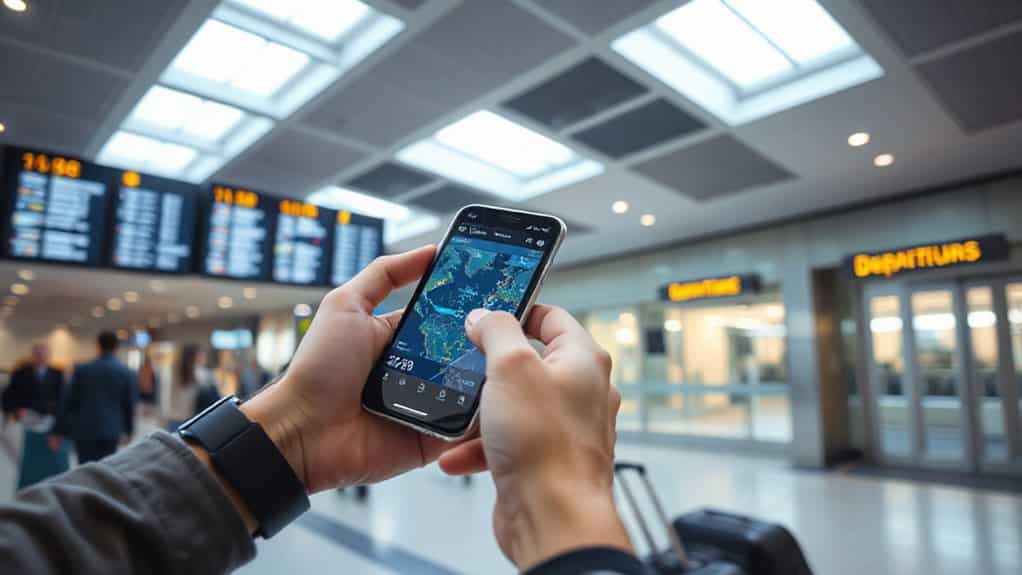
If you check the flight status before you leave, you’ll avoid last‑minute surprises at the airport.
Use FlightAware or FlightStats to see live maps, real‑time updates, and delay predictions.
These services pull ADS‑B, MLAT, satellite, and radar data, showing you precise positions and cancellations.
Alerts arrive instantly, letting you adjust plans, skip unnecessary crowds, and maintain the freedom to travel on your schedule.
FlightAware offers an AeroAPI for on‑demand flight status and tracking data.
Spare lithium batteries should stay in carry-on so you’re not forced to repack during security if your schedule changes.
Arrive Early and Check Gate Updates for Flight Delays
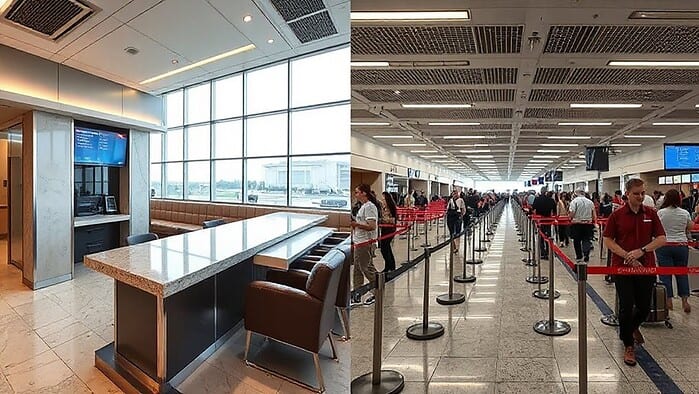
You should plan to be at the airport well before the scheduled departure, even if you’ve already received a delay alert, because airlines still base check‑in cut‑offs on the original time. Once you’re near the gate, keep an eye on the display boards and listen for announcements, as gate agents often receive updates before they’re posted publicly. Staying close to the gate lets you act quickly if a new departure time or gate change is announced—using real-time gate data from airport systems can also help you adjust your plan on the fly.
Arrive for Early
Arriving early gives you a practical buffer against the 15‑minute‑plus delays that affect 78 % of U.S. flights and nearly one‑third of European departures.
By getting to the terminal two hours before departure, you absorb the average 16‑18‑minute delay and avoid last‑minute gate changes.
Check the display immediately; high‑delay hubs like SFO often need extra time, while smoother airports let you relax before boarding.
Monitor Gate Changes Continuously
Typically, gate assignments shift throughout the day as airlines adjust schedules, aircraft types, and operational constraints, so keeping an eye on the display board is essential.
Use the airport’s real‑time monitoring tools—color‑coded alerts, mobile push notifications, and SMS updates—to catch changes instantly.
Check your airline’s app, enable push alerts, and glance at the FIDS screen frequently.
This proactive habit lets you adjust your boarding plan without stress.
Understand Your Legal Rights for Delayed Flights
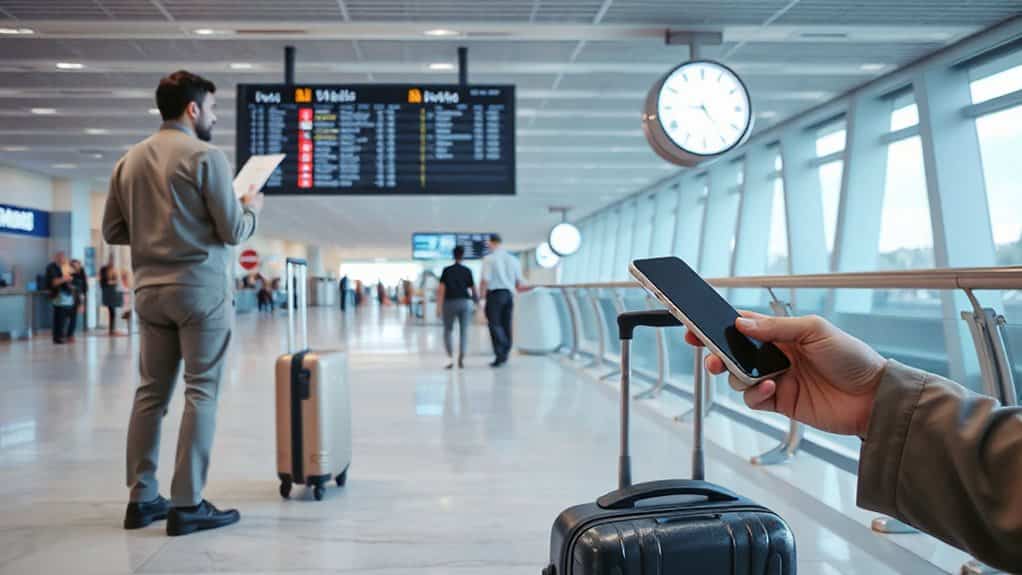
You should first check if you meet the refund eligibility criteria, which usually require a delay of three hours or more and no extraordinary circumstances. Next, understand the two main compensation types—cash or voucher payments for short‑haul flights and higher fixed amounts for longer routes—so you know what you can claim. Finally, follow the claim filing process by contacting the airline’s customer service, providing your booking details and delay documentation, and keeping copies of all correspondence. If your delay causes a late arrival to your hotel, call ahead because reservations may be canceled after 6 p.m. to midnight without notice, leading to possible no-show fees.
Refund Eligibility Criteria
If your flight arrives three hours or more late (domestic) or six hours or more late (international), you’re generally entitled to a refund, even if your ticket was marked non‑refundable.
You must decline rebooking, credits, or vouchers to trigger the automatic refund.
It applies to all tickets, covers the unused portion, and processes within seven days for credit cards, twenty for other methods.
Baggage delays follow similar rules.
Compensation Types Overview
When a flight is delayed, the compensation you can receive depends on the jurisdiction, the airline’s policies, and whether the delay is considered controllable.
In the U.S., you get no cash payout for most delays, only refunds after 3‑hour domestic or 6‑hour international interruptions if you don’t travel.
Bumping rules mandate 200‑% or 400‑% fare compensation, up to $1,550, based on delay length.
Internationally, the Montreal Convention may cover expense reimbursement, while airlines may voluntarily offer meals, hotels, or vouchers for controllable delays.
Claim Filing Process
Compensation types vary by region, but knowing what you’re entitled to is only half the battle; the next step is filing a claim correctly.
Gather your boarding pass, ticket, itinerary and any airline notices, then submit an online DOT complaint or EU 261 form with full personal and flight details.
Keep a reference number, follow up bi‑weekly, and consider third‑party services if you prefer a hands‑off approach.
Rebook Quickly After a Flight Delay Using Standby, Phone, and Social Media
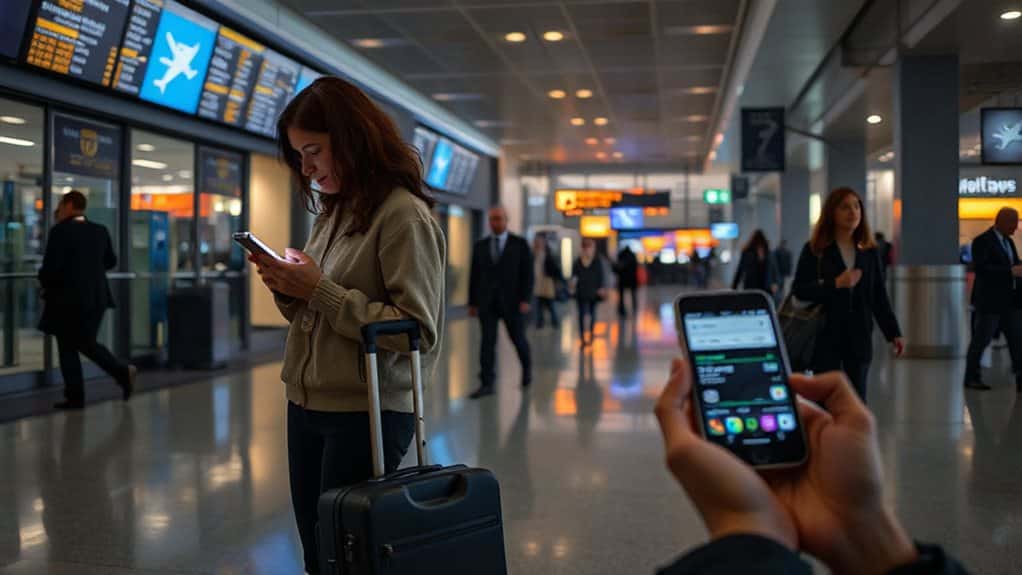
Standby lists, mobile‑app rebooking, phone calls, and social‑media messages each give you a fast track to a new flight when your original departure is delayed. Seamless connection strategies help you rebook faster after a delay and reduce the risk of missing your next segment. Check the airline’s app for same‑day alternatives; elite status or early check‑in enhances standby priority.
Call the carrier to bypass lines and examine competitor options.
Direct‑message the airline on X for rapid responses, specifying routes and flexible dates.
File a Refund or Compensation Claim After a Flight Delay
If your flight is delayed long enough to qualify under the 2024 DOT rule or EU 261, you can file a refund or compensation claim to recover cash or vouchers. Gather your boarding pass, booking confirmation, and proof of delay, then check eligibility on the airline’s site or a claim service. Submit the required documents, request the appropriate amount—250‑600 euros or up to $650—and follow up until you receive the refund or compensation. For lounge timing while you wait, consider that Priority Pass guest fees can be lower than public day passes (often saving about guest fee savings).
Plan Backup Options Specifically for Flight Delays and Keep Claim Documentation
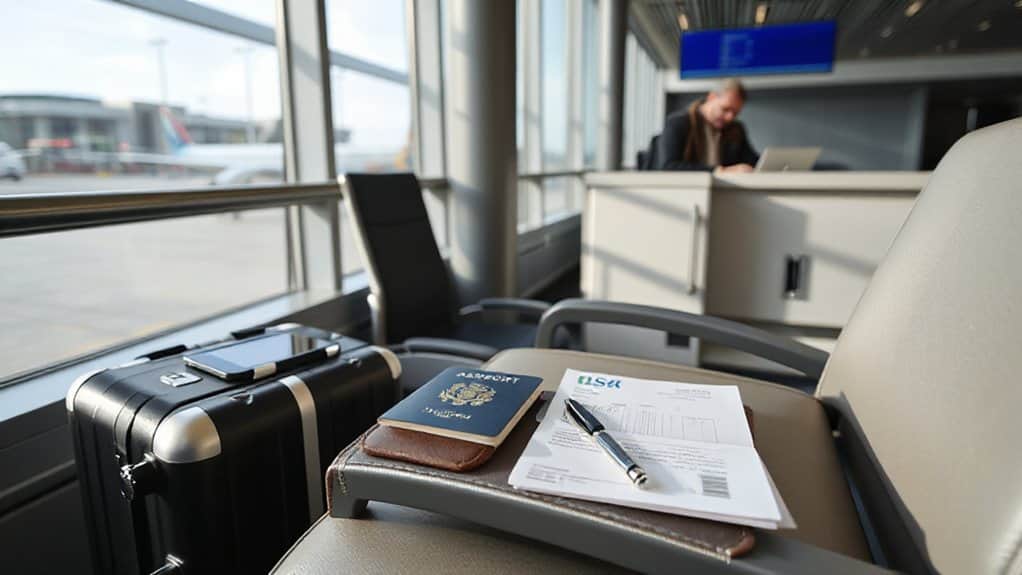
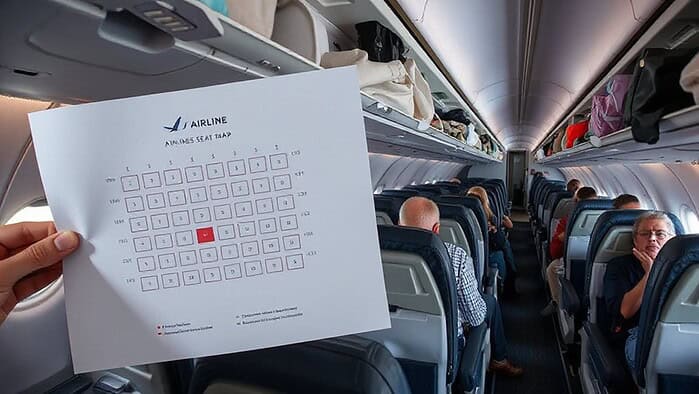
After you’ve gathered the paperwork for a refund or compensation claim, turn your attention to securing backup travel plans and preserving the evidence you’ll need for the claim. Research alternate flights, note earlier and later options, and check standby availability. Book a refundable premium ticket if needed, and keep a printed flight list. Photograph boarding passes, luggage tags, and save receipts for lounges or hotels. Use app alerts for updates and store all documentation in one folder, including any DOT rules that apply if your flight is canceled.
And Finally
By staying informed, arriving early, and knowing your rights, you can manage flight delays with confidence. Use real‑time status tools, monitor gate changes, and act quickly to rebook via standby, phone, or social media. If you’re eligible, file a refund or compensation claim promptly, keeping all documentation. Finally, always have a backup plan—alternative routes, transport, or accommodation—so you’re prepared for any disruption. This proactive approach minimizes stress and protects your travel investment.