Eat a bowl of oatmeal or whole‑grain toast with a drizzle of almond butter and sliced banana for slow‑release carbs, then add a hard‑boiled egg or turkey jerky for lean protein. Include a handful of walnuts or a few avocado slices for healthy fats that keep you full without bloating. Pack water‑rich fruits like strawberries or cucumber sticks to stay hydrated and supply electrolytes. Avoid sugary snacks and alcohol, which can cause crashes and dehydration; the TSA lets you bring these items in your carry‑on, and the next sections will show you how to pack them efficiently.
TLDR
- Hydrate with water, electrolyte‑rich coconut water, or juicy fruits to maintain fluid balance and reduce fatigue.
- Eat slow‑release carbs like oats, whole‑grain toast, or sweet potatoes to stabilize blood sugar and prevent energy crashes.
- Include lean protein snacks (hard‑boiled eggs, turkey jerky, tofu bars) paired with low‑fiber carbs for sustained muscle support.
- Add modest healthy fats such as walnuts, chia seeds, or avocado slices to promote fullness without bloating.
- Pack water‑rich fruits and vegetables (cucumber, strawberries, bell peppers) for hydration, micronutrients, and immune support.
Understand How Pre‑Flight Nutrition Impacts Energy & Comfort
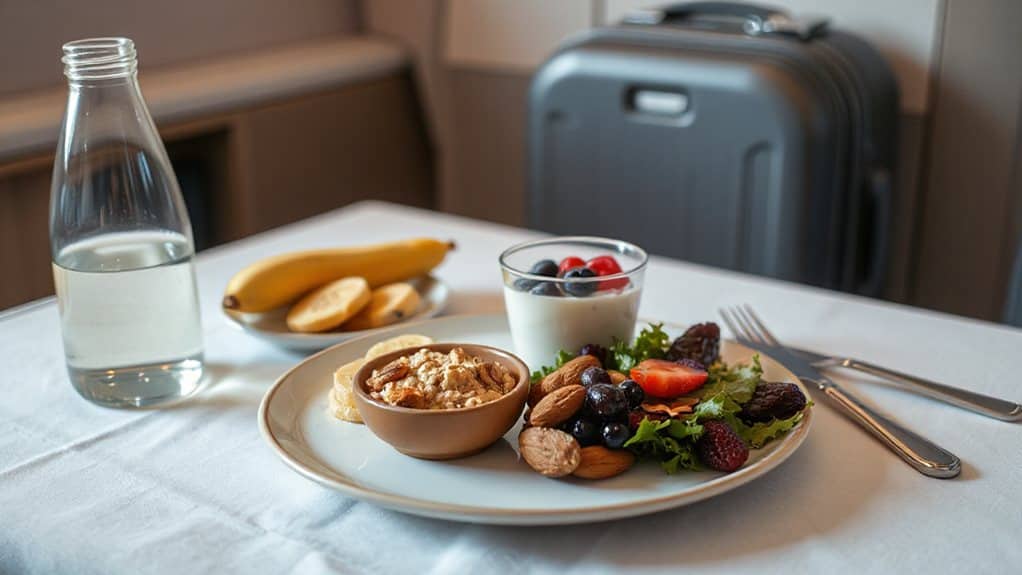
When you’re preparing for a long flight, what you eat and drink in the hours before boarding can directly affect your energy levels and comfort in the cabin. Hydrating with water, electrolyte‑rich coconut water, or juicy fruits keeps fatigue at bay. Pair lean proteins like nuts, yogurt, or chicken with low‑fiber carbs to stabilize blood sugar. Avoid high‑sugar snacks that cause crashes. Balanced nutrition supports alertness and reduces jet‑lag discomfort. Avoid alcohol as it can increase dehydration. Also, if you plan to bring ibuprofen for any discomfort, keep it in your carry-on and declare it if you’re asked during screening.
Choose Pre‑Flight Slow‑Release Carbs for Stable Blood Sugar
If you pick slow‑release carbohydrates before boarding, your blood‑sugar levels will stay steadier throughout the flight. Choose high‑fiber oats, whole‑grain toast, or sweet potatoes; they digest slowly, preventing spikes and crashes. Stable insulin supports fat oxidation and spares glycogen, keeping energy consistent for long hours. These foods are gentle on the stomach, reduce cramping, and improve overall comfort during travel. Also, if you pack travel neck pillows for the trip, they’re usually allowed without eating into your carry-on allowance.
Pair Pre‑Flight Lean Protein for Sustained Muscle Support
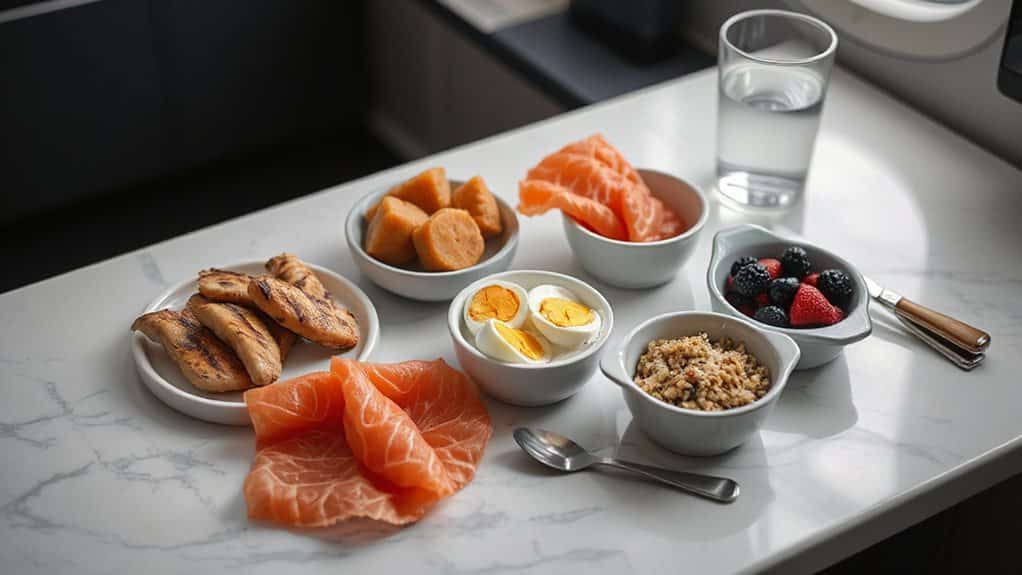
Pack a protein‑rich snack in your carry‑on to keep muscles fueled and fatigue at bay during a long flight. Choose lean options like hard‑boiled eggs, turkey jerky, or a tofu‑based bar with at least 10 g protein. Make sure any lithium batteries you’re carrying with electronics (like a phone, watch, or power bank) are packed in your carry‑on so they’re accessible and screened safely. Pair it with low‑fiber carbs—wheat toast with fruit spread, banana and nuts, or dried fruit—to sustain energy, aid digestion, and prevent cramps without overloading your stomach.
Add Pre‑Flight Healthy Fats for Satiety Without Bloating
Adding a modest amount of healthy fats to your pre‑flight snack can keep you feeling full without causing the uncomfortable bloating that often follows heavy meals.
Choose walnuts, chia seeds, avocado slices, or a drizzle of olive oil over whole‑grain crackers.
Small portions of unsaturated fats slow digestion, sustain energy, and support circulation, while keeping your stomach comfortable for the trip.
When packing protein supplements or powders for your flight, remember they’re generally allowed in carry-on and must follow TSA screening rules for any 3-1-1 liquids under 3.4 oz/100 ml.
Pack Pre‑Flight Fruit & Veggies for Hydration & Micronutrients
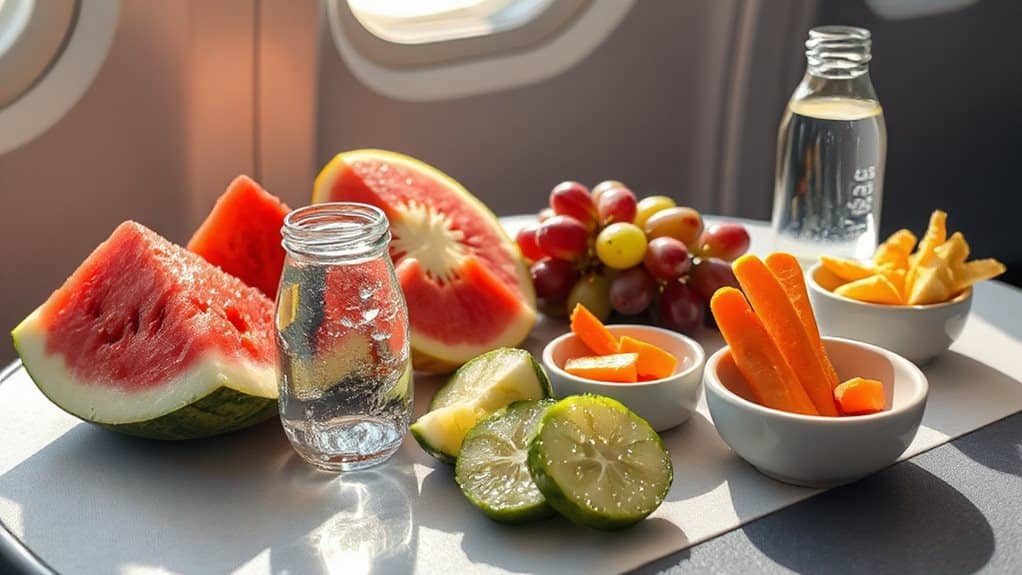
Since air‑travel can leave you dehydrated, loading your carry‑on with water‑rich fruits and vegetables helps you stay hydrated and supplies essential micronutrients.
Pack cucumbers, celery, bell peppers, strawberries, and watermelon slices; each offers 90‑96% water and electrolytes.
Two fruit servings and three vegetable servings provide about 15 oz fluid, while vitamin C, potassium, and magnesium from tomatoes, mango, and cantaloupe support immunity and fluid balance during the flight.
If you also plan to bring salt in your carry-on for saline rinses or other needs, TSA generally allows it but powders and larger amounts may be inspected at the checkpoint.
Combine Carbs, Protein, and Fats Into a Balanced Meal Plate
You’ll want to follow a macro‑balance blueprint that hits roughly 35‑45 % carbs, 25‑35 % protein, and 20‑30 % fats to keep blood sugar steady during the flight. By pairing whole‑grain carbs with lean protein and a modest drizzle of healthy oil, you create an energy‑sustaining ratio that’s both portable and satisfying. Exit row seats may offer more legroom, but they often come with limits like no recline and fixed armrests, which can make long periods seated less comfortable. Use hand‑size cues—fist for grains, palm for protein, thumb for fats—to assemble a balanced plate that fits within carry‑on limits.
Macro Balance Blueprint
When you’re preparing a meal for a long flight, the key is to balance carbohydrates, protein, and fats on a single plate so you stay energized, satiated, and comfortable throughout the trip.
Fill half the plate with vegetables or fruit, a quarter with whole‑grain carbs, a quarter with lean protein, and add a thumb‑sized healthy fat.
Use a 9‑inch plate, keep protein around 20 g, carbs a cupped handful, and fats 20‑30 % of calories for a free‑moving, satisfying meal.
Energy‑Sustaining Ratios
Balancing carbs, protein, and fats on a single plate keeps your energy steady throughout a long flight.
Aim for 35‑45 % complex carbs, 25‑35 % lean protein, and 20‑30 % healthy fats.
Fill half the plate with vegetables or fruit, a quarter with protein like chicken or tofu, and the remaining quarter with whole‑grain carbs or starchy veg.
This ratio sustains energy, curbs hunger, and supports focus during extended travel.
Portable Nutrient Pairings
If you pack a portable meal that combines carbs, protein, and fats, you’ll keep blood‑sugar levels steady and avoid the mid‑flight energy slump that many travelers experience.
Choose turkey lettuce wraps with avocado, collard wraps filled with beans and nuts, or rice‑paper rolls with tofu and fruit.
Pair high‑fiber protein bars with nuts, or hummus with crisp veggies.
Each option fits carry‑on limits while providing balanced nutrition.
Pack Quick Snacks for the Boarding Hour
Because boarding time is short, you’ll want snacks that are easy to grab, don’t require refrigeration, and stay fresh for the whole flight.
Pack homemade granola bars with dried fruit and nuts, protein bars like Kind or Lara, and a mix of trail‑mix nuts, seeds, and a few chocolate chips.
Include single‑serve nut butter, coconut chips, and a small fruit portion such as an apple or clementine.
These items fit carry‑on limits, stay tasty, and keep you energized.
And Finally
By choosing slow‑release carbs, lean protein, and healthy fats, you’ll keep blood sugar steady, avoid energy crashes, and stay comfortable throughout the flight. Including hydrating fruits and vegetables adds micronutrients and helps prevent dehydration. A balanced plate that combines these macronutrients offers sustained satiety without bloating. Pack easy‑to‑eat snacks for the boarding hour to maintain nutrition while complying with carry‑on limits. This strategy supports energy, digestion, and overall well‑being during long trips.