A nonstop flight stays on a single aircraft from departure to arrival with no ground stops, while a direct flight shares one flight number but may land for refueling or passenger changes before continuing. Nonstop usually saves one to two hours and avoids deplaning, but it often costs 10‑30 % more. Direct flights can be cheaper yet add layover time and stress. Both terms affect scheduling, cabin options, and risk of missed connections. Continue for a deeper look.
TLDR
- Nonstop flights travel from origin to destination under a single flight number with no intermediate landings; direct flights share one number but may stop for refueling or passenger changes.
- Nonstop itineraries usually cost 10‑30% more than direct‑with‑stops, especially on long‑haul or international routes.
- Nonstop saves 1‑2 hours of gate‑to‑gate time versus direct flights that include brief layovers and deplaning.
- Direct flights with stops increase missed‑connection risk and require additional security/baggage handling, while nonstop eliminates those hassles.
- Cabin availability can differ: ultra‑long nonstop routes may limit economy class, whereas direct flights often offer a full cabin mix.
What’s the Difference Between Nonstop and Direct Flights?
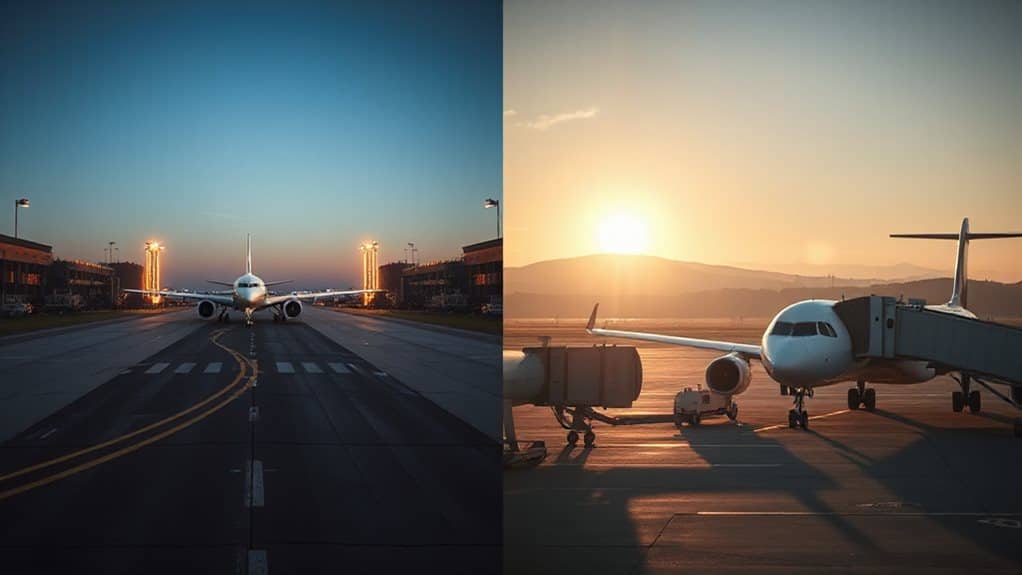
When you book a flight, the terms “nonstop” and “direct” might look similar, but they actually describe different travel experiences.
A nonstop flight flies straight from origin to destination under one flight number, with no ground stops, saving time and reducing baggage risk.
A direct flight also keeps one number but may land for refueling or passenger changes, adding ground time while keeping the same aircraft. Historically, direct flights often involved a stop for refueling before ultra‑long‑range aircraft made true nonstop service possible.
Why the Nonstop vs. Direct Terminology Matters When Booking
When you book a flight, spotting whether it’s labeled “nonstop” or “direct” can change your expectations about price, travel time, and overall value.
A “nonstop” flight guarantees you stay on the same aircraft from departure to arrival, usually costing more but shaving off hours that a “direct” flight with stops would add.
Night flights can also impact both cost and schedule by taking advantage of lower off-peak airport fees and quieter operations.
Clarity In Booking
In booking a flight, the distinction between “nonstop” and “direct” matters because the terms describe different itineraries. You must verify whether a “direct” option includes intermediate landings; airlines often mask stops under a single flight number.
Check detailed itineraries, use filters that separate nonstop from direct‑with‑stops, and confirm gate‑to‑gate times to avoid unexpected delays and preserve your travel freedom.
Pricing And Value
Usually, the price gap between nonstop and direct flights is the first thing travelers notice, and it can be substantial. Direct tickets often cost 10‑30% more, especially on long‑haul and peak‑season routes, while layovers can shave $150‑$300 off the fare.
Factor in modest food, hotel, and baggage costs, then compare total expense to your schedule and budget for the best value.
Travel Time Impact
The price gap you just examined doesn’t tell the whole story; how long you’ll actually be in the air and on the ground can change your itinerary dramatically.
A nonstop flight keeps you on one aircraft, cutting layover waits and providing the shortest door‑to‑door time, often saving 1‑2 hours or more.
Direct flights add technical stops, extending total travel and increasing fatigue, even though you stay on the same plane.
Choose based on how much time you value.
How Much Time Does a Nonstop Flight Save?
A nonstop flight typically shaves only a few minutes off short domestic routes—average times rise from 1 hour 30 minutes on a nonstop to 1 hour 33 minutes on a direct flight with a stop—yet the real saving comes from eliminating the ground layover, which can add 1–2 hours to the trip.
You’ll feel that freedom when you skip the 1‑2‑hour wait, especially on long‑haul legs where nonstop service cuts nearly an hour compared with routed connections.
For international itineraries, a nonstop flight also helps you avoid extra immigration checks that can come with leaving the airport during a connection.
When Nonstop Isn’t Available: Direct Flights as the Only Option
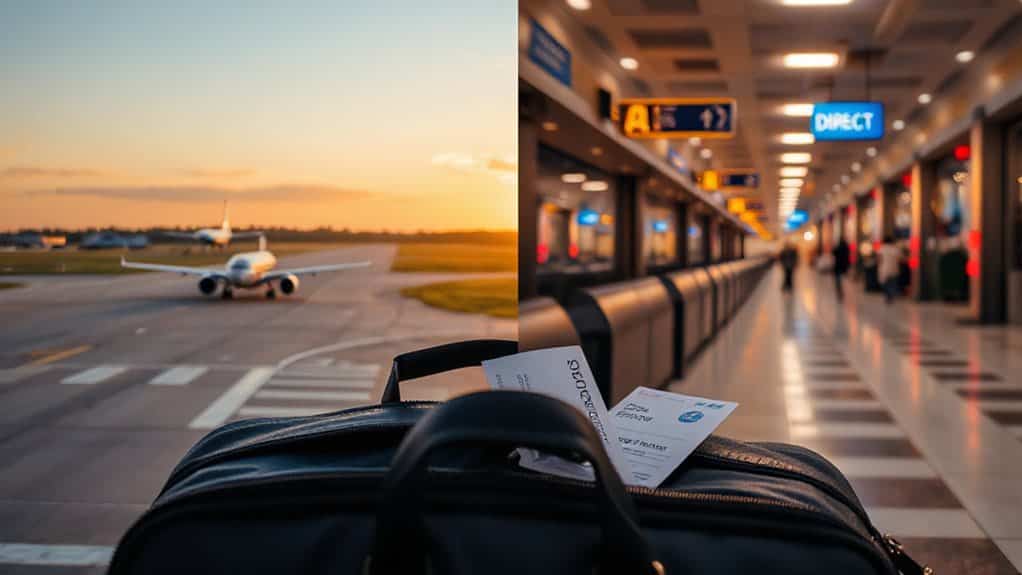
When a nonstop service isn’t offered, airlines often fill the gap with a direct flight that keeps the same flight number but includes one or more scheduled stops. You’ll find direct options on less‑popular or intercontinental routes where demand is low. Stops may involve passenger pick‑ups, refueling, or aircraft changes, yet you stay on the same ticket, preserving itinerary freedom and simplifying travel. In practice, that can mean you still arrive in time to enjoy Penang Night Markets without having to redo your bookings.
Price Comparison: Nonstop vs. Direct Flight Costs
Comparing prices shows that nonstop flights generally cost more than direct flights with scheduled stops.
On short‑haul routes you’ll see nonstop fares 10‑20% higher, like $230 versus $200, plus $10‑30 for food.
Long‑haul domestic nonstop tickets run 20‑30% up, $400 versus $300, with $20‑50 meals.
International nonstop tickets exceed layovers by 25‑30%, $800 versus $600, adding $50‑200 for hotels.
These differences often come from how airlines manage seat inventory management in real time—protecting high-fare seats and adjusting availability and pricing as demand changes.
Which Cabin Classes Are Offered on Nonstop vs. Direct Flights?
Price differences aside, the cabin‑class lineup varies noticeably between nonstop and direct flights.
On nonstop ultra‑long routes you’ll find premium economy and business, sometimes first, but economy may be missing.
Direct flights with stops usually offer economy, premium economy, business, and first class, giving you a full range of options.
Business seats feature lie‑flat beds, while first class adds chef‑prepared meals on certain routes.
Most itineraries also expect travelers to comply with Delta’s carry-on sizing rules, including the 22 x 14 x 9 dimensions.
How Aircraft Range and Scheduling Shape Nonstop Availability
With limited fuel capacity and weight constraints, an aircraft’s range is fundamentally set by how much usable fuel it can carry and how much payload it must lift.
You’ll see light jets handling 1,000‑1,500 nm, midsize 2,000‑3,000 nm, super‑midsize 3,000‑3,500 nm, while long‑range jets push 4,000‑7,500+ nm.
Headwinds, runway length, and reserve fuel cut that distance, so airlines schedule flights that match each plane’s realistic nonstop capability.
In addition, weather radar helps crews detect storm cells early and often adjust routing to protect safety, which can affect whether a “nonstop” plan remains feasible.
How Layovers Add Stress, Delay Risk, and Connection Hassle
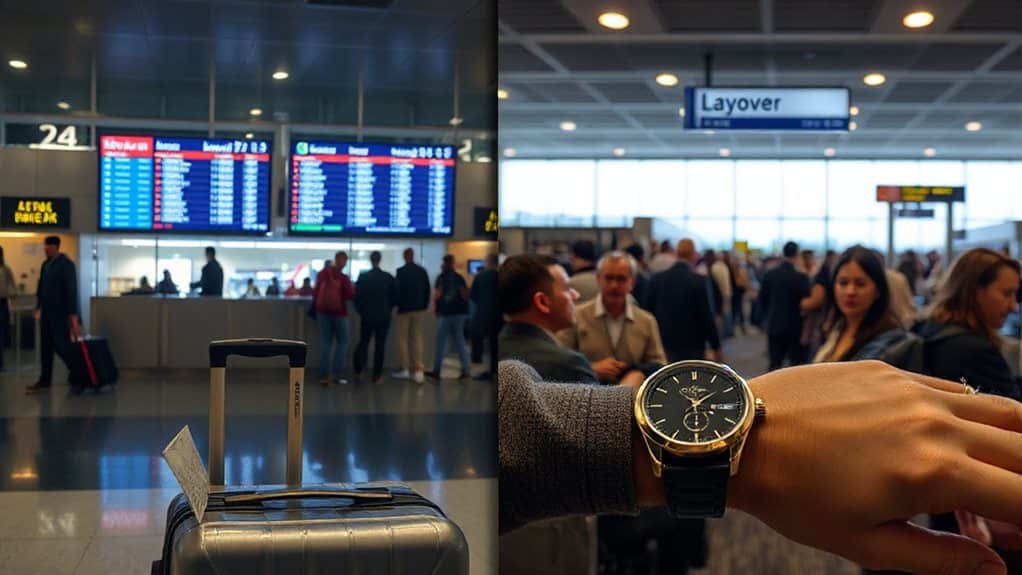
You’ll notice that each layover adds a new source of anxiety, from the fear of missing the next gate to the uncertainty of possible delays. Those delays can push the chance of a missed connection up to 37%, which often forces you to rearrange your itinerary and extend your total travel time.
Even when the layover is short, the need to collect and re‑check baggage, clear security again, or travel through customs creates extra hassle that many travelers are willing to pay extra to avoid.
Creased Anxiety
Most travelers feel the pressure of layovers, and the numbers back it up: 81 % of passengers report air travel as at least somewhat stressful, a figure that has risen sharply since 9/11.
Layovers magnify anxiety because delays affect over half of flyers, baggage transfers rank among top stressors, and women report higher tension.
You risk extra cancellations after 3 p.m., and 63 % would pay $88 to skip connections, underscoring how layovers crease your peace of mind.
Missed Connections
Layovers turn a simple trip into a chain of timed events, and each connection adds a new layer of risk. You must retrieve and re‑check luggage, which often ranks among the top stressors for travelers.
Short layovers force rushed gate changes, raising missed‑connection odds to 37 % in some data.
Delays cascade, prompting costly rebookings and extra service calls, while many passengers would pay a premium to avoid these hassles.
Extended Travel Time
Delays affect over half of travelers, and each connection multiplies the chance of missed flights, missed baggage, and overall stress, limiting your freedom.
Real‑World Examples: Nonstop vs. Direct on Popular Routes
On popular routes the distinction between nonstop and direct flights becomes clear when you compare travel times, cabin options, and stop‑over procedures.
From LAX to Singapore, nonstop takes about 17 h 10 m, while the direct via Tokyo adds roughly 2 h 45 m and forces a brief disembarkation.
NYC‑to‑Singapore nonstop is just under 19 hours, whereas the direct via Frankfurt offers economy, business, and first‑class seats, with a layover for servicing.
Choosing Nonstop or Direct for Business vs. Leisure Travel
After reviewing real‑world examples, the next step is to weigh how nonstop and direct options affect business versus leisure travelers.
For business trips, you prioritize time, so a nonstop’s speed justifies higher fares and ultra‑long‑range comfort.
Leisure trips tolerate longer itineraries, letting you save 20‑40 % on economy fares and accept variable aircraft.
Direct flights keep one ticket number and reduce baggage handling, while still offering premium cabin choices at competitive rates.
Final Decision Checklist: Nonstop or Direct for You?
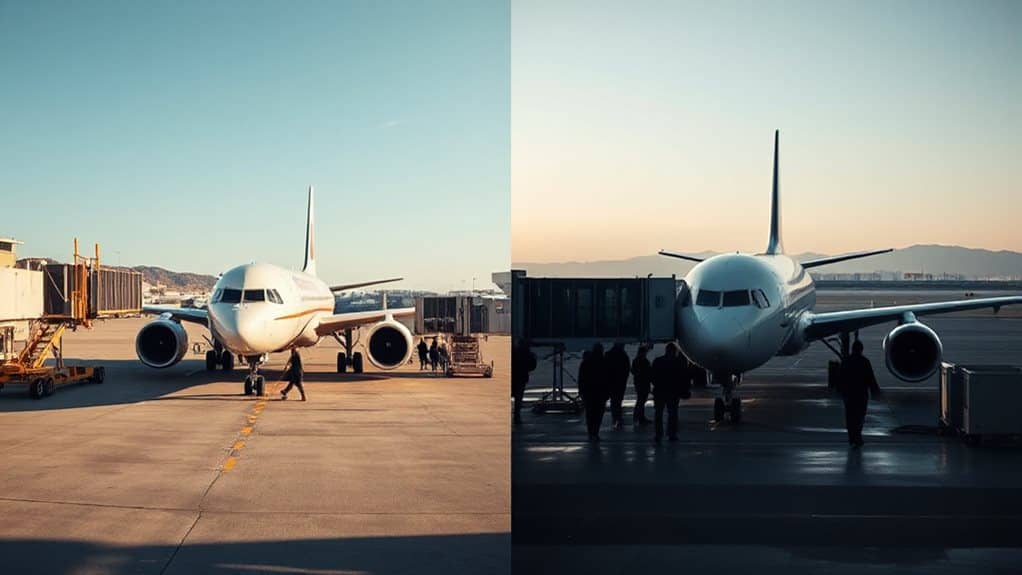
If you’re trying to decide between a nonstop and a direct flight, start by listing the three key factors that matter most to your trip—travel time, cost, and convenience.
Check travel time: nonstop saves 1‑2 hours. Compare cost: direct is often cheaper, especially in economy.
Assess convenience: nonstop avoids deplaning and baggage hassles.
Use this checklist to match your freedom‑focused priorities.
And Finally
When you need speed and simplicity, choose a nonstop flight; it eliminates layovers, reduces travel time, and lowers the chance of delays. If a nonstop isn’t offered, a direct flight can still get you to your destination without changing planes, though you’ll endure a scheduled stop that may add inconvenience. Weigh the time saved against cost and personal tolerance for stops, then pick the option that best fits your schedule, budget, and travel priorities.