Adjust your bedtime 2‑3 days before departure, moving it earlier for eastward trips and later for westward trips by 30‑60 minutes each night, and pair the shift with bright morning light or afternoon melatonin as needed. Dress in breathable layers, keep the cabin at 20‑22 °C, use an eye mask, noise‑cancelling headphones, and a light blanket, and limit caffeine and alcohol. Take 0.5‑5 mg melatonin at your destination bedtime, sync meals and hydration to local time, and get at least 30 minutes of natural light within 3.5 hours of waking after landing. Follow these steps and you’ll uncover even more tactics.
TLDR
- Choose a window seat, dim the lights, and use an eye mask and noise‑cancelling headphones to create a dark, quiet cabin environment.
- Dress in breathable layers, keep cabin temperature around 20‑22 °C, and bring a light blanket and a moisture‑rich scarf to stay comfortable.
- Align your sleep schedule with the destination by shifting bedtime 30‑60 minutes nightly before departure and taking melatonin 30 minutes before the new local bedtime.
- Expose yourself to bright natural light for at least 30 minutes soon after landing (morning for eastward, evening for westward trips) to reset your circadian clock.
- Limit caffeine and alcohol during the flight; stay hydrated with water and avoid heavy meals to reduce sleep disruption.
Jet‑Lag Sleep Tip #1: Adjust Your Sleep Schedule Before Departure
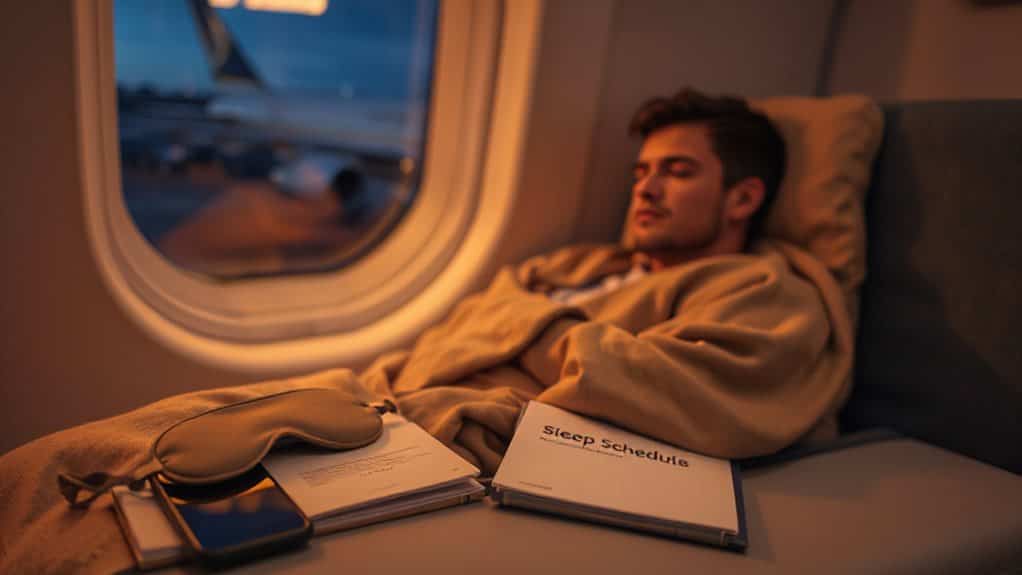
If you’re flying eastward, start shifting your bedtime earlier before you leave. Move it 30 minutes earlier each night for three to four days, pairing the change with bright‑light exposure in the morning. For westward trips, delay bedtime 30 minutes (up to two hours) nightly and add afternoon melatonin. These gradual adjustments help your circadian clock align with the new zone, reducing jet‑lag disruption. Melatonin timing is crucial for aligning the darkness signal with the new local night. TSA allows solid melatonin gummies in carry-on bags, so you can pack them in original labeling for easy identification if you plan to use them.
Jet‑Lag Sleep Tip #2: Choose a Flight Arriving in Daylight
You’ll reset your internal clock faster when you land in daylight, because natural light cues your body to be awake and aligns your sleep schedule early.
By choosing a flight that arrives during the day, you can enhance light exposure immediately and take advantage of the destination’s bright hours for strategic circadian adjustment.
This timing also makes it easier to stay awake through the local afternoon, building the sleep pressure you need for a restful night later.
And if you’re traveling to a place like Dubai, booking your main attractions morning or evening slots can help you coordinate your outdoor light exposure without getting overtired.
Optimize Arrival Light Timing
When you pick a flight that lands during daylight, the natural sunlight you encounter right after touchdown helps reset your circadian rhythm faster than arriving in the dark.
Step out immediately, walk outside, and soak the early‑morning or evening light depending on travel direction.
Eastward arrivals benefit from morning rays; westward arrivals from evening glow.
Stay awake, avoid naps, and let daylight cue your internal clock.
Align Sleep Schedule Early
Choosing a flight that lands in daylight gives you a built‑in cue to start shifting your sleep schedule before you even step off the plane. Begin adjusting bedtime 2‑3 days early, moving it earlier by an hour each night for eastward trips or later by 30‑60 minutes for westward trips.
Pair these shifts with timed melatonin and morning light to align your circadian rhythm, reducing jet‑lag severity and preserving freedom on arrival.
Boost Daylight Exposure Immediately
If you pick a flight that lands in daylight, you’ll get immediate natural light exposure at your destination, which is the most powerful cue for resetting your circadian clock.
Choose morning arrivals when traveling eastward to trigger phase advances, and evening arrivals westward for delays.
Seek bright sun within three to four hours of waking, avoid mistimed light, and let daylight guide your internal rhythm.
Jet‑Lag Sleep Tip #3: Create a Cabin‑Friendly Sleep Environment
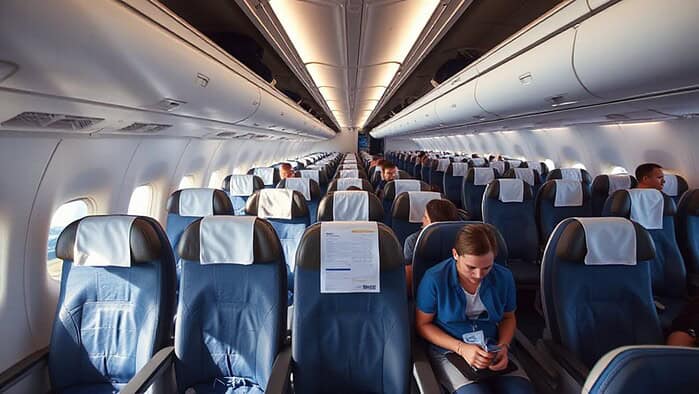
By adjusting temperature, noise, light, pressure, and humidity, you can turn a cramped cabin into a sleep‑friendly zone.
Keep the cabin around 20‑22 °C, use a light blanket for head‑coolness and body warmth, and add a personal humidifier or moisture‑rich scarf.
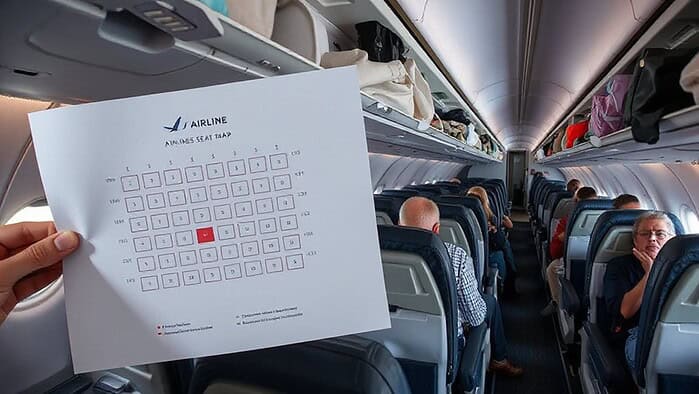
Block light with an eye mask, request a window seat, and wear noise‑cancelling headphones to stay below 35 dB.
Stay hydrated to counter low humidity and pressure.
Pack a lightweight travel blanket so you’re comfortable without relying on airline blankets that may vary by flight.
Jet‑Lag Sleep Tip #4: Dress Lightly and Layer for Temperature Swings
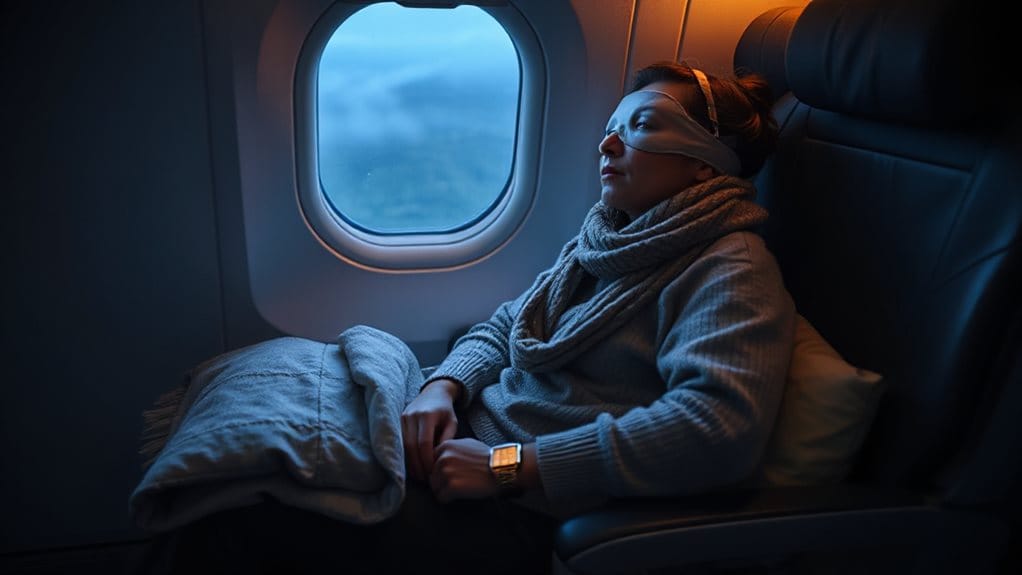
When you board an overnight flight, the cabin temperature can swing dramatically—from a cool 64 °F during descent to a warm 88 °F after an hour of cruising—so dressing lightly and layering is essential for staying comfortable.
Pack a breathable base layer, a lightweight sweater, and a zip‑up jacket.
Adjust each piece as the cabin shifts, keeping you cool when it’s cold and warm when it heats up.
This flexible approach prevents overheating and chills, supporting uninterrupted sleep—and if you’re bringing a massage gun for post-travel muscle relief, remember TSA battery rules to avoid surprises at security.
Jet‑Lag Sleep Tip #5: Wear Bed Socks and a Cashmere Wrap for Better Efficiency
Because the cabin air is usually cool and can drop to 64 °F, keeping your feet warm helps your body settle into sleep faster.
Slip on soft cashmere or merino bed socks; they raise distal skin temperature, trigger vasodilation, and cut sleep‑onset latency by minutes minutes minutes.
Pair them a‑ cashmere wrap to disperse body heat, enhance efficiency, and reduce awakenings during a seven‑hour flight.
For long flights, adding warmth with ice-silk cooling fabric isn’t necessary since you’re aiming to conserve heat in the cabin.
Jet‑Lag Sleep Tip #6: Control Light Exposure on the Plane
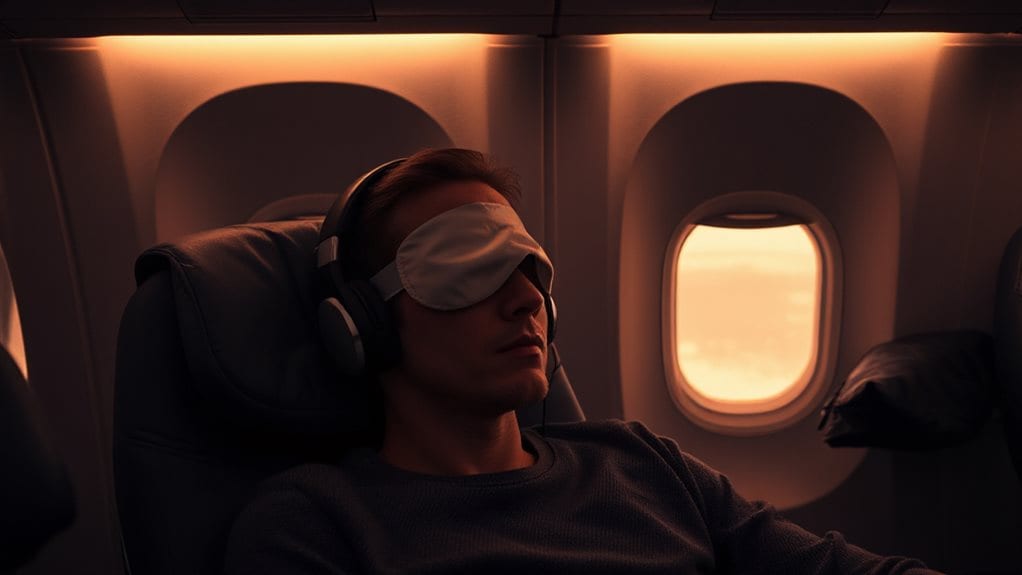
Ever wonder why the cabin lights seem to switch on and off at the wrong moments during a long flight? You can fight that by timing light exposure to your destination’s circadian rhythm. Eastward? Seek bright light after the body‑temperature minimum, avoid it before. Westward? Do the opposite. Wear dark glasses when you need darkness, and use a portable light source for bright exposure when natural light isn’t available. This strategic control helps your internal clock adjust faster. TSA 3-1-1 liquids rule can also matter for overnight flights if you’re traveling with skincare essentials that may disrupt your routine.
Jet‑Lag Sleep Tip #7: Limit Caffeine and Alcohol During the Flight
If you want to arrive at your destination feeling rested, you should limit both caffeine and alcohol during an overnight flight.
Caffeine’s three‑to‑five‑hour half‑life means even a small dose can linger, disrupting sleep if taken within eight hours of trying to rest.
Alcohol dehydrates and fragments sleep, compounding fatigue.
Choose decaf drinks, stay hydrated, and avoid sugary add‑ins to preserve natural rest cycles.
Jet‑Lag Sleep Tip #8: Take Melatonin at the Optimal Pre‑Flight Time
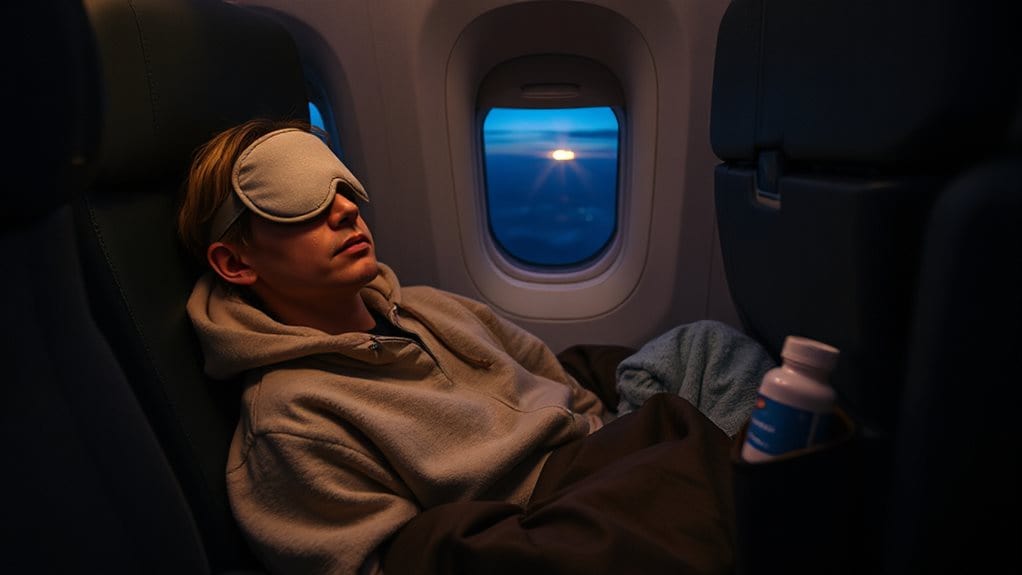
When you time a long‑haul overnight flight, taking melatonin at the right pre‑flight window can dramatically reduce jet‑lag symptoms.
Start 30 minutes earlier each night for five to six days before departure, aiming for a dose of 0.5‑5 mg taken at your destination’s bedtime (between 10 p.m. and midnight).
This schedule advances your circadian rhythm, especially for eastward trips crossing five or more zones, and improves sleep onset and quality.
Jet‑Lag Sleep Tip #9: Sync Meals, Hydration & Activity to Destination Time
By aligning your meals, hydration, and activity with the destination’s local schedule, you can accelerate the reset of your circadian rhythm and reduce jet‑lag symptoms.
Eat a hearty breakfast at the new morning, avoid late‑night meals before departure, and sip electrolyte‑rich water throughout the flight.
Light, protein‑rich in‑flight snacks keep energy steady, while regular post‑arrival meals and activity reinforce the new time zone.
Jet‑Lag Sleep Tip #10: Maximize Natural Light and Follow Wake‑Up Strategies After Landing
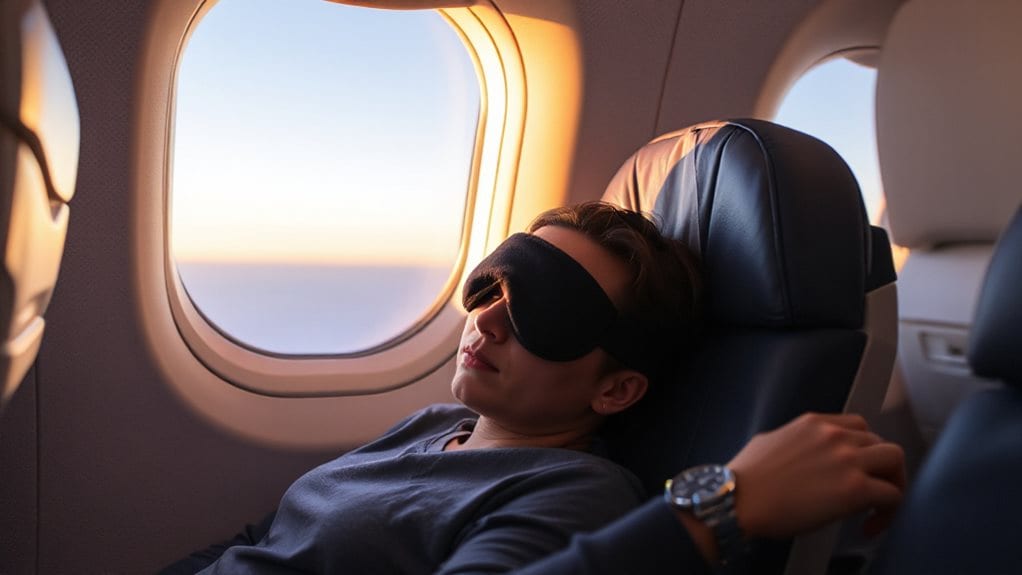
After you land, step outside and soak up the morning sun for at least 30 minutes to cue your internal clock toward the new time zone.
Pair this light exposure with a brief, 20‑minute power nap if you’re still fatigued, but make sure the nap ends before the early afternoon to avoid disrupting nighttime sleep.
Morning Sun Exposure
If you step outside as soon as you wake up after landing, the bright morning sunlight will jump‑start your circadian clock and help you adjust to the new time zone faster.
Stay outdoors for at least 30 minutes, avoiding sunglasses, to receive ~5000 lux.
This exposure during the first 3.5 hours after waking advances your internal clock by about one hour daily, easing jet lag and restoring your natural rhythm.
Strategic Power‑Nap Timing
When you schedule a power nap during a long‑haul flight, align the nap window with the destination’s local time rather than your home clock. Aim for a 26‑minute nap, allowing six minutes to drift off, and set an alarm for thirty minutes total.
For eastward trips, nap early; for westward, stay awake longer.
After landing, limit naps to 30‑90 minutes, then expose yourself to bright light and move.
And Finally
By planning ahead and applying these tips, you’ll align your body clock with your destination, reduce fatigue, and improve sleep quality on overnight flights. Adjust your schedule before departure, choose daylight arrivals, and create a comfortable cabin environment. Dress in layers, wear supportive socks and a cashmere wrap, and limit caffeine and alcohol. Use melatonin at the right time, sync meals and hydration, and after landing, maximize natural light and follow wake‑up strategies. These steps help you arrive rested and ready.