Black boxes on airplanes record both cockpit audio and flight data. The cockpit voice recorder captures conversations between pilots, sounds of alarms, and engine noises. The flight data recorder logs numerous parameters such as speed, altitude, engine performance, and system statuses. This data helps investigators analyze aircraft behavior during incidents. Modern black boxes use tough materials and underwater signal transmitters for recovery and often incorporate advanced technology like encryption. Continuing will reveal how these devices protect and store critical information.
TLDR
- Cockpit Voice Recorder (CVR) captures pilot conversations, cockpit sounds, alarms, and radio communications during flight.
- Flight Data Recorder (FDR) logs parameters like speed, altitude, engine performance, and system statuses.
- Recordings include cockpit activities, pilot decisions, and environmental sounds for incident analysis.
- Data is continuously recorded, overwriting the oldest information to retain recent flight details.
- Modern black boxes also record hundreds or thousands of parameters, providing comprehensive flight data.
What Do Black Boxes Record During a Flight?
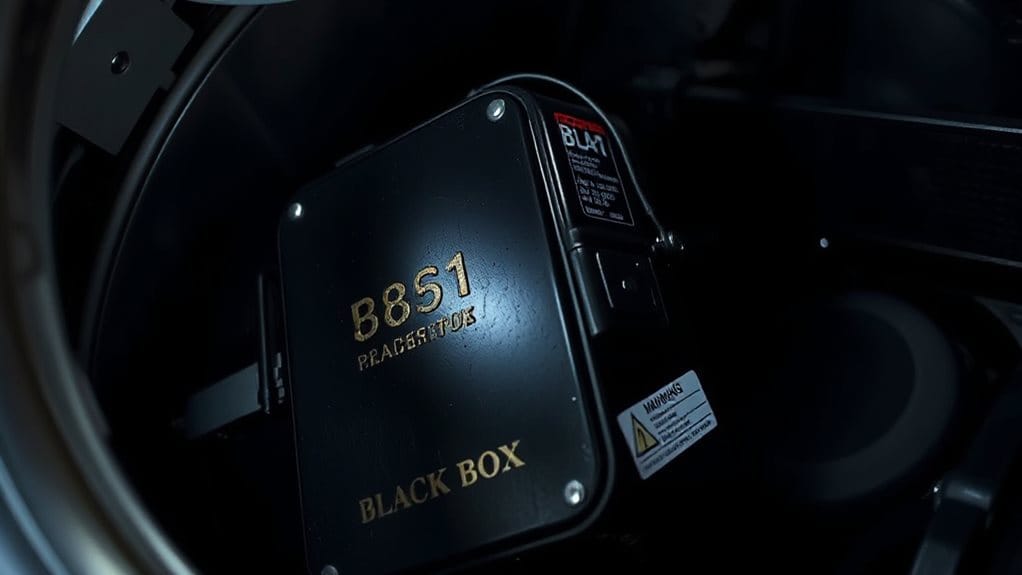
Black boxes on airplanes, which include the Cockpit Voice Recorder (CVR) and the Flight Data Recorder (FDR), are designed to capture a wide range of flight information.
The flight data recorder logs flight parameters like speed, altitude, and engine performance.
While the CVR records cockpit sounds, pilot conversations, and alarms, providing crucial understanding into the aircraft’s operation during flight.
In addition to recording these signals, black boxes are built to store data and withstand severe conditions to help investigators analyze what happened flight parameters.
How Do Flight Data Recorders Capture Aircraft Data?
Flight data recorders gather information through multiple sensors connected to the aircraft’s systems, capturing a wide range of parameters such as speed, altitude, and control surface positions. This data is continuously recorded in a circular buffer, allowing the recorder to overwrite the oldest information and keep the most recent data available. Modern FDRs can store thousands of parameters over many hours, providing investigators with a detailed visual of the aircraft’s performance during flight. For safety and context, investigators may also consider related night-vision training activity that can affect how and when observers notice unusual aircraft behavior.
Data Collection Methods
Data collection methods for aircraft black boxes involve sophisticated systems that continuously monitor and record a wide range of operational parameters.
The flight data recorder, as the core recording device, uses solid-state memory to store real-time data. This memory is designed to withstand extreme conditions, ensuring that critical flight information remains safe and accessible after an incident.
Parameters Monitored
Aircraft black boxes, or Flight Data Recorders (FDRs), collect a vast array of operational information during a flight. They monitor and store hundreds to thousands of parameters, including speed, altitude, heading, and system statuses.
Modern data recorders sample these parameters multiple times per second, capturing detailed data from engines, autopilot, hydraulics, and environmental controls for in-depth analysis.
Data Storage Techniques
Modern flight data recorders employ solid-state memory chips to store vast amounts of operational information collected during a flight. These recorders use advanced data storage techniques, encoding and compressing data efficiently.
The flight data recorder continuously samples parameters like speed, altitude, and heading at high frequencies, overwriting the oldest data after reaching capacity. Usually, this covers the last 25 hours.
What Cockpit Sounds and Communications Are Saved?
The cockpit voice recorder (CVR) captures a wide range of sounds that occur within the cockpit during flight. It records cockpit sounds, communications, and voice recordings of pilot and crew conversations, along with alarms, engine noises, and operational sounds. These recordings offer detailed understanding into cockpit activities, including interactions with air traffic control, providing an all-encompassing audio record for investigations. In a similar way to how hotels document room condition through photo and inspection records, aviation investigators can use collected recorder data to clarify what happened and support accurate accountability.
How Are Black Box Recordings Stored and Accessed?
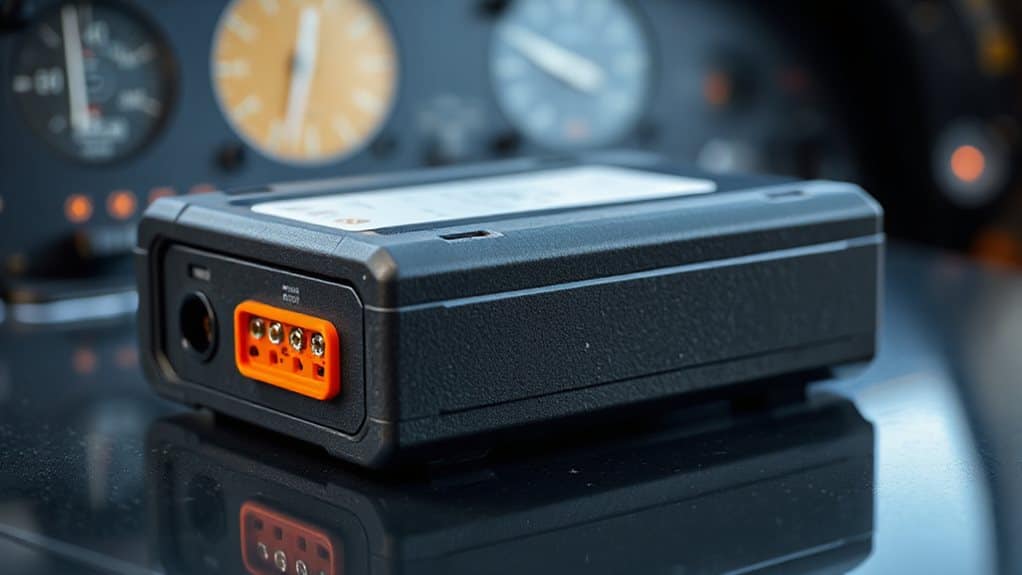
Black box recordings are stored on specialized devices called flight data recorders and cockpit voice recorders, which use solid-state memory chips to securely save vast amounts of flight information. Accessing this data involves investigators retrieving it through underwater transmitters or surface recovery methods. Modern black boxes allow authorized personnel to analyze stored data, helping determine causes of aviation incidents efficiently. DVT risk reduction] Black boxes are different from consumer airplane accessories, such as footrest devices, which are lightweight and portable but do not store flight data.
How Long Do Black Boxes Keep Flight Data and Audio?
Flight data recorders typically store the last 25 hours of flight information, including speed, altitude, and aircraft position.
Cockpit voice recorders generally retain the final two hours of audio, capturing pilot conversations, alarms, and radio communications.
Data retention involves continuous looping, overwriting older recordings, ensuring the most recent flight data and cockpit audio are available for analysis after an incident.
These recordings help investigators evaluate TCAS alerts and other cockpit decisions during the events leading up to an occurrence.
What Modern Technologies Do Black Boxes Use Today?
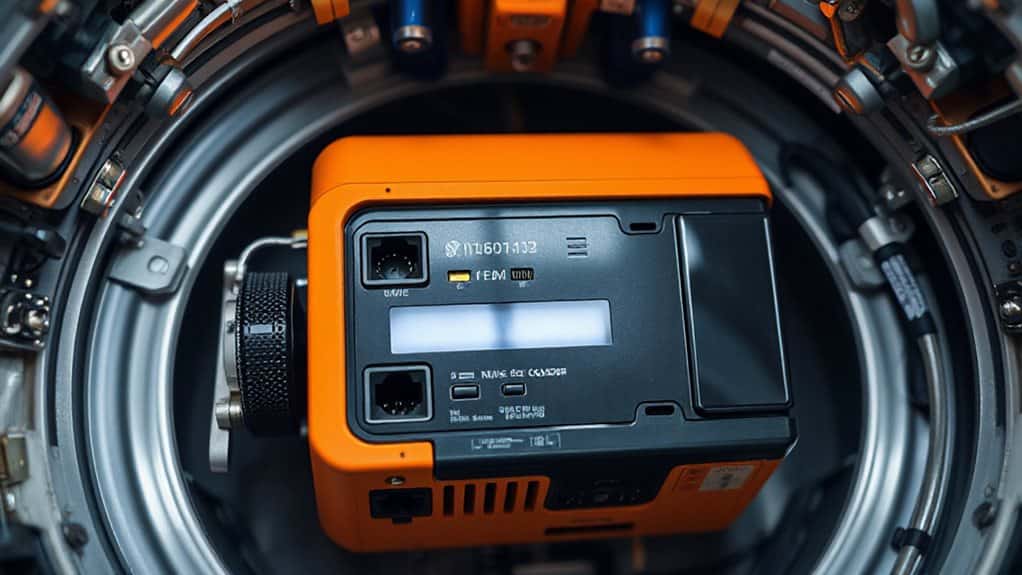
Modern black boxes incorporate advanced technologies to improve data safety and recovery. They use solid-state memory chips capable of storing thousands of flight parameters for up to 25 hours. These flight data recorders feature crash-resistant structures made of titanium or stainless steel. Many include underwater locator beacons that emit signals for underwater recovery, enhancing safety and efficiency. checked baggage can also be packed with precautions to avoid leaks during transit.
How Do Black Boxes Survive Crashes and Facilitate Recovery?
To guarantee they can withstand the extreme conditions of an aircraft crash, black boxes are encased in fire-resistant, impact-resistant shells made from durable materials like titanium or stainless steel.
They include underwater locator beacons that emit acoustic signals for up to 30 days, helping recovery teams locate them underwater.
Bright colors and reflective stripes further aid in quick site recovery.
What Innovations Are Improving Black Box Data Recording?
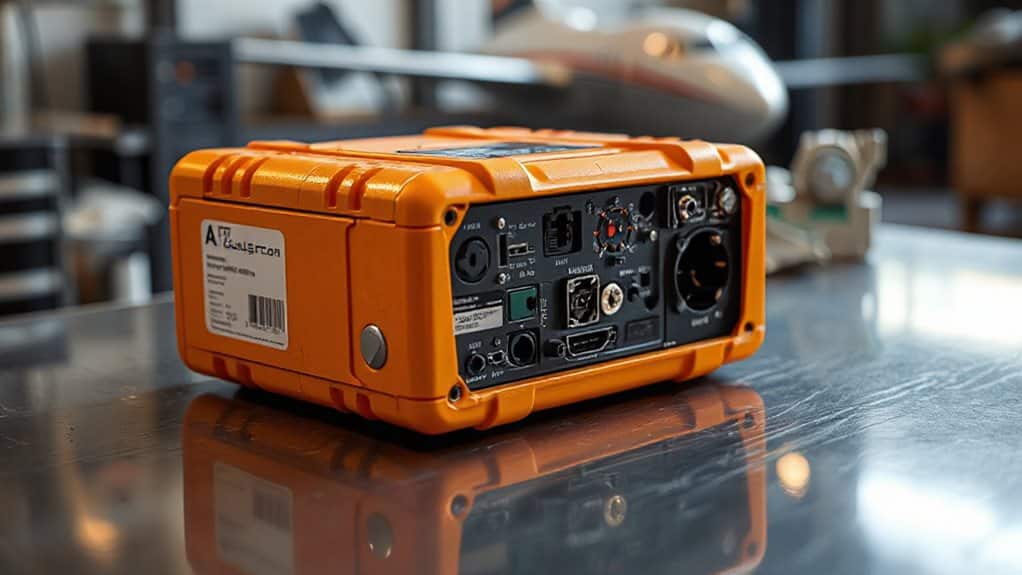
Innovations like real-time data streaming allow black boxes to transmit flight information continuously, reducing the time needed for accident investigations.
Advanced data security measures guarantee that the recorded data remains protected from tampering or unauthorized access.
Together, these advancements improve the speed and reliability of black box data recording, helping investigators respond more effectively to aviation incidents.
Real-Time Data Streaming
Advances in real-time data streaming are revolutionizing how flight information is recorded and analyzed, making air travel safer and more responsive. Modern flight data recorders now employ aircraft data transmission via satellite, enabling continuous data flow.
This technology allows critical flight parameters and cockpit audio to be transmitted instantly, improving accident response and reducing reliance on post-accident retrieval.
Advanced Data Security
Recent developments in data security are considerably strengthening the protection of black box information. New technologies like advanced encryption protocols safeguard flight data during transmission and storage, ensuring confidentiality.
Cybersecurity measures, including AI-driven detection of unauthorized access, enhance data security.
Innovations such as deployable black boxes with communication modules and cloud storage further improve data integrity and facilitate quick recovery after incidents.
And Finally
Black boxes record essential flight data, cockpit sounds, and communications, providing critical information during investigations. They store data securely and are designed to survive crashes, aiding recovery efforts. Modern technology enhances data recording, increasing reliability and duration. Understanding what black boxes capture helps clarify their role in aviation safety. By analyzing this data, authorities can improve aircraft design and prevent future accidents, making air travel safer for everyone.