Planes are inspected regularly based on their usage, regulations, and type. Most aircraft undergo annual inspections, each lasting about a year, with additional checks like 100-hour inspections for commercial or training planes requiring every 100 flight hours. Larger commercial aircraft also schedule more extensive checks, such as C and D (heavy) checks, which can take weeks or even months. Advanced technologies and environmental factors influence these intervals, so understanding these schedules provides a clearer visual of maintenance routines. Keep exploring to uncover more details.
TLDR
- Commercial aircraft typically undergo annual inspections every 12 months.
- 100-hour inspections are required for aircraft used for hire or training.
- Transponder testing occurs every 24 months to ensure proper functioning.
- Regular inspections include checks of the ELT annually and system-specific assessments.
- Heavy maintenance, like D checks, can take up to a year and occur based on flight hours or cycles.
How Often Are Aircraft Inspected?
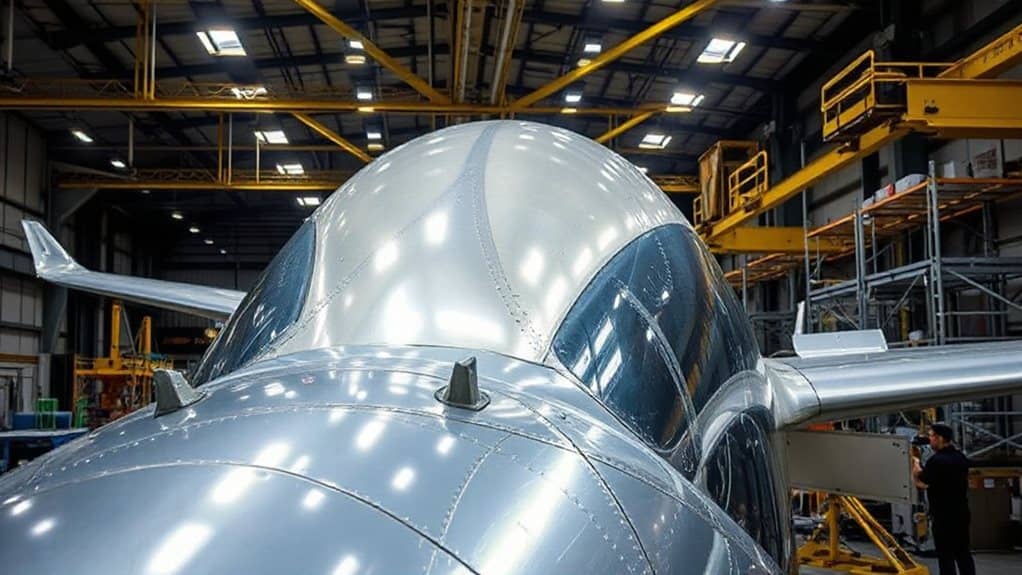
Aircraft are inspected at regular intervals to guarantee safety and compliance with regulatory standards. Your aircraft undergoes routine maintenance checks, including annual inspections every 12 months and 100-hour inspections if used for hire or training. Safety inspections also cover transponder testing every 24 months and ELT checks annually, forming part of an all-encompassing aircraft maintenance program. Maintenance practices also emphasize compliance-focused checks that support all-encompassing safety standards across the aircraft’s operating cycle.
What Are the Main Types of Aircraft Inspections?
Different types of aircraft inspections serve different purposes and are conducted at various intervals to verify safety and compliance. These include annual inspections endorsed by mechanics, 100-hour inspections for commercial use, and progressive inspections for high-use aircraft, often every 25 hours. Additional system-specific checks, like transponder and ELT inspections, confirm adherence to aviation regulations and safety standards. Wet wipes allowed in both carry-on and checked luggage per TSA guidance.
How Frequently Do Commercial Planes Undergo A, B, C, and D Checks?
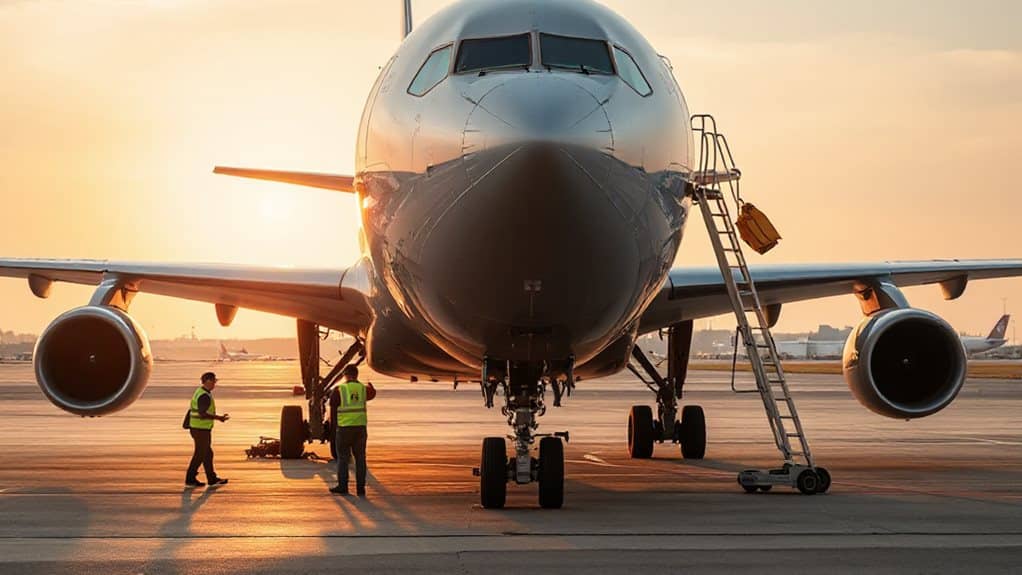
You’ll find that A, B, C, and D checks are scheduled at different intervals based on how often the aircraft is flown and its manufacturer’s guidelines.
Each type of inspection varies in scope, duration, and cost, with A checks happening more frequently and D checks requiring extensive disassembly.
Understanding these timelines helps you grasp how maintenance guarantees safety and reliability in commercial aviation.
Also, the same safety-focused approach that limits exit row recline to keep emergency pathways clear is reflected in how aircraft maintenance is strictly scheduled and governed.
Check Interval Timelines
Maintenance checks are scheduled at different intervals depending on the type and usage of the aircraft, with each one serving a specific purpose in ensuring safety and operational efficiency.
Inspection intervals for A, B, C, and D checks are based on flight hours, aircraft cycles, and regulatory requirements.
These checks form part of all-encompassing maintenance programs that align with scheduled inspections and aircraft cycles.
Inspection Scope Variations
The frequency of A, B, C, and D checks for commercial airplanes varies based on operational factors, manufacturer guidelines, and regulatory standards. These inspections define the scope of maintenance tasks, covering aircraft components during periodic inspections.
The inspection scope adapts to aircraft usage and regulatory requirements, ensuring thorough checks of critical systems and components during each maintenance check, from simple A checks to extensive D overhauls.
Maintenance Duration and Cost
Commercial airplanes undergo maintenance checks at varying intervals, with each type designed to guarantee safety and operational efficiency.
A checks take about 10 hours.
B checks last 1-3 days.
C checks span 1-4 weeks.
D checks may last up to a year.
These scheduled inspections impact maintenance costs, as heavy maintenance involves extensive inspection duration and high resource demands, especially during D checks.
What Does Heavy Maintenance (D Checks) Involve and How Long Does It Take?
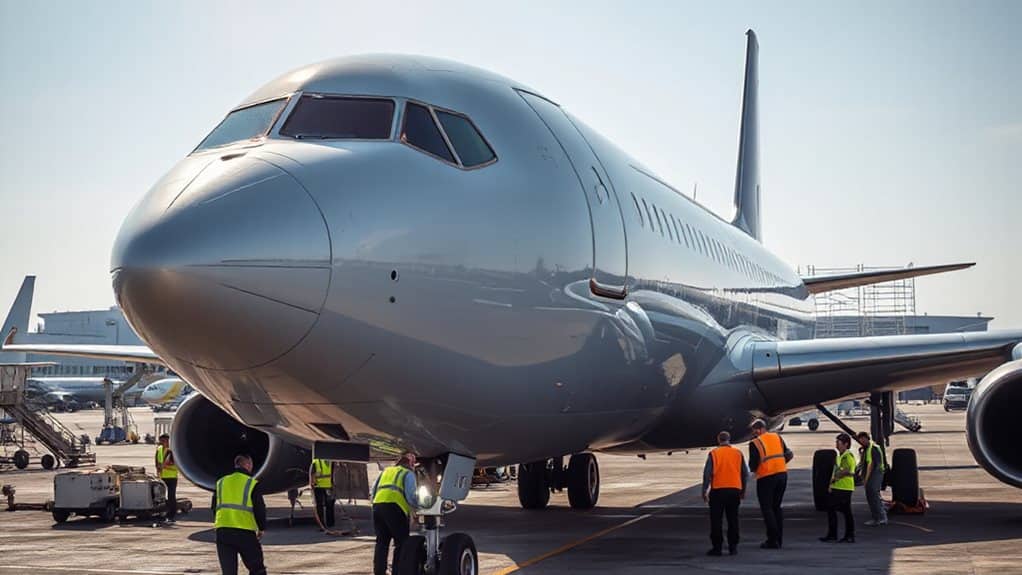
Heavy maintenance, or D checks, involve completely disassembling and inspecting an aircraft’s major components. This process often takes up to a year to complete.
The process includes detailed assessments of the fuselage, wings, engines, and systems, with parts replaced or repaired as needed. It requires around 50,000 man-hours of work.
Due to their complexity and cost, these checks are performed at specialized facilities. They involve careful planning and significant resource allocation.
D checks also benefit from specialized facilities where technicians can safely manage the aircraft’s full disassembly and detailed inspections.
Disassembly and Inspection Process
Disassembly and inspection form the core of heavy maintenance, or D checks, where most of the aircraft’s systems and structures are taken apart for thorough examination.
You’ll see components disassembled, structural elements tested for corrosion and stress fractures, and parts replaced or repaired as needed.
This overhaul guarantees everything, from engines to avionics, remains safe and dependable.
Duration and Cost Factors
D checks are among the most extensive and time-consuming maintenance tasks an aircraft undergoes. They involve disassembly, inspections, and overhauls, taking up to a year and costing several million dollars.
These heavy maintenance checks considerably impact the aircraft lifecycle, with inspection duration and costs increasing as aircraft age, emphasizing the importance of scheduled maintenance checks based on inspection frequency.
What Regulations Govern Aircraft Inspection Schedules?
Aircraft inspection schedules are primarily governed by regulations set by aviation authorities such as the FAA in the U.S., EASA in Europe, and TCCA in Canada. These aircraft regulations establish strict standards for maintenance checks, including annual inspections, 100-hour checks, and major overhauls like C and D checks.
Regulatory standards guarantee critical systems meet safety and operational requirements.
How Do Industry Standards Influence Inspection Timing?
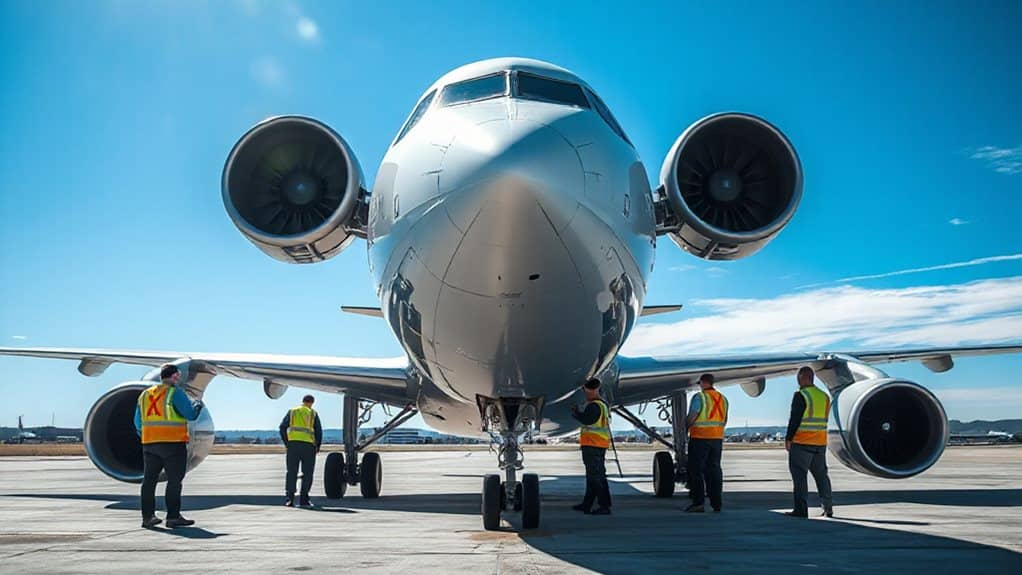
Industry standards play a significant role in shaping the timing of aircraft inspections, often extending beyond the minimum requirements set by regulatory bodies. These industry guidelines influence inspection intervals through safety standards and maintenance planning. predictive maintenance They guide scheduled inspections and integrate predictive maintenance. Airlines may adopt more conservative schedules to guarantee safety, leveraging advances in condition monitoring for more flexible inspection timing.
What Technologies Help Optimize Inspection Intervals?
Advancements in technology have reshaped how maintenance teams determine ideal inspection intervals. Predictive maintenance uses sensors and real-time data analytics to monitor aircraft conditions continuously.
Condition monitoring systems help identify when repairs are needed, while machine learning and digital twin technology analyze data and simulate scenarios. These tools optimize inspection timing, reducing unnecessary checks and enhancing safety.
How Do Environmental Factors Affect Aircraft Inspection Frequency?
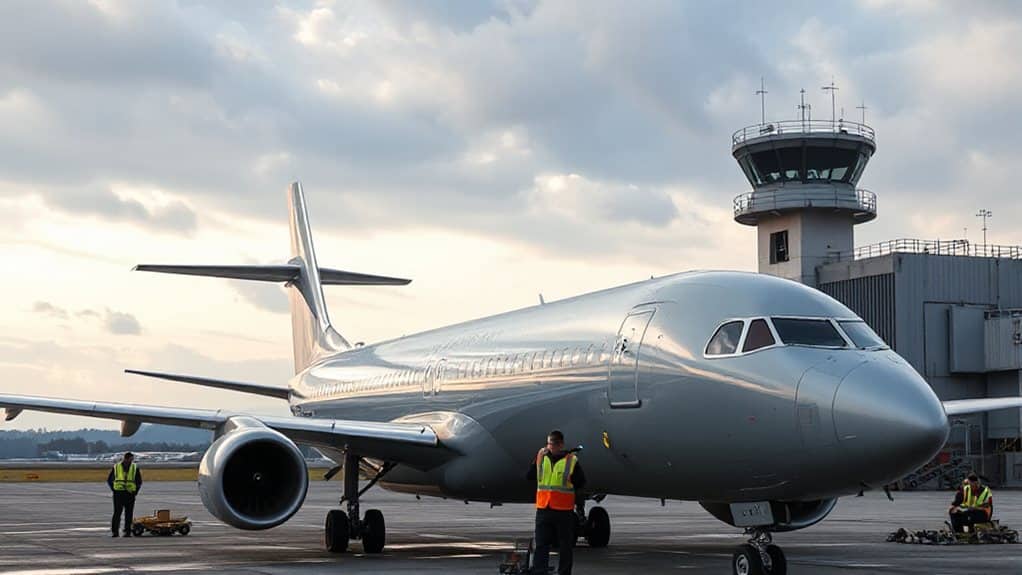
Have you ever wondered how environmental conditions influence the frequency of aircraft inspections? Environmental factors like high humidity, salt, and pollutants accelerate corrosion on external surfaces, requiring adjustments to the inspection schedule. Extreme temperature fluctuations cause material stress, prompting more frequent maintenance checks to maintain airworthiness and prevent structural damage. Severe weather also demands immediate inspections after incidents. Eyes remain a critical defense because changing conditions can increase the need for disciplined situational awareness during flight.
And Finally
Understanding aircraft inspection schedules helps guarantee safety and reliability. Regular checks, from routine inspections to thorough D checks, are mandated by regulations and industry standards. Advances in technology and environmental considerations further optimize inspection timing. By adhering to these procedures, airlines maintain aircraft integrity, minimize potential failures, and guarantee passenger safety. Staying informed about inspection practices allows you to better appreciate the rigorous processes behind safe air travel, emphasizing the importance of strict adherence to scheduled maintenance and inspections.