Weather systems force you to adjust altitudes, headings, and waypoints based on real‑time METARs, radar, satellite, and ADS‑B data. Headwinds can raise fuel burn by up to 15 % and add travel time, while jet streams can shave the same amount off. Thunderstorms, turbulence, and icing require you to skirt hazardous zones, often inserting one or two waypoints with 20‑40 NM buffers. Seasonal cross‑wind limits may shift runway usage, and climate‑driven turbulence is rising, affecting North Atlantic routes. Continue to *learn* how *flexible* routing tools help you stay efficient and safe.
TLDR
- Headwinds and jet streams alter groundspeed, affecting fuel burn and prompting altitude or speed adjustments.
- Thunderstorms, turbulence, and icing zones are avoided using real‑time radar, satellite, and ADS‑B data, often inserting detour waypoints.
- Cross‑wind limits at runways dictate runway selection and may require flight‑level reroutes during seasonal high‑wind periods.
- Integrated weather models (CIWS, CWAM) fuse radar, satellite, and atmospheric data to generate pilot alerts and FAA advisories for proactive route planning.
- Climate‑driven trends, such as rising turbulence and shear, increase the need for dynamic, fuel‑efficient rerouting to maintain NAS capacity.
Understand Real‑Time Weather Data for Flight Planning

When you pull up a flight‑planning tool, it immediately pulls together METARs, TAFs, and SIGMETs from several sources to give you a complete, snapshot of current conditions.
You then see radar and satellite images that map storms, turbulence, and icing along your route.
APIs deliver location‑specific forecasts, while cross‑sectional displays show wind, temperature, and pressure at each altitude, letting you adjust altitude or reroute instantly.
The system includes a data API for real‑time METARs.Airlines prioritize safety by using these updates to anticipate hazardous thunderstorm conditions like lightning, heavy rain, and turbulence that can lead to delays or cancellations.
Assess Headwinds & Jet Streams for Fuel‑Efficient Routes
If you’re planning a fuel‑efficient route, the first thing you need to do is assess how headwinds and jet streams will affect your aircraft’s performance. Headwinds increase drag and lower groundspeed, raising fuel burn and extending time. Jet streams can offer strong tailwinds that enhance groundspeed and range. Choose cruising levels and airspeed that match wind forecasts, balancing throttle and speed to keep fuel use minimal while maintaining progress. In rain, crews use weather radar and instruments to avoid severe precipitation areas that can force speed and route changes.
Weather‑Aware Strategies to Avoid Thunderstorms, Turbulence, and Icing
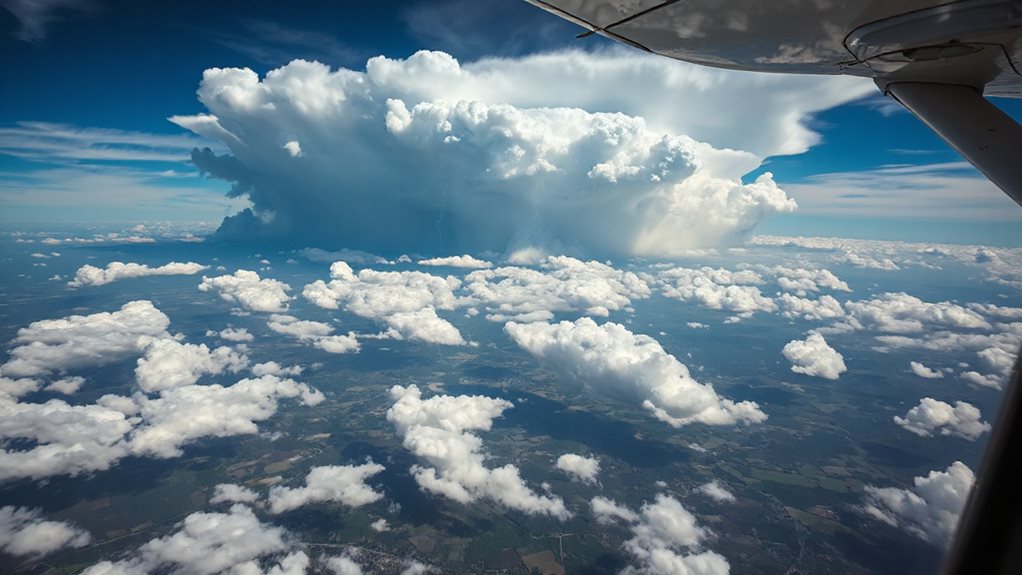
Because severe thunderstorms, turbulence, and icing can jeopardize safety and increase fuel consumption, pilots must employ weather‑aware strategies that integrate real‑time radar, probabilistic forecasts, and regulatory guidance. You’ll keep at least 20 mi from intense radar echoes, use onboard radar and pilot reports to spot convective cells, and apply a 40 NM buffer for deviations. Combine AIRMETs, SIGMETs, and data‑link updates to avoid turbulence and icing contours, relying on machine‑learning thresholds and CWAM to stay clear of hazardous zones. Doppler weather radar helps pilots detect and avoid hazardous thunderstorm cells in real time.
Plan for Seasonal Cross‑Wind Runway Constraints
You’ll start by evaluating runway orientation to see if a single strip can meet the 95 % wind‑coverage target across seasons.
Then you’ll integrate cross‑wind forecasts into your scheduling, noting how dry, wet, or contaminated conditions shift allowable limits for different aircraft.
Finally, you’ll build operational buffers—such as alternate runway assignments or timing adjustments—to keep delays minimal when seasonal cross‑winds exceed the primary runway’s capacity.
FAA rules prioritize evacuation efficiency in exit rows can similarly remind you that safety-driven constraints sometimes override pure comfort or capacity assumptions.
Runway Orientation Assessment
When evaluating runway orientation for seasonal cross‑wind constraints, you start by comparing the prevailing wind directions against the primary runway’s heading to see if the FAA’s 95 percent wind‑coverage threshold is met throughout the year.
You then analyze summer and winter data, flag periods where crosswinds exceed aircraft‑specific limits, and consider adding a secondary runway if coverage falls below 95 percent for critical aircraft.
This guarantees safe, efficient operations.
Cross‑Wind Forecast Integration
Integrating cross‑wind forecasts into seasonal runway planning means you’ll continuously compare predicted cross‑wind components against the runway‑specific thresholds for dry, wet, and contaminated conditions. You’ll track 95 % coverage for design aircraft, adjust for wet and contaminated limits of 20 knots and 10 knots, and flag secondary runway activation when primary tolerances are exceeded.
Heavier planes tolerate higher winds, but smaller aircraft may need seasonal cross‑wind runways to stay within 10.5‑13 knots. This guarantees safety while preserving operational freedom.
Operational Buffer Strategies
Because cross‑wind limits can vary dramatically between seasons, you need a buffer strategy that accounts for the most restrictive winter and summer daytime conditions.
Align runway orientation with prevailing winds, add a cross‑wind runway when primary coverage dips below 95 %, and plan for dry‑runway limits up to 30 knots.
Use partial flaps in gusty periods, increase approach speed, and schedule arrivals to avoid peak cross‑wind windows, preserving capacity and safety.
What Happens When Weather Delays Spread Across the NAS?
When weather forces a delay at one airport, the ripple effect creates cascading operational bottlenecks that quickly spread through the NAS, reshuffling airspace capacity and pushing flights into alternate routes. You’ll see controllers reallocate slots and adjust flow‑control measures to keep the system moving, often sacrificing efficiency to maintain safety. procedural adherence becomes critical as crews and controllers manage routine cruise actions and respond consistently to anomalies while their plans change. These reallocations can trigger further delays downstream, turning a single weather event into a network‑wide slowdown.
Cascading Operational Bottlenecks
Weather delays don’t stay isolated; they spill over into the entire National Airspace System, creating a chain reaction of operational bottlenecks. You’ll see a single thunderstorm grounding Boston Logan, then downstream flights scramble for slots, forcing ground‑delay programs that ripple across hubs.
Snowstorms in the Midwest add thousands of cancellations, while high summer traffic magnifies the effect. Controllers and airlines wrestle with reduced arrival rates, padded schedules, and costly bottlenecks, stretching the system’s capacity and inflating passenger‑time losses.
Airspace Capacity Reallocation
The cascading bottlenecks described earlier force the National Airspace System to reshuffle its capacity, and that’s where airspace capacity reallocation comes into play. You’ll see TFM specialists trim capacity by 10 % in high‑volume markets, using forecasts to shift flights to unaffected sectors.
Ground‑delay programs hold departures, while flow‑restriction plans reroute traffic 4‑8 hours ahead, keeping the sky moving despite storms.
Climate‑Driven Turbulence & Wind‑Shear Risks

Because jet streams are sharpening as the planet warms, clear‑air turbulence and wind‑shear events are becoming far more common on major flight corridors.
You’ll notice a 55% rise in severe turbulence over the North Atlantic and a 15% increase in vertical shear since the 1980s.
Projections suggest turbulence could double or triple by 2050, raising injury risk on busy routes.
Public transit in Paris shows how smart planning and alternative options can meaningfully reduce travel risk and stress even when conditions are unfavorable.
Weather‑Aware Airport Infrastructure Risks (Heat, Flood, Lightning)
When extreme heat, flooding, or lightning strike an airport, the entire operation can grind to a halt.
Heat limits take‑off weight and slows ground crews; flooding submerges runways and blocks access roads, costing millions per day; lightning shuts down power grids and damages terminals.
Leverage Emerging Tech for Dynamic, Weather‑Aware Rerouting

If you tap into the latest weather‑aware rerouting tools, you can keep flights moving even as storms develop mid‑flight.
The DWR engine continuously scans active routes, updates data every 12 seconds, and inserts one or two waypoints to skirt turbulence.
It fuses radar, satellite, ADS‑B, CIWS, and CWAM models, providing time‑saving advisories to FAA managers.
Pilots receive alerts for wind shear, convective activity, and runway visibility, enabling proactive, fuel‑efficient detours.
And Finally
By integrating real‑time weather data into flight planning, pilots and dispatchers can choose routes that guarantee fuel burn, avoid hazardous conditions, and respect runway limits. Tracking headwinds, jet streams, and seasonal cross‑winds helps maximize efficiency, while proactive thunderstorm and icing avoidance improves safety. Understanding NAS‑wide delay cascades and climate‑driven turbulence further refines decisions. Leveraging emerging technologies for adaptive rerouting ensures that weather‑aware strategies remain effective, keeping operations both reliable and cost‑effective.