You’ll rush past Tokyo’s charm if you overpack your itinerary—leave room for street food stops and quiet neighborhoods. Don’t rely solely on cash; carry a contactless card or smartphone for transit, as some bank cards fail at metro gates. Stand on the left, let others exit trains first, and keep voices low on crowded trains. Pick accommodations near major hubs like Haneda or Shinjuku to save time. Skip tattoos in onsen and wash thoroughly before entering. Small choices add up to a smoother trip—smart adjustments open deeper experiences.
TLDR
- Avoid overpacking your itinerary to prevent burnout and allow time for spontaneous local experiences.
- Carry a contactless card or mobile wallet, as many transit gates and stores require tap-to-ride payments.
- Stand on the left and let others pass on the right when using escalators in Tokyo’s Kanto region.
- Choose accommodations near major transit hubs to reduce commute stress and simplify sightseeing.
- Follow onsen rules: shower thoroughly before entering, leave towels out, and check tattoo policies.
Overpacking Your Itinerary and Losing the Joy of Exploration
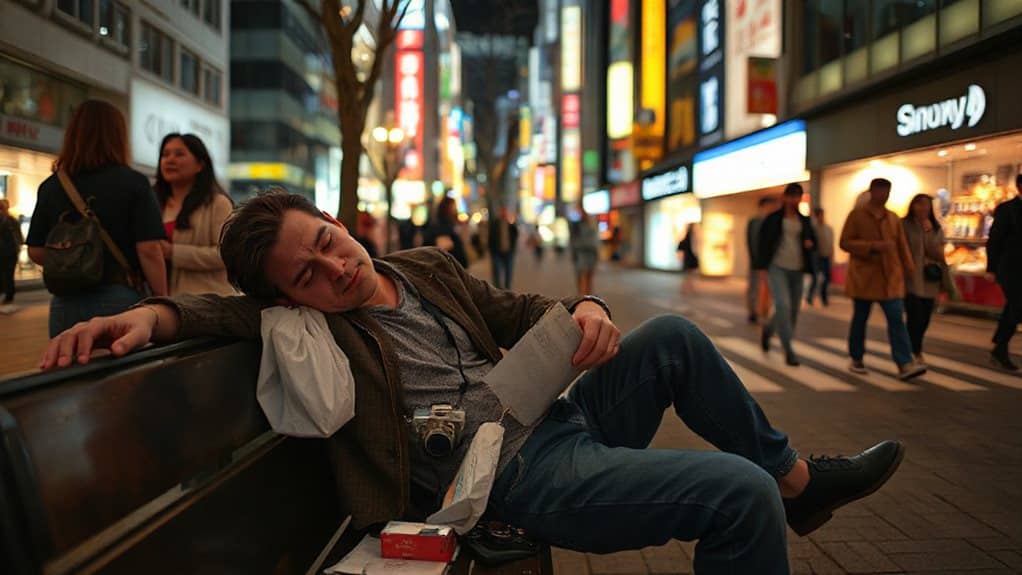
While it’s tempting to pack every moment of your Tokyo trip with plans, overloading your itinerary often undermines the quality of your experience.
You’ll rush through sights, waste time commuting between scattered locations, and miss spontaneous moments.
Consider saving time for local experiences like sampling street food to make room for unexpected discoveries.
Mismanaging Cash and Digital Payments in a Modern Metro
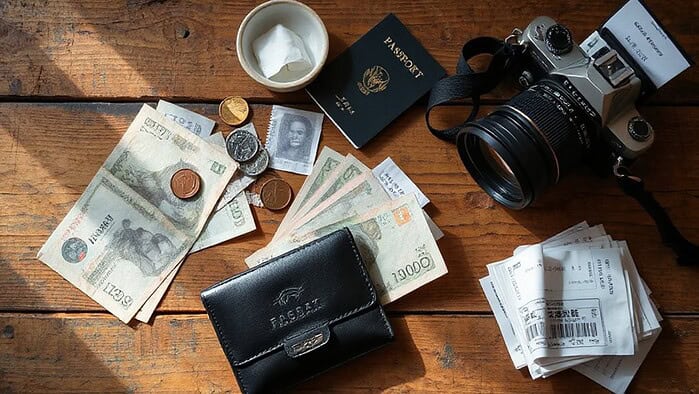
You’ll want to carry a contactless card or smartphone for Tokyo’s metro, since cash isn’t accepted at many newer ticket gates.
Make sure your card supports tap-to-ride—Visa, JCB, and Amex usually work, but bank card often doesn’t on some lines.
If you run into issues, convenience store ATMs let you withdraw cash quickly as a backup.
Regional flights enforce stricter limits and gate agents may require bags to fit in a sizer, so travel light and use packing cubes to save space.
Carry Cards, Not Just Cash
Often, first-time visitors to Tokyo underestimate how quickly cash becomes inconvenient in a city rapidly shifting toward digital payments.
Carry cards, not just cash—credit and mobile wallets like PayPay or Rakuten Pay work seamlessly across transit, shops, and Disneyland.
While coins still rule small rural purchases, urban life favors digital.
Skip the hassle: equip yourself with cards to move freely, securely, and efficiently through Japan’s cashless surge.
Use ATMs at Convenience Stores
Nearly every traveler encounters the need for cash in Tokyo, even amid the city’s digital surge—so using ATMs at convenience stores is a practical must.
Seven Bank ATMs in 7-Elevens are open 24/7, charge no fees from 7 AM to 7 PM, and support English and other languages. Choose standard card settlement, not DCC, to save on conversion fees.
Breaking Unwritten Rules on Escalators and Public Transit
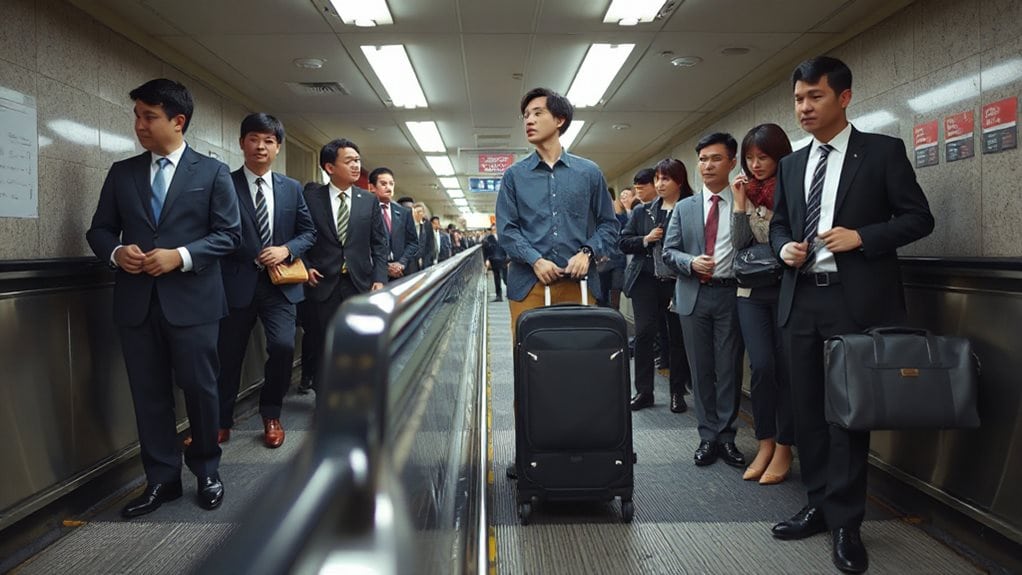
You’ll notice everyone stands on the left and walks on the right when riding escalators in Tokyo, so keep to the left to avoid blocking those in a hurry.
Always let passengers exit before you try to board, especially during rush hour when trains and platforms get crowded.
Keep your voice down and avoid phone calls, since quiet behavior on public transit is expected and helps maintain order.
Be prepared for slightly cooler temperatures near doors and exits, so consider bringing a light jacket or blanket for comfort on colder days.
Stand Left, Walk Right
In Tokyo, you’ll typically stand on the left and let others walk on the right when riding escalators, a long-standing habit that keeps foot traffic flowing smoothly across the city’s busy transit hubs.
This unwritten rule applies in the Kanto region, including Yokohama and Sendai.
If unsure, just follow the person ahead.
Exit Before Boarding
While maneuvering Tokyo’s crowded transit hubs, you’ll want to let passengers exit elevators and escalators before stepping in to board—this simple courtesy keeps foot traffic moving efficiently during peak hours.
Blocking exits causes delays and draws disapproving looks.
Always prioritize exiting passengers, offer a quick 「すみません」 if needed, and follow the person ahead to blend in smoothly and respectfully.
Keep Transit Quiet
Stepping aside for exiting passengers sets the tone for respectful transit behavior, and just as important is maintaining a quiet, orderly presence once you’re in motion.
Avoid loud conversations or phone calls—keep your voice low. Silence shows respect. Many locals use no sound at all.
Following this unspoken rule helps you blend in, move freely, and honor shared space without drawing unwanted attention.
Choosing Inconvenient Accommodations That Drain Your Energy
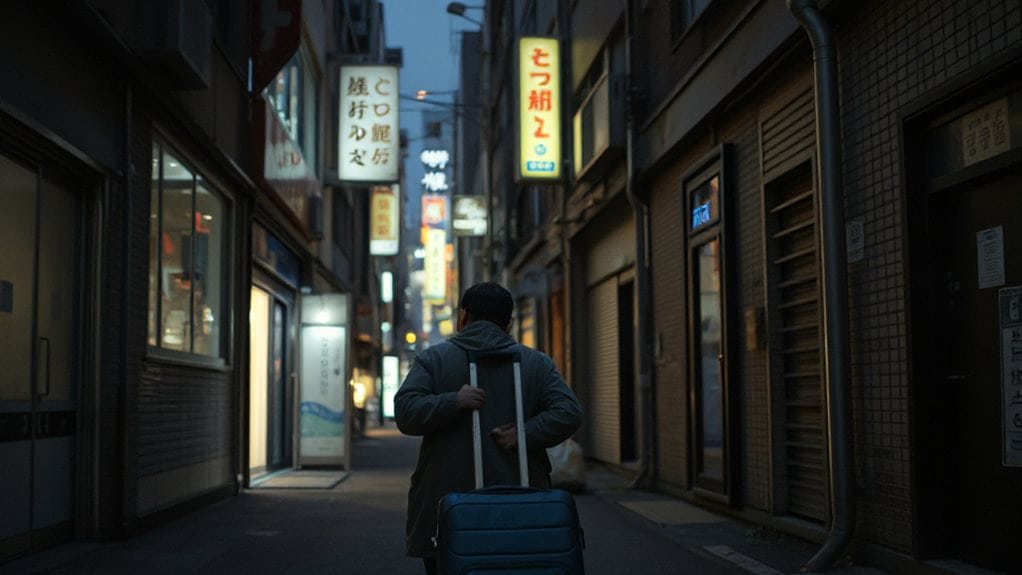
Picking the wrong place to stay in Tokyo can quickly turn your trip from exciting to exhausting.
Small rooms, often fit for just one or two, limit movement and rest. Unit baths are cramped, and narrow streets add stress.
Overcrowded districts drain energy, while poor amenities like smoking floors or lack of luggage space hinder comfort. Choose wisely to stay refreshed and free. The island also offers quieter options like Batu Ferringhi Beach for relaxed afternoons and beachside markets.
Overlooking Key Airport and Long-Distance Travel Logistics
Choosing where to stay in Tokyo sets the tone for your trip, but how you enter the city shapes your first impression just as much.
Fly into Haneda for faster access, shorter transfers, and easier wayfinding—ideal if you value time and simplicity.
Pick Narita for budget flights, but expect longer commutes and higher transport costs.
Plan transfers ahead, especially during rush hours.
Also consider staying near major transport hubs like Bukit Bintang to simplify sightseeing and connections.
Committing Cultural Blunders at Onsen and Tourist Hotspots
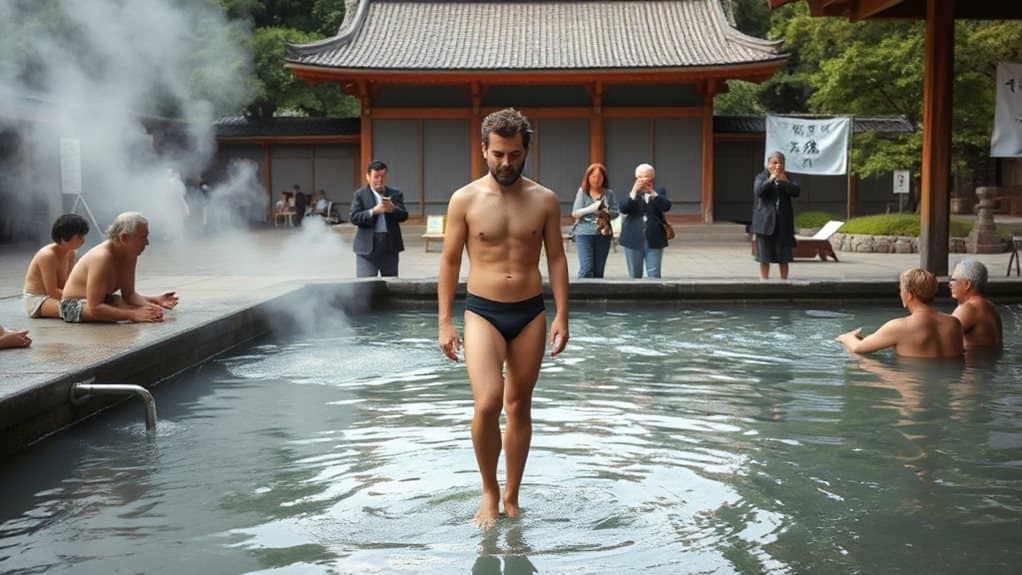
While enjoying Japan’s traditional onsen can be a highlight of your trip, skipping the unwritten rules might turn relaxation into awkwardness.
Undress fully before entering, wash thoroughly at your shower stool, and never bring towels or soap into the bath.
Keep quiet, dry off before leaving, and respect tattoo policies.
Confirm if mixed bathing is allowed, avoid loud behavior, and leave glass items behind.
Many visitors also enjoy nearby geothermal attractions like Wai-O-Tapu Geothermal for dramatic thermal features and geysers.
Prioritizing Perfection Over Authentic Local Experiences
You’ve likely heard about the importance of respecting local customs at onsen and popular attractions, but another common misstep shapes your experience just as much: focusing only on image-perfect, well-known destinations.
Chasing crowded hotspots like Takeshita-Dori or Dotonbori means missing quieter, authentic neighborhoods. Spread beyond Tokyo’s core—explore lesser-known areas to enjoy real culture, avoid congestion, and support regions benefiting from Japan’s visitor dispersion efforts.
And Finally
You’ll find your way through Tokyo more smoothly by avoiding common missteps. Stick to a flexible schedule, carry both cash and a prepaid IC card, and stand on the correct side of escalators. Choose central lodging to save time and energy. Plan airport transfers early, respect onsen etiquette, and savor real local moments over perfect photos. These practical choices help you experience Tokyo with less stress and more authenticity, making your trip more enjoyable and efficient without unnecessary setbacks or cultural misunderstandings.