Airlines split a flight’s seats into fare buckets—like F or J—each with its own price, availability, and restrictions. Real‑time demand forecasts, competitor price scraping, and passenger‑behavior signals constantly update those bucket prices, shifting seats between classes as willingness‑to‑pay changes. Time‑to‑departure, business versus leisure segmentation, and heuristics such as EMSRb guide how many seats stay protected or are released. Targeted discounts appear when a traveler hesitates, and AI models fine‑tune the fare curve throughout the day. Keep going and you’ll see the full mechanics.
TLDR
- Airlines segment seats into fare buckets (e.g., F, J) that combine price, availability, and restrictions, then allocate seat counts per bucket based on demand forecasts.
- Real‑time AI models ingest bookings, cancellations, weather, and competitor prices to predict willingness‑to‑pay and adjust fares multiple times daily.
- Fare changes are driven by days‑to‑departure, with low‑price buckets appearing ~35 days out and prices surging within two weeks as inventory shifts.
- Passenger segmentation (business vs. leisure) and competitor price scraping inform differentiated pricing and seat‑allocation strategies using EMSRb and Littlewood’s rule.
- Behavioral signals such as fare‑view frequency, pause duration, and payment‑field abandonment trigger targeted discounts or nudges to convert hesitant travelers.
Why Airlines Use Fare Buckets

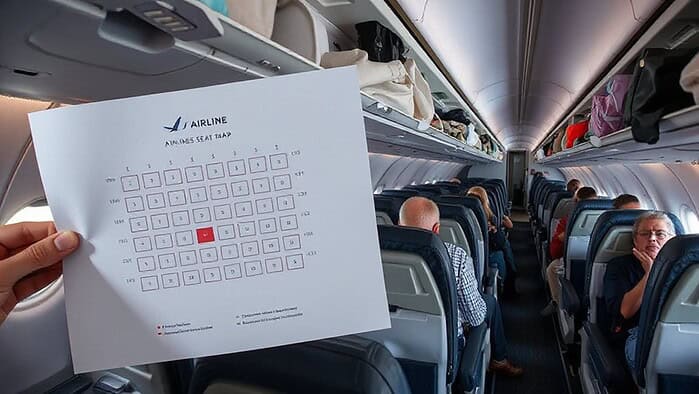
Airlines use fare buckets to segment a flight’s seats into distinct pricing levels, allowing them to match each seat with the willingness‑to‑pay of different travelers. You’ll see buckets labeled with letters like F or J, each reflecting a unique price, availability, and restriction combo. By controlling how many seats sit in each bucket, airlines capture higher revenue, shift inventory as demand changes, and keep the cabin filled while respecting each traveler’s budget freedom. Forecast demand determines the number of seats airlines are willing to sell in each bucket. Historical and live data helps these systems decide when to release or protect inventory within each fare bucket.
Dynamic Airline Pricing: Demand Forecasts to Prices
Fare buckets set the stage, but turning those buckets into actual prices requires constantly updated demand forecasts.
You feed real‑time bookings, cancellations, weather, and competitor searches into AI models that predict willingness to pay for each fare class and route.
The engine then adjusts prices instantly, balancing revenue lift with seat‑load goals, while you retain the freedom to travel on your schedule.
As a result, dynamic pricing can update fares multiple times daily as demand and inventory shift.
Time‑to‑Departure’s Impact on Real‑Time Fares
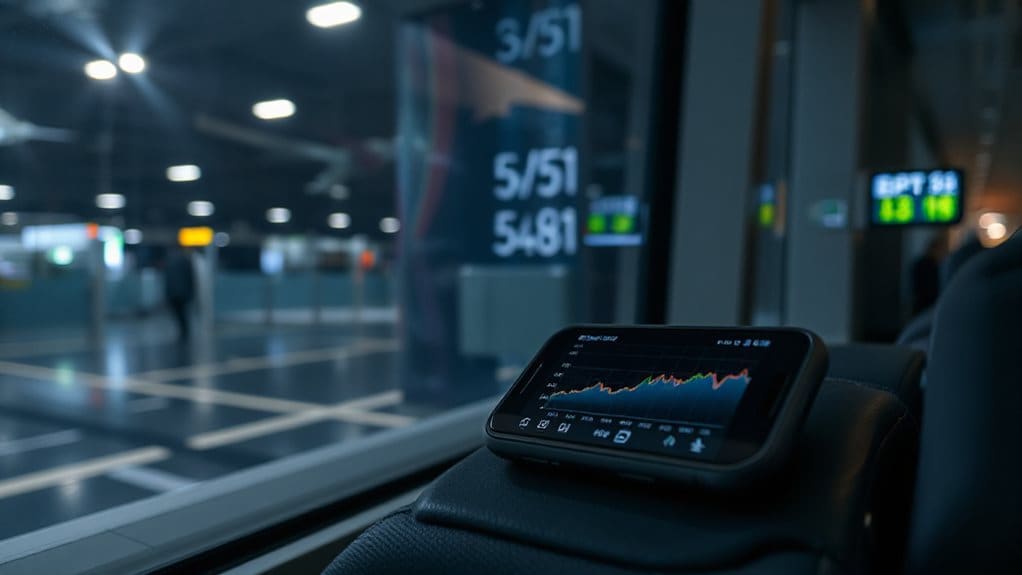
Watch the clock as you book, because the number of days until departure drives the most rapid fare changes. You’ll see lowest fares roughly 35 days out, with a sweet spot between 24 and 59 days. Real-time load factors help algorithms fine-tune fares as seats fill and congestion or demand shifts. Prices surge within two weeks, especially as lower‑price buckets empty. Algorithms adjust three times daily, reacting to cancellations, bookings, and demand spikes, so timing directly shapes your cost.
Segmenting Business vs. Leisure Passengers
Identify the two main passenger groups—business and leisure—by analyzing booking patterns, loyalty activity, and travel purpose, then tailor pricing strategies to each segment’s distinct sensitivities. You’ll see business travelers book close to departure, value comfort and schedule, and accept higher fares, while leisure flyers prioritize price, often book early, and respond to basic‑economy offers. AI models segment by purpose, frequency, and willingness to pay, enabling adaptive, segment‑specific pricing. Airlines also incorporate real-time dynamic pricing signals—like demand and seat availability—so fares can shift differently for business versus leisure travelers as each group’s buying behavior changes.
How Competitor Pricing Triggers Immediate Fare Changes

You’ll notice that airlines run real‑time price scraping tools that constantly pull rivals’ fares, and when a competitor’s price crosses a pre‑set threshold, the system flags it as a trigger.
The algorithm then instantly re‑balances revenue by adjusting your flight’s price up or down, keeping the offer competitive without manual intervention.
This automated response lets airlines react within seconds, ensuring they capture demand while protecting profitability.
If you’re hunting for hidden error fares, those rapid adjustments are exactly what can make sudden price drops disappear just as quickly.
Real‑Time Price Scraping
Typically, airlines and travel agencies run automated scrapers that pull live fare data from competitor sites every few minutes, feeding the results directly into their pricing engines.
You schedule these jobs with Airflow or Cron, scraping routes, seat availability, and prices across Skyscanner, Google Flights, and Kayak.
Cleaned data lands in MySQL or CSV, then triggers instant price adjustments, keeping your margins protected and your offers competitive.
Competitive Fare Thresholds
When a rival airline lowers its fare for a given route, your pricing engine can instantly push your own price up to stay above the competitor’s threshold. You monitor API feeds and shopping data, then apply rule‑based thresholds that trigger upward jumps once inventory levels or departure dates hit set points.
Continuous adjustments use live rival signals, keeping your fare ladder smooth and protecting revenue while preserving free‑choice options for travelers.
Automated Revenue Re‑balancing
Because competitor fares can shift in milliseconds, your pricing engine must react instantly to keep revenue on track. AI scans rival prices, updates bid thresholds, and tweaks percentages across endless fare points.
Lufthansa, United, and PROS use real‑time signals to balance network load, lift yields by 3 %, and capture extra profit per passenger.
Automation eliminates manual lag, ensuring freedom from revenue leakage.
From ATPCO RBDs to Continuous Personalized Pricing

If you look beyond the 26‑letter RBD system, you’ll see how airlines are turning a static, bucket‑based fare structure into a fluid, personalized pricing engine.
Dual RBDs expand buckets to 182 combos, while positional match automates rules and fees.
Real‑time market data then drives continuous price adjustments, letting you receive offers that reflect current demand, competition, and personal travel patterns.
One-way pricing also reflects airlines’ revenue-management incentives to protect higher-value seats on itineraries where return risk is different.
AI Models That Predict Passenger Willingness‑To‑Pay
You’ll see how predictive modeling techniques combine historical booking data, competitor fares, and passenger preferences to estimate each traveler’s willingness‑to‑pay.
The real‑time personalization engine then adjusts prices on the fly, using thousands of variables and transformer‑based forecasts to match supply with demand.
This hybrid approach lets airlines fine‑tune fares for individual customers while keeping overall revenue goals in view.
Predictive Modeling Techniques
Most airlines now rely on predictive modeling to estimate each passenger’s willingness‑to‑pay (WTP) and set fares accordingly.
You’ll see Gradient Boosted Trees dominate, enhancing RMSE 83.17 and the highest R² among regressions.
Random Forests, MLPs, linear regressions and polynomial SVMs also contribute.
Inputs span booking patterns, competitor prices, weather, seat availability, and RBD segments.
Ensemble GBT models balance load, spill and overbooking, increasing revenue while targeting a 5 % margin.
Real‑Time Personalization Engine
Predictive models have given airlines a solid estimate of aggregate willingness‑to‑pay, but the next step is to tailor those estimates to each individual traveler in real time.
Your browsing history, location, loyalty status, and purchase patterns feed a “super analyst” AI that simulates prices instantly.
It adjusts fares up or down, aiming for freedom‑focused pricing while respecting privacy concerns and market growth.
EMSRb Heuristic: Setting Prices at Scale

When airlines need to allocate seats across multiple fare classes, they often rely on the EMSRb heuristic, which stands for Expected Marginal Seat Revenue version b.
You’ll see it pool lower‑class demand, then apply Littlewood’s rule to set a single protection level.
This reduces over‑protection, captures high‑value travelers, and stays within half a percent of *best* revenue, *providing* flexible, efficient pricing at scale.
Using Abandoned‑Booking Signals for Targeted Discounts
If you can spot a traveler’s hesitation before they hit “confirm,” you can turn a likely loss into a sale by offering a targeted discount.
AI monitors fare‑view frequency, pause duration, and payment‑field abandonment to flag price‑sensitive or frustrated users.
When signals appear, the system suggests a fare lock, a flexible date option, or an instant discount, nudging the traveler toward completion while preserving the freedom to choose.
Key Takeaways for Implementing Dynamic Airline Pricing

Spotting a traveler’s hesitation lets you move from targeted discounts to a broader adaptive‑pricing strategy, where the same cues feed into real‑time fare adjustments across the network.
Define competitors per route, assess premium capacity, and track KPIs.
Start with responsive availability, then continuous and situational pricing.
Use rule‑based adjustments, NDC, and DPE vendors.
Align RM, IT, and marketing, test parallel to legacy, and monitor revenue, load factor, and ancillary uplift.
And Finally
Understanding airline ticket pricing means recognizing that airlines blend data, algorithms, and market signals to set fares. You’ve seen how fare buckets, demand forecasts, and time‑to‑departure shape prices, while segmenting business and leisure travelers refines offers. Competitor moves and abandoned‑booking cues trigger rapid adjustments, and AI models gauge willingness‑to‑pay. The EMSRb heuristic scales this process, ensuring consistent pricing across routes. Apply these interpretations to build a adaptable system that balances revenue goals with passenger behavior.