
Pack a universal adapter, reusable bottle, noise‑canceling headphones, travel pillow, eye mask, earplugs, and a packable jacket with a spare outfit; use cubes cubes and a fold‑up tote for organization. Verify your nationality’s visa or transit‑pass needs, passport validity, and onward‑ticket proof via official sources like IATA. Choose a lounge with day suites, Wi‑Fi, and reasonable pricing, or a shower pod and nap pod if you need rest. Keep hydrated, eat light, stretch often, and align bright‑light exposure, meals, and work with the destination’s schedule to reduce jet lag. Continue for deeper details.
TLDR
- Pack smart: universal adapter, noise‑canceling headphones, travel pillow, eye mask, compression socks, and a spare outfit in organized cubes.
- Verify visa, transit‑pass, and passport requirements for the layover country using official sources like IATA.
- Choose a lounge with day suites, Wi‑Fi, and shower facilities; compare day‑pass prices and credit‑card access options.
- Stay hydrated, eat light, and use bright‑light exposure to align your circadian rhythm with the destination’s time zone.
- Bring TSA‑approved snacks, a reusable bottle, and a small first‑aid kit to save money and stay healthy during long waits.
Pack Smart for a Comfortable Long Layover
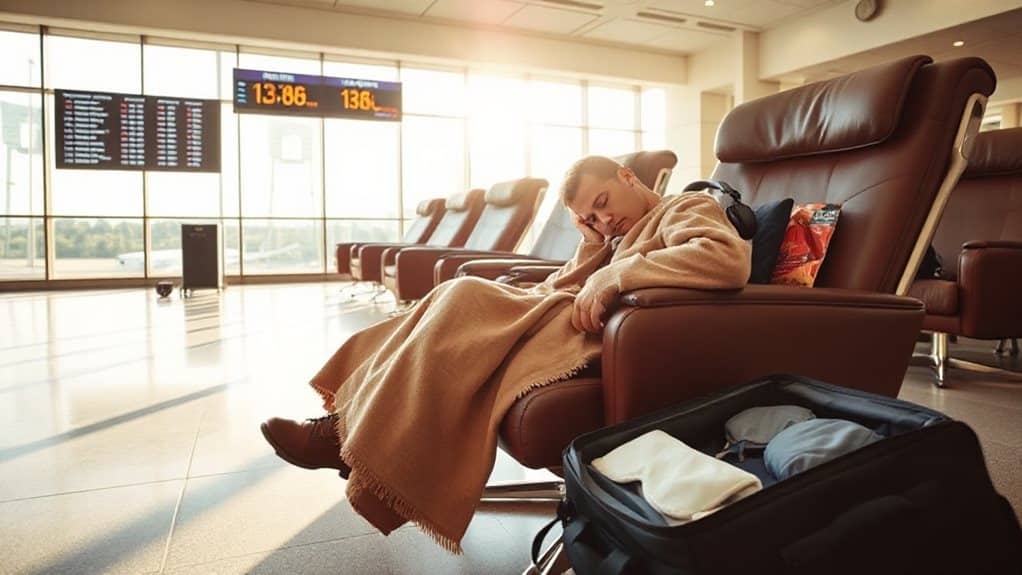
How can you turn a long layover into a comfortable mini‑stay? Pack a universal adapter, reusable bottle, and noise‑canceling headphones to stay powered and rested. Include a travel pillow, eye mask, and earplugs for sleep. Layer with a packable jacket, pashmina, and compression socks, plus a spare outfit. Bring travel‑size toiletries, hand sanitizer, and a small first‑aid kit. Use packing cubes, a fold‑up tote, and snacks for organization and convenience. Invest in high‑quality essential clothing such as a durable raincoat to stay comfortable in any airport climate. Consider carrying a compact inflatable footrest to reduce leg fatigue and improve circulation during long waits.
Check Visa and Transit‑Pass Requirements Before You Land
Before you board, verify whether your nationality or a visa or transit‑pass for the layover country, because many nations only allow airside transfers without immigration clearance.
Check the eligibility criteria for any transit‑pass or airport‑transit visa, especially if your layover exceeds the typical visa‑free window or involves changing terminals.
Finally, confirm any entry restrictions such as passport validity, required onward‑ticket proof, or additional documentation, so you avoid surprises at the gate.
When packing, remember that disposable cameras with undeveloped film can be damaged by airport X‑ray machines, so carry them in your hand luggage and request a hand inspection at security.
Verify Visa Requirements
Where are you headed next? Before you land, confirm your visa status. Check your passport’s six‑month validity, blank pages, and machine‑readable zone. Use official immigration sites or the IATA Travel Centre to see if your nationality needs a transit visa, a C‑1 for the U.S., or qualifies for visa‑free entry. Gather itinerary, destination visa proof, and any required photos, then apply early—no airport issuance for transit visas.
Check Transit‑Pass Eligibility
Can you confirm whether your itinerary qualifies for an airport transit‑pass before you board? Check the country list, because Indian, U.S., and many European nationals may be exempt, but others need a visa. Verify passport validity, blank pages, and required photos. Note timing windows: Spain allows 180‑day applications, Japan up to nine months. Ensure onward‑travel proof to avoid immigration triggers.
Confirm Entry Restrictions
How do you know if you’ll need a visa or transit‑pass before you touch down? Check the layover country’s immigration site for nationality‑specific charts, and verify any ESTA, DS‑160, or airline airside policies. Note if your stop exceeds eight or 24 hours, involves terminal changes, luggage recheck, or overnight stays—these often trigger visa requirements. Gather passport, onward‑ticket, and any needed forms beforehand.
Choose the Best Lounge for a Long Layover: Comfort, Wi‑Fi, and Price
What should you prioritize when selecting a lounge for a long layover? Look for comfort features like day suites, private rooms, or spa treatments, then check Wi‑Fi availability and work booths for productivity. Compare pricing: day passes range $25‑$75, credit‑card access can be free, and sleep pods cost $30‑$55 per hour. Choose a network that fits your budget and schedule, such as Capital One’s spacious lounges or Chase Sapphire’s high‑rated locations. Also consider lounges with reliable Wi‑Fi availability since dependable internet is essential for extended stays and remote work.
Refresh on a Budget: Showers, Naps, and Affordable Meals

You can find shower facilities right next to many gates, often for $15‑$45, and they usually include towels, toiletries, and luggage storage.
Quiet lounges nearby let you catch a nap in private rooms or nap pods, with rates ranging from free with a Priority Pass to $70‑$85 for a two‑hour stay.
For meals, look for affordable eateries or grab‑and‑go counters inside the terminal that offer fresh salads, sandwiches, and hot dishes for under $10.
Consider taking a short excursion to nearby attractions like hot springs for a relaxing soak if your layover is long enough.
Shower Facilities Near Gates
Ever wondered where you can freshen up without splurging on a lounge? At Sydney Airport, showers sit near check‑in counters A and K, plus airside at Gates 31, 51, and a male‑only spot at Gate 24. San Francisco’s Freshen Up! offers $15 showers pre‑security in the International Terminal, with a $30 deluxe option. Abu Dhabi provides free public showers at Gates 32 and 37, and many business‑class lounges have paid shower access. Use the Priority Pass app to locate nearby facilities and verify hours.
Quiet Lounges For Naps
Looking for a quiet spot to catch some shut without breaking the bank? In Singapore Changi, Incheon, Philadelphia, Dallas/Fort Worth, and San Francisco you’ll find free snooze lounges with reclining chairs and low‑traffic zones. If you need guaranteed privacy, paid pods at LAX, DFW, and DTW start at $10‑$35 per hour, offering beds, Wi‑Fi, and basic amenities. Search airport maps for “quiet room” or “nap zone” and head to terminal ends for the best free options.
Budget-Friendly Meal Options
When you’re stuck between flights, grabbing a satisfying meal without blowing your budget is easier than you might think, especially if you investigate the pre‑security dining area where local vendors often beat the price of multinational chains. Look for hawker stalls at Changi, Incheon or Madrid for chicken laksa or pork satay, and use Google Maps to spot quick‑service sushi, sandwiches, or salads that fit a 30‑minute layover. Pack TSA‑approved snacks like RXBARS, hummus, fruit, and trail mix to stay flexible and avoid pricey chains.
Explore Nearby Attractions Without Leaving the Airport Zone
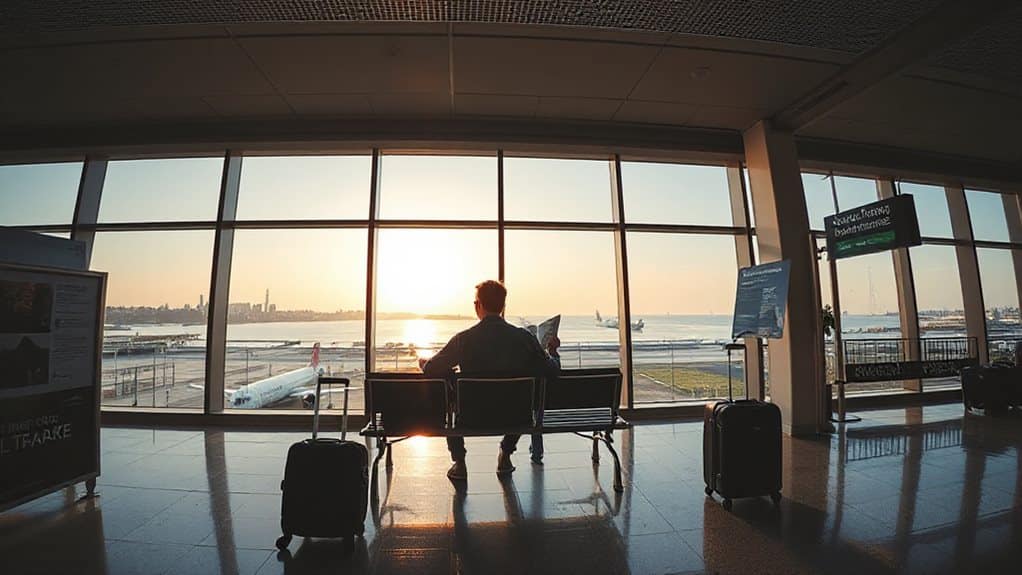
What can you uncover without stepping outside the airport’s secure perimeter? You can wander concourses to see permanent installations, rotating exhibits, and murals visible from the train.
Check the blue horse sculpture outside, then head to the open‑air plaza for free events, live music, and seasonal ice skating.
Sample Colorado craft beer at Boulder Beer Tap House or New Belgium Hub, and enjoy panoramic mountain views from Gates C23 and C24. Tokyo’s morning trains can reach 139% capacity, so plan connections outside peak commute times to avoid crowds.
Stay Safe and Healthy During a Long International Layover
How can you keep yourself safe and healthy while traversing a long international layover? Empty pockets before security, wear minimal metal, and choose easy‑to‑remove shoes with socks. Keep luggage in sight, avoid high‑traffic sleeping spots, and never let strangers watch your bags. Stay hydrated, eat light, stretch often, and use quiet lounges or yoga rooms for rest. Check gate screens and apps regularly, and follow staff instructions. Modern aircraft safety systems like TCAS continuously monitor nearby traffic to reduce collision risk.
Beat Jet Lag and Stay Productive While You Wait
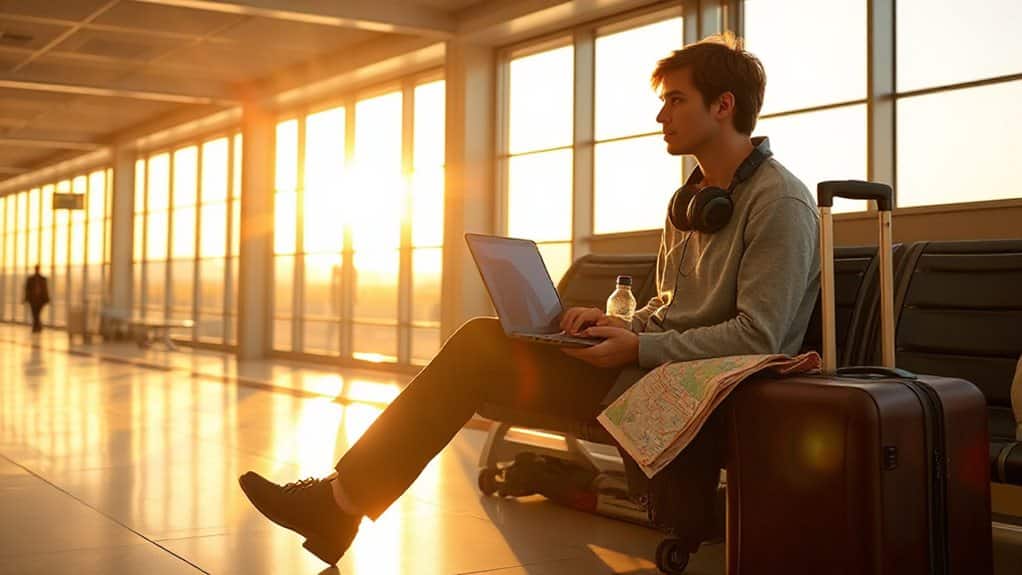
After you’ve secured your belongings and stayed hydrated, the next step is to fight jet lag while keeping productive during a long layover.
Adjust your sleep schedule a few days before departure, shifting bedtime and wake time by 30‑60 minutes.
Use melatonin 4‑5 hours before sleep, stay caffeine‑free, sip water, and expose yourself to bright light matching your destination’s morning or afternoon sun.
Work on a laptop or read while you wait, and keep meals aligned with the new time zone.
And Finally
By planning ahead, you’ll turn a long layover into a manageable break rather than a stressful ordeal. Verify visa and transit‑pass rules, pack essentials, and pick a lounge that fits your budget and needs. Use airport facilities for showers, naps, and affordable meals, and consider nearby attractions if time permits. Stay safe, hydrated, and mindful of jet lag, and you’ll keep productive and comfortable until your next flight.