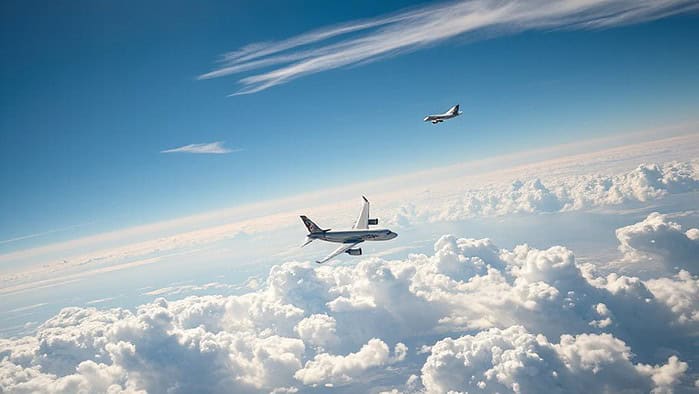
When a plane climbs or descends, cabin pressure changes faster than the air in your middle ear can adjust, creating a pressure difference that pulls or pushes your eardrum. The Eustachian tube, normally closed, briefly opens when you swallow, yawn, chew gum, or perform a Valsalva maneuver, letting air flow between the middle ear and the back of your throat to equalize the pressure. This sudden equalization produces the familiar “pop.” If you keep going, you’ll learn more about the underlying physics and helpful tricks.
TLDR
- Cabin pressure changes faster than the middle ear can equalize, creating a pressure differential that stretches the eardrum.
- The Eustachian tube opens briefly during swallowing, yawning, or Valsalva, allowing air to flow between the middle ear and nasopharynx to balance pressure.
- Boyle’s Law explains that as external pressure drops (ascent) or rises (descent), the trapped air in the middle ear expands or compresses, causing the “popping” sensation.
- Chewing gum, swallowing, or yawning repeatedly helps keep the Eustachian tube open, preventing painful pressure buildup.
- Persistent pain, bleeding, or hearing loss after a flight warrants medical evaluation, as congestion or inflammation can block pressure equalization.
Why Do My Ears Pop on a Plane?
Why do your ears pop on a plane? As the cabin climbs, external pressure drops faster than the middle ear can equalize, pulling the eardrum inward and creating a vacuum. The eardrum stretches, causing a popping or crackling sensation. Swallowing, yawning, or chewing gum opens the eustachian tube, letting air flow in and restoring balance, easing discomfort. This process can be aided by using a decongestant to reduce swelling of the eustachian tube. If you’re traveling with seashells in your luggage, note that airport security doesn’t relate to ear-popping—seashells are generally allowed as long as they’re packed safely.
How Does the Eustachian Tube Balance Pressure?
When you swallow, yawn, or perform a Valsalva maneuver, the tensor and levator veli palatini muscles contract and briefly open the Eustachian tube, letting air flow between your middle ear and the nasopharynx.
This short‑lived opening equalizes the pressure difference, so the eardrum can move freely and sound transmission stays ideal.
The reflex works automatically, but you can help it by chewing gum or swallowing during ascent and descent.
Tube Opening Triggers
If you’ve ever felt that sudden pop in your ears during a flight, it’s your Eustachian tube opening to balance pressure between the middle ear and the cabin air.
The tube stays closed until levator veli palatini or tensor veli palatini muscles contract, or sneezing and Valsalva create positive pressure.
During descent you actively open it roughly every 500‑1000 feet, letting air flow equalize pressures and keep the eardrum functional.
Swallow‑Yawning Reflex
During a flight, each time you swallow or yawn, the tensor veli palatini muscle tenses the soft palate and pulls the lateral wall of the Eustachian tube, creating a brief opening that lets air flow into the middle ear.
Your levator veli palatini and salpingopharyngeus assist, while jaw muscles stretch during yawns.
This tiny puff equalizes pressure, prevents muffled sound, and keeps your ears comfortable.
Pressure Equalization Mechanism
Swallowing or yawning briefly opens the Eustachian tube, and that opening is the key to pressure equalization.
When you descend, cabin pressure rises, creating negative pressure in the middle ear; the tube opens, letting air rush in and restore balance.
During ascent, excess pressure pushes gas out through the same valve.
Even a half‑open tube equalizes pressure for most ears, preventing discomfort.
What Causes a “Vacuum” in the Middle Ear During Flight?
You feel the vacuum when the cabin’s pressure drops faster than your eustachian tube can open, leaving the middle ear sealed while the air inside contracts.
The rapid altitude change creates a pressure lag that pulls the eardrum inward, producing that characteristic fullness.
If the tube stays closed because of congestion or inflammation, the pressure differential intensifies, and the vacuum sensation worsens.
Rapid Altitude Pressure Shift
When a plane climbs, the cabin’s external pressure drops faster than the air inside your middle ear can equalize, creating a pressure differential that feels like a vacuum. The rapid altitude change pulls your eardrum inward, muffling sound and causing fullness.
As the aircraft descends, external pressure rises quickly, pushing the eardrum outward. This swift shift outpaces the ear’s natural balancing mechanisms, leading to discomfort until you equalize.
Eustachian Tube Lag
If the Eustachian tube doesn’t open quickly enough as the aircraft climbs or descends, the middle ear becomes sealed off from the nasopharynx and the air inside can’t equalize with the changing cabin pressure.
The trapped air is absorbed, creating negative pressure that pulls the eardrum inward.
This “vacuum” stretches the membrane, causing fullness, muffled hearing, and pain until the tube finally clears or fluid accumulates.
How Does Boyle’s Law Make Your Ears Pop?
Because the middle ear is a sealed air pocket, any change in the surrounding atmospheric pressure forces the gas inside to expand or compress according to Boyle’s Law, which says that pressure and volume are inversely proportional when temperature stays constant. During ascent, external pressure drops, the middle‑ear air expands, pushing the eardrum outward. During descent, pressure rises, the air compresses, pulling the eardrum inward. The Eustachian tube opens forcefully to equalize, creating the popping sensation. While popping itself is unrelated to airplane mode, staying in compliance with airplane mode helps minimize potential interference with aircraft systems.
Which Conditions Make Equalization Harder and Increase Ear Popping on a Plane?
Even a mild cold can turn a routine flight into a painful ear‑popping experience, because the inflammation and mucus that accompany upper‑respiratory infections often block the eustachian tube. Prescription medications can also complicate ear pressure comfort for some travelers if they affect congestion or nasal inflammation.
How to Quickly Equalize Pressure When Your Ears Feel Stuck?
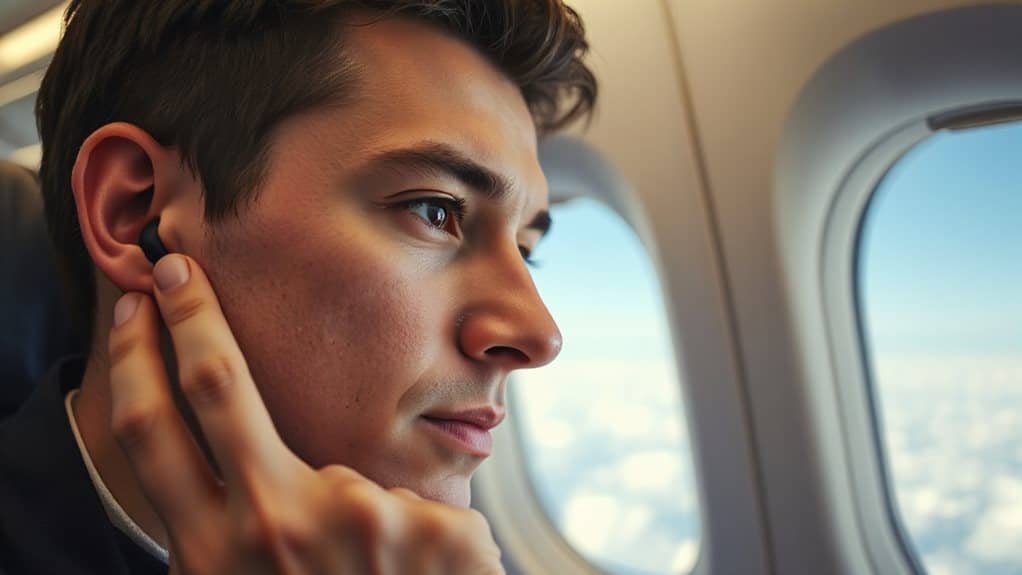
Ever notice how your ears feel stuck mid‑flight and you need instant relief? Swallow, yawn, or chew gum to open the Eustachian tubes, or suck on candy for repeated swallowing.
Try a gentle Valsalva: pinch nostrils, close your mouth, and blow softly for under five seconds.
If that fails, use Toynbee or Frenzel maneuvers, or wear pressure‑regulating earplugs for smoother equalization.
Also, if you happen to be traveling with inhalers on planes, keep them accessible for your trip in case you need them during the flight.
When Should I See a Doctor for Serious Barotrauma?
When you experience intense ear pain, bleeding, or a sudden loss of hearing during or after a flight, you should seek medical attention promptly.
Persistent pressure, pain, or fullness that won’t resolve after landing also warrants a visit.
If symptoms linger days, worsen, or include vertigo, tinnitus, or hearing loss, Bluetooth in airplane mode see an otolaryngologist for audiometry, possible imaging, and treatment.
Expert Answers to the Top Ear‑Popping Questions
Although the sensation of your ears “popping” feels sudden, it’s actually a predictable response to rapid pressure shifts that occur during a flight.
You’ll hear experts explain that the Eustachian tube forces open when pressure differs about 15 mmHg, equalizing air in the middle ear.
Swallowing, yawning, or chewing helps, but congestion can block the tube, making pops harder.
Similar pressure changes happen while scuba diving, hyperbaric therapy, or during mountain climbs.
Declare medical devices to expedite screening if you use ear-related medical treatments before flying.
And Finally
Understanding why your ears pop on a plane helps you manage the discomfort and avoid complications. The Eustachian tube equalizes pressure by letting air move in and out of the middle ear, while Boyle’s law explains the pressure changes that cause the popping sensation. Factors like colds, allergies, or rapid altitude shifts can make equalization harder, but simple techniques—such as swallowing, yawning, or the Valsalva maneuver—usually restore balance quickly. If pain persists or hearing loss occurs, seek medical attention to rule out barotrauma.