You’ll notice a slight drop in oxygen saturation as cabin pressure falls to the equivalent of 8,000 feet, which can make you breathe faster and feel a mild fatigue, especially on long flights. The pressure change also pushes on your eardrum, so you may experience fullness, pain, or muffled hearing until you swallow, yawn, or chew to equalize. Dry air speeds fluid loss, leading to dehydration and sluggishness. Seniors, cardiac patients, and those with lung disease are most vulnerable. Continue for deeper understanding.
TLDR
- Cabin pressure at cruising altitude reduces arterial oxygen saturation to ~90%, causing mild hypoxemia that can lower energy and increase breathing rate.
- The body compensates for lower oxygen by elevating heart rate and pulmonary artery pressure, especially in seniors, cardiac patients, and those with lung disease.
- Pressure changes during ascent and descent create middle‑ear pressure differentials, leading to ear fullness, pain, or muffled hearing if the Eustachian tube cannot equalize.
- Dry cabin air (1–12% humidity) accelerates fluid loss through respiration and skin, contributing to dehydration, fatigue, and discomfort on long flights.
- Mitigation strategies include staying well‑hydrated, moving regularly, practicing controlled breathing, and avoiding excess alcohol or caffeine.
Cabin‑Pressure Effects on Blood Oxygen Levels
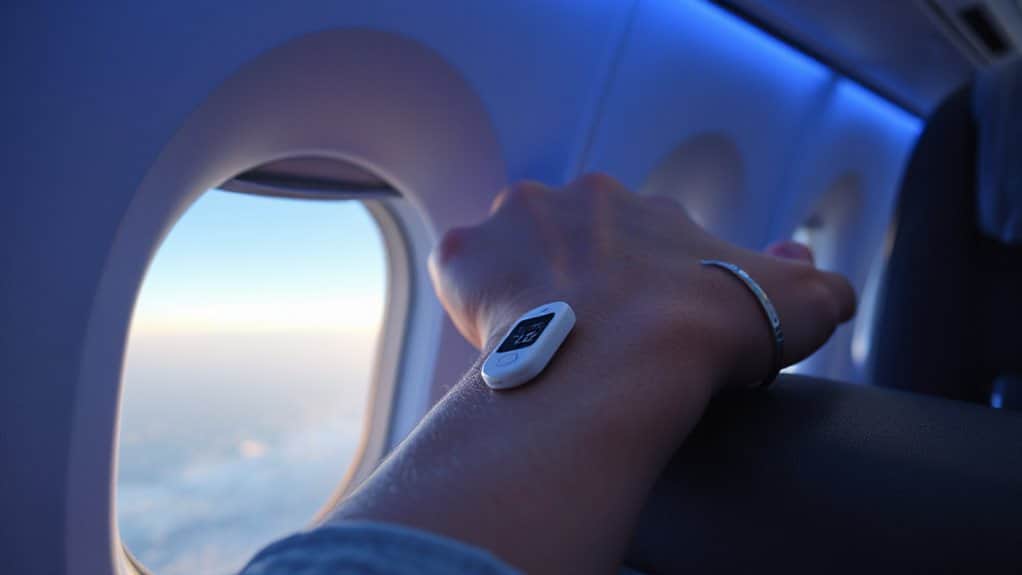
Cabin pressure drops to the equivalent of 2,400–2,500 meters (about 8,000 feet) above sea level, which reduces the partial pressure of oxygen that reaches your lungs.
As a result, arterial oxygen saturation falls to roughly 90 % at 8,000 feet, and healthy passengers lose about 4 % of saturation after several hours.
Older travelers, cardiac patients, and those with lung disease experience larger drops, sometimes below 90 %, especially on longer flights.
This mild hypoxemia triggers faster breathing and higher heart rates as your body compensates. The study found that pulmonary artery pressure rises in response to the reduced oxygen levels. Additionally, pilot testing and continuous oversight help ensure cabin systems and pressurization operate within safe parameters throughout the flight.
Cabin‑Pressure Effects on Middle‑Ear Comfort
The drop in oxygen saturation you feel during a long flight also coincides with pressure shifts that affect your middle ear.
As cabin pressure drops on ascent, positive pressure pushes against your eardrum; on descent, negative pressure pulls it outward.
Swallow, yawn, or chew to open the Eustachian tube and equalize.
Congestion can block this, causing fullness, pain, muffled hearing, or brief dizziness until you land.
Solid medications are typically handled with X-ray screening rather than opened, so if you’re bringing any pills on a flight, keeping them in clearly labeled containers can help you get through screening smoothly without unnecessary delays.
Cabin‑Pressure Effects on Fatigue and Dehydration
You’ll notice that the reduced oxygen level at cruising altitude drops your energy output, making you feel more sluggish.
The dry cabin air speeds up moisture loss from your skin, eyes, and respiratory tract, so you become dehydrated faster than on the ground.
And because you’re seated for long periods, the lack of movement compounds both the dehydration and the fatigue, leaving you more exhausted by the time you land.
Tight economy seating can further limit your usable hip space and make staying still for hours feel even more draining.
Reduced Oxygen Lowers Energy
Reduced oxygen in the cabin makes you feel fatigued because the lower partial pressure of O₂ forces your body to work harder to deliver enough oxygen to tissues. Your heart beats faster and breathing deepens, trying to compensate for the 3‑4 % drop in saturation that appears after three hours and worsens on longer flights.
Seniors and athletes notice this most, as age and exertion amplify the effect.
Dry Air Accelerates Dehydration
Feel the cabin’s dry air pulling moisture from your lungs and skin as you fly.
Humidity often drops to 1‑12 %, far below the 40‑70 % you need. You lose 2‑4 oz of water each hour through breathing and skin, totaling up to 2 L on a ten‑hour trip.
Low pressure speeds respiration, so dehydration accelerates, causing dry throat, chapped lips, and fatigue.
Stay hydrated to maintain comfort and performance.
Immobility Amplifies Fatigue
When the cabin is pressurized to the equivalent of 8,000 feet, the reduced oxygen partial pressure triggers mild hypoxia that already makes you breathe faster and your heart beat harder.
Prolonged sitting then amplifies fatigue: oxygen saturation drops, heart rate climbs, and sleep pressure builds.
Your alertness erodes, performance declines, and cardiovascular strain rises, especially on ultra‑long flights.
Which Passengers Are Most Vulnerable?
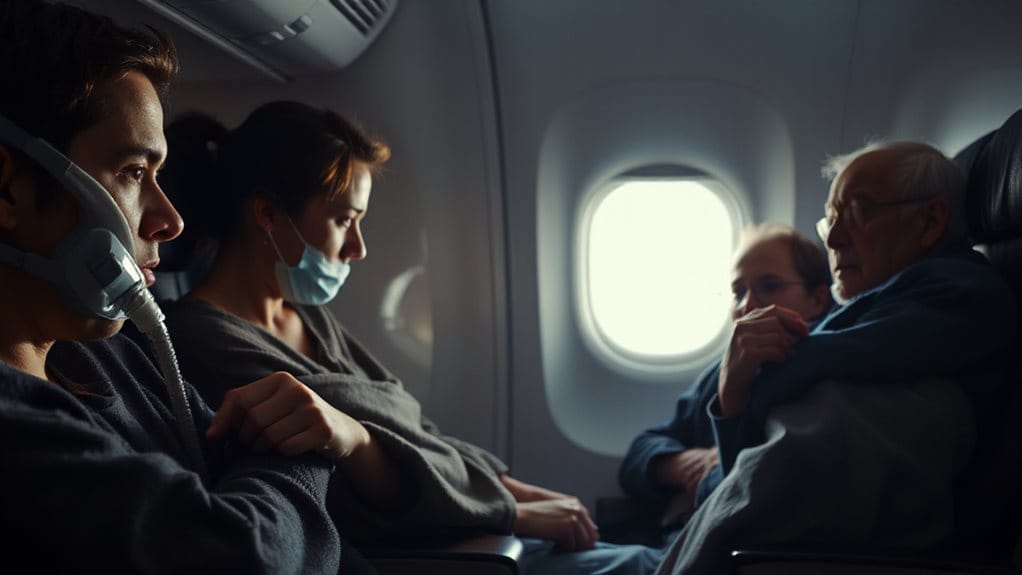
Some travelers are more prone to the effects of cabin pressure than others, and the risk varies with age, health status, and recent medical procedures.
Seniors often experience moderate hypoxia and faster breathing.
Cardiac patients show exaggerated heart responses, especially after recent attacks.
Those with COPD, anemia, or recent abdominal surgery face deeper oxygen drops.
Even active crew members feel fatigue at altitude.
Refueling operations also emphasize maintaining safety protocols to preserve safe conditions during fueling and protect people on the ground.
In‑Flight Signs of Cabin‑Pressure Stress
If the cabin’s pressure drops during ascent or descent, your ears are usually the first place you’ll notice the change.
You may feel ears popping, muffled hearing, pain, or balance issues, and motion sickness can follow.
Oxygen saturation falls, causing shortness of breath, faster breathing, fatigue, and headache.
Heart rate rises, palpitations appear, and dehydration dries lips and mucous membranes, while swelling in feet and ankles may develop.
In‑Flight Strategies to Manage Cabin‑Pressure Symptoms
You’ll feel better if you stay hydrated, move frequently, and use oxygen‑boosting techniques throughout the flight.
Drinking water regularly and limiting alcohol or caffeine helps counter the low humidity and reduced oxygen levels, while walking the aisle or doing simple seated stretches improves circulation and eases gas expansion.
Controlled breathing—deep inhalations followed by slow exhalations—keeps your oxygen intake steady and can relieve ear pressure during ascent and descent.
Because slime is treated like a liquid by TSA and follows the 3-1-1 rule, packing or bringing it requires keeping it in compliant small containers for carry-on.
Stay Hydrated, Move Frequently
Typically, cabin humidity drops well below sea‑level levels, so you’ll lose moisture through your throat, nose, and skin faster than you realize.
Drink water regularly; sips replace lost fluid and keep fatigue at bay.
Stand and stroll the aisle every 30‑45 minutes; movement enhances circulation, eases hypoxia, and prevents gas‑related discomfort.
Simple, frequent actions sustain comfort and freedom throughout the flight.
Use Oxygen‑Boosting Techniques
Staying hydrated and moving regularly already help your circulation, but they don’t directly increase the oxygen your blood carries.
Practice deep, diaphragmatic breathing: inhale through your nose for four counts, hold two, exhale slowly through your mouth for six.
Sit upright, shoulders relaxed, to open lung capacity.
Consider a light, iron‑rich snack like nuts to support hemoglobin.
If you feel light‑headed, pause, breathe fully, and re‑orient your posture.
Easy Tips to Beat Cabin‑Pressure Discomfort
When the cabin pressure drops during ascent, your body experiences reduced oxygen levels and lower humidity, which can cause discomfort in the ears, sinuses, and circulation.
Stay hydrated with water each hour, avoid alcohol and caffeine, and chew gum or swallow to equalize ear pressure.
Stretch, do ankle circles, and wear compression socks to keep circulation smooth.
Use saline spray and sit near the wing for stability.
Also, choosing the right compression level (often 20–30 mmHg for stronger venous return) helps support circulation during longer flights.
And Finally
By staying aware of how cabin pressure impacts oxygen, ear pressure, fatigue, and hydration, you can reduce discomfort and protect your health during flights. Recognize that older adults, pregnant travelers, and those with respiratory or cardiovascular conditions are especially vulnerable. Watch for signs like shortness of breath, ear pain, or excessive tiredness, and apply simple strategies—hydrating regularly, chewing gum, and moving periodically. These practical steps help you manage pressure‑related symptoms and make the trip smoother.