Log into your airline’s portal, pick the appropriate special‑meal option, and submit it at least 24–48 hours before departure—some religious or specialty meals need 72 hours. Double‑check the request on the booking page, store the preference in your frequent‑flyer profile, and reconfirm at the gate and with flight attendants, since airlines and TSA have the final say on what’s loaded. If you keep going, you’ll find more details on deadlines, meal types, and allergy rules.
TLDR
- Log into the airline’s portal or app, select a meal from the specific menu, and confirm the request before the carrier’s deadline.
- Most airlines require 24‑48 hours notice for vegetarian, religious, medical, or low‑calorie meals; some specialty diets need up to 72 hours.
- Store your meal preference in a frequent‑flyer profile, but re‑enter it for each new reservation to ensure it’s recorded.
- Verify the request on the boarding pass and with gate agents or flight attendants at boarding; call the airline 24 hours ahead if discrepancies appear.
- Airlines cannot guarantee a completely allergen‑free environment, so bring any necessary medication and be aware of cross‑contamination risks.
Special Meal Request: Step‑by‑Step Guide
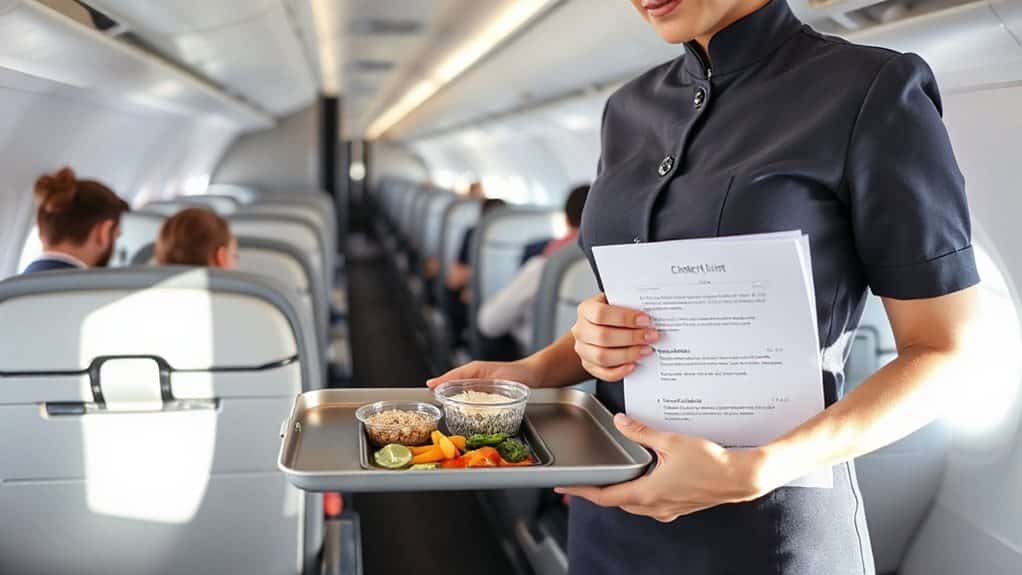
Where do you start when you need a special meal for your flight? Log into the airline’s portal—Delta’s MyTrips, American’s aa.com, Turkish’s website or app, or Virgin’s My Booking—and select a meal from the airline’s specific menu. After you’ve selected your request, double-check whether you need to choose it under special meal options on that same booking page. If you’re a frequent flyer, store your preference in your profile, but remember to re-enter it for each new reservation. Notify gate agents and flight attendants at boarding to confirm the order. Advanced notice required for all special meal requests.
Special Meal Request Deadlines by Airline
When you need a special meal, knowing each airline’s deadline is essential to avoid disappointment. Special meal order timing is the key factor in whether your request can be accommodated, so always check the airline’s cutoff window before you book or travel.
Delta requires requests on international flights and most domestic First‑Class routes, but no specific religious‑meal window.
American asks 30 days to 20 hours before takeoff.
Virgin, ITA, and EVA allow orders up to 24 hours prior, with Kosher needing 48 hours on Virgin and 72 hours on EVA.
Aer Lingus caps at 48 hours for transatlantic flights.
Special Meal Types & Notice Requirements
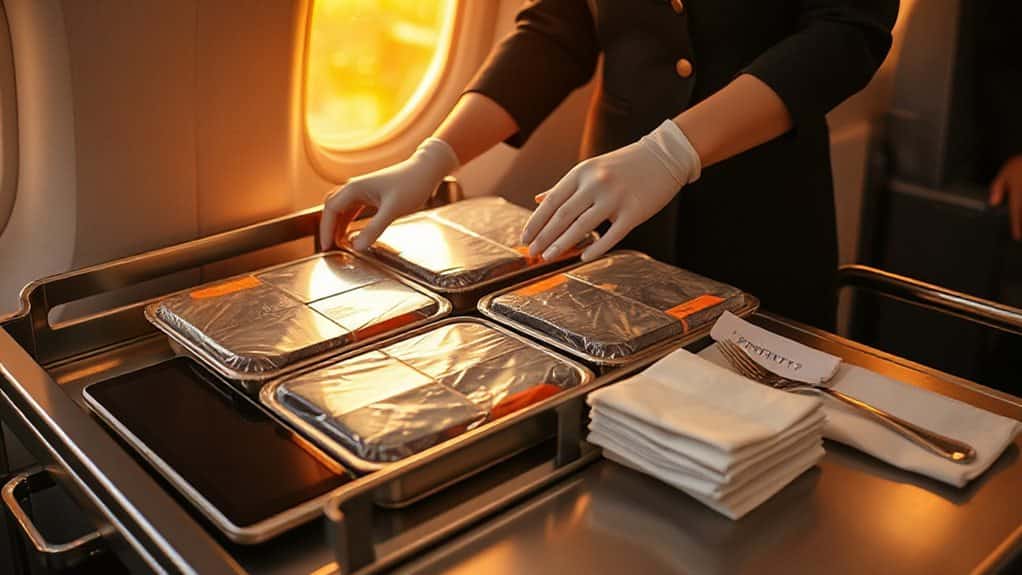
Although airlines categorize meals by dietary preference, religious observance, medical need, or calorie control, each type also comes with a specific notice period you must meet to secure it’s prepared correctly. Vegetarian, religious, medical, low‑calorie, and child options all require 24‑48 hours advance notice, sometimes up to 72 hours for specialty diets. Check your carrier’s deadline, request early, and you’ll travel with the meal you need. If you’re bringing medication for a medical meal requirement, remember that TSA allows medication in carry-on and you may need to declare it during screening.
Special Meal Allergy & Dietary Rules
Because airlines can’t guarantee a completely allergen‑free environment, you’ll need to plan ahead if you have a severe peanut or tree‑nut allergy. Know that cross‑contamination can occur, other passengers may bring allergenic foods, and many cabins don’t offer nut‑free meals. International flights may impose different rules, so you should verify destination regulations before traveling. Request early boarding for seat cleaning, ask for a buffer zone, and bring ready‑to‑eat safe snacks if needed.
Special Meal Confirmation on Boarding Day
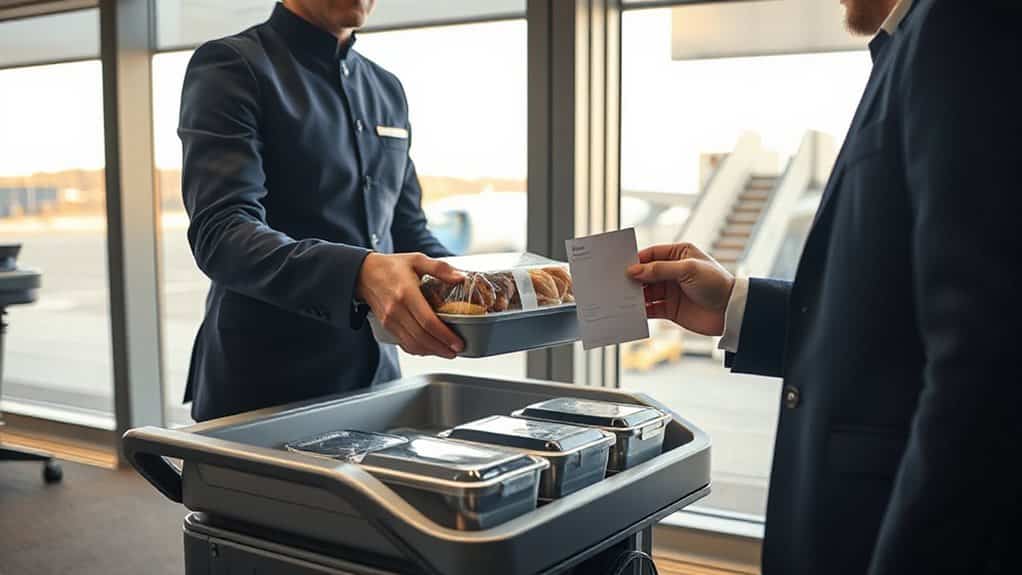
You’ll need to verify your special‑meal request on the day you board, even if you’ve already confirmed it online or by phone. Check the gate agent’s system, remind the flight attendant, and glance at your boarding pass for the service code. Call the airline 24 hours ahead if you spot a discrepancy, and keep a snack handy in case the meal isn’t loaded. Remember that final authority on what’s permitted—and loaded—comes from the TSA or airline staff handling your case at the airport checkpoint.
And Finally
By following airline deadlines, confirming your request, and double‑checking any allergy or dietary notes, you’ll make certain your special meal arrives as expected. Remember to review the specific requirements for each carrier, because policies differ. If you keep records of your request and verify it on boarding day, you reduce the chance of errors. Staying organized and communicating clearly with the airline helps secure a smoother travel experience for any dietary need.