You’ll see that airline meals are built in a tightly timed 72‑hour window, starting with AI‑driven demand forecasts that convert passenger counts into precise portion sizes. Ingredients arrive at a temperature‑controlled warehouse, then move through HACCP‑compliant stations where hot foods are cooked, blast‑cooled, and sealed while cold items stay below 41 °F. Real‑time data loggers track every step, and automated vision systems verify portioning. Trays are labeled, loaded by class, and shipped in insulated carts to the aircraft, where in‑flight testing adjusts recipes for altitude‑induced flavor changes. Continue and and you’ll uncover the exact temperature limits, waste‑reduction tactics, and cold‑chain safeguards that keep each meal safe and on schedule.
TLDR
- Meals are cooked 24‑36 hours before departure, then blast‑cooled to ≤ 41 °F within four hours to stay out of the temperature danger zone.
- Cold‑chain logistics keep ingredients ≤ 8 °C in warehouses, ≤ 5 °C during transport, and sealed containers preserve freshness for 12‑72 hours.
- AI‑driven demand forecasting aligns production with passenger counts; dynamic portion allocation reduces waste by adjusting orders in real time.
- Automated weighing, precise portioning, and AI vision inspection ensure each tray meets recipe specifications and menu standards.
- Loading follows a strict sequence—first‑class carts first, economy later—with batch‑level labeling for traceability and rapid recall if needed.
Airline Catering Process: The 72‑Hour Production Window
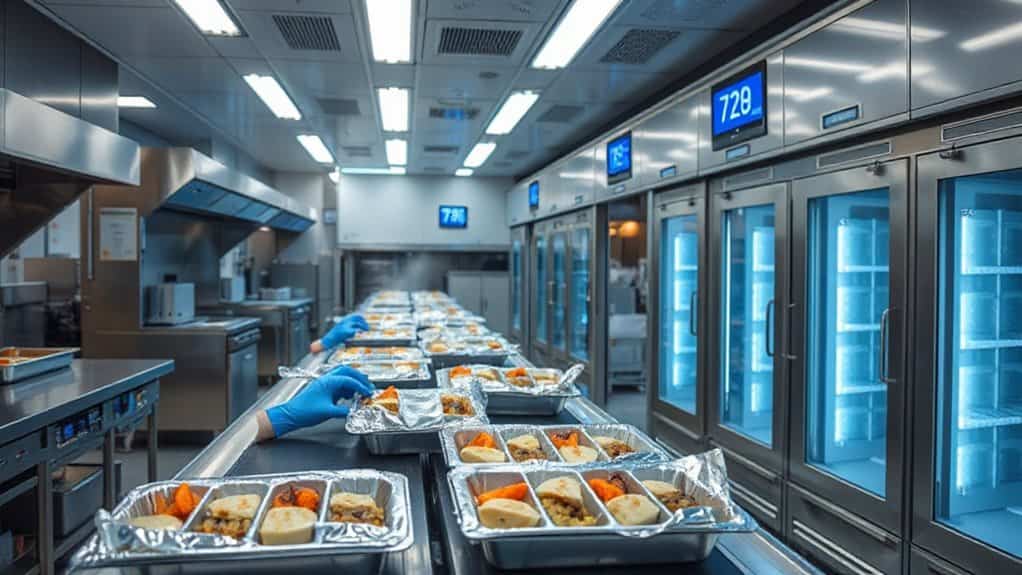
Because the 72‑hour window is mandatory, every hot meal must be cooked, cooled, packaged, and loaded onto the aircraft within three days of departure.
You start cooking 24–36 hours before takeoff, blast‑cool within in under 90 minutes, then keep hot foods above 63 °C.
Cold items stay sealed 48 hours, and plated dishes must be used within 24 hours.
All steps follow strict temperature and timing rules.
Bacteria multiply rapidly when within the TDZ. color vision
How Airline Catering Turns Ingredients Into 130 K Daily Trays
You’ll see how tight supply‑chain coordination brings raw ingredients from farms and warehouses straight to the kitchen floor, where precision‑cooking automation slices, seasons, and bakes each component in sync. The line‑side robots and programmable ovens keep cooking times exact, so every tray matches the same recipe specifications. Finally, cold‑chain quality assurance maintains temperature controls from storage to loading, ensuring that the 130 K daily trays arrive fresh and safe for passengers. Airlines often use real-time disruption monitoring tools like weather alerts to anticipate changes that could affect catering delivery timing.
Supply Chain Coordination
When airlines share their projected passenger counts and meal preferences weeks in advance, catering firms can start aligning their supply chain to turn raw ingredients into the 130 K trays served each day.
You’ll see governments, airlines, logistics providers and suppliers syncing forecasts, using AI‑driven demand models, just‑in‑time deliveries, and lean production.
This coordination lets containers arrive at assembly centers, meals get built, and trays load onto aircraft on schedule.
Precision Cooking Automation
If airlines feed their projected passenger numbers and menu choices into the catering system weeks ahead, the kitchen floor can start the automated sequence that converts raw ingredients into 130 K trays each day.
You’ll see rice batches automatically weighed, portioned to exact specs, and sent through massive industrial cookers that run continuously.
AI vision checks each tray, counting items, flagging missing pieces, and ensuring every menu meets the same precise standards.
Cold‑Chain Quality Assurance
The precise cooking line that weighs, portions, and cooks raw ingredients feeds directly into a tightly controlled cold‑chain network that preserves food safety from factory floor to aircraft galley.
You monitor temperatures with infrared probes and auto‑alarm systems, log data in real time, and train staff continuously.
Refrigerated trucks, cool dollies, and multi‑zone aircraft keep foods at 2‑8 °C or –20 °C until service, meeting WFSG, FDA, IATA and local regulations.
From Forecast to Kitchen: Translating Load Data Into Portion Sizes
You’ll see how forecast‑driven load modeling feeds directly into adaptive portion allocation, turning passenger numbers into precise meal counts.
As the load data updates at 18, 6, and 3 hours before departure, you adjust the portion sizes to reflect the latest booking and no‑show probabilities.
This continuous recalibration lets you balance cost and service level while keeping waste to a minimum.
In practice, it also helps ensure that meal supply is aligned with TSA carry-on rules, since onboard security and screening workflows can affect passenger timing and access to services.
ForecastDriven Load Modeling
When a flight’s departure approaches, the airline’s kitchen must turn forecast data into concrete portion sizes, and this translation hinges on a structured load‑modeling workflow.
You start with 24‑hour ticket‑based estimates, then apply finite‑horizon MDP policies at decision epochs—especially one hour out—to adjust orders by increments like +5 meals.
Software evaluates load distributions, boxplot trends, and staff judgment, balancing shortages and surpluses while cutting overage costs.
Dynamic Portion Allocation
Although the flight’s departure is still hours away, the kitchen must already be turning forecasted load data into exact portion counts.
You match booking numbers, cabin mix, and special‑diet requests to a spreadsheet that predicts how many standard, vegan, halal, or child meals you’ll need.
At 24‑hour and three‑hour checkpoints you adjust the totals, ensuring each cabin receives the right quantity while keeping waste under five meals per flight.
AI Load Forecasting: Reducing Waste With No‑Show Predictions
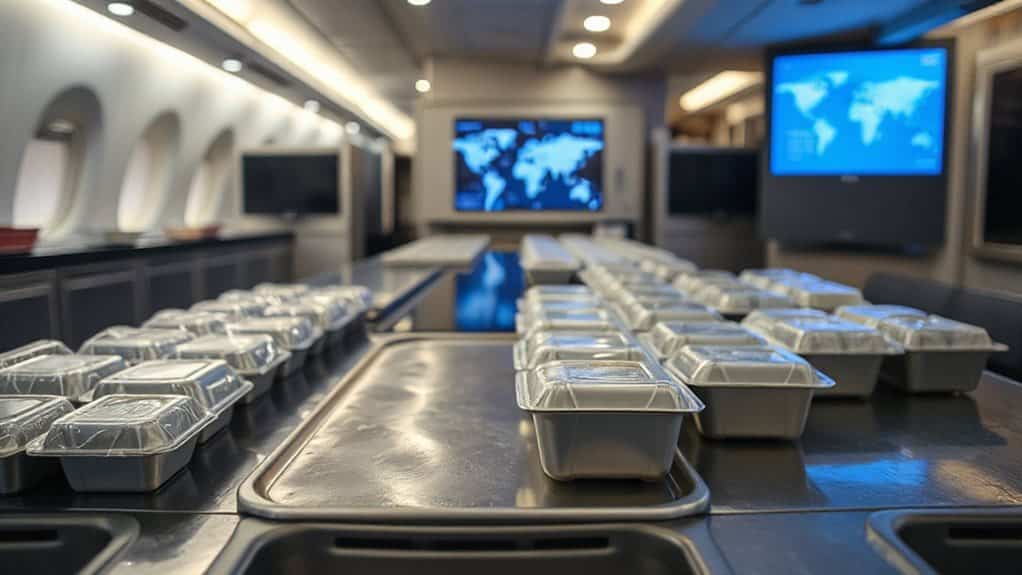
Leveraging AI to predict passenger no‑shows is reshaping airline load forecasting and cutting food waste dramatically. You’ll see models ingest historical bookings, flight schedules, weather, and real‑time passenger updates, generating class‑specific forecasts from 17 days out to 20 minutes before departure. KLM’s system trimmed waste by 63 %, saving over 100 000 kg of meals annually, while suppliers receive precise orders and loading crews adjust quantities moments before take‑off. To reinforce accuracy, airlines can also price-drop protection to reduce uncertainty in demand and better plan meal production.
HACCP & Real‑Time Temperature Logs for Food Safety
Because airline catering serves thousands of meals per flight, you must keep the cold chain intact from kitchen to gally, and HACCP provides the structure to do that. You identify hazards, set critical limits—usually below 41°F for cooling and above 165°F for reheating—and monitor them with real‑time data loggers. SOPS enforce corrective actions, while calibrated thermometers and insulated carts preserve temperature, ensuring compliance and safety on every flight. To support safe service, Night Bazaar staff in Chiang Mai rely on strict temperature control practices when preparing and serving large volumes of food to customers.
Automated Portioning, Cooking, and Blast‑Cooling to Keep Meals Fresh
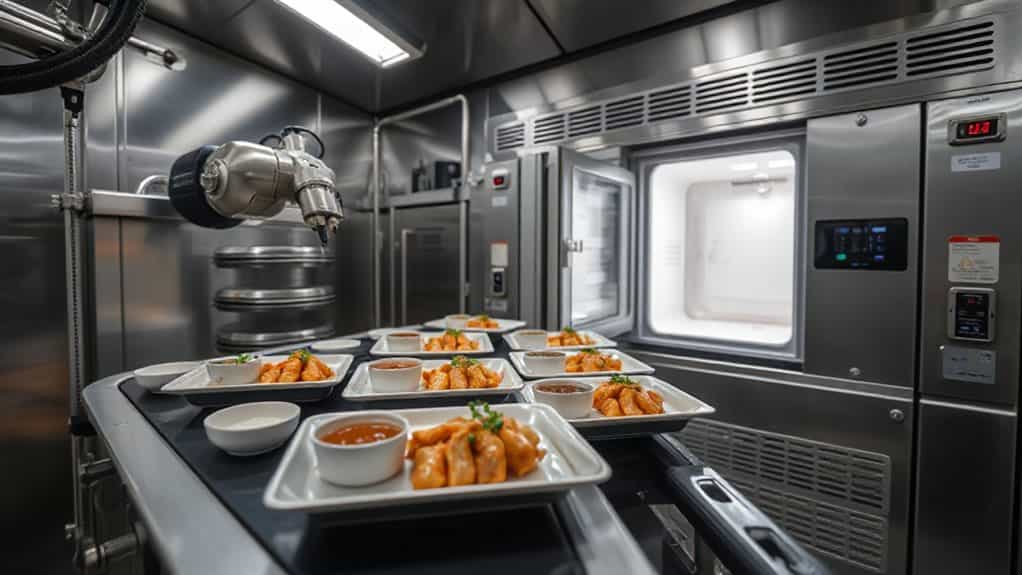
You’ll see that automated weighing stations deliver exact rice portions before the mix moves into industrial cookers, where high‑speed ovens handle thousands of meals per hour.
After cooking, a rapid blast‑cooling tunnel brings temperatures down in minutes, then sealing locks in freshness for the next distribution step.
This integrated flow lets you maintain precise portion control, consistent cooking quality, and extended shelf life without manual intervention.
That same safety-first approach is also why airlines carefully manage weather hazards before flights proceed.
Precision Weighing & Portioning
When airline meals are prepared, precise measuring and portioning start the process, ensuring every dish meets nutritional and cost targets.
You’ll see Leonhardt depositors and Chef Robotics AI‑driven arms dosing each ingredient to the gram, while tablet trackers log weight loss from oil draining.
Vision systems verify counts, and AI‑based logic adjusts levels, cutting waste and guaranteeing each passenger receives the exact portion intended.
High‑Speed Industrial Cooking
Even before the first tray reaches the galley, the kitchen’s high‑speed industrial cooking line is already in motion.
Automated scales weigh rice, pasta and vegetables, then conveyor belts dump them into massive cookers that run nonstop for tens of thousands of meals.
Zones separate hot and cold work, while brine‑cooled racks keep temperatures stable.
You watch hundreds of chefs coordinate precise timing, ensuring each portion stays fresh and ready for flight.
Rapid Blast‑Cooling & Sealing
Because the kitchen must lock in moisture while preventing bacterial growth, it blasts‑cools each cooked portion the seconds.
You watch cold air surge over shallow pans, dropping temperature from 135°F to 70°F in two hours, then to 41°F in four.
Automated portioning spreads food evenly, while ice wands stir dense items.
Once chilled, sealed containers lock freshness for 12‑72‑hour flight storage.
How Chefs Use Assembly‑Line Timing to Keep 130 K Trays on Schedule
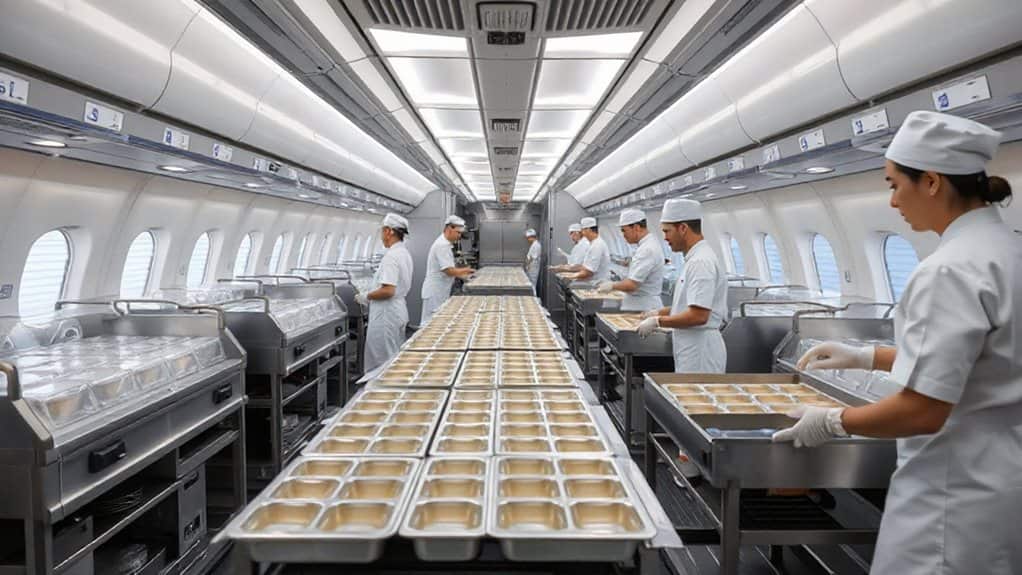
By the time a flight’s gate opens, chefs at facilities like Gate Gourmet’s Zurich plant have already set a synchronized rhythm that moves 130 K trays through the line without a hitch.
You watch pre‑weighed ingredients arrive at stations, then hot, cold, and pastry sections work in lockstep.
Real‑time tracking flags any deviation, while specialized equipment toes each tray to precise weight and timing, ensuring every meal reaches the aircraft on schedule.
Cold‑Chain Management: Ground‑to‑Air Temperature Control
When the first pallet of fresh produce arrives at the catering warehouse, the temperature must stay at ≤ 8 °C, and every step that follows—storage, transport, and loading onto the aircraft—relies on a tightly controlled cold chain.
You monitor temperatures 24/7 with sensors, keep cold storage at ≤ 5 °C, use refrigerated trucks and insulated carts, and load insulated boxes that stay +5 °C or ‑20 °C for over 24 hours without power.
Loading Sequence & Cart Labeling: First‑Class to Economy Explained
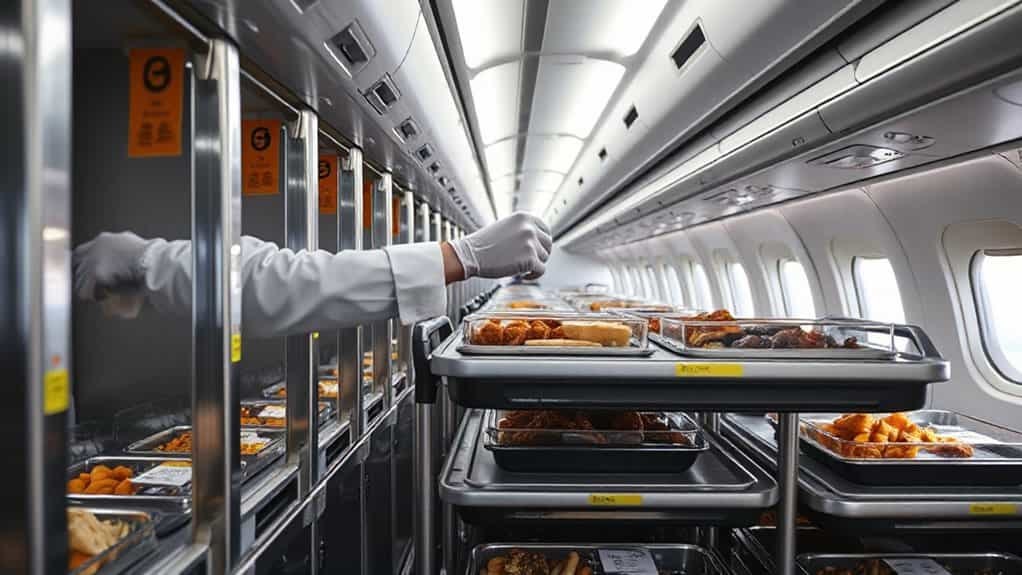
The cold‑chain controls you just reviewed keep every ingredient at the right temperature until it reaches the catering warehouse, and the next step is getting those prepared trays onto the aircraft.
You check quantities, apply tracking labels, then assemble trays on stainless tables.
First‑class carts, labeled with flight details, load first; economy carts follow within an hour, all traced by batch numbers for precise recall.
Testing New Menus In‑Flight: How Catering Validates Recipes
In the controlled environment of a pressurized cabin, catering teams replicate flight conditions to validate every new menu before it reaches passengers.
You’ll taste dishes while ambient noise hums, using calibrated scales and colored cards for consistency.
Tests mimic altitude‑induced flavor shifts, ensuring bold spices and umami survive two‑hour flights.
Airlines log results, adjust recipes, and approve only those that meet documented weight, placement, and safety standards.
Altitude‑Specific Design: Aerospace Constraints on Meals
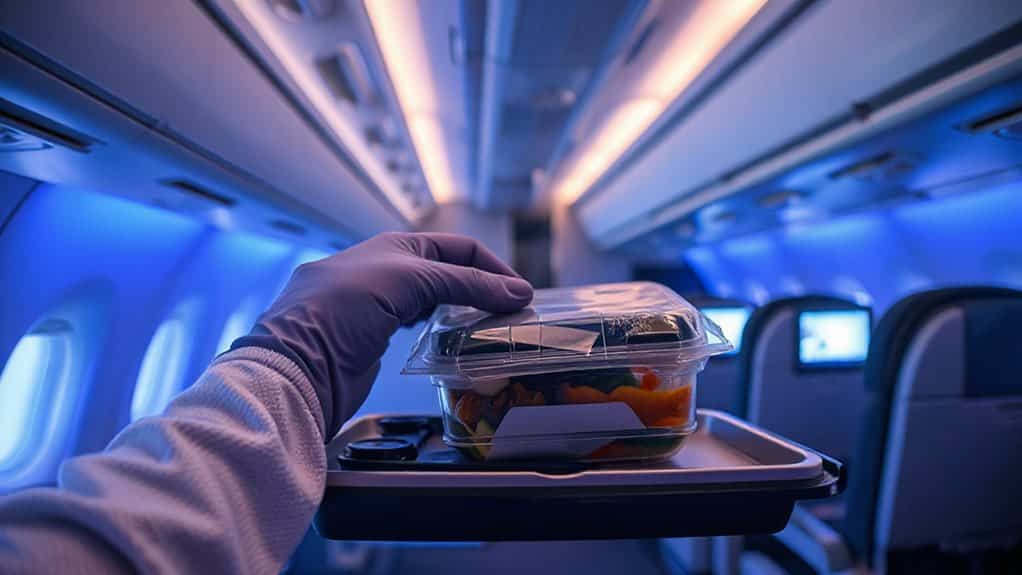
Testing new menus on the ground shows whether a recipe can survive the cabin, but the real test begins once the meals enter the aircraft.
At 35,000 feet, pressure and humidity drop, dulling taste buds and drying textures, so you season heavily, use moist dishes, and vacuum‑seal for stability.
Convection ovens reheat to 165 °F, while compact galleys demand modular trays and strict HACCP monitoring.
And Finally
You’ve seen how airlines coordinate a tight 72‑hour window, turning forecasts into thousands of trays while monitoring temperature and waste. AI predicts no‑shows, cutting leftovers, and HACCP standards keep food safe from kitchen to cabin. Cold‑chain logistics preserve freshness, and labeling guarantees the right meals reach the right seats. New recipes undergo in‑flight testing, and altitude‑specific constraints shape packaging. All these steps work together to deliver consistent, safe meals on every flight.