You pay more for one-way flights because airlines target business travelers who are less price-sensitive and book last minute. They restrict cheap fare buckets, especially on one-ways, and use algorithms that quickly raise prices as seats sell. Round-trips often cost less per leg since airlines encourage longer commitments. Limited inventory and routing rules also inflate one-way fares. This pricing lets carriers maximize revenue while offering apparent discounts on return trips, where savings can reach up to 39%. There’s more to how this plays out across different routes and ticket types.
TLDR
- Airlines use variable pricing to maximize revenue, often charging more for one-way tickets targeted at business travelers.
- Limited fare buckets fill quickly on one-way routes, causing prices to spike faster than on round-trip itineraries.
- Round-trip bookings encourage longer stays and commitment, so airlines offer them at a discounted per-leg rate.
- One-way fares lack the built-in return demand balance, leading to higher prices to offset potential revenue loss.
- Low-competition routes often have inflated one-way prices due to minimal pressure to offer round-trip-style deals.
Why Airlines Charge More for One-Way Flights
While you might expect a one-way flight to cost half as much as a round-trip ticket, airlines often charge markedly more for single-leg trips—and there’s a method behind the pricing.
You’re paying more because airlines protect high-revenue seats, target less price-sensitive business travelers, and offset losses when return flights go unused. This pricing strategy is reinforced by booking-class control and inventory management, which allows airlines to optimize revenue by restricting availability of lower-priced fare classes on one-way itineraries.
Variable pricing adjusts in real time, ensuring they maximize every seat’s profit potential. Airlines also factor in typical traveler behavior and demand patterns when setting one-way fares.
Round-Trip Savings: Up to 39% on U.S. Routes
You’ll often pay less overall when booking a round-trip instead of two separate one-way flights. Airlines price round-trips lower to encourage longer bookings, especially on domestic routes where the savings can reach up to 39%.
For example, a round-trip from LAX to SFO dropped 20% year-over-year, showing how return itineraries can offer clear cost advantages. Enforcement is strict at major hubs, where agents may require carry-on measurement checks that can lead to gate-checking.
Round-Trip Price Advantages
A round-trip ticket often costs markedly less than buying two one-way flights on the same route, and this isn’t a fluke—it’s standard practice across most U.S. airlines.
You’ll save up to 39% by booking round-trip, especially on full-service carriers.
Delta, American, and United frequently price one-ways higher, even when you fly the same flights.
The closer you get to departure, the steeper the savings—making round-trips smarter for flexible travelers.
Airline Discount Incentives
Many airlines offer substantial discounts when you book round-trip instead of two one-way tickets, and those savings can add up fast—up to 39% on U.S. routes.
You’ll often pay less per mile, especially on popular domestic flights. Deals from cities like Phoenix or Orlando to Alaska start at $327 roundtrip, and members save about $200 through deal monitoring.
United vs. JetBlue: One-Way vs Round-Trip Showdown

When comparing one-way and round-trip options, JetBlue and United take different approaches that can quickly add up in cost and convenience.
JetBlue’s one-way fares start at $25, include free carry-ons, and offer free WiFi, while United often charges extra for seat selection and bags.
Round-trips on JetBlue begin at $128, providing better value, whereas United’s pricing adds fees across fare classes, making round-trips more predictable but often pricier overall.
Note that carry-on policies like Delta’s 22 x 14 x 9 size limit can affect perceived value when airlines differ on carry-on allowances.
When One-Way Flights Are Actually Cheaper
You can save money on multi-city trips by booking one-way flights instead of a single round-trip ticket, especially when visiting more than two destinations.
One-way awards often cost the same as round-trip miles, giving you more flexibility without extra cost.
Mixing budget airline one-ways with award flights also cuts expenses, particularly on domestic or low-cost international routes.
Consider using RTW tickets strategically to combine long-haul alliances with budget segments for maximum savings.
Multi-City Trip Savings
On competitive short-haul routes dominated by budget airlines, booking separate one-way flights often cuts costs more effectively than a single multi-city ticket.
You can mix carriers freely, avoid bundled pricing, and grab last-minute deals.
Flexible dates and open-jaw trips save more when booked piecemeal.
Separate tickets also protect you from full re-pricing and let you redeem miles per leg.
Award Ticket Flexibility
Booking one-way award flights opens up strategic advantages that can make your miles go further, especially when flexibility and availability are priorities.
You can mix loyalty programs, change legs independently, and maximize seat availability.
Splitting bookings lets you combine cabins, stopovers, or alliances easily.
In many cases, two one-ways cost the same—or less—than a roundtrip, giving you more control without penalty.
Domestic Routes Where One-Way = Round-Trip Cost
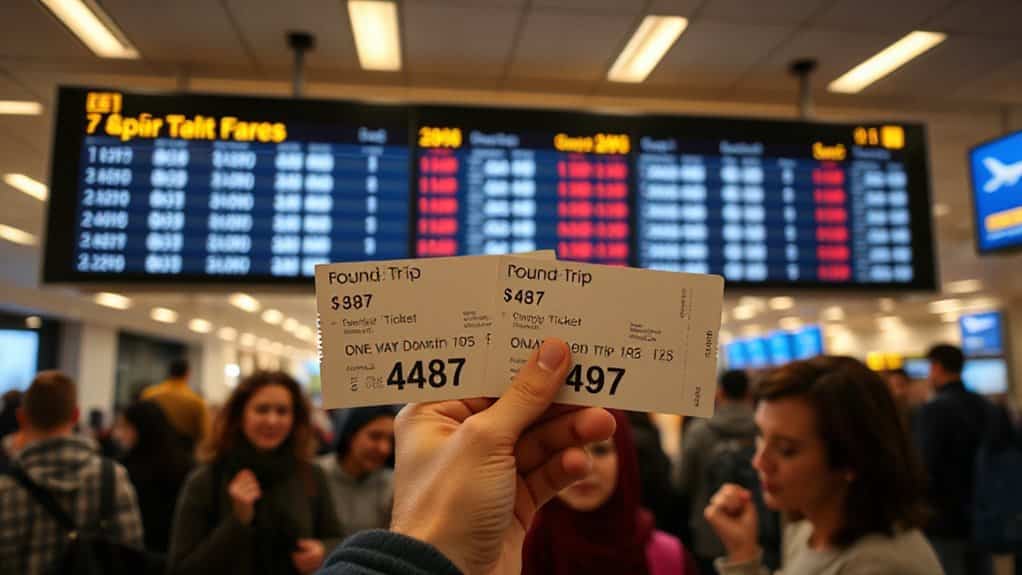
Just over a quarter of domestic routes on major U.S. airlines charge the same price per segment for one-way and round-trip flights, showing that equal pricing isn’t universal but still common.
You’ll often find two one-ways matching roundtrip costs, like American’s Newark-Miami flights at $278 total.
This symmetry gives you pricing freedom, especially where basic economy isn’t restricted to roundtrips.
Standby travel with buddy passes can offer an alternative way to save when flexible scheduling and lower guaranteed seat availability are acceptable.
Fly Wednesday, Save 43% on Round-Trip Fares
You’ll often find the best round-trip deals by simply shifting your departure to midweek—especially Wednesday, the cheapest day to fly across most U.S. carriers.
Flying Wednesday can save you up to 43% compared to weekend fares. Midweek flights are consistently cheaper due to lower demand, with Tuesday and Wednesday offering the lowest prices year-round. Hospital de Sant Pau is a notable Barcelona landmark known for its early-1900s architecture and modern-hygiene design, making it a great cultural stop for travelers visiting midweek who seek quieter museums and sights like Hospital de Sant Pau.
Why One-Way International Flights Cost More Than Half
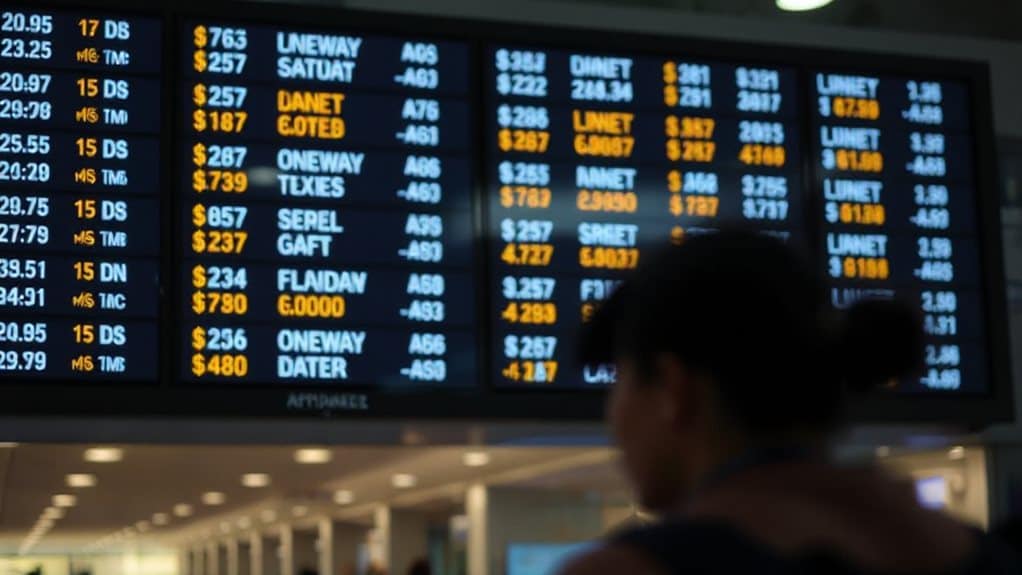
While shifting your departure to Wednesday can slash round-trip costs by up to 43%, that kind of pricing logic rarely applies when you’re only flying one way—especially overseas.
Airlines use algorithms that favor round-trips, making one-way international flights cost more than half the total. They prioritize filling both legs, charge higher premiums on long-haul routes, and adjust for demand, distance, and capacity—so you pay more for one-way freedom.
Award Tickets: One-Way vs Round-Trip Mile Costs
When booking award flights, you’ll often find that mileage costs differ depending on whether you choose one-way or round-trip tickets.
Some programs, like United MileagePlus, offer round-trip discounts, while others, like Alaska, charge the same either way.
You can mix currencies with two one-ways, gain flexibility, and avoid redeposit fees—ideal when you value control over savings.
Multi-City Itineraries vs Two One-Way Flights

You’ll often save money by booking a multi-city itinerary instead of two one-way flights, especially with full-service airlines in the same alliance.
For example, a Chicago-Frankfurt-London-Chicago trip costs $1,874 multi-city but $3,436 when booked as separate one-ways.
Multi-city bookings also simplify changes, apply consistent baggage rules, and reduce the risk of missed connections across flights.
Multi-City Booking Advantages
For travelers planning trips with multiple destinations, booking a multi-city itinerary often makes more financial and logistical sense than purchasing two separate one-way flights.
You save money through combined pricing and avoid seasonal fluctuations. A single reservation cuts booking time, simplifies changes, and protects connections.
Plus, you gain flexibility for stopovers and seamless regional travel across continents.
Two One-Way Drawbacks
While booking two one-way flights might seem like a flexible option, it often comes with hidden drawbacks that can affect both your budget and travel experience.
You’ll manage multiple reservations, face inconsistent baggage fees, and risk higher costs—like paying $3,110 instead of $1,783 on a round-trip.
Cancellations or changes become harder, with no unified protection across separate tickets.
Why One-Way Prices Change So Much
Prices take off quickly on one-way flights, and it’s not just random luck or bad timing—multiple forces drive these frequent shifts.
Demand spikes, limited fare buckets, and algorithmic pricing react fast when seats sell.
Low competition or sudden events push costs up.
Airlines adjust in real time, so booking early or off-peak gives you more control and often better rates.
And Finally
You now know why one-way flights often cost more—airlines price them higher to offset lost revenue from return trips. Round-trips usually offer better value, sometimes saving you up to 39%. While some domestic or international routes may charge more than half for one-way, multi-city bookings or award tickets can change the math. Always compare options, since prices shift based on demand, route, and airline policy. Smart shopping helps you find the best deal.