
You skip tuk tuk scams by using metered taxis or Grab, agreeing on fares or routes first. You cover shoulders and knees for temple entry, wearing real shirts, not scarves. You cross streets carefully, choosing quieter areas like Silom or Phrom Phong to sleep. You eat where locals do—Nang Loeng, Sam Yan—and avoid pre-made food. You carry copies of documents, use money belts, and skip unethical animal tours. There’s more to get right than you think.
TLDR
- Avoid unsolicited tuk tuk drivers offering free tours—they often take you to commission-based shops instead of your destination.
- Dress properly for temples: cover shoulders and knees, as improper attire can get you denied entry.
- Skip touristy restaurants near attractions; eat where locals queue for safer, tastier, and cheaper street food.
- Use Grab or metered taxis to avoid scams and overcharging—never rely on tuk tuks for reliable transport.
- Pick quiet, residential neighborhoods to stay in—avoid Khao San Road and red-light districts for better rest.
Dodging Tuk Tuk Traps and Transportation Scams
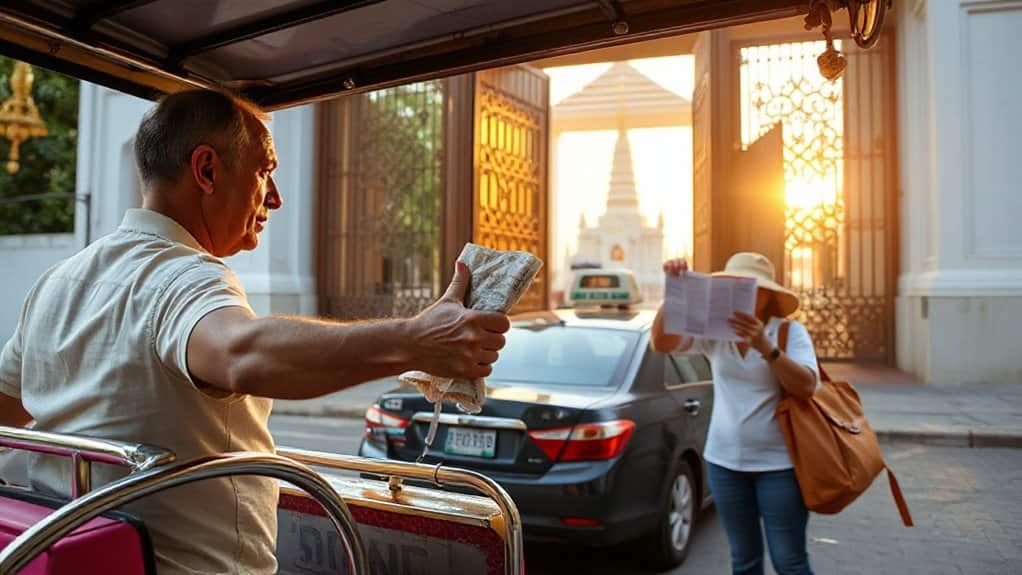
You’ll quickly run into tuk tuk drivers in Bangkok who offer cheap rides or free tours, but watch out—many of these come with hidden strings attached. They often take you to gem shops or tailors for commissions, not your best interests. Avoid unsolicited offers, use metered taxis or apps like Grab, and stick to your planned route to stay scam-free. Transportation scams account for nearly half of all reported fraud cases in the city. Local tips like checking meter use and agreeing fares beforehand can greatly reduce your risk of being overcharged in Bangkok.
Navigating Temple Rules Without the Embarrassment
While exploring Bangkok’s revered temples, dressing appropriately isn’t just respectful—it’s required, and failing to follow the rules can mean being turned away at the gate.
Cover your shoulders and knees: no shorts, tank tops, or sleeveless shirts. Wear slip-on shoes and long pants or skirts. Grand Palace bans scarves over bare arms—real shirts are mandatory. Rent clothing at entrances if needed. Many visitors also plan a visit to the Grand Palace during their first day in Bangkok.
Staying Safe on Bangkok’s Unforgiving Streets
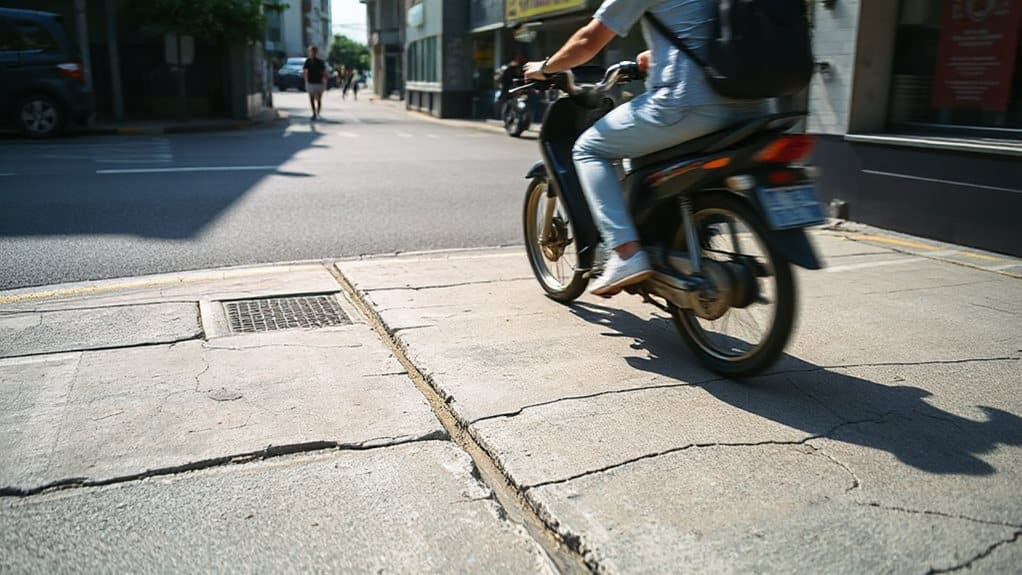
Because Bangkok’s streets rank among the most dangerous in Southeast Asia, staying alert and informed is essential for your safety.
You face real risks: motorcyclists make up over half of traffic deaths, often unhelmeted.
Speeding and fatigue are leading causes.
Pedestrian infrastructure is poor, so cross carefully.
Use crosswalks, obey signals, and stay visible.
CCTV monitors speed, but enforcement varies.
Know that 12.0 road deaths occur per 100,000 people here.
Many visitors also underestimate risks around popular tourist areas like street food stalls and busy markets, where crowds and vehicles create additional hazards.
Choosing the Right Neighborhood to Avoid Nightly Noise
You’ll sleep better if you pick a quiet neighborhood, since Bangkok’s nightlife noise can be unceasing.
Staying in areas like Old Town or Thonburi keeps you away from the crowds and constant buzz of tourist hotspots.
Even within busy zones, side streets or spots near parks and temples offer real peace just steps from the chaos.
Consider checking local weather patterns before booking, since rainy-season downpours can affect transport and noise levels.
Quiet Zones Over Chaos
If you’re looking to escape Bangkok’s unceasing energy without leaving the city, choosing the right neighborhood can make all the difference.
Opt for Bang Krachao’s lush calm or Riverside’s quiet charm. Silom and Lang Suan offer luxury near parks, while Upper Sukhumvit’s side streets stay peaceful. Phrom Phong and Phra Khanong provide serenity with BTS access, perfect for travelers seeking quiet freedom.
Hotel Location Matters
Picking the right neighborhood can make or break your sleep in Bangkok, where noise levels vary dramatically from one street to next.
Stay away from Khao San Road and red light districts like Nana Plaza to avoid loud music and harassment.
Opt for quieter riverside areas or lower Sukhumvit Sois.
Choose hotels with soundproofing, double-glazed windows, and solid doors to block traffic and street noise.
Eating Like a Local Without Falling for Food Frauds
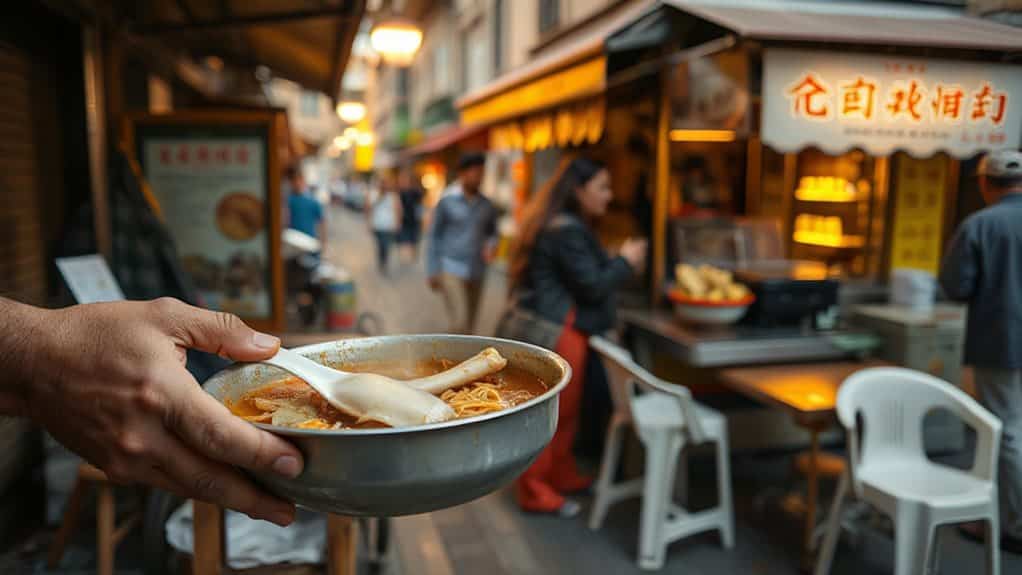
You’ll avoid overpriced, underwhelming meals by skipping flashy restaurants near tourist spots and heading to stalls crowded with locals.
Stick to trusted areas like Nang Loeng or Sam Yan markets, where office workers and students line up for affordable, authentic bites.
Always check if a popular stall has an original roadside location—like Somsak Pu Ob—since newer branches often lose the real flavor.
Also consider exploring nearby Chatuchak weekend market for local snacks and vibrant street food scenes.
Spotting Tourist Trap Eateries
Steer clear of Bangkok’s flashiest food streets if you’re after authentic flavors at fair prices—many have turned into tourist traps where inflated costs and lower quality go hand in hand.
Skip overcrowded spots like Banthat Thong or Khaosan Road, where menus target foreigners. Instead, investigate alleyway stalls, local markets like Taling Chan, or residential areas such as Ari—where real Bangkok life unfolds.
Navigating Street Food Safely
Plunge into Bangkok’s street food scene with confidence by focusing on stalls that draw crowds, since busy vendors mean high turnover and fresh ingredients. Locals lining up, especially at lunch, signal safe, quality food.
Opt for cook-to-order dishes, boiling soups, or grilled items. Check for clean workspaces, health badges, and avoid pre-made food sitting out.
Wash hands, skip tap water, and enjoy boldly—street food here is overwhelmingly safe.
Protecting Your Belongings in Crowded Public Spaces
Keep your valuables close, because Bangkok’s crowded public spaces rank among the riskiest in the world for theft and scams.
You’ll face high risks at sites like the Grand Palace and Chatuchak Market, where pickpocketing and scams are frequently reported.
Public vans and transit hubs are vulnerable, especially at night.
Stay alert, secure belongings, avoid unlicensed taxis, and know common scams to protect your freedom and peace of mind.
Always carry copies of your passport and use a money belt to store cash and documents safely.
Avoiding Ethical Mistakes on Popular Tourist Excursions
You’ve taken steps to safeguard your belongings in busy markets and transit areas, but protecting your travel experience goes beyond personal security—it includes respecting local ethics and culture.
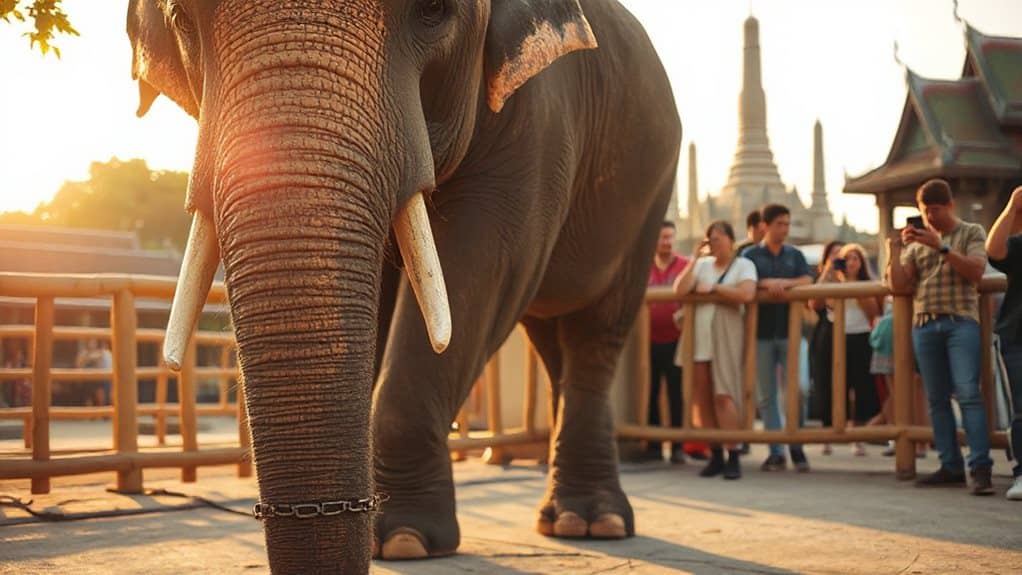
Avoid elephant rides or tiger selfies, as they involve abuse and stress. Don’t point feet at shrines or touch heads, and use your right hand for giving items. Skip tours with chains, tricks, or cub handling, and respect spirit houses and temple customs to travel responsibly.
And Finally
You now know how to avoid common Bangkok mistakes. Stick to metered taxis or ride apps instead of tuk-tuks to skip overcharges. Dress properly at temples—cover shoulders and knees. Stay alert in crowds, especially at markets and on transit. Pick quieter areas like Thonglor or Sathorn for restful nights. Eat where locals queue, not where prices spike for tourists. Keep bags secure and respect cultural norms on tours. These steps help you travel smarter.


