You rely on TCAS to prevent midair collisions by detecting nearby aircraft through transponder signals. It alerts you to traffic with visual and audio cues, giving time to spot potential threats. If danger grows, TCAS issues climb or descent commands you must follow, even over ATC instructions. Modern systems can automate these maneuvers, enhancing accuracy. You’re trained to respond fast, though limitations exist, like undetected non-transponder aircraft. Knowing these layers of safety keeps flights protected, and there’s more to how crews and technology work together seamlessly.
TLDR
- Airlines use TCAS to detect nearby aircraft and issue real-time collision warnings independent of air traffic control.
- Traffic Advisories (TAs) alert pilots to nearby traffic, prompting visual acquisition and situational awareness.
- Resolution Advisories (RAs) command immediate climb, descent, or speed changes to avoid collisions.
- Pilots are trained to prioritize RAs over ATC instructions, ensuring rapid, standardized responses.
- Integration of ADS-B, ground radar, and transponder data enhances overall traffic awareness and safety.
How TCAS Prevents Midair Collisions
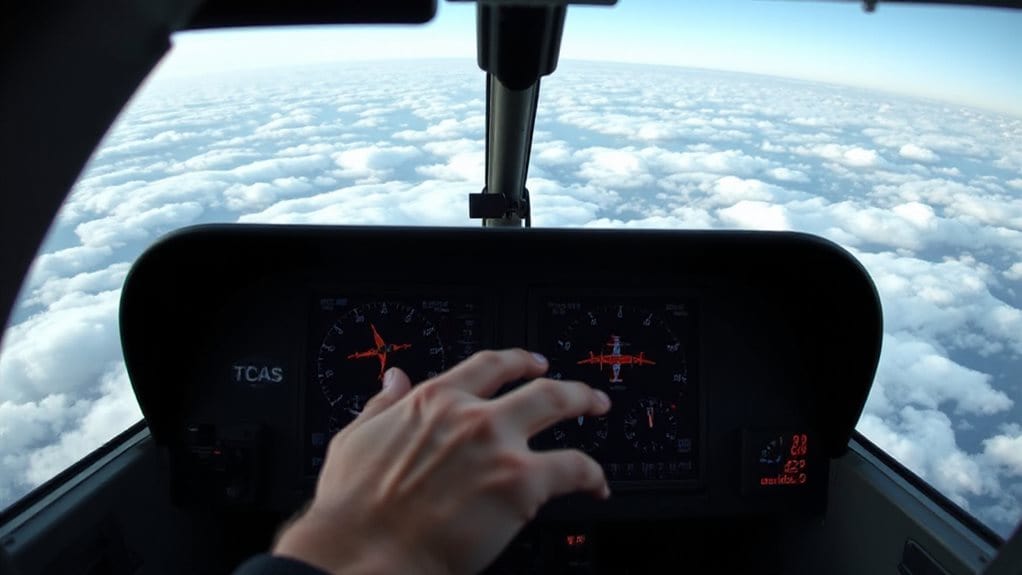
When it comes to avoiding midair collisions, TCAS steps in to take the guesswork out of pilot decision-making.
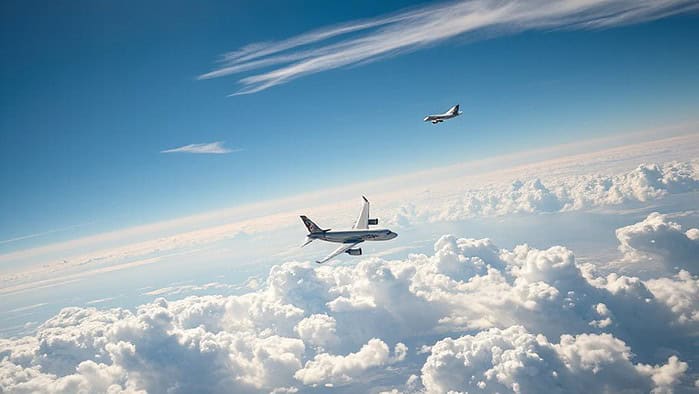
You rely on its radar and transponder signals to detect nearby aircraft, track their speed and altitude, and predict potential threats. It issues clear traffic or resolution advisories, telling you exactly when to climb or descend.
This system operates independently of air traffic control, ensuring continuous monitoring of surrounding airspace (operates independently).
Pilots also receive real-time updates from TCAS that supplement other traffic information and improve situational awareness.
TCAS Traffic Advisories: What Pilots See in the Cockpit
You’ll see nearby aircraft appear as white diamonds on your display, turning into solid yellow circles when a Traffic Advisory (TA) activates.
The system alerts you with a “Traffic, traffic” warning and highlights the intruder’s position, showing its distance, bearing, and relative altitude—like “+05” for 500 feet above.
Arrows next to the altitude tell you if the aircraft is climbing or descending, helping you quickly assess potential risks.
Flight crews follow regulatory staffing minimums to ensure a qualified team is available to respond during traffic alerts and other emergencies.
Traffic Display Symbols
Keep your eyes on the cockpit display, and you’ll quickly spot nearby aircraft through the TCAS traffic symbols that pop up in real time.
A solid yellow circle means a Traffic Advisory—stay alert and look outside. A red square signals a Resolution Advisory—act now.
These symbols show direction, altitude, and vertical movement, helping you safely steer without unnecessary maneuvers.
Advisory Alert Types
What do you see and hear when another aircraft enters your vicinity at cruising altitude?
You’ll hear “Traffic, traffic” and see a yellow symbol on your display.
It shows the intruder’s bearing, distance, and altitude—with small arrows indicating if it’s climbing or descending.
This advisory helps you spot the aircraft visually.
You stay in control, evaluating and adjusting your path as needed, without mandatory commands.
TCAS Resolution Advisories: From Alert to Evasive Action
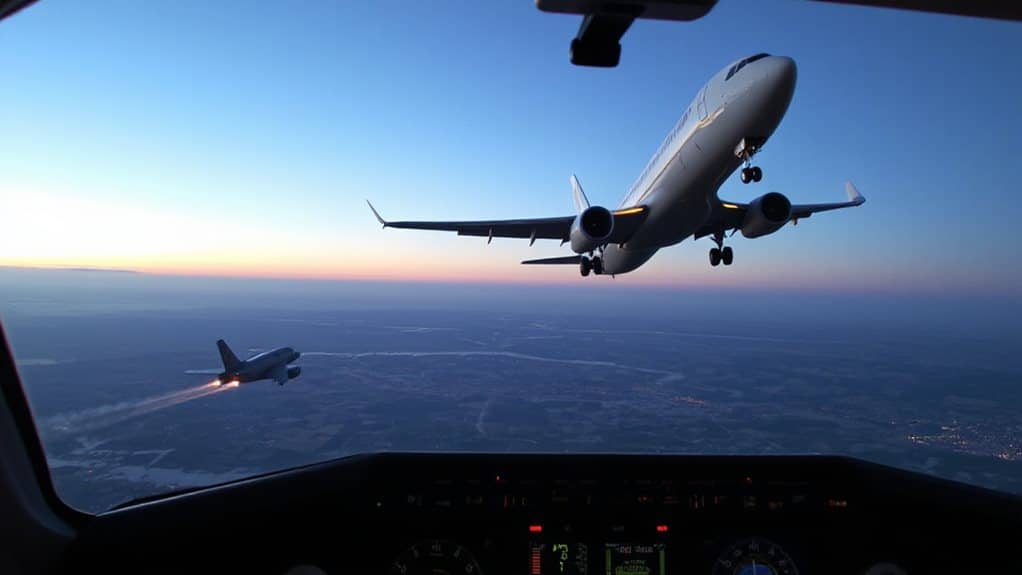
You’ll hear a traffic alert about 35 to 48 seconds before a potential conflict, giving you time to spot the intruder.
If the threat continues, a resolution advisory activates between 20 and 35 seconds out, telling you to climb, descend, or adjust your vertical speed.
You must immediately disconnect the autopilot and hand-fly the maneuver, following the voice commands and cockpit displays to guarantee safe separation.
Heavy aircraft produce particularly strong wake turbulence that can affect separation and briefing during TCAS events.
Traffic Alert Triggers
When an aircraft enters the vicinity of another, the TCAS first issues a Traffic Advisory (TA) to alert you to a potential conflict, giving you time to monitor the situation without requiring immediate action.
You’ll hear “Traffic, traffic” and see the intruder on your display. TAs trigger farther out, typically 35–45 seconds before potential collision, allowing awareness and preparation if the threat escalates.
Resolution Advisory Execution
After a Traffic Advisory alerts you to nearby aircraft, the system escalates to a Resolution Advisory (RA) if the risk of collision increases. You’ll hear commands like “Climb” or “Adjust Vertical Speed,” which you must follow immediately.
Corrective RAs require changing your vertical speed, while preventive ones mean holding your current rate. You’ve got five seconds to respond to the first RA, then 2.5 seconds for any follow-up changes.
The system calculates these alerts using tau thresholds—time to closest approach—based on altitude and closure rate. You’re expected to prioritize RAs over ATC instructions, even if they conflict.
Using 0.25g acceleration, you’ll reach the required vertical speed smoothly. If the RA reverses, you’ll get a new command.
Once clear, you’ll hear “Clear of Conflict” and can return to your original flight path or ATC clearance. Compliance is critical—only 58.7% of pilots react correctly, making this a top safety concern.
Autopilot Integration Benefits
Integrating autopilot systems with TCAS II markedly improves how quickly and accurately your aircraft responds to Resolution Advisories.
You benefit from reduced workload and precise vertical maneuvers, as the system automatically adjusts climb or descent.
This seamless coordination guarantees timely, correct actions, minimizing collision risks.
In turbine aircraft over 5,700 kg, automation supports safety without relying on ATC, giving you greater operational freedom and confidence during high-threat scenarios.
Why Does TCAS Override Air Traffic Control?
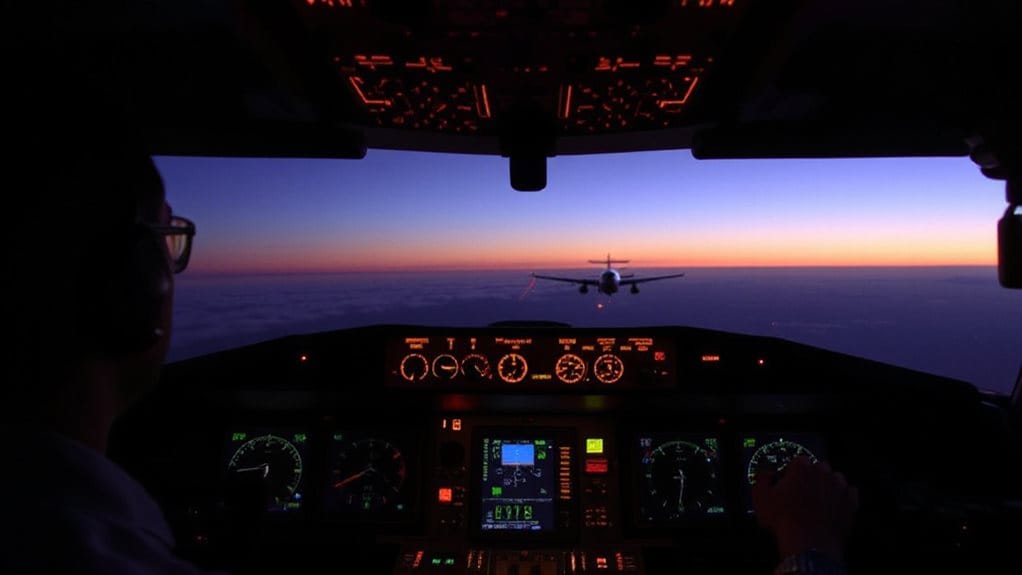
Although air traffic control (ATC) guides aircraft throughout most of a flight, you must follow TCAS resolution advisories (RAs) immediately—even if they conflict with ATC instructions.
TCAS provides real-time collision avoidance, prioritizing safety over ATC directives.
The 2002 Überlingen disaster showed the risks of ignoring RAs. You’re required to obey TCAS, as it detects threats faster than ground radar, ensuring midair separation when it matters most.
Safety initiatives have reduced aviation accidents over time, contributing to a lower helicopter fatal accident rate of 0.73 per 100,000 flight hours.
Automated TCAS Responses in Modern Cockpits
You’ll often rely on automated systems in modern cockpits to respond swiftly to TCAS resolution advisories, especially during high-workload phases of flight.
Your aircraft’s flight director or autopilot automatically follows RA commands, coordinating climbs or descents with the threatening aircraft. Voice alerts and visual cues guide you, while the system adjusts maneuvers every second.
These vertical corrections guarantee safe separation, all without overriding your ultimate control. Modern cockpit designs also integrate comfort and ergonomic systems like adjustable armrests to help pilots maintain focus during prolonged high-workload situations.
TCAS Limitations: What It Can’t Detect and How Pilots Compensate
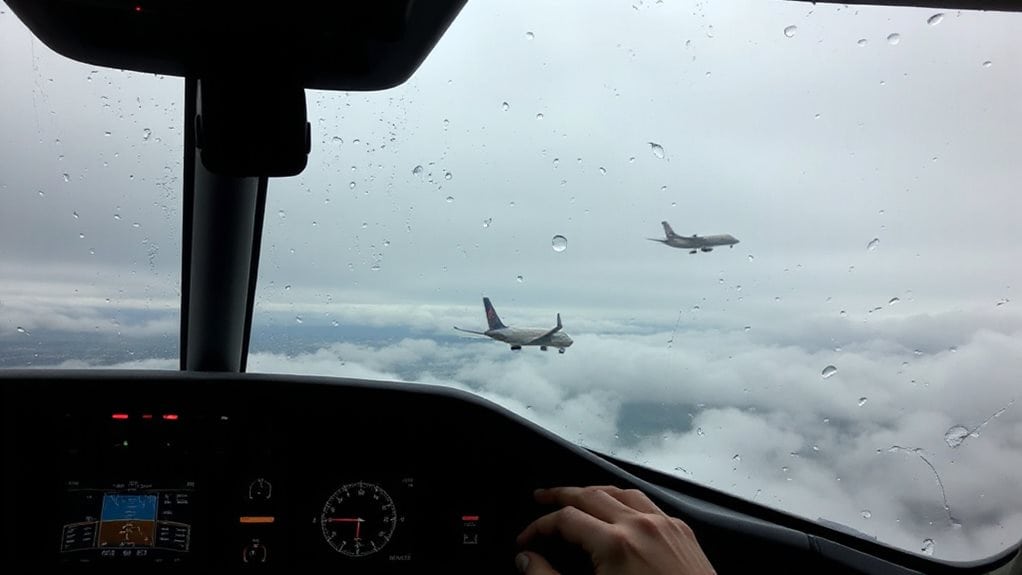
While TCAS is a powerful tool for preventing midair collisions, it has several key limitations that you must be aware of to maintain safety.
It can’t detect aircraft without altitude-reporting transponders, like some older Pipers. Below 1,000 feet, most alerts are inhibited, and terrain or non-responsive transponders can block detection. You rely on visual scanning and ATC in these gaps, especially near the ground. Airline procedures also emphasize using airline-provided equipment and coordinated protocols for safety, such as only using airline-provided extenders that are maintained under approved safety standards.
Global TCAS Regulations and Compliance Standards
When it comes to avoiding midair collisions, global regulations guarantee that aircraft are equipped with reliable collision avoidance systems, and compliance isn’t left to chance.
You must follow FAA, EASA, and international rules mandating ACAS II v7.1 or TCAS, depending on your operation. These standards guarantee compatibility, safety during parallel approaches, and proper pilot training—all while aligning U.S. practices with global norms to keep your flights safe and legal.
And Finally
You rely on TCAS to prevent midair collisions, and it works by constantly monitoring nearby aircraft. When a threat arises, you get clear alerts and precise instructions to climb or descend. TCAS overrides ATC commands when necessary to guarantee safety. Modern systems automate responses, but you stay in control. Though effective, TCAS can’t detect all aircraft, so you still depend on radar, communication, and vigilance to stay safe in crowded skies.