
Hotel cancellation policies set the rules for when and how you can cancel a reservation without or with penalties. They specify deadlines for free cancellations, often 24 to 72 hours before arrival, and outline fees or charges for late cancellations or no-shows, which can be full or partial refunds. Hotels communicate these terms clearly through websites and confirmation emails, and the specifics depend on whether the policy is flexible, semi-flexible, or strict. Understanding these details helps you manage bookings effectively and avoid surprises; for more information, delve deeper.
TLDR
- Hotel cancellation policies specify deadlines, fees, and refund procedures for reservation changes or cancellations.
- Policies vary by hotel, including flexible, semi-flexible, and strict options, affecting penalties and refunds.
- Guests are informed of policies during booking through clear, accessible details on websites and confirmation emails.
- Fees are calculated based on timing, often increasing closer to the check-in date or for no-shows.
- Transparent communication and visual aids help guests understand policies, fostering trust and reducing misunderstandings.
What Are Hotel Cancellation Policies and Why Are They Important?

Hotel cancellation policies are rules set by properties that determine when and how guests can cancel their reservations without penalties or with applicable fees. These policies are essential for guest flexibility.
They clearly outline refund procedures, no-show fees, and deadlines for free cancellations. Transparency in these policies helps build trust and guarantees both guests and hotels understand their rights and responsibilities.
Additionally, guests should be aware that hotels may place a temporary incidental hold at check-in to cover potential extra charges, which is separate from the room-rate cancellation terms.
How Do Hotel Cancellation Policies Work?
Understanding how hotel cancellation policies work helps you avoid unexpected charges or forfeiting your reservation. These policies specify the terms and conditions, including deadlines for free cancellations and fees for late changes. Knowing the cancellation process steps guarantees you can manage your booking effectively and stay informed about any required payments or penalties. Just like using hotel safe tricks can help protect your valuables, following the cancellation deadlines helps prevent costly mistakes.
Policy Terms and Conditions
Clear policy terms and conditions are vital for understanding how hotel cancellation policies work. These outline cancellation policies, refund eligibility, cancellation deadlines, and the fee structure, including potential penalties.
Knowing the terms and conditions at booking guarantees you’re aware of any exceptions, such as force majeure or no-shows, and helps you make informed decisions about cancellations and refunds.
Cancellation Process Steps
When canceling a reservation, you typically follow a series of steps that guarantee the process is smooth and transparent.
You initiate the cancellation through an online portal, phone call, or email. Then, you wait for the hotel to review your request against its policy, including deadlines and fees.
Once approved, your reservation is canceled, the system updates availability, and you receive confirmation of your refund or charges.
What Are the Main Types of Cancellation Policies Hotels Use?
Hotels typically categorize their cancellation policies into three main types: flexible, semi-flexible, and strict. Flexible cancellation allows free changes up to 24-72 hours before arrival. Semi-flexible policies may involve a penalty closer to the date of arrival. Strict policies often impose a no-show fee or charge the full reservation, especially for last-minute bookings or emergencies. If a payment needs to be adjusted due to a booking change, seat belt extenders are not relevant here, since that concept applies to airline safety rather than hotel charges.
How Are Cancellation Fees and No-Show Penalties Calculated?
Cancellation fees and no-show penalties are generally calculated based on the timing of the cancellation relative to your scheduled arrival date. Your reservation policy and booking terms determine the penalty calculation, often as a percentage of the total booking or a fixed fee. Closer cancellations incur higher cancellation fees, and no-show penalties typically match the full reservation amount or one night’s stay. To avoid surprises, re-check seat maps is similar in concept to revisiting your booking’s terms right before cancellation deadlines if you’re unsure how your penalty will be applied.
How Can Hotels Clearly Communicate Cancellation Policies to Guests?
Clear communication of cancellation policies is vital for setting guest expectations and reducing misunderstandings. By displaying clear policy details on your website, booking pages, and confirmation emails, you guarantee guests understand deadlines, fees, and refunds.
Using simple language, visual aids, and prompts throughout the booking process helps reinforce transparency and build trust. This approach minimizes disputes and enhances the guest experience.
For example, clearly stating the specific latest natural addition to your “Central Highlands” offering (Central Highlands) in your listings can help guests understand what they’re booking and why schedule changes may affect availability and related fees.
What Role Do Booking Platforms and Technology Play in Enforcing Policies?
Booking platforms and technology are key factors in ensuring that cancellation policies are enforced consistently and accurately across all channels. They automate enforcement by integrating policies into booking systems, sending prompts, and applying adaptable fees based on booking details.
This automation reduces errors, synchronizes updates, and helps guests adhere to deadlines, providing clarity and control over cancellation processes. In the same way that travelers should verify airline policy rules before using certain seat and footrest aids, platforms can surface eligibility constraints early so guests understand what’s allowed under the selected terms.
How Do Cancellation Policies Affect Hotel Revenue and Occupancy?
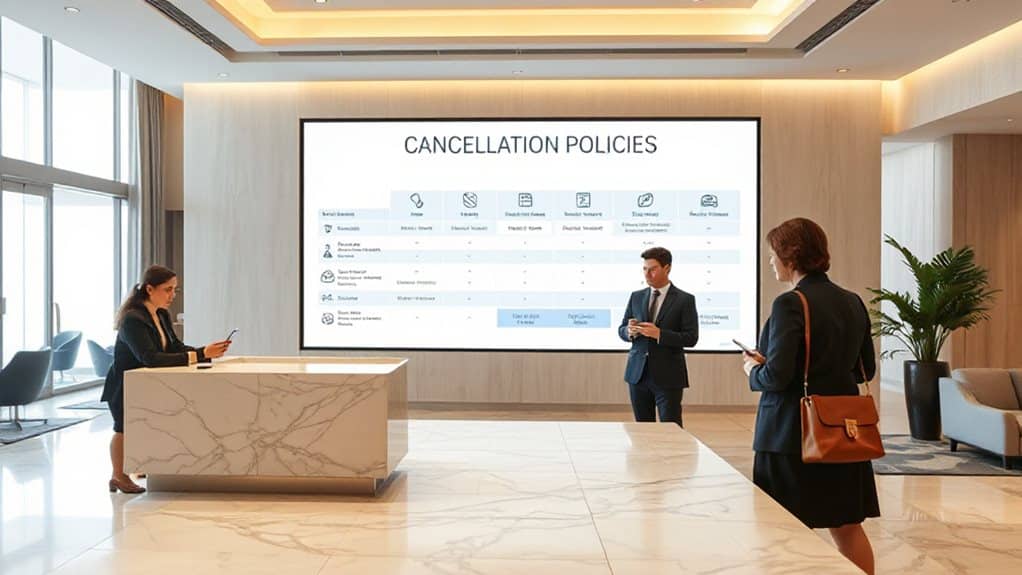
Hotels often implement strict cancellation policies to protect their revenue streams, especially during high-demand periods.
Higher cancellation rates from last-minute cancellations and no-show penalties can substantially reduce occupancy and revenue.
Longer notice periods allow hotels to resell rooms, reducing the impact of cancellations.
These policies help stabilize revenue and manage occupancy more effectively, particularly with higher cancellation rates through OTAs.
How Can Hotels Handle Cancellations and Exceptions Effectively?
Effective cancellation management starts with clear procedures that communicate deadlines and fees upfront, reducing guest confusion.
Handling exceptions with flexibility—such as offering tiered fees or accommodating force majeure events—helps protect revenue while maintaining guest satisfaction.
Using technology and staff training guarantees consistent responses and allows for proactive adjustments based on trends and feedback.
Clear Cancellation Procedures
Clear cancellation procedures are crucial for guaranteeing smooth interactions between hotels and guests. By establishing and communicating clear policies upfront, you help guests understand the booking process, deadlines, fees, and refund conditions.
Using automated systems and multiple channels for guest communication streamlines cancellations, reduces misunderstandings, and makes certain accurate processing. This approach helps ensure that the cancellation process is transparent and hassle-free for everyone involved.
Flexible Exception Handling
Handling cancellations and exceptions effectively requires hotels to implement flexible policies that can adapt to unforeseen circumstances. Clear communication of exception handling, including force majeure clauses for events like natural disasters, is essential.
Automating policy enforcement and offering flexible cancellation options, combined with proactive guest communication, helps balance guest needs with revenue protection during unexpected situations.
How to Choose the Best Cancellation Policy for Your Hotel?

Choosing the right cancellation policy for your hotel requires balancing guest flexibility with your revenue goals. Consider industry booking trends, your property’s location, and market segment to set appropriate deadlines and fees.
Clear communication of these policies at booking and pre-arrival reduces disputes. Regularly reviewing them helps adapt to changing demand, maximizing both guest satisfaction and revenue protection.
Tips for Optimizing Cancellation Policies to Improve Guest Satisfaction?
To enhance guest satisfaction, it’s important to have clear and transparent cancellation terms, so travelers understand their options upfront.
Offering flexible cancellation windows, such as 24 to 48 hours before arrival, can reduce frustration and increase booking confidence.
Additionally, visual aids like charts or infographics for tiered fees help guests easily grasp policies, building trust and encouraging loyalty.
Clear and Transparent Terms
Clear and transparent cancellation terms are essential for setting guest expectations and building trust.
By providing clear terms at booking and confirmation, you help guests understand policies easily.
Using visual aids like charts and communicating through multiple channels guarantees transparent communication.
Regular updates keep policies fair and aligned with guest needs, promoting confidence and satisfaction.
Flexible Cancellation Options
Implementing flexible cancellation options can substantially enhance guest satisfaction and increase direct bookings. Offering free cancellation up to 24-48 hours before arrival and clear online cancellation processes helps reduce last-minute cancellations by around 20%.
Including flexible policies on booking pages and tiered fees encourages trust and repeat bookings. This makes it easier for guests to adapt to changing plans.
And Finally
Understanding hotel cancellation policies is vital for both guests and hoteliers. Clear policies help manage expectations, reduce misunderstandings, and protect revenue. By knowing how cancellations, fees, and exceptions work, you can plan better and avoid surprises. Hotels benefit from transparent communication and flexible options, which enhance guest satisfaction and loyalty. Ultimately, selecting and implementing well-structured cancellation policies guarantees smooth operations and positive experiences for everyone involved.


