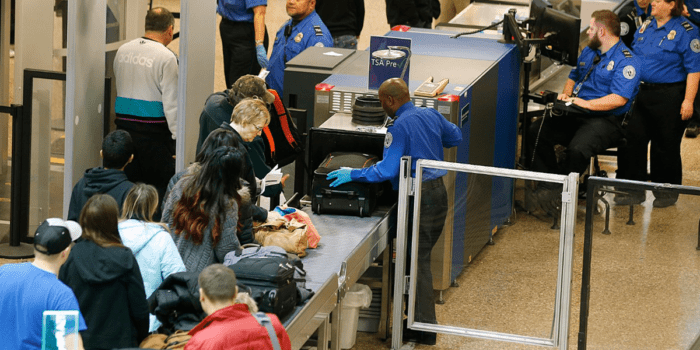
Yes, you can bring a firearm in checked baggage if you follow TSA and airline rules. You must declare the firearm at check-in, make sure it is unloaded, and store it in a locked, hard-sided case. Ammunition should sit in a box designed to carry it, and can travel in the same locked case as the firearm. Keep the key or combination with you and comply with all guidelines. Proper packing and declaration are essential to avoid delays. Continue to find out more about how to guarantee a smooth process.
TLDR
- Can it fly in the cabin: No. TSA allows firearms in checked baggage only, and firearm parts such as magazines, bolts and firing pins are barred from carry-on.
- What the case has to do: It must be hard-sided, locked and secure the firearm completely. TSA refuses cases that open easily, including the box the gun came in.
- Do you need a special lock: No. Any brand or type of lock is allowed, including TSA-recognized locks. Only you should keep the key or combination.
- Where ammunition goes: In a box designed for ammunition and declared at check-in. It can travel in the same locked case as the firearm.
- Declaring it: Tell the agent at the ticket counter before the bag is accepted, on every flight. Ask whether the case must be opened for inspection.
- The penalty for getting it wrong: A firearm at the checkpoint, even unloaded with accessible ammunition, carries the same civil penalty as a loaded one.
Basic Rules for Flying With Firearms
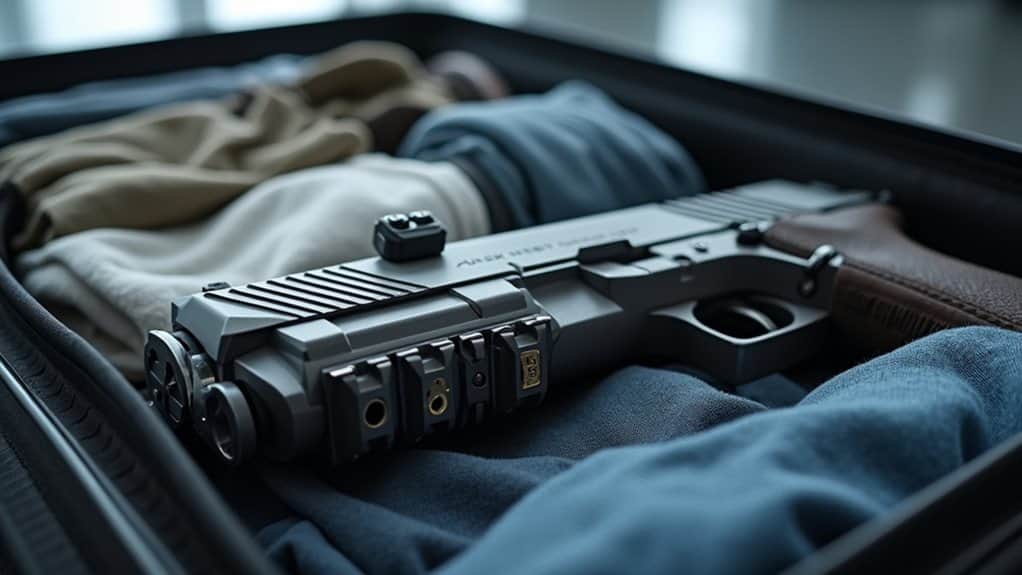
When traveling with firearms, it’s essential to follow specific rules to guarantee compliance with airline and TSA regulations.
You must declare your firearm at check-in, unload it completely, and store it in a locked, hard-sided container as checked baggage.
Only you should hold the key or combination unless TSA requests access.
Firearms are prohibited in carry-on luggage.
If you also need additional seating space while flying, check your airline’s policy on extra seats in advance.
How to Pack Your Firearm and Ammunition for Travel
When packing your firearm, use a sturdy, lockable, hard-sided case that’s built to secure the firearm completely. Make sure your firearm is unloaded and stored in the case, with magazines and clips also secured separately or within the same locked container if empty. For ammunition, use its original packaging or a clearly labeled, secure container to meet airline and security requirements. If you’re traveling through crowded transit areas like the London Underground, keep your locked firearm case secured and out of sight to reduce the chance of theft or interference, especially during peak times when pickpocketing is more common.
Proper Packaging Materials
Proper packaging materials are essential to make certain your firearm and ammunition are transported safely and in compliance with airline regulations.
Use a hard-sided container or a locked case designed for firearms, secured with TSA-recognized locks or a lock or combination.
Confirm all parts are separately packed, and firearms are securely packed to prevent damage or tampering during travel.
Secure Locking Techniques
Secure locking techniques are vital to ensuring your firearm remains protected and inaccessible to unauthorized individuals during travel.
You must use a locked, firearm container in checked baggage, securing the unloaded firearm separately from magazines and ammunition.
Employ TSA-recognized locks or secure locks, and keep keys or combinations with you.
Proper labeling and declaration are also essential for compliance.
Ammunition Storage Guidelines
Ammunition must be packed carefully to meet airline and TSA regulations. Use a firearm container or a hard-sided, locked case to securely box unloaded ammunition.
Small caliber ammunition and shotgun shells should be stored in a declared container, such as a manufacturer-approved box.
Ammunition can’t be loose, in carry-on luggage, or packed with magazines, ensuring your airline luggage remains compliant and secure.
How to Declare Your Firearm at the Airport
When you arrive at the airport, you need to declare your firearm at the check-in counter by informing an airline agent and completing any required paperwork.
Make sure your unloaded firearm is stored in a locked, hard-sided case that fully secures the weapon during check-in, and always keep the key or combination with you.
Follow the airline’s procedures carefully, and be prepared to open your case if security personnel request an inspection.
Declare Firearm Clearly
To properly declare your firearm at the airport, you should do so verbally at the airline check-in counter before dropping off your luggage.
Clearly state that you’re checking a firearm, confirm it’s unloaded, and keep it in a locked, hard-sided case.
Present any required declaration forms, and follow TSA instructions to avoid delays or penalties.
Follow Airline Procedures
Following airline procedures is essential to confirm your firearm is declared correctly and travels safely. You must declare your unloaded firearm verbally at check-in, complete any required forms, and make certain it’s in a locked, hard-sided container within checked baggage.
Follow specific procedures, including proper tagging, and be prepared for security inspections or access requests during the process.
TSA and Airline Requirements for Firearm Transport
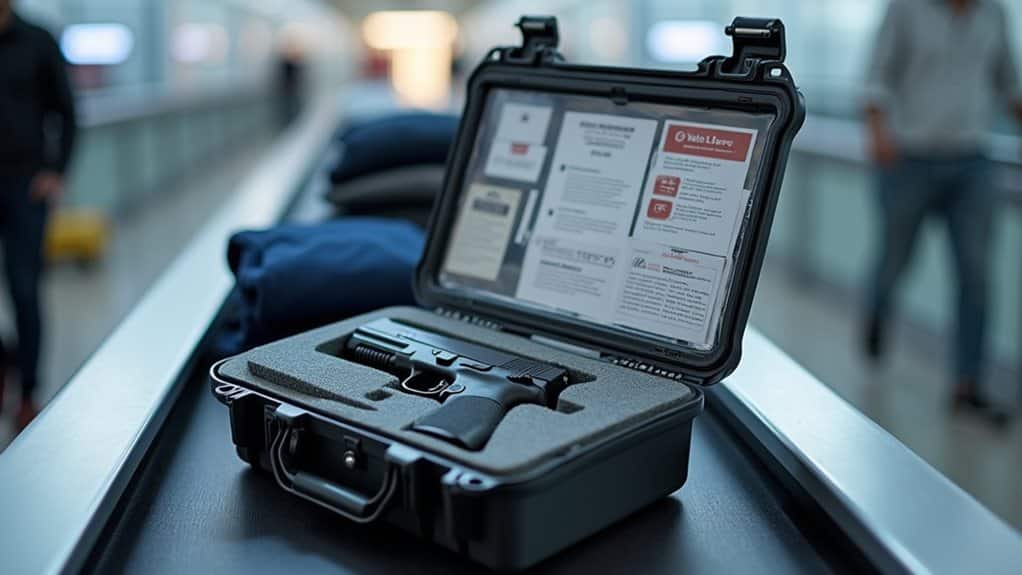
Transporting firearms by air requires strict adherence to TSA and airline regulations. You must declare unloaded firearms at check-in and store them in a locked, hard-sided case that secures the firearm, as checked baggage. customs regulations also require you to have the correct documentation and to declare firearms properly when entering another country. Firearm parts are prohibited in carry-on baggage, and ammunition must be securely packed separately. Always verify airline-specific policies before traveling to guarantee compliance.
Common Mistakes to Avoid When Flying With Firearms
One of the most common mistakes travelers make when flying with firearms is failing to thoroughly understand and follow all relevant regulations, which can lead to delays or legal issues.
Always declare firearms at check-in, make certain they’re unloaded, securely locked in checked baggage, and remove all ammunition.
Using proper containers and verifying airline policies prevent security violations and keep your rights intact.
Before flying, remember that offline playback on Spotify requires Premium offline listening to be available without an internet connection.
Tips for a Smooth Firearm Check-In Process
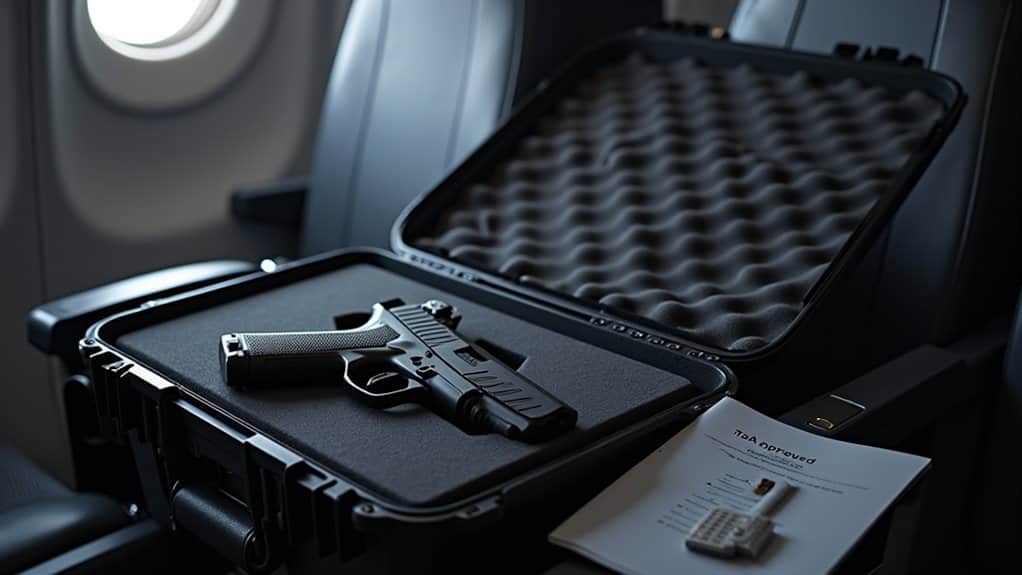
Preparing for a smooth firearm check-in begins with proper planning and organization. Always declare your unloaded firearms at the check-in counter and pack them in a completely secure, locked, hard-sided firearm container.
Keep the key or combination with you, not airline staff, and declare all firearms and ammunition.
Arrive early to allow time for inspection and compliance.
Frequently asked questions
Can you bring a firearm on a plane?
Yes, in checked baggage only. The firearm must be unloaded, packed in a locked hard-sided container that fully secures it, and declared to the airline at the ticket counter. TSA does not allow firearms or firearm parts such as magazines and bolts in carry-on bags, and a gun at the checkpoint carries a civil penalty.
Does the case need to be TSA approved?
No. TSA does not certify or approve cases, and you may use any brand or type of lock, including TSA-recognized locks. What matters is that the container is hard-sided, locked, and completely prevents access to the firearm. TSA notes that the box a firearm was sold in often does not secure it well enough for checked baggage.
Can ammunition go in the same case as the gun?
Yes. TSA allows ammunition in the same locked hard-sided case as the firearm, as long as it sits in a fiber, wood, plastic or metal box designed to carry ammunition and is declared to the airline. Loose rounds are not allowed, and a magazine cannot hold the rounds unless it completely encloses them.
What happens if you forget to declare it?
The bag can be pulled from screening, and an undeclared firearm may bring a civil penalty. TSA treats a firearm plus accessible ammunition as loaded for enforcement, even when the gun is empty. Declaring takes a minute at the counter, and skipping it risks your flight and a fine.
Can you fly internationally with a firearm?
Only if the destination allows it. TSA screens the bag under US rules, but possession, import permits and customs declarations are set by the country you enter. Check US Customs and Border Protection requirements and the destination’s own law before you book, because several countries bar civilian firearms outright.
Primary source: TSA, Transporting firearms and ammunition.
What to do next
Declare the firearm at the ticket counter before the bag leaves your hands, and keep the key or combination with you rather than the agent. If the case is the one the gun came in, replace it with a hard-sided case that locks shut.