
Yes, you can bring a drone on a plane, but you must follow specific rules. Drones are typically allowed as carry-on items, but lithium batteries need to be in carry-on luggage and kept in fireproof bags. Batteries up to 100 Wh are generally permitted without approval, while those between 101-160 Wh require airline approval, with a limit of two spares. Proper packing, understanding airline policies, and calculating watt-hours guarantee smooth travel. Keep these details in mind, and you’ll be well-prepared for your trip.
TLDR
- Drones are generally allowed in carry-on luggage, but check airline policies beforehand.
- Lithium batteries must be carried in carry-on, with watt-hour ratings up to 100 Wh, or with airline approval for higher capacity.
- Remove propellers and pack batteries in fireproof bags in carry-on luggage for safety.
- Confirm airline and TSA policies to ensure compliance and prevent confiscation or delays.
- Research international drone laws and carry necessary permits for safe travel abroad.
Can You Bring a Drone on a Plane?
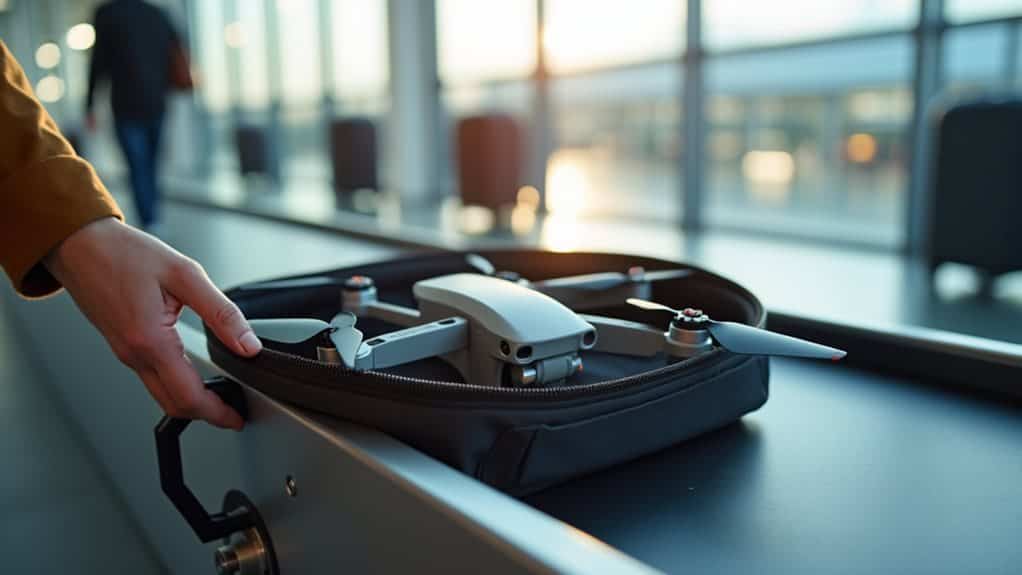
You can generally bring a drone on a plane, but there are important guidelines to follow. Drones and their lithium batteries must be carried in carry-on luggage. Batteries must comply with watt-hour limits—up to 100 Wh without approval, or up to 160 Wh with airline permission. Also, carry-on size limits are strictly enforced at check-in and departure gates, so make sure your drone bag fits within American Airlines’ carry-on and personal item dimensions to avoid mandatory gate checking. TSA and airline policies vary, so confirm before traveling to guarantee smooth security checks.
How to Pack Your Drone and Batteries for Air Travel
When packing your drone for air travel, use a hard case with foam padding to protect it from damage during transit. Remove the propellers and store them separately in labeled, secure containers to avoid breakage and meet airline regulations. Additionally, pack batteries in fireproof bags, keep them in your carry-on, and verify their watt-hour ratings comply with airline and TSA rules .
Packing Safety Tips
Properly packing your drone and batteries is essential to make certain safety and compliance during air travel. Use a protective case with foam padding to prevent damage.
Remove propellers and store them separately. Pack lithium-ion batteries in fireproof bags labeled with capacity.
Keep all items accessible for security checks. Verify the drone is powered off, and follow packing safety guidelines.
Battery Capacity Regulations
Understanding battery capacity regulations is key to ensuring your drone and its batteries comply with airline policies.
Batteries with up to 100 Wh can be carried without approval, and spare batteries must go in carry-on luggage.
Batteries between 101 and 160 Wh require airline permission, limited to two spares, and must be approved before packing in checked baggage, following airline regulations.
What Are TSA and Airline Policies on Flying With a Drone?
Travelers planning to fly with a drone should familiarize themselves with TSA and airline policies to guarantee smooth security checks and boarding processes.
TSA regulations generally permit drones in carry-on and checked baggage, but approval depends on TSA officers.
Most airlines prefer drones in carry-on baggage, especially lithium batteries, which must follow specific capacity limits and airline restrictions.
FAA cannot guarantee aftermarket seat belt extender effectiveness, so always confirm safety requirements with the airline or cabin crew when flying.
How to Handle and Pack Drone Batteries Safely
When traveling with drone batteries, safety and compliance are essential to prevent delays or confiscation. You should pack lithium-polymer batteries in fireproof bags and keep them in carry-on luggage. Verify the watt-hour rating, limit spare batteries to two if between 100 and 160 Wh, and remove batteries from the drone, storing them separately to guarantee battery safety during transit. Airline compatibility can vary by carrier, so confirm your specific airline’s rules before departure to avoid confiscation.
Calculating Watt Hours to Ensure Battery Compliance
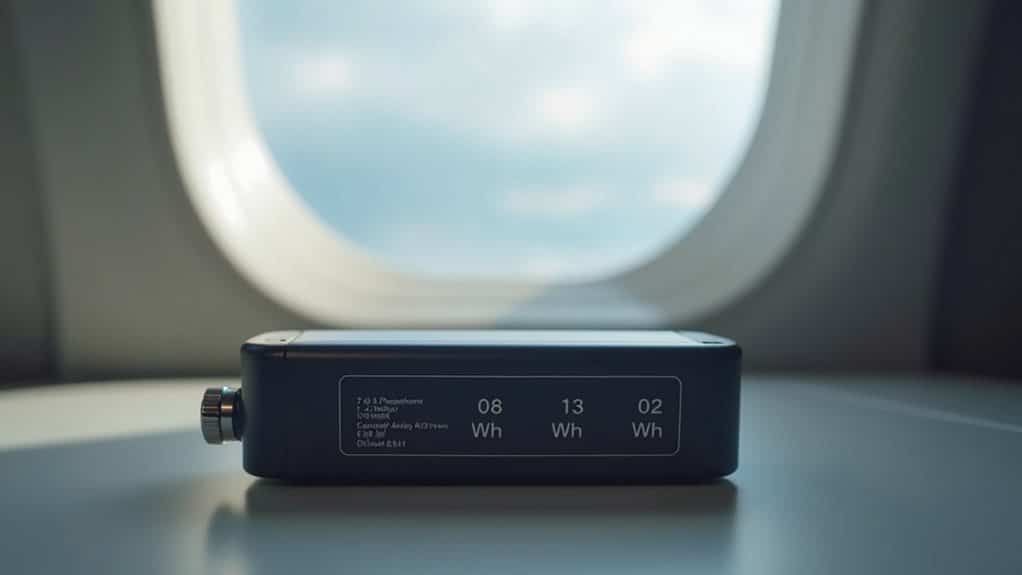
Calculating the watt-hours (Wh) of your drone batteries is an essential step to confirm they meet airline safety regulations. To do a Wh calculation, multiply your battery’s voltage (V) by its ampere-hours (Ah). Most consumer drone batteries are under 100 Wh, but always verify the label to guarantee battery compliance and adhere to airline regulations. Because airlines cap watt-hour limits, getting your batteries calculated correctly can help prevent issues at check-in.
Should You Carry Your Drone in Carry-On or Checked Baggage?
Carrying your drone in your carry-on baggage is generally the safest and most compliant option when flying. Airline policies require lithium batteries to be transported in carry-on bags, and drones are often fragile, making checked luggage unsuitable. During security screening, having your drone in carry-on baggage allows easier access, helping you follow drone regulations and prevent damage or delays. You can also minimize checkpoint concerns by packing other climbing rope items in checked luggage whenever possible.
International Drone Travel: Regulations and Tips
Traveling internationally with a drone involves understanding a complex web of regulations that vary from country to country. You must research drone regulations, including drone registration and import restrictions, before your trip.
Airline policies may also restrict carrying drones, and some countries enforce strict import fees or permits.
Always verify local laws to avoid fines or confiscation during international travel.
Preparing for Customs and Security Checks With Your Drone
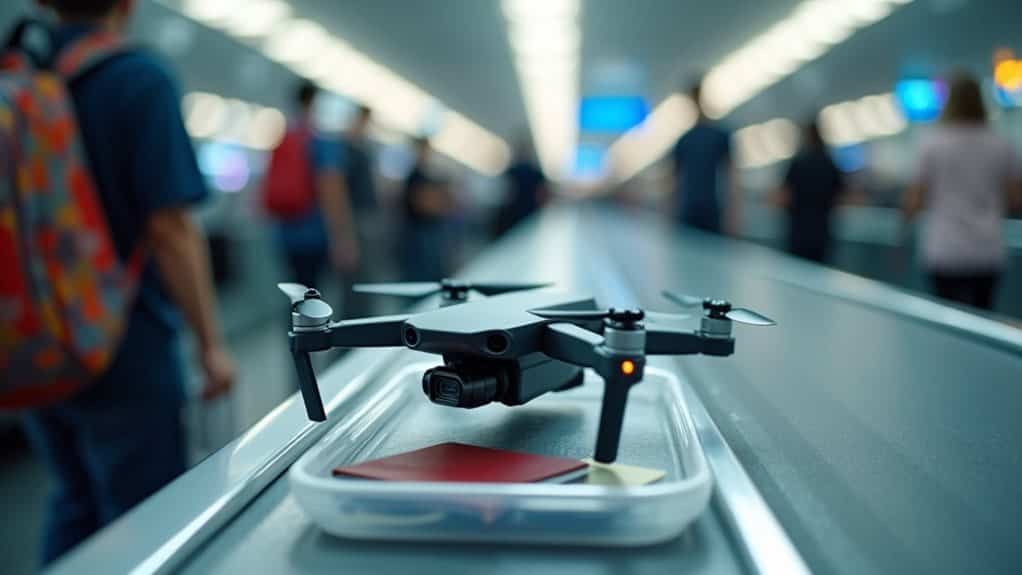
Before passing through security, it’s important to be prepared for the inspection process with your drone. Inform TSA agents about your drone, keep it accessible, and pack it in a hard case in your carry-on.
Remove propellers, label batteries, and store lithium batteries in fireproof bags.
Verify airline policies and carry printed FAA and TSA regulations to guarantee smooth security checks.
Tips for Flying With a Drone in Different Countries
Before flying with your drone in a new country, it’s essential to research the local regulations thoroughly. Many places require permits or registration, and failing to comply can lead to fines or confiscation of your device.
Make sure to understand no-fly zones and carry all necessary documentation to avoid legal issues during your trip.
Research Local Drone Laws
Have you checked the drone regulations of the country you plan to visit? Researching local drone laws is essential, as many countries require registration, permitting, or licensing, even for recreational use.
Consult the aviation authority’s website or local embassies to understand specific rules like altitude limits or no-fly zones. Non-compliance can lead to fines or legal issues.
Obtain Necessary Permits
When flying with a drone in different countries, obtaining the necessary permits and licenses becomes a key step to avoid legal issues. Research international drone regulations, complete drone registration if required, and secure any permits or licenses before travel.
Carry supporting documentation to comply with airline restrictions and local laws, ensuring smooth travel with your drone and avoiding confiscation or fines.
Common Mistakes to Avoid When Traveling With Your Drone
One common mistake travelers make is neglecting to verify airline policies regarding drone transport before their trip, which can lead to delays, confiscation, or TSA issues.
Make sure batteries are within watt-hour ratings, properly secured, and labeled.
Check airline and TSA regulations for checked or carry-on batteries, and avoid overpacking to prevent violations and security complications, maintaining your freedom to discover.
And Finally
Traveling with a drone requires understanding airline and security policies, especially regarding batteries and payloads. Properly pack your drone and batteries, ensuring they meet watt-hour limits, and always check international regulations before your trip. Being prepared for customs and security checks will help avoid delays or confiscation. By following these guidelines, you can safely and efficiently bring your drone along, ensuring smooth travel experiences and uninterrupted aerial excursions.