
All-inclusive hotels cover meals, drinks, entertainment, and often alcohol, offering a pay-one, unrestricted access experience, ideal for relaxed, resort-focused vacations. European Plan hotels include only the room, so meals and amenities are paid separately, providing flexibility and encouraging local dining. Your choice depends on your travel style and destination—families or those seeking convenience may prefer all-inclusive, while adventurers valuing independence might choose European Plan. To understand more about how each plan impacts your trip, continue investigating further details.
TLDR
- All-inclusive covers meals, drinks, and entertainment for a single fee; European Plan includes only the room, with extras paid separately.
- All-inclusive offers on-site dining and activities, while European Plan encourages exploring local restaurants and attractions.
- All-inclusive is cost-effective for families and extended stays; European Plan provides flexibility and potentially lower initial rates.
- Beach resorts suit all-inclusive for relaxation; urban destinations benefit from European Plan for cultural exploration.
- European Plan allows customization but requires more planning and budgeting for meals and activities.
What’s the Difference Between All-Inclusive and European Plan Hotels?

The main difference between all-inclusive and European Plan hotels lies in what’s included in the price. With all-inclusive, you pay once and enjoy unlimited meals, drinks, and entertainment, often including alcohol. European Plan hotels only cover the room, so you’re free to venture outside dining options and pay for meals and drinks separately, offering more flexibility. airplane seat width can also affect comfort costs in travel, similar to how hotel pricing determines what you’ll need to pay for separately.
What Do All-Inclusive Packages Usually Cover: and What’s Often Not Included?
All-inclusive packages generally offer an extensive experience by covering accommodations, multiple meals each day, snacks, and non-alcoholic beverages. They usually include most alcoholic drinks, on-site entertainment, pools, and water sports.
However, premium beverages, off-site excursions, spa services, specialty restaurants, and certain amenities often require extra payments.
Gratuities are frequently included, reducing additional tipping costs during your stay.
How Do European Plan Hotels Offer Flexibility and Control Over Your Spending?
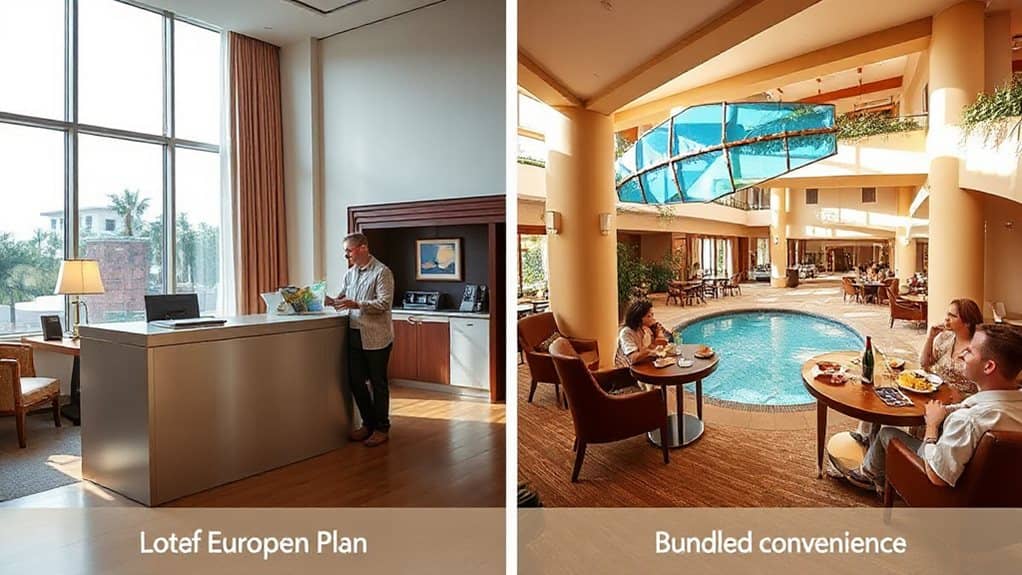
Because you pay only for the room with European Plan hotels, you gain significant control over your spending.
You can discover local dining options, skip hotel meals, and tailor expenses to your preferences.
This flexibility allows you to manage your budget effectively, avoid paying for unused amenities, and allocate funds for activities outside the hotel, giving you greater freedom over your overall travel costs.
European plan travelers can also apply the same pay-for-what-you-need mindset to comfort add-ons during transit, such as choosing adjustable, packable airplane foot hammocks instead of relying on provided seating accommodations.
Which Travel Styles and Destinations Suit Each Hotel Plan Best?
Different travel styles and destinations tend to align better with specific hotel plans based on your preferences and trip goals.
If you favor relaxation in beach destinations like Cancun or Ibiza, All-Inclusive resorts suit you best.
For exploring urban destinations, cultural scenes, and local dining, European Plan hotels offer more flexibility, especially in European cities and diverse destinations outside resort zones.
If you’re bringing any nail products on your trip, remember that TSA liquids rule applies to items like nail glue in carry-on, so bottle size must be 3.4 oz / 100 ml or less and packed in a quart-sized clear bag.
Are Food and Drink Options Different in All-Inclusive vs. European Plan Hotels?

Food and drink options differ markedly between all-inclusive and European Plan hotels, often shaping the overall guest experience. All-inclusive resorts typically offer unlimited food and drinks, with multiple meals and beverages included, but limited to on-site options. Travel security belts may not be relevant to dining, but they help some guests feel safer while exploring nearby restaurants between meals, which can affect how often they venture out. European Plan hotels require you to pay separately, giving you the freedom to discover local dining, with a wider variety of cuisine options.
What Factors Should You Consider When Choosing Between the Plans?
When choosing between all-inclusive and European plan hotels, you should consider your budget and how flexible you want your spending to be, as each option has different cost implications. Think about your travel style and preferences—if you plan to stay mainly on the resort, an all-inclusive plan might suit you best. Whereas exploring outside the hotel favors a European plan. Additionally, assess your dining habits and activity plans to determine which plan aligns with your needs and offers the best value for your trip. Also, if you’re planning frequent day trips or city transit, factor in extra costs and time for licensed cabs or other reliable transportation options to keep your schedule—and budget—on track.
Budget and Cost Flexibility
Choosing between an All-Inclusive plan and a European Plan depends heavily on your travel budget and how much flexibility you want in managing expenses.
If you tend to spend a lot, the ALL-INCLUSIVE VS. European Plan decision hinges on whether you prefer predictable costs or enjoy exploring local options.
Consider your spending habits to choose the best plan for your budget.
Travel Style and Preferences
Your travel style and preferences play a significant role in determining which plan suits you best.
If you value convenience and on-site amenities, an all-inclusive plan may be ideal, especially for resort-focused trips.
Conversely, if you prefer exploring local culture, trying diverse foods, and maintaining flexibility, a European plan aligns better with your desire for freedom and independence.
Is One Plan Better for Families, Couples, or Solo Travelers?

The suitability of All-Inclusive versus European Plan hotels depends largely on the type of traveler and their specific needs.
For families, All-Inclusive options often offer better value with bundled meals, drinks, and activities, plus kid-friendly amenities.
Conversely, couples and solo travelers seeking flexibility may prefer European Plans to discover local dining and customize their experiences freely.
For any traveler, keeping essentials secure in busy areas can help you avoid common problems like pickpocketing while you’re out exploring.
How Can You Decide Which Hotel Plan Fits Your Vacation Goals?
To choose the right hotel plan, consider your travel style and what activities you plan to do during your trip.
If you prefer convenience and staying within the resort, an all-inclusive option might suit you best, especially for families or relaxed vacations.
However, if exploring local cuisine and visiting attractions outside the hotel are priorities, a European plan offers more flexibility and control over your expenses.
Travel Style Preferences
Choosing between an all-inclusive and a European Plan hotel ultimately depends on your travel style and vacation priorities.
If you prefer convenience and stress-free stays, an all-inclusive plan suits relaxed travelers who want everything within reach.
Conversely, if your travel style involves exploring local cuisine and experiences, the European Plan offers the flexibility to dine independently and *uncover* new places.
Budget and Expenses
When deciding between an all-inclusive and a European Plan hotel, evaluating your budget and expected expenses is essential.
All-inclusive options often have higher upfront hotel costs but include meals and entertainment, making them economical for extended stays or families.
European Plan hotels have lower nightly rates but require you to budget separately for food, drinks, and activities.
Destination and Activities
Deciding which hotel plan aligns with your vacation goals depends heavily on your destination and the activities you plan to pursue.
For beach resorts and Caribbean islands, all-inclusive options offer convenience and relaxation.
In contrast, European cities favor the European plan, supporting cultural exploration.
Your destination shapes how much flexibility and independence you want in dining and activities.
And Finally
Choosing between all-inclusive and European plan hotels depends on your travel preferences and budget. All-inclusive options provide convenience with bundled meals and activities, ideal for stress-free vacations. European plans offer flexibility, allowing you to select dining and excursions based on your interests. Consider your destination, travel style, and priorities to determine the best fit. By understanding the differences, you can select a plan that maximizes your enjoyment and aligns with your vacation goals.


