Airline safety ratings are based on inspections, safety audits, and compliance with international standards like IOSA. Authorities monitor airline records, including recent incidents, accident history, and enforcement of safety protocols. External lists, such as the EU Air Safety List, also influence ratings. Airlines with ongoing safety certifications and good safety reports receive higher scores. If you delve further, you’ll find deeper insights into the specific factors shaping these evaluations.
TLDR
- Safety audits, inspections, and compliance with international standards like IOSA are primary evaluation criteria.
- Recent incident history and accident records significantly influence safety ratings.
- External safety assessments, such as EU Air Safety List, impact airline safety scores.
- Adherence to safety protocols and pilot training programs contribute to safety performance.
- Industry safety records and participation in safety management programs shape overall safety ratings.
What Factors Do Airlines Use to Evaluate Safety Performance?

Airlines evaluate safety performance using a variety of critical factors, ensuring they meet high standards for passenger safety and operational integrity.
They conduct safety audits, adhere to international safety standards like IOSA, and inspect aircraft maintenance records.
Pilot training, safety incident reviews, and strict safety protocols all influence safety performance, shaping overall safety ratings and ensuring compliance with global aviation regulations.
Because airborne collision avoidance depends on disciplined TCAS(climb or descent commands), airlines also emphasize TCAS procedures and immediate response to alerts as part of their operational integrity.
How Do Safety Audits and Inspections Shape Airline Ratings?
Safety audits and inspections play a crucial role in shaping airline safety ratings by thoroughly evaluating how well an airline complies with safety standards. These safety assessments include inspections, staff evaluations, and procedural reviews aligned with regulatory requirements. Consistent safety inspections influence safety performance, highlighting strengths and weaknesses, which directly impact safety ratings and overall airline safety. In parallel, airlines also benefit from durable, waterproof nylon safeguards in travel equipment systems during passenger handling to reduce risk of gear damage and related safety concerns.
Why Is IOSA Registration Important for Airline Safety?

Since it evaluates an airline’s operational management and control systems, IOSA registration serves as a key indicator of safety compliance. It demonstrates adherence to rigorous safety standards through a thorough safety audit, covering safety management, maintenance, and regulatory compliance. Being IOSA-registered enhances airline safety, improves safety ratings, and signals a strong safety record within the aviation industry. In practice, it’s especially helpful when comparing airlines that operate in highly connected, high-traffic hubs like MTR accessibility
How Do External Safety Lists and Records Influence Ratings?
External safety lists and records play a significant role in shaping airline safety ratings by providing independent assessments of an airline’s operational safety.
Being on the EU Air Safety List or having recent accident history can lower safety ratings.
Airlines registered in the IOSA registry or with good safety performance often receive higher ratings, reflecting safety validation and standards adherence.
Airline policy considerations can also affect how passengers perceive safety by dictating what devices and behaviors are allowed onboard, such as whether certain inflatables are permitted on some carriers.
Do Recent Incidents Affect How Safe an Airline Is?
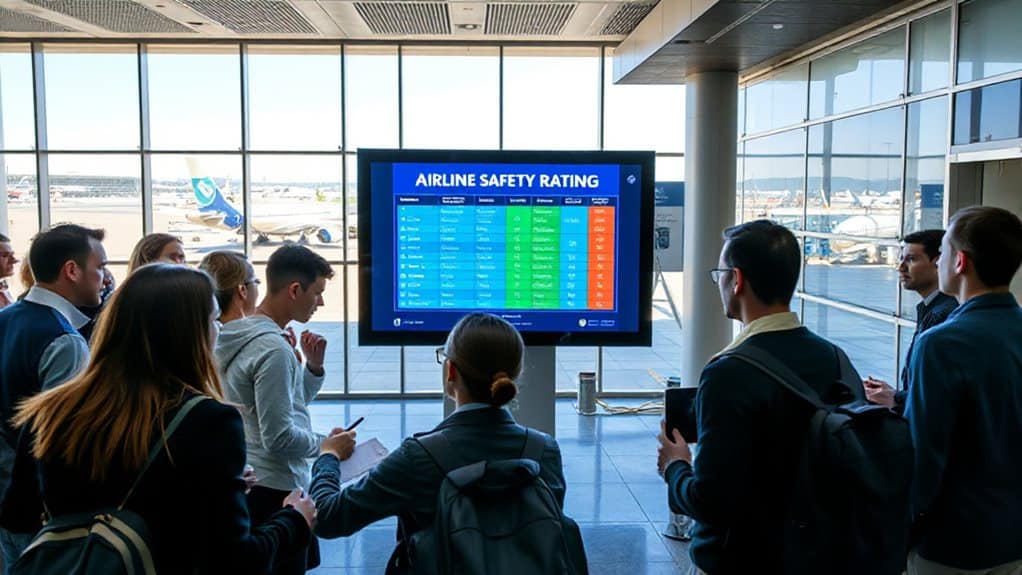
Recent safety incidents can influence an airline’s safety rating, especially if they involve serious errors, operational failures, or fatalities within the past two years. Recent accidents, such as fatal crashes, impact safety performance and safety records. Safety audits and accident history are vital in safety assessments, reflecting an airline’s adherence to safety standards.
And Finally
Understanding how airline safety ratings are determined helps you make informed travel choices. Factors like safety performance evaluations, audit results, and international registrations such as IOSA all contribute to these ratings. External safety records and recent incident history also influence perceptions of safety. By considering these elements, you gain a clearer image of an airline’s safety standards, allowing you to travel with greater confidence and awareness of the measures airlines take to guarantee passenger safety.