
Watch for scammers in busy areas like Mong Kok and Tsim Sha Tsui who sell counterfeit antiques or fake electronics. Avoid strangers offering unsolicited help—they may distract or drug you. Be cautious of fake officials demanding on-the-spot payments or checks. Use secure payment methods and verify sellers before buying. Don’t trust too-good-to-be-true deals online or via social media. Report suspicious activity to authorities immediately—more tips await on staying safe in Hong Kong.
TLDR
- Avoid unsolicited help from strangers in tourist areas, as it may lead to theft or drugging scams.
- Watch for fake monks and counterfeit goods on Nathan Road and in Mong Kok markets.
- Be cautious of overpriced drinks and red-light traps at Temple Street and Wan Chai nightlife spots.
- Verify the identity of anyone claiming to be an official—scammers often pose as police or customs agents.
- Use secure payment methods and avoid too-good-to-be-true deals, especially on social media or fake online shops.
Common Scam Tactics Targeting Tourists

Scammers in Hong Kong are stepping up their game, and tourists are increasingly in their crosshairs. They target you through social media, offering fake investments in crypto or overseas property. Romance scams exploit emotional needs, then demand urgent money. Phone fraudsters pose as officials, pressuring you for data. Watch for unsolicited contacts, guaranteed returns, or immediate demands—these are red flags. This surge in scams aligns with a broader trend, as sham customer service scams alone accounted for 5,575 cases in 2024. Also be aware that travelers should check airline policies and local laws when carrying devices or valuables that could attract thieves.
High-Risk Locations for Tourist Frauds
You’ll find scams lurking in plain sight at Hong Kong’s busiest spots, especially when crowds are thickest.
Cat Street Market swarms with fake antiques, while Temple Street hides red-light traps behind its night buzz.
Watch closely at Mong Kok and Nathan Road, where fake monks and knockoff goods thrive under the neon lights.
Be extra cautious around Victoria Harbour Star Ferry and crowded waterfront viewpoints, where distracted tourists are common targets.
Popular Attractions Under Siege
Often teeming with enthusiastic shoppers and wide-eyed visitors, Hong Kong’s popular attractions can quickly become hotspots for tourist-oriented scams.
At Cat Street Market, you’ll likely encounter counterfeit antiques marketed as genuine. Mong Kok overflows with fake electronics. Wan Chai’s nightlife hides drink-overcharge scams. Street vendors use sympathy tricks, while online fraudsters sell fake concert tickets. Always verify purchases and use secure Wi-Fi to protect your freedom and funds.
Peak Season Scam Hotspots
When you arrive in Hong Kong, especially during peak travel seasons, major transit hubs become prime grounds for scams that target tourists the moment they step off planes, trains, or buses.
Black taxis overcharge, fake officials approach, and friendly strangers may drug you.
Stations and bus stops see fake guides and broken meters.
Stay alert, avoid unsolicited help, and agree on taxi fares first.
Online and Digital Scams While Traveling
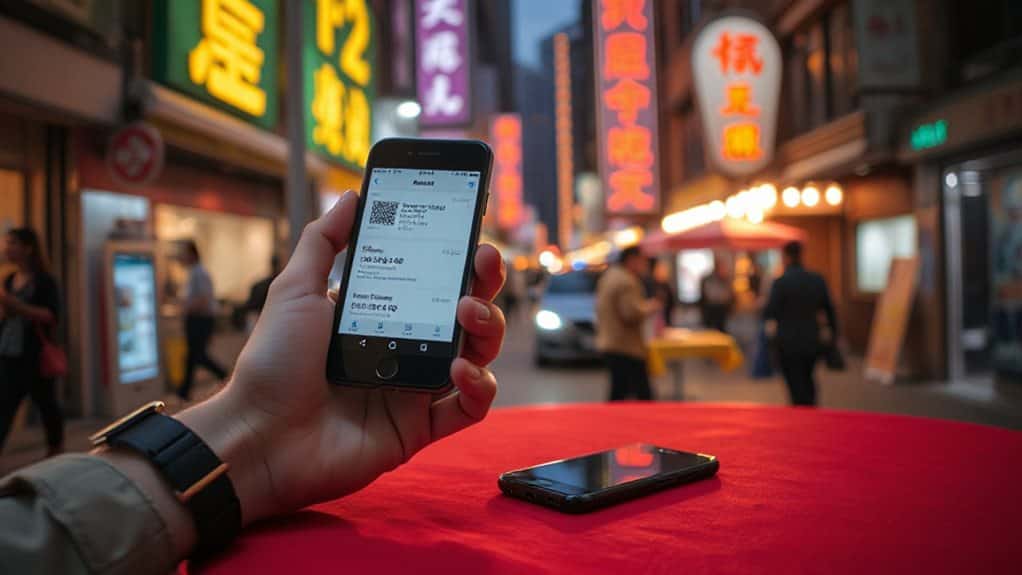
You might encounter fake online shops when booking tours or hotels, especially during peak travel seasons.
Phishing attempts through email or text can trick you into sharing login or payment details while you’re on the go.
Digital payments are convenient, but they also come with risks like fraudulent transactions or vishing calls targeting travelers.
When bringing coffee or coffee-related items from your trip, remember that powdered items over 12 oz in carry-on bags may require additional screening.
Fake Online Shops
Watch out—fake online shops are thriving in Hong Kong, and they’re getting harder to spot. Scammers use fake websites and QR codes, often targeting you during account signups.
With 17.8% of retail transactions suspected as fraudulent, staying alert is essential. They mimic real stores, so always verify URLs, avoid suspicious links, and never share login details to protect your freedom online.
Phishing During Travel
While traveling, you’re more vulnerable to phishing attacks that exploit the urgency and distraction of trip planning. Scammers use fake travel sites, lookalike domains, and QR codes to steal your login and payment details.
During peak seasons, these scams surge, especially via email and messaging apps. Always verify URLs, avoid urgent requests, and never share personal data on unsecured platforms.
Digital Payment Risks
Digital payment scams have taken hold in Hong Kong at an alarming pace, with travelers and locals alike facing heightened risks when making online transactions.
You’re most vulnerable during account login (11.1% fraud rate) or creation, especially on digital platforms. Retail and financial services see high fraud levels, and vishing (36%) and phishing (33%) are top threats.
Stay alert—fraud losses average over $33,500, 2.5 times the global norm.
Fake Authorities and Impersonation Risks

If you’re visiting Hong Kong, you should know that impersonation scams are the most common type of fraud encountered in the city.
Scammers may pose as police or customs officials, especially in busy areas like Tsim Sha Tsui.
They often use urgent claims—like contaminated money or drug checks—to pressure you.
Never follow strangers to fake hotels or pay on the spot.
Verify identities through official channels and report suspicious encounters immediately.
Arrive early and be prepared to show alternative documents if official ID verification becomes necessary.
Shopping and Retail Scams to Avoid
Watch out when shopping in Hong Kong—scams are on the rise, and tourists aren’t the only ones getting caught.
Online shopping fraud jumped 29.2% in 2024, with losses soaring to HK$356 million.
Concert tickets and luxury goods are top targets.
Scammers use fake listings, social media, and cryptocurrency payments.
Always verify sellers, avoid too-good-to-be-true deals, and use secure payment methods.
Job and Investment Traps for Visitors

While you mightn’t be actively looking for work during your visit, scammers are increasingly targeting tourists and residents alike with deceptive job and investment schemes that promise easy money.
They lure victims via WhatsApp or Telegram, offering fake online tasks with high returns. Once you start, they block withdrawals, accuse you of errors, and demand penalty payments—quickly escalating losses. Many schemes also instruct victims to use specific devices or methods to transfer funds or verify identities, which can involve mishandling lithium-ion batteries or other regulated items.
How to Protect Yourself From Financial Loss
You’re far from alone in facing the risk of financial scams in Hong Kong, where digital fraud isn’t only common but rapidly changing.
Always verify unexpected calls or messages, especially from officials or romantic contacts. Never share bank details or click suspicious links.
Monitor accounts regularly, report fraud to police immediately, and use secure networks when making transactions to protect your money effectively. Many victims find that having a college degree can sometimes help with job prospects and awareness of fraud risks.
And Finally
You can avoid tourist scams in Hong Kong by staying alert and informed. Watch for fake deals, pushy touts, and impersonators, especially in busy areas like Tsim Sha Tsui and Mong Kok. Always verify transport costs, check prices upfront, and use official services. Keep your documents secure and never hand them over. Use ATMs inside banks, and monitor your accounts. By staying cautious and prepared, you protect your trip and your money—simple steps make a big difference.


