Your tray table’s height directly affects how much legroom you feel. If it’s too low, you hunch forward, compressing your torso and making space feel tighter. At around 78 cm, the tray supports better posture, reducing knee pressure and improving comfort. Seat pitch and body size also play key roles—more space means better usability. Adjustable trays help, but design trade-offs with seating density matter. Taller passengers especially benefit from thoughtful ergonomics. There’s more to how small changes create noticeable improvements.
TLDR
- Low tray tables force forward hunching, compressing the torso and reducing perceived legroom.
- Proper tray height (~78 cm) improves spinal alignment, enhancing comfort and creating a sense of more space.
- Incorrect tray height increases knee pressure, especially for taller passengers with longer legs.
- Adequate seat pitch (34–40 inches) allows optimal tray use and better legroom utilization.
- Adjustable trays aligned with lap height reduce strain and improve posture, indirectly enhancing legroom comfort.
The Connection Between Tray Table Height and Legroom
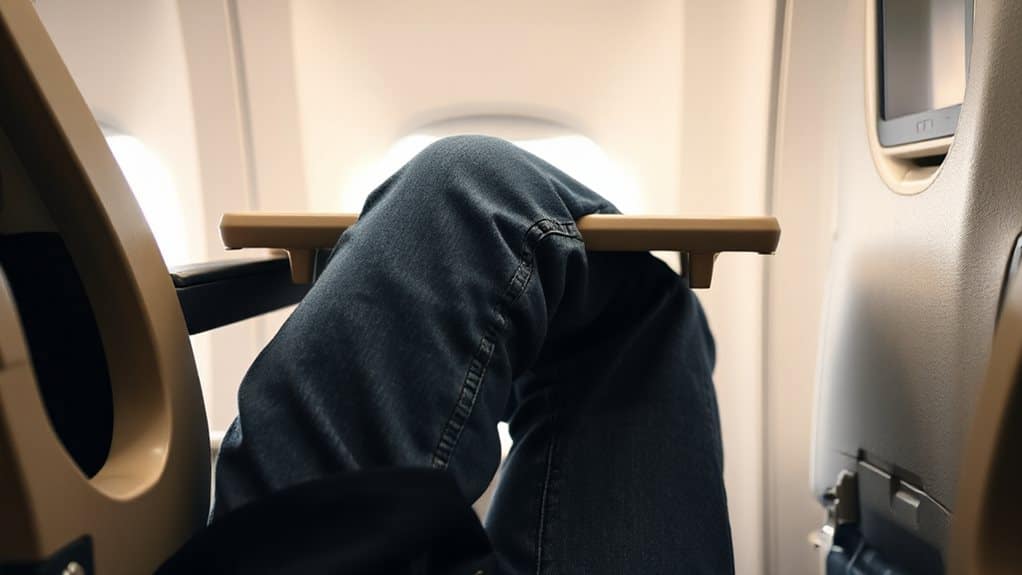
While you mightn’t immediately connect the position of your tray table with how much legroom you feel you have, the two are closely linked in determining your overall comfort during a flight.
A tray table set too low forces you to hunch forward, compressing your torso and making legroom feel tighter. Raising it to around 78 cm improves spinal alignment, opens up space, and reduces pressure on your knees, especially if you’re taller or have longer legs. Proper height adjustment lets you sit naturally, enhancing perceived legroom without changing seat pitch. This optimal height aligns closely with the average comfortable tray table height found in recent studies, which indicates that typical aircraft tray tables are set too low for most passengers. Airline seat width and pitch measurements can further affect how much benefit you get from tray table adjustments, so check your aircraft’s seat width before deciding if other measures (like an extra seat) are necessary.
How Low Tray Tables Restrict Passenger Movement
You mightn’t realize it, but a low tray table can seriously limit how freely you move during a flight. It forces you to hunch forward, restricting neck and upper body motion.
This posture reduces your ability to shift comfortably, especially on long flights. Low tables also limit legroom by encouraging cramped sitting positions, making it harder to stretch or adjust, ultimately restricting your movement and personal space. Gate agents actively enforce carry-on size limits which can affect overhead bin space and passenger seating dynamics.
Impact of Seat Pitch on Tray Table Usability
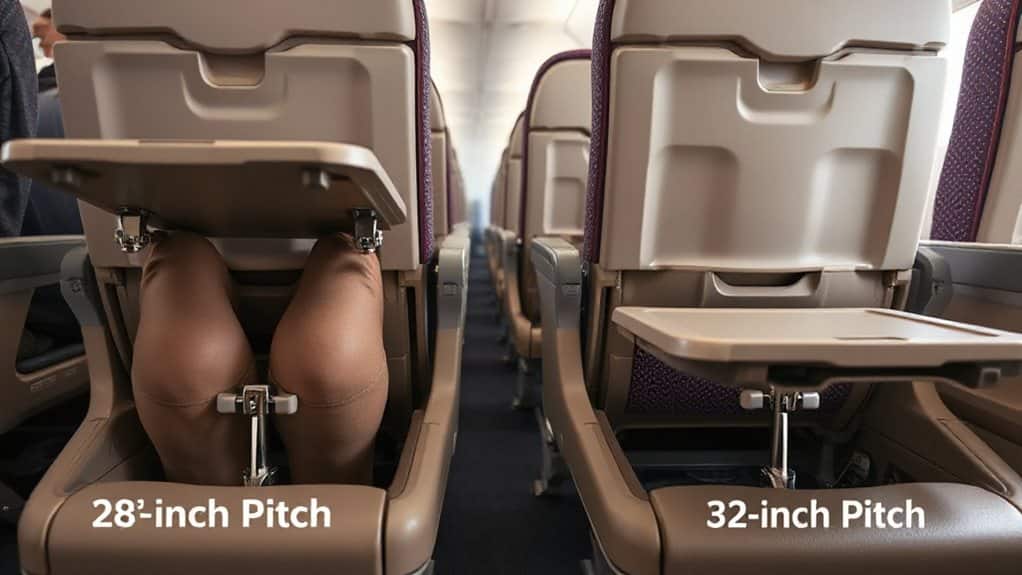
Low tray tables don’t just limit your movement—they also highlight how seat pitch affects your ability to use the tray comfortably. You’ll find eating easier with more legroom, as greater pitch shifts ideal tray height upward.
At 34–40 inches, comfort peaks, and your posture improves. Too little pitch strains your neck, while extra space lets you adjust freely, enhancing overall usability. Exit row seats often provide about 36 inches of pitch giving noticeably better tray usability.
Anthropometry and Personal Space Requirements
You need enough legroom because your body’s dimensions directly affect how comfortably you sit.
As average hip and shoulder widths have increased, personal space on planes must adapt to fit more body types. With seat pitch and legroom influencing both comfort and usability, airlines must balance design to accommodate diverse passengers. Compression bags can be used strategically for carry-on storage to maximize space for personal items in tight cabins, particularly for bulky items like winter clothing and gear space savings.
Body Dimensions Matter
When designing aircraft seating, engineers must account for the wide range of human body sizes to guarantee basic comfort and usability for most passengers.
Your height, leg length, and seated depth directly affect how much space you feel you have. Even with standard seat pitch, taller passengers often struggle, while shorter individuals may find adequate room.
Body dimensions matter when fitting into tight spaces.
Space Impacts Comfort
Aircraft seating isn’t just about fitting bodies into seats—it’s about fitting them comfortably into the space available for movement and activity.
You need enough legroom for knee clearance and tray use, especially at lower seat pitches.
Shrinking space limits comfort, particularly for taller or larger passengers.
Proper tray height—around 78 cm—matches your body’s needs, improving posture and ease during meals or work, while cramped conditions restrict movement and increase discomfort.
Design Meets Diversity
While seat design has long focused on maximizing capacity, it’s becoming clear that one size doesn’t fit all when it comes to passenger comfort. Your body shape and size directly affect how you experience tray table height and legroom.
Studies show most passengers need more than the standard 68 cm, with 78 cm improving neck posture. But taller tables can strain shoulders.
Comfort depends on your unique build, seat pitch, and how you use the space—proving design must welcome diversity to truly work.
Redesigning Tray Tables for Improved Comfort
You’ll notice the new tray table is set at an ideal height, so your arms rest comfortably while eating or typing.
Its ergonomic alignment reduces strain by positioning the surface level with your lap when seated normally.
Some models even offer slight adjustability, letting you tilt the tray for better viewing or writing angles.
Many designs also consider overhead bin and carry-on size constraints to ensure overhead bin compatibility with standard airline dimensions.
Optimal Height Range
If you’ve ever hunched forward to eat a meal on a plane, the problem mightn’t be your posture—it’s likely the tray table.
Current models sit at 68 cm, too low for comfort. You need around 78 cm, ±2 cm, to maintain natural neck alignment. Going higher than that causes shoulder strain.
Adjustable mechanisms like telescoping arms or four-bar linkages can offer you this ideal range, improving comfort during meals, work, or resting.
Ergonomic Alignment Benefits
Because poor tray table height forces you into awkward postures, redesigning for ergonomic alignment directly improves comfort during flights.
You maintain better neck and shoulder angles, reducing strain. Adjustable height, tilt, and swivel let you position the tray for reading, eating, or working.
Proper alignment supports natural sitting postures, enhancing freedom of movement without sacrificing legroom.
Adjustable Design Solutions
Rethinking tray table design starts with innovation that fits seamlessly into the existing aircraft cabin.
You can now adjust your comfort with a Z-shaped platform that extends upward from the tray table to support your head. It’s adjustable for your height, includes charging ports and speakers, and folds away easily—no permanent changes needed.
This smart design saves space while giving you more freedom to relax on long flights.
Balancing Legroom and Seating Density on Aircraft
While airlines aim to maximize seating density for economic efficiency, you face ongoing trade-offs between legroom and comfort in economy class. Slimline seats save space but reduce tray table size.
Seat pitch has shrunk to 30 inches, limiting knee room. Though denser seating cuts legroom, maintaining personal space remains key. You prioritize legroom over tray height, yet both affect your overall comfort. Airlines often set seat pitch and tray dimensions to balance capacity and passenger comfort.
And Finally
You see how tray table height affects your legroom directly. When tables sit too low, they restrict leg movement, especially on compact seats. Seat pitch influences how comfortably you can use the tray, while individual body size plays a role in personal space needs. Redesigning tables to be higher or stowable improves comfort. Airlines must balance space efficiency with passenger needs, ensuring usable legroom without sacrificing seating capacity. Small changes make a measurable difference.