
To find free Wi‑Fi abroad safely, start with reputable venues like chain cafés, major hotels, libraries, and well‑known retail stores, and verify that the SSID matches the signage on site. Use apps such as Wi‑Fi Map, Instabridge, or Boingo to locate encrypted hotspots and see user‑verified passwords. Check for duplicate network names or unusually strong signals that could indicate an evil‑twin, and confirm the captive portal’s URL and certificate before logging in. Enable a trusted VPN with a kill‑switch, use HTTPS, and protect your passwords with a manager. If you follow these steps, you’ll discover even more tips.
TLDR
- Use reputable venues (chains, hotels, libraries) that display matching SSID signage and encrypted networks.
- Verify the hotspot with apps like Wi‑Fi Map or Instabridge, checking user‑verified passwords and offline lists.
- Scan for rogue APs by comparing signal strength, duplicate names, and checking captive‑portal certificates.
- Connect through a trusted VPN (OpenVPN/WireGuard) with kill‑switch and DNS‑leak protection enabled.
- Employ HTTPS, DNS‑Over‑HTTPS, and a password manager; enable two‑factor authentication for any online accounts.
Identify Trusted Free Wi‑Fi Spots for Public Wi‑Fi Safety

Where can you reliably find free Wi‑Fi that won’t compromise your data? Look for chain cafés like Starbucks or McDonald’s, which use consistent security protocols worldwide. Independent European cafés often display passwords openly, lowering phishing risk.
Hotels—especially major chains—offer encrypted lobby and room Wi‑Fi, while budget hostels and airport hotels list official hotspots.
Libraries, community centers, and reputable retail stores also provide verified, name‑matched SSIDs for safe connections. Boingo’s unlimited plan gives access to over one million secure hotspots worldwide.
Top Apps & Websites That Map Safe Public Wi‑Fi Networks
Looking for reliable tools to locate safe public Wi‑Fi while you travel? Wi‑Fi Map offers 150 million hotspots, offline maps, and user‑verified passwords, though data can lag in remote zones. Instabridge tops 2025 lists with quick connections, offline lists, and VPN reminders. Avast Wi‑Fi Finder blends antivirus security with simple navigation. OpenSignal adds cellular context, while Wiman provides community‑driven global coverage. Use these apps to stay connected confidently.
Verify Public Wi‑Fi Authenticity to Avoid Evil‑Twin Hotspots
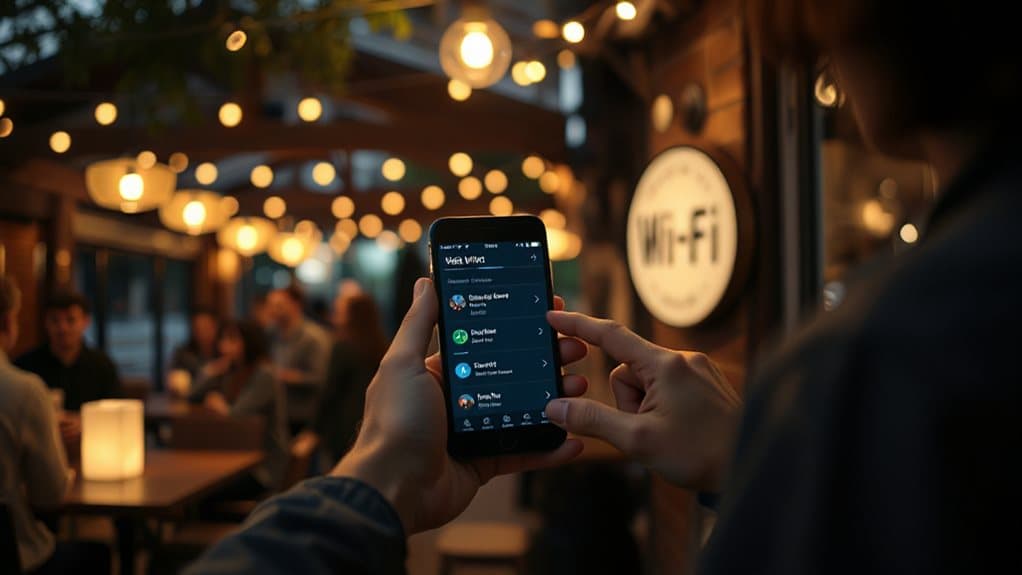
Ever wonder how to tell a genuine hotspot from an evil‑twin that’s trying to steal your data? Check the SSID against venue signage; duplicate names or unusually strong signals hint at a rogue.
Compare signal strength—legitimate APs stay consistent, while twins enhance RSSI.
Use a traceroute or hop‑analysis app to spot extra hops.
Verify the captive portal’s URL and certificate, and run a detection tool like EvilAP_Defender before connecting.
What to Do When Verification Fails on Free Wi‑Fi?
If the SSID check, signal‑strength test, or captive‑portal inspection doesn’t confirm a legitimate hotspot, you need a systematic fallback plan before you start sending any sensitive data.
Forget the network, reconnect with the correct password, and toggle random hardware addresses.
Flush DNS and IP caches, then restart Wi‑Fi or the device.
If needed, temporarily disable firewalls and update drivers before retrying.
Configure VPN Settings That Boost Public Wi‑Fi Safety

Pick a reliable VPN protocol, then enable auto‑connect so the app protects you as soon as you join an untrusted hotspot.
This setting automatically establishes an encrypted tunnel, preventing data exposure if the network drops or changes.
Remain especially cautious in busy transit hubs where crowded areas increase the risk of device theft or opportunistic data exposure.
Choose Reliable Protocol
When you connect to a public hotspot abroad, the VPN protocol you pick determines how well your data stays private and how smoothly your connection runs.
Choose OpenVPN for solid AES‑256 security and firewall bypass, WireGuard for ChaCha20 speed and modern audits, or IKEv2/IPSec for mobile stability.
Avoid PPTP; it’s obsolete and insecure.
Enable a kill switch and pick a no‑logs provider.
Enable Auto‑Connect Safely
Because public Wi‑Fi can be a hotspot for attackers, you should configure your VPN to auto‑connect the moment you join any network. Enable the auto‑connect toggle, turn on the kill switch, and activate DNS leak protection. Verify the SSID with staff before connecting, and avoid open or similarly named networks. This ensures encrypted traffic from the first second, preserving privacy and freedom.
Choose Safe Activities and Avoid Risky Ones on Open Networks
Ever wonder which online tasks are truly safe on a public Wi‑Fi hotspot? Check train schedules, maps, museum hours, or read news on sites that show a lock icon—these are low‑risk because they’re encrypted.
Browse public pages without logging in, and read emails without attachments.
Avoid banking, shopping, or entering personal details, as they expose credentials to potential interception.
Use mobile data for any sensitive activity.
Many airlines require a second seat purchase if you cannot sit comfortably with both armrests down, so consider airline seat width policies when planning travel.
Enable HTTPS, DNS‑Over‑HTTPS, and Protective Browser Extensions

How can you keep your data safe on a public Wi‑Fi hotspot? Use HTTPS everywhere—look for the padlock icon or “https://” before entering passwords, and install the HTTPS Everywhere extension to force encryption on compatible sites. Enable DNS‑Over‑HTTPS to hide your queries from eavesdroppers. Add protective browser extensions that block trackers, scan for injected malware, and provide real‑time Wi‑Fi risk alerts. This layered approach guards against man‑in‑the‑middle attacks and DNS sniffing. Consider also enrolling in TSA PreCheck to speed through airport security and reduce time spent on potentially insecure public networks.
Store & Manage Passwords Securely While Traveling Abroad
Store your passwords in an encrypted manager before you leave, then enable two‑factor authentication on every account you’ll access abroad.
The manager keeps credentials safe from public Wi‑Fi snooping, while 2FA adds a second barrier that thieves can’t bypass with just a stolen password.
Seat widths have shrunk over time, so consider how inner armrests affect comfort when planning device use and sitting for long periods.
Store Passwords
What’s the safest way to keep your credentials accessible while you’re abroad? Use a password manager such as 1Password, BitWarden, or KeePassXC. Enable Travel Mode to limit vaults to essentials, and create temporary travel passwords for every device and account. Turn off “remember me” functions, clear browser stores, and never type credentials on shared machines. Change all travel passwords when you return.
Enable Two‑Factor Authentication
Why rely on text messages when you can secure your accounts with an authenticator app that works offline? Authenticator apps generate codes without cellular service, so you avoid SMS delays, interception, and roaming fees. Choose Google Authenticator, Microsoft Authenticator, or Duo Mobile, scan the QR code during setup, and approve logins via push notifications. This keeps your accounts safe on public Wi‑Fi, even abroad.
Use Encrypted Password Manager
Ever wondered how to keep your login credentials safe while hopping between airports, cafés, and hotels? Use an encrypted password manager like 1Password, which offers Travel Mode to hide non‑essential vaults at borders. Mark essential vaults as safe, enable unique passwords per site, and protect the app with a passcode or biometrics. This keeps credentials secure on public Wi‑Fi without sacrificing freedom.
And Finally
By sticking to verified hotspots, using a reliable VPN, and keeping your connections encrypted, you’ll protect your data while abroad. Choose trusted apps to locate safe Wi‑Fi, double‑check network names, and avoid risky activities on open networks. Enable HTTPS, DNS‑over‑HTTPS, and security extensions, and store passwords in a reputable manager. Following these steps lets you stay connected without compromising privacy or security.