You’d avoid tuk-tuk scams by ignoring “temple closed” lies and checking opening times yourself. Wear covered shoulders and knees to enter temples—rent clothing if needed. Always remove shoes before entering sacred spaces and dress respectfully. Use BTS or MRT instead of taxis to save time and money. Skip Khao San Road’s overpriced bars and Patpong’s drink scams. Stay hydrated, carry cash, and verify street food cleanliness. You’d plan temple visits early and leave room for rest—there’s more to uncover beyond the obvious.
TLDR
- Booking tuk-tuk rides without confirming prices can lead to inflated fares and scams; use metered taxis or ride-sharing apps instead.
- Ignoring temple dress codes may result in denied entry; always cover shoulders and knees before visiting religious sites.
- Overloading your itinerary risks burnout; Bangkok’s heat and traffic make pacing essential for enjoyment.
- Relying only on cashless payments fails—many vendors require cash, so carry enough Thai baht.
- Visiting only tourist hotspots like Khao San Road can be disappointing; explore quieter temples and local neighborhoods for authentic experiences.
Tuk-Tuk Scams: “Temple Closed” Is a Lie?
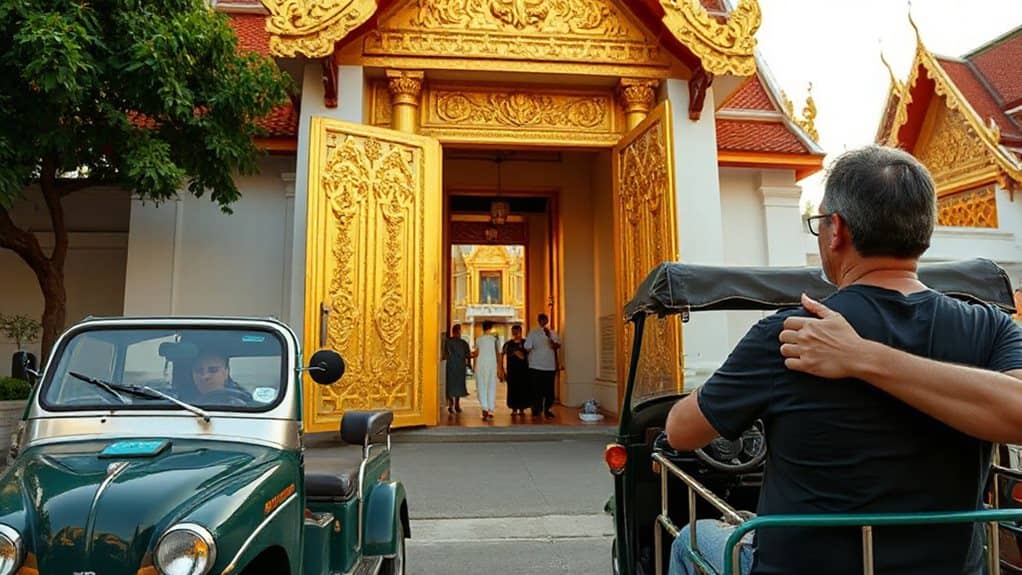
Have you ever been told the temple is closed—only to find out it’s open? Scammers near sites like the Grand Palace claim closures, then offer cheap tuk-tuk tours. They redirect you to gem or tailor shops where drivers earn commissions. Fares start low but rise, and refusals may bring pressure or threats. One traveler reported being threatened with a fake police call when refusing to continue the tour, highlighting how intimidation tactics are commonly used to enforce compliance. Verify temple status yourself, use Grab or metered taxis, and agree on destinations upfront to stay in control. Many visitors also find that checking official opening times for places like the Grand Palace before leaving helps avoid these tricks.
Dress Right for Bangkok Temples: Cover Up
You’ll need to cover your knees and shoulders at most Bangkok temples, so skip the shorts and tank tops.
The Grand Palace and Wat Phra Kaew enforce strict rules—ankle-length pants and sleeves are required, and no scarves over sleeveless tops.
Luckily, rental sarongs and pants are available for 50 THB at major sites if you’re not prepared.
Many visitors also miss seeing the nearby Reclining Buddha at Wat Pho, which is a must-see while temple hopping.
Modest Attire Matters
While exploring Bangkok’s sacred temples, dressing appropriately isn’t just respectful—it’s required. Cover your knees and shoulders: no shorts, tank tops, or sheer clothing.
Opt for cotton or linen long pants, maxi skirts, or breathable blouses. The Grand Palace bans sleeveless tops and rolled-up sleeves; ankles must be covered. Rent sarongs for 50 THB if needed.
Temple Entry Requirements
When visiting Bangkok’s revered temples, dressing appropriately isn’t just about comfort—it’s a firm requirement enforced at every major site.
Cover shoulders and knees: no sleeveless tops, shorts, or sheer clothing.
Long pants must reach your ankles; scarves won’t fix improper tops.
Slip-on shoes help at Wat Arun, where sarongs are rented.
Follow these rules to enter with ease.
Remove Shoes and Respect Sacred Spaces
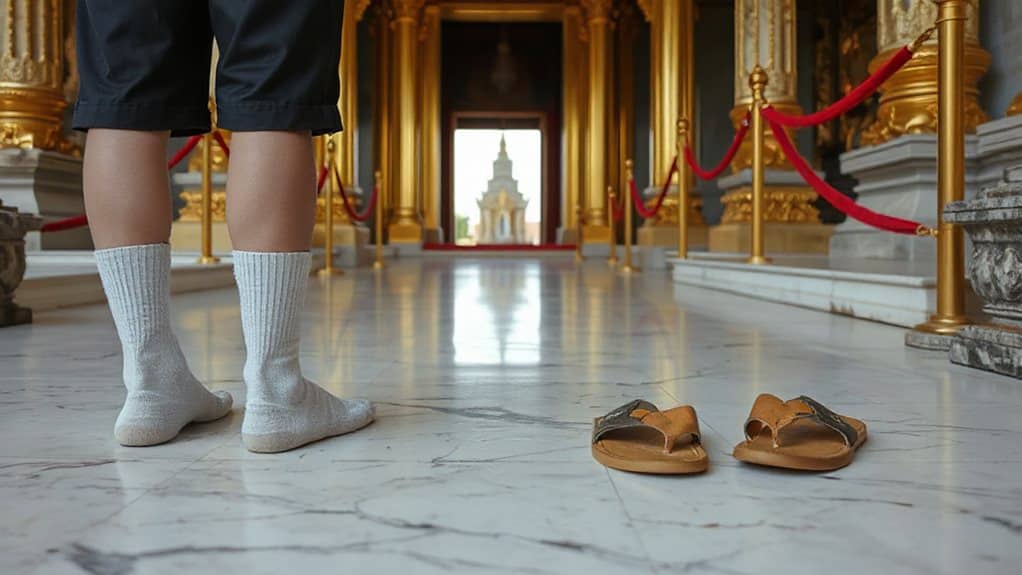
Because shoes carry dirt from the outside world, you’ll need to remove them before stepping into temple buildings, where cleanliness and respect go hand in hand.
Leave shoes facing the exit, wear socks even with sandals, and step over thresholds.
Avoid pointing your feet at Buddha or monks, sit with toes tucked back, and walk clockwise around sacred sites.
Many travelers also make the mistake of dressing inappropriately for sacred sites, so always dress appropriately and cover shoulders and knees before entering.
Skip Risky Tuk-Tuks: Use BTS or MRT
You’ve probably heard about tuk-tuk scams, where drivers overcharge or take long routes, and with Bangkok’s traffic jamming up 9.7 million vehicles, you’ll face delays and pollution riding in one.
Instead, you can hop on the BTS or MRT—both offer air-conditioned, reliable rides with clear English signs and fares from just 16 THB. The BTS runs from 5 a.m. to 1 a.m., while the MRT operates from 6 a.m. to midnight, and both connect across the city, so you’ll skip the risks and save time.
Consider combining your rail trips with a Chao Phraya River boat ride to enjoy scenic views and easy access to major riverfront attractions.
Tuk-Tuk Scams Exposed
Skip the tuk-tuk rides peddled by enthusiastic drivers at tourist hotspots—they often come with hidden detours and inflated prices. They’ll claim temples are closed, reroute you to gem shops, then charge ฿1,000 for short trips.
Some inflate toll fees or demand per-person fares. Without meters, they set arbitrary costs. Protect yourself: use metered taxis, ride-sharing apps, or BTS transit instead.
Bts And Mrt Advantages
Tuk-tuk drivers might promise a scenic ride, but they often waste your time with detours and inflated fares.
Skip the hassle—use the BTS or MRT instead. These trains cut travel time by up to 50%, ease congestion, and move over a million people daily.
Clean, reliable, and fast, they connect key areas without traffic.
You’ll save time, avoid scams, and travel like a local.
Safe Transit Alternatives
Often overlooked by tourists seeking an “authentic” experience, tuk-tuks pose significant safety risks due to reckless driving, frequent speeding, and high rates of drink-driving.
You’re safer using Bangkok’s BTS or MRT, which had zero accidents during the 2026 New Year period.
With strict inspections and reliable service, these options offer freedom and peace of mind while avoiding traffic and dangerous road conditions.
Avoid Noisy Tourist Hubs Like Khao San Road
While Khao San Road has long been synonymous with Bangkok’s backpacker culture, the area’s reputation today doesn’t always match the hype.
You’ll find empty bars and quiet streets where lively crowds once thrived. Entry fees of 300 THB get you into half-empty clubs, and the shift to marijuana shops overshadows its former vibrancy.
Despite its central location, many travelers now skip it, seeking more authentic, less overrated experiences nearby. A three-day visit to Bangkok is often recommended for first-time travelers to balance highlights and avoid rushing, so consider spreading your time to explore alternative neighborhoods.
Escape Crowded Temples and Tourist Traps
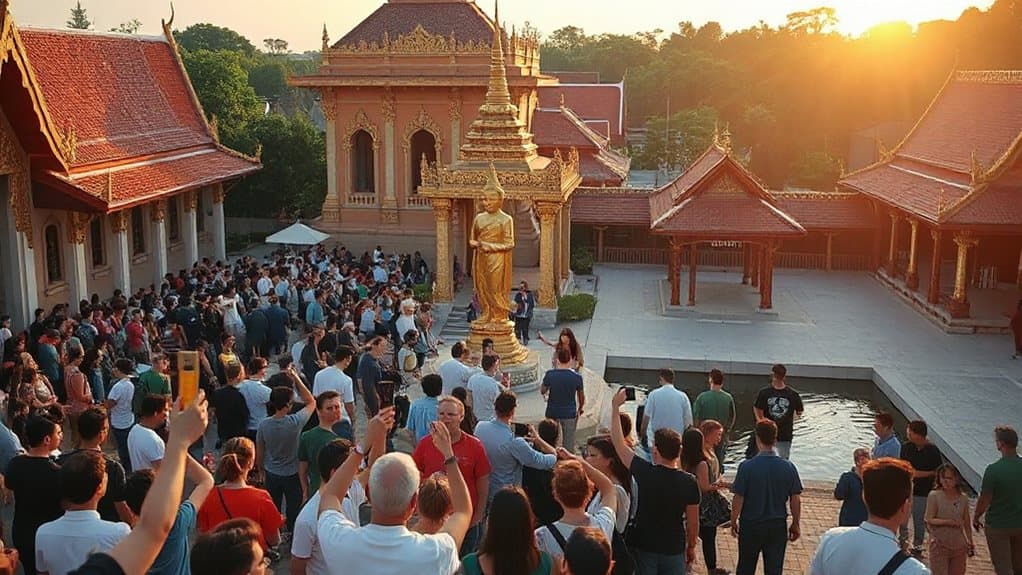
Step beyond the throngs of visitors at Bangkok’s famous temples and you’ll find a quieter side of the city’s spiritual life.
Uncover Wat Ratchanatdaram’s Loha Prasat for 360° views, or visit Wat Thepthidaram’s poet museum.
Seek serenity at Wat Saket’s Golden Mount or Wat Arun’s riverside backstreets.
Reveal hidden gems like Wat Pariwat’s Beckham carving and Wat Samphran’s dragon tower—unique, peaceful, and invigoratingly off the beaten path.
You can combine Bangkok’s calm temple visits with nearby nature and history excursions, such as day trips to explore Erawan National Park and its seven-tiered waterfalls.
Spot Fake Closures and Scam Tour Offers
Watch out for tuk-tuk drivers who steer you away from major attractions with false claims—many will tell you the Grand Palace is closed due to a holiday, construction, or even a lunch break, when it’s actually open.
They often push overpriced tours or detour to scam shops for commissions.
Avoid unsolicited advice, verify closures online, and book tours through official outlets to stay in control of your itinerary and budget.
Avoid Red Light District Scams in Bangkok
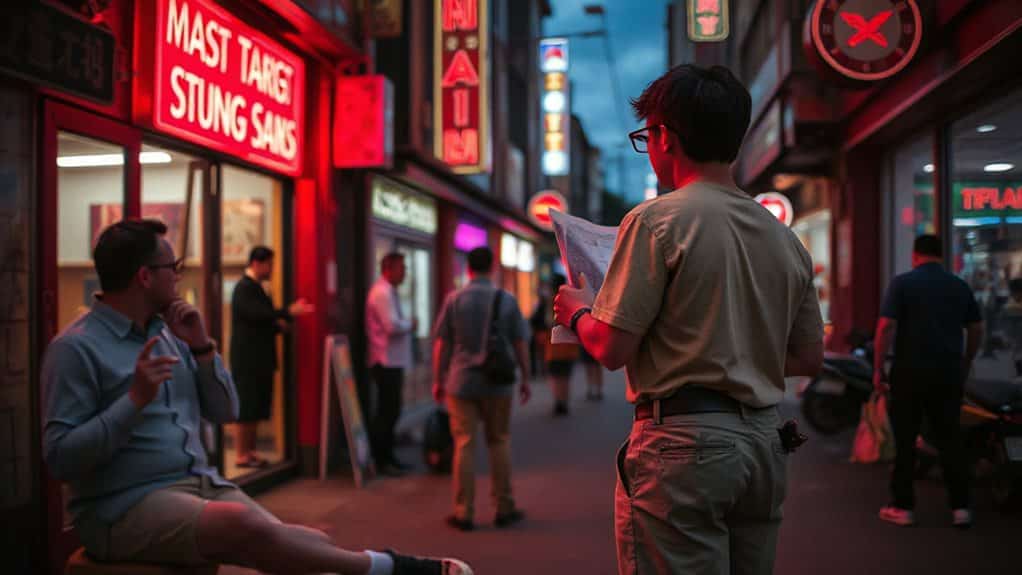
Don’t let a night out turn into a costly ordeal—red light districts like Patpong in Bangkok are hotspots for scams targeting unsuspecting tourists.
Strangers may lure you with cheap drinks, then trap you in bars with inflated bills up to 6,800 baht. Staff often demand forced tips or use threats.
Avoid this by checking prices first, skipping unsolicited offers, and leaving if pressured—your freedom isn’t worth the risk.
Follow Thai Etiquette: Or Be Turned Away
While visiting Bangkok, respecting local customs isn’t just polite—it’s often required for entry into temples, palaces, and even some upscale venues.
Cover your shoulders and knees, remove your shoes before entering sacred or private spaces, and avoid touching anyone’s head.
Offer items with your right hand, never point your feet at people, and bow slightly when greeting.
Follow these rules, and you’ll move freely with respect.
And Finally
You now know what many travelers learn too late. Avoid tuk-tuk scams by ignoring “temple closed” stories. Dress modestly at temples—cover shoulders and knees. Always remove shoes when required. Use the BTS or MRT instead of risky rides. Skip crowded spots like Khao San Road. Respect local customs to avoid being turned away. Stay alert for fake tours and red light scams. These simple steps protect your time, money, and experience in Bangkok.


