
Random airport security checks are unpredictable extra screenings that TSA adds to any traveler to deter threats and catch unknown risks without relying on profiling. The Secure Flight system blends risk‑based data—like one‑way tickets, cash purchases, last‑minute bookings, and name matches—with a random component that flags passengers for additional screening. X‑ray scanners, metal detectors, millimeter‑wave body scanners, and explosive trace detectors are used, while staffing shortages can lengthen queues. ICE agents and CLEAR help verify IDs and speed lines, and preparing your ID, boarding pass, and a TSA‑approved liquids bag can smooth the process. Continue for deeper details.
TLDR
- Random checks add unpredictable extra screening to deter threats, mixing with targeted screening to cover all travelers.
- TSA’s Secure Flight system combines risk analysis (e.g., one‑way tickets, cash purchases, high‑risk destinations) with a random component for selection.
- Screening equipment includes X‑ray and CT scanners, metal detectors, millimeter‑wave body scanners, explosive trace detectors, and biometric readers.
- Staffing shortages cause longer queues and reduced coverage, especially at busy hubs, as fewer experienced agents handle random checks.
- ICE and CLEAR operate at the same checkpoints; passengers should verify IDs and boarding passes early, pack light, and use TSA‑approved liquid bags.
What Are Random Airport Security Checks and Why Does TSA Use Them?
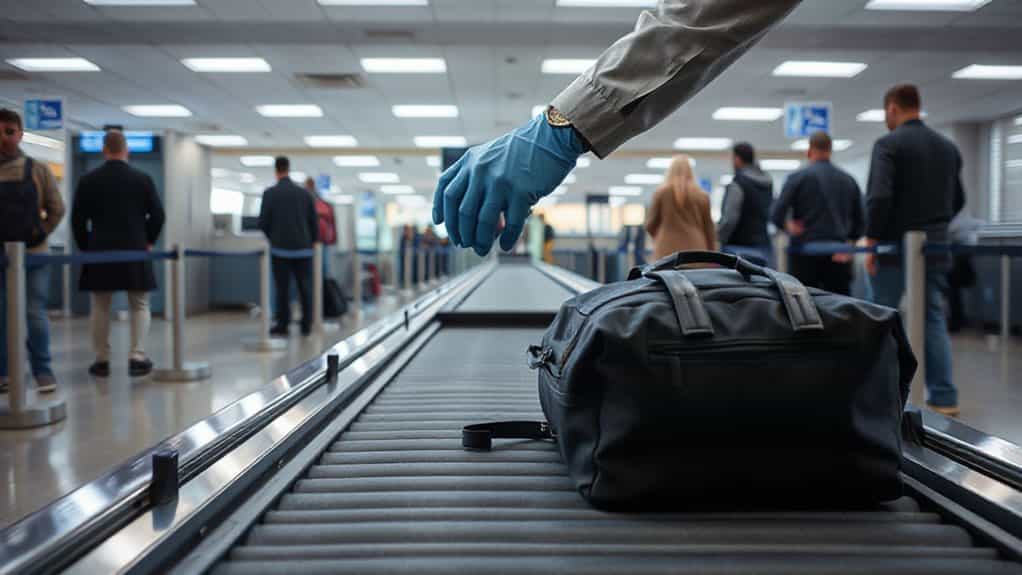
What’re random airport security checks, and why does the TSA use them? These checks involve the unpredictable selection of passengers for additional screening beyond the standard procedures you encounter at U.S. checkpoints.
You’ll notice they target all travelers, regardless of profile, to deter threats through uncertainty.
By mixing random and targeted screening, the TSA spreads vigilance evenly, catches unknown risks, and upholds safety without relying on profiling.
This approach complements broader security laws and technology. One common factor that can increase the chance of review is one-way tickets, which are sometimes associated with extra scrutiny. One‑way tickets are often considered a trigger for extra scrutiny.
How Does TSA Select Travelers for Random Airport Security Checks?
Your ticket may have been flagged by the TSA’s Secure Flight system, which blends risk‑based analysis with a random component to decide who gets an extra screening.
You might be selected for one‑way tickets, cash purchases, last‑minute bookings, or travel to high‑risk destinations.
Frequent passport stamps, name similarities to watch‑list individuals, and irregular booking patterns also raise your score, prompting secondary screening.
Random screening can still happen even when you’ve planned normally.
What Equipment Powers Random Airport Security Checks?
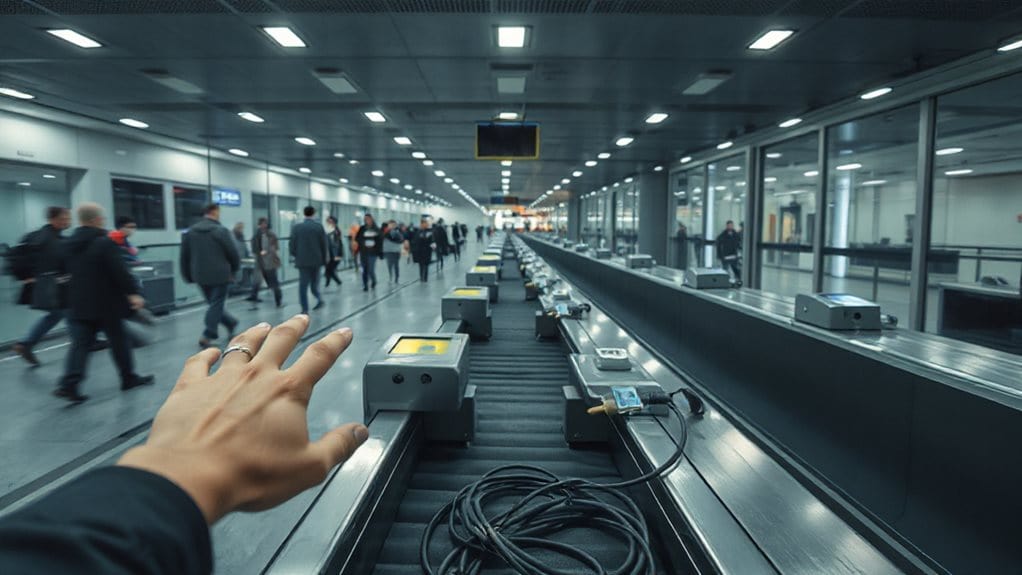
When you step through a TSA checkpoint, a suite of specialized equipment works together to flag potential threats, and each device plays a distinct role in random security checks.
X‑ray scanners, both single‑view and dual‑view, reveal hidden items in bags.
Walk‑through and handheld metal detectors spot metallic objects.
Millimeter‑wave body scanners detect non‑metallic threats, and scar tissue can appear as variations in body density on these systems.
Explosives trace detectors and CT systems sniff chemicals.
Biometric readers verify identities swiftly.
How Are Staffing Shortages Undermining Random Airport Security Checks?
Because staffing shortages cut the number of available screeners, random security checks are being stretched thin across the airport terminal.
You’ll see longer queues, especially at hubs like Atlanta and Houston, where callout rates hit 37‑55 %.
Fewer experienced agents mean reduced coverage and slower threat detection, while the shutdown’s funding gap forces many officers to quit, amplifying bottlenecks and safety risks.
How Do ICE Agents and CLEAR Support Random Airport Security Checks?
You’ll notice ICE agents handling ID verification at the same checkpoints where TSA screens, using the same card readers and procedures to flag travelers with immigration concerns.
Meanwhile, CLEAR speeds up the line for pre‑screened passengers by confirming their biometric data, but it doesn’t interact with ICE or random security checks.
Together, these roles add layers of identification and flow management without overlapping the core TSA threat‑search functions.
In the broader safety landscape, this kind of multi-layering echoes aviation’s use of stringent regulations and advanced technology to reduce risk.
ICE Verification Role
Over a dozen U.S. airports now have ICE agents on the floor, stepping in to fill the gaps left by the ongoing DHS shutdown that has thinned TSA staffing.
You’ll see them checking IDs at card readers, guiding you through entrances, and managing baggage flow.
They wear ballistic vests at busy hubs, follow TSA training, and verify identities on screens, keeping lines moving while supplementing reduced TSA personnel.
CLEAR Bypass Functionality
ICE agents already help keep lines moving, and CLEAR takes that efficiency a step further by letting you skip most TSA steps before you even reach the screening area.
You scan your fingerprint or iris at the pod, show your boarding pass, and a CLEAR ambassador escorts you to the front of the screening line.
This bypass eliminates the ID queue, speeds identity verification, and lets you join the PreCheck lane for lighter, faster screening.
How Should Passengers Prepare for Random Airport Security Checks?
When a random security check is triggered, the best preparation starts with your paperwork and packing habits. Verify your boarding pass, ID, and any SSSS markings early; enroll in TSA PreCheck or trusted‑traveler programs if you qualify. Pack light, empty pockets, and wear easy‑remove shoes. Stay calm, follow lane directions, and be ready for possible metal‑detector or pat‑down checks. Use a TSA-approved quart-sized bag for any liquids so they come out fast if you’re selected for extra screening.
What Strategies Reduce Wait Times When Staffing Is Low?
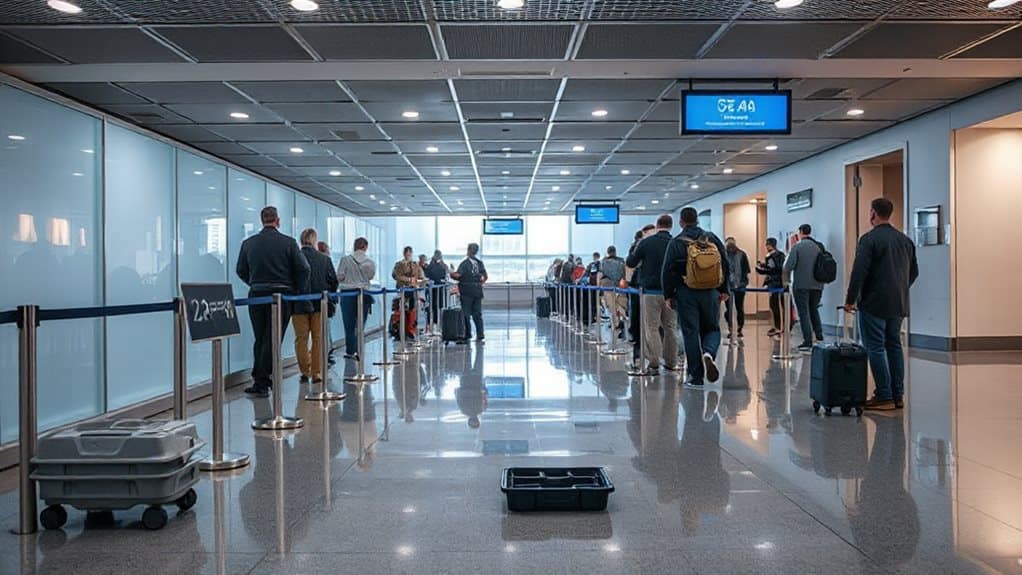
When staffing drops, you can deploy ICE personnel to handle secondary screenings, expand biometric programs to speed up identity verification, and adjust flight schedules to spread passenger arrivals more evenly. These actions let you keep queues moving without adding permanent staff, while technology and timing tweaks reduce bottlenecks. For passengers with lithium batteries in carry-on, remind them that spare batteries and power banks must be kept in carry-on luggage and protected to prevent short circuits.
Deploy ICE Personnel
Because TSA staffing is low, airports can cut wait times by assigning ICE agents to non‑screening duties that keep passenger flow moving.
You’ll see agents monitoring exit lanes, directing crowds, and handling ID checks, freeing TSA staff to focus on baggage and x‑ray work.
This “force multiplier” approach lets you breeze through checkpoints, even when TSA numbers dip.
Expand Biometric Programs
If staffing drops, expanding biometric programs can keep lines moving by automating identity checks and routing travelers to faster lanes.
Enroll in TSA‑PreCheck at 200 airports for $80/5 years, or use Clear’s $200/yr facial‑scan gates for instant front‑of‑line access.
Deploy facial‑recognition kiosks and touchless processing to cut delays, while digital queue monitoring predicts bottlenecks and redirects passengers, preserving speed and freedom.
Adjust Flight Schedules
Typically, airlines shift flight times to avoid peak security periods when staffing is thin, and the effect is immediate.
You can book Tuesday, Wednesday, or Saturday midday flights to dodge crowds, and airlines often stagger departures by a few minutes to spread passenger flow.
Real‑time digital queue monitoring alerts crews to bottlenecks, prompting mobile staff to redirect travelers to quieter serpentine lanes and reduce wait times.
And Finally
You’ve learned that random security checks keep flights safe, that TSA uses risk‑based algorithms and technology to select travelers, and that equipment like advanced scanners and biometric tools powers the process. Staffing shortages can slow lines, but ICE agents and CLEAR help maintain flow. By arriving early, packing correctly, and following TSA guidelines, you can reduce delays. Staying informed and prepared assures smoother travel even when resources are stretched.