You trigger airport security screening when dense metal objects—like firearms, metal‑rich foods, or hard plastics—appear on the X‑ray, when you exceed liquid or aerosol limits (over 100 ml per container or 2 kg total), or when you carry prohibited items such as bleach or large solvents. A TSA “SSSS” code on your boarding pass, stress signals like heavy breathing or nervous gestures, and metal‑laden clothing or accessories also flag you for secondary checks. Ignoring these cues can lead to bag pulls, pat‑downs, and possible fines, so you’ll want to learn the exact steps to avoid them.
TLDR
- Dense metal objects (e.g., firearms, metal fragments, hard plastics) that appear as dark spots on X‑ray scans trigger secondary screening.
- Carry‑on liquids, aerosols, or gels exceeding 100 ml (3.4 oz) or total limits (2 kg/2 L) set off alarms.
- The “SSSS” boarding‑pass code or stress‑related behaviors (e.g., rapid breathing, fidgeting) flag passengers for extra checks.
- Metal accessories, underwire bras, belts with buckles, or densely packed items create scanner shadows and prompt manual inspection.
- Items resembling hazardous materials (e.g., bleach, insecticide, large solvents) are prohibited and cause immediate secondary screening.
Identify Firearms That Trigger Secondary Screening
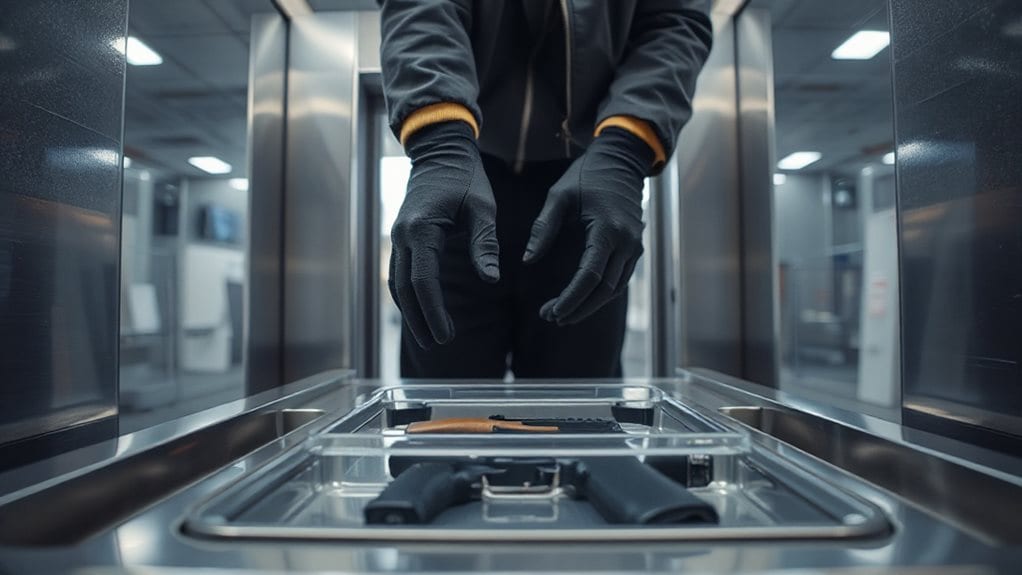
Firearms that set off secondary screening are those the TSA’s X‑ray scanners can spot as dense, metal‑rich shapes that match the profile of a gun.
You’ll see a bag pulled aside behind Plexiglas when the scanner flags a shape consistent with a loaded weapon.
Officers then divert the bag, deny bag access, and summon law enforcement.
Penalties range from $3,000 to $14,950, plus loss of TSA PreCheck.
Packing cubes do not affect what X-ray scanners detect, since they are storage organizers rather than weapons.Over 5,000 firearms were discovered at checkpoints in the first nine months of 2024.
Spot Dense Foods That Set Off X‑ray Alarms
While you’re checking for firearms that trigger secondary screening, you also need to watch for dense foods that set off X‑ray alarms.
Metal fragments in foil, hard plastic pieces, glass shards, stones, bone chips, or dense rubber can appear as dark spots on the scan.
X‑ray systems detect these materials within a second, using radiation far below safety limits, ensuring no health risk while protecting your freedom to travel.
Recognize Hazardous‑Looking Personal Care Items
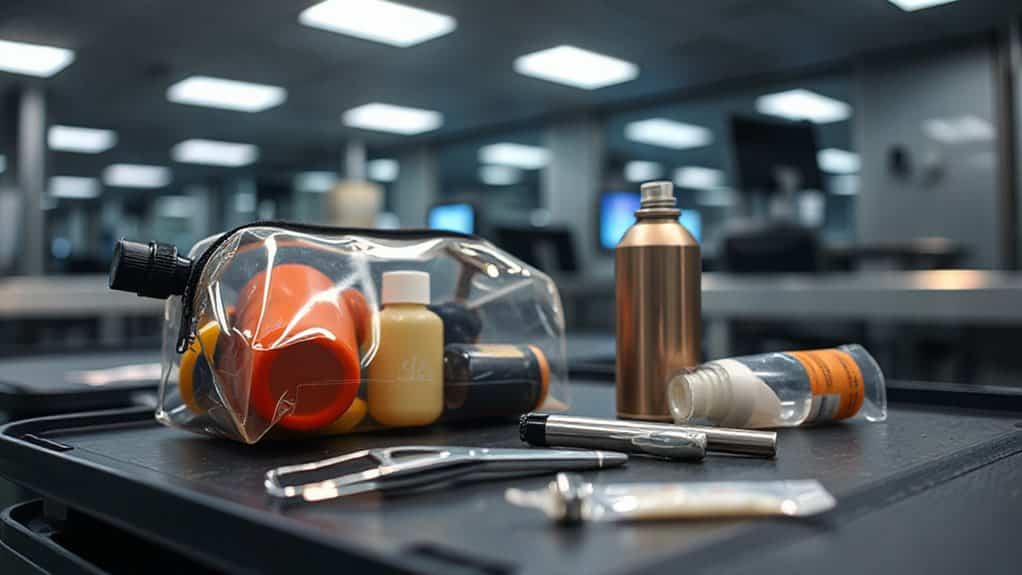
If you spot a personal‑care product that looks like a hazard, you need to know the exact limits and packaging rules that keep it off the prohibited list. Hairspray, deodorant, shaving cream, and gel must stay under 3.4 oz (100 ml) in carry‑on, with protective caps on aerosols. Total aggregate aerosol limits are 2 kg (70 oz) or 2 L, and no container may exceed 0.5 kg (18 oz) or 500 ml. Bleach, insecticide, and large solvents remain banned. Using a quart-size resealable bag can help you keep all approved liquids together and easier to present during screening.
Read TSA‑Monitored Body‑Language Stress Signals
Spotting stress signals in a passenger’s body language helps TSA officers assess potential threats before they become actionable.
You’ll notice nervous tics like tapping fingers, rubbing hands, heavy breathing, throat clearing, or profuse sweating.
Avoiding eye contact, shifty eyes, or gaze aversion raises red flags.
Fidgeting, shifting weight, shuffling feet, leg shaking, and exaggerated grooming are monitored.
Vocal quirks—nonstop talking, whistling, yawning, stuttering, rehearsed answers—also trigger scrutiny.
Aggressive or confrontational behavior, hostile fashion, and line‑jumping amplify suspicion.
Decode Boarding‑Pass Codes That Flag Extra Checks
Decoding the four‑letter “SSSS” code on a boarding pass is essential for anyone who wants to avoid surprise delays at the security checkpoint.
It means you’ve been placed on TSA’s Secure Flight secondary‑screening list, overriding PreCheck.
Expect a metal‑detector walk‑through, a full pat‑down, and bag emptying.
Arrive early, charge devices, and keep powders and cords separate to smooth the process.
Powder spices can be treated as additional screening triggers, so packing them in small, well‑sealed containers can help reduce delays.
Avoid Clothing Choices That May Trigger Alerts
After you’ve decoded the “SSSS” code, the next step is to watch what you wear. Skip metal fasteners, underwire bras, and belts with buckles; they trigger alarms. Add bracelets around blade size in your packing plan, because TSA allows small nail clippers but may require longer-blade clippers to be checked. Avoid layered, bulky outerwear and loose, baggy garments that create scanner shadows. Choose fitted basics, remove jewelry and piercings, and leave hidden‑pocket clothes in checked bags to keep security swift.
Fix Packing Mistakes That Cause Scan Anomalies
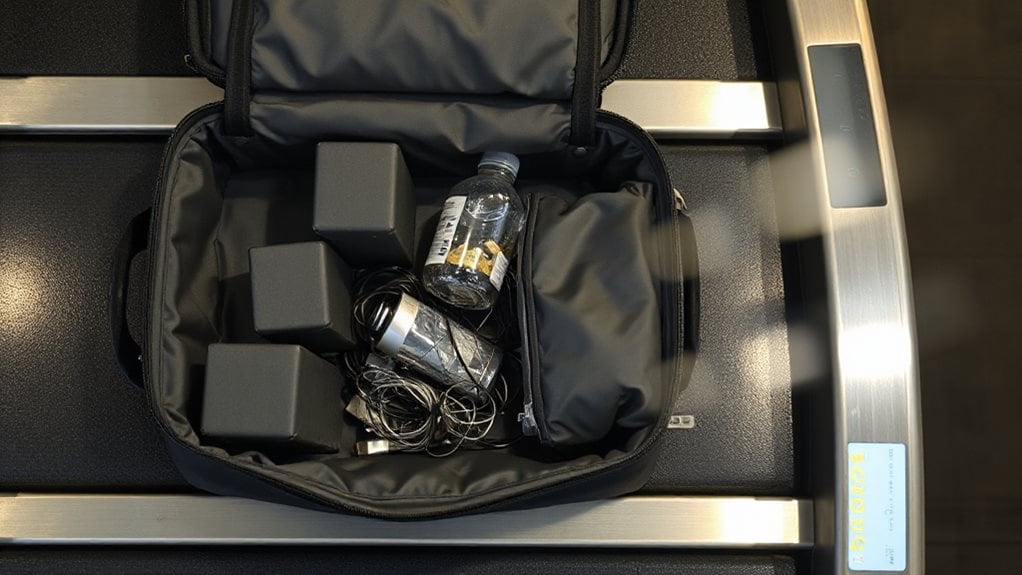
You’ll notice that densely packed items appear as solid masses on the X‑ray, so placing them in separate and using packing cubes enhances visibility and cuts down on manual checks.
Properly arranging liquids, foods, and electronics—keeping each in its own clear container or dedicated sleeve—prevents scan anomalies and speeds up screening.
Also, avoid prohibited materials like flammables and keep lithium batteries in carry-on only to reduce unexpected alarms during screening.
Dense Items, Scan Anomalies
When dense items such as metal accessories, thick fabrics, or layered electronics are packed too tightly, they absorb x‑rays or radiofrequency waves unevenly, creating high‑contrast shadows that trigger scanner alarms.
Separate dense objects into their own pockets, limit layered clothing, and keep electronics in clear sleeves.
Use transparent bags for gels and avoid compressing toiletries.
Proper spacing prevents overlapping signals and reduces false positives.
Proper Placement, Visibility Boost
If you arrange your items with clear zones for each category, the X‑ray scanner can see every object without interference, and TSA agents can assess your luggage quickly.
Separate electronics from liquids, keep devices flat and spaced, and use zip‑top bags for gels.
Avoid stacking dense objects and label containers.
This simple organization clears the view, speeds processing, and reduces secondary checks.
8 Easy Actions to Prevent Security Triggers
You can keep your bag light and free of bulges, which helps the scanner read it smoothly.
Leaving liquids in checked luggage and double‑checking that your ticket includes the proper SSS code further reduces the chance of a secondary inspection.
These simple steps let you move through security faster without unnecessary delays.
Stay mindful of hand luggage rules to avoid triggering extra checks.
Pack Light, Avoid Bulges
Because security scanners react to density and shape, keeping your carry‑on light and free of bulges dramatically reduces the chance of extra screening.
Choose a soft‑sided bag under 22 × 14 × 9 inches, limit weight to 22 lb, and use transparent packing cubes.
Fold clothes flat, avoid thick folds, and empty pockets.
Consolidate electronics, carry one device per category, and power off laptops before screening.
Leave Liquids in Checked Baggage
When you place liquids in checked baggage instead of your carry‑on, you bypass the 3.4‑ounce (100 ml) limit that applies to the quart‑sized clear bag at security checkpoints.
Checked bags have no volume cap, so you can pack larger containers safely.
Just seal them well, avoid flammables, and declare any medical or baby supplies if asked.
This prevents liquid‑related alarms and speeds screening.
Check Ticket for SSS Code
If your boarding pass shows the letters “SSSS” or a single “S” in capital letters, you’ll need to check in with an agent instead of using a kiosk or the airline’s app.
This flag often appears when Secure Flight identifies risk, when you book one‑way or last‑minute tickets, pay cash, or travel to high‑risk destinations.
You can avoid delays by confirming your status online before arriving, choosing regular payment methods, and selecting round‑trip itineraries when possible.
And Finally
By staying aware of the items and behaviors that set off TSA alerts, you can breeze through security without delays. Keep firearms, dense foods, and suspicious personal‑care products out of your carry‑on, and choose clothing that won’t trigger alarms. Pack neatly, follow size limits, and watch your body language and boarding‑pass codes. These simple steps reduce the chance of secondary screening, helping you reach your gate on time.