Keep valuables hidden and inaccessible: wear a money belt under clothes for cash, passport and cards, and use an RFID‑blocking wallet. Choose an anti‑theft bag with slash‑resistant fabric and hidden zippers, and strap your phone to a neck lanyard or cross‑body tether tucked inside a jacket. Stay hyper‑aware in crowded streets, night markets, and busy transit hubs like London’s Central, Northern, and Piccadilly lines. If you feel a tug, clamp the bag, zip compartments, move to a safe spot, and report it. Continue for more detailed steps.
TLDR
- Keep valuables hidden: wear a money belt or neck pouch under clothing for passports, cash, and cards.
- Use anti‑theft gear: choose bags with hidden zippers, slash‑resistant fabric, and RFID‑blocking wallets.
- Stay vigilant in crowds: regularly check belongings after bumps, especially on busy transit lines and night markets.
- Secure phones and cameras with straps or lanyards tucked inside clothing; never leave them unattended on tables.
- React instantly to a tug: pull the bag close, zip compartments, shift weight, and move to a safe spot before reporting the incident.
Learn the Single Most Effective Pickpocket‑Prevention Rule
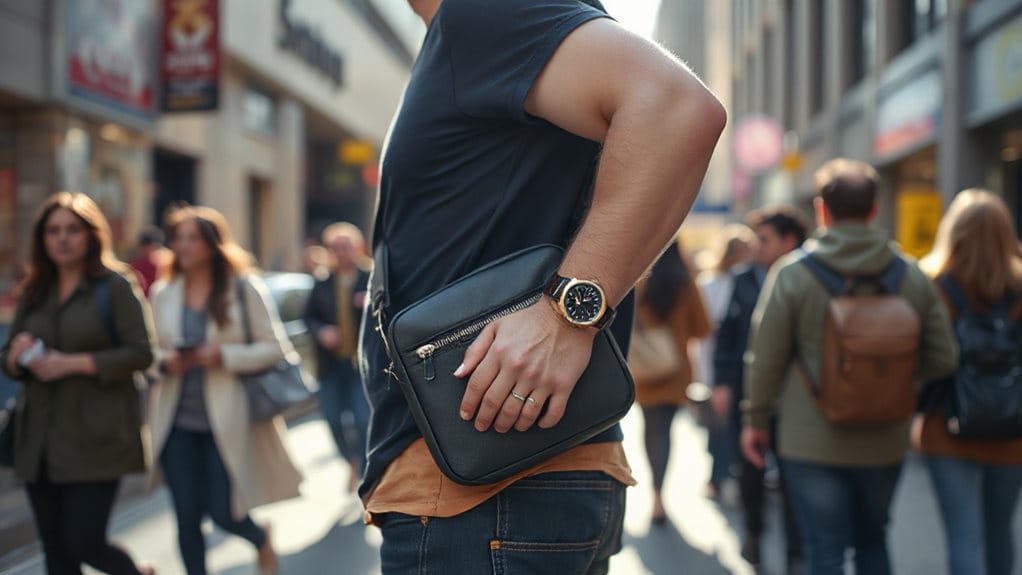
When you travel, the single most effective rule for preventing pickpocketing is to keep your treasures hidden and inaccessible to strangers.
Wear a money belt under clothing for passports, cards, cash, and add RFID protection.
Split cash and cards across wallet, hotel safe, and belt so loss of one item doesn’t cripple you.
Stay hyper‑vigilant, check belongings after bumps, and loop bag straps around your arm or leg.
Also, in crowded hotspot areas like Khao San Road, keep your bag secured and your hands off open pockets to reduce opportunities for thieves.
This disciplined routine safeguards freedom while you venture.
The majority of thefts are non‑violent and avoidable.
Spot Pickpocket‑High‑Risk Zones: Crowds, Nightlife, Transit
If you walk through crowded streets, lively nightlife venues, or packed transit hubs, you’ll encounter the zones where pickpockets operate most aggressively. In Barcelona’s Las Ramblas, Prague’s Old Town Square, and London’s Camden Market, dense foot traffic fuels thefts. Nightlife hotspots like Amsterdam’s De Wallen, Berlin techno clubs, and Thai night markets draw opportunists. Transit hotspots include Paris Metro, London Tube, and Victoria Station, where packed cars and platforms simplify pickpocketing. On the London Underground, you’re especially likely to face thefts on the Central, Northern, and Piccadilly lines during busy travel times.
Hide and Organize Valuables on the Go
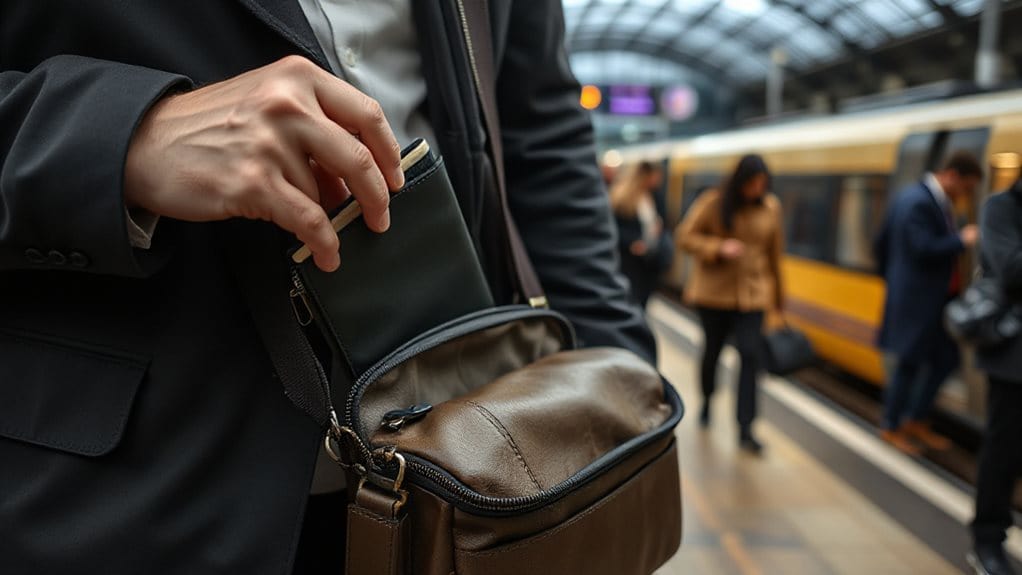
Because pickpockets thrive on easy access, you should keep your assets hidden and organized at all times. Use an anti‑theft bag with hidden zippers and slash‑resistant fabric, and add an RFID‑blocking wallet for cards. Slip a money belt or neck stash under clothing for cash and passport. Pack a portable safe in hotel rooms, and limit carry‑ons to essential items only. Tracking devices and digital backups add extra security. Also, in crowded places like London Eye and Tube stations, keep your phone and bag secured and avoid setting them down or loosening your grip.
Use Pickpocket‑Proof Photo and Phone Techniques
Secure your phone and camera with a neck lanyard or strap that tucks the device inside a shirt or jacket pocket, keeping it out of sight while you move through crowded streets.
Use a cross‑body lanyard or wrist tether to keep the phone attached to you, and choose anti‑theft cases with built‑in straps.
Hide the device in a lockable travel purse or anti‑theft bag, and add a Tile tracker for quick location.
Avoid leaving phones on tables and keep eyes on surroundings.
In crowded metro stations or near major landmarks, be extra alert for stranger distractions and possible bracelet or petition ploys.
Apply Front‑Pocket and Money‑Belt Techniques for Cash and Cards
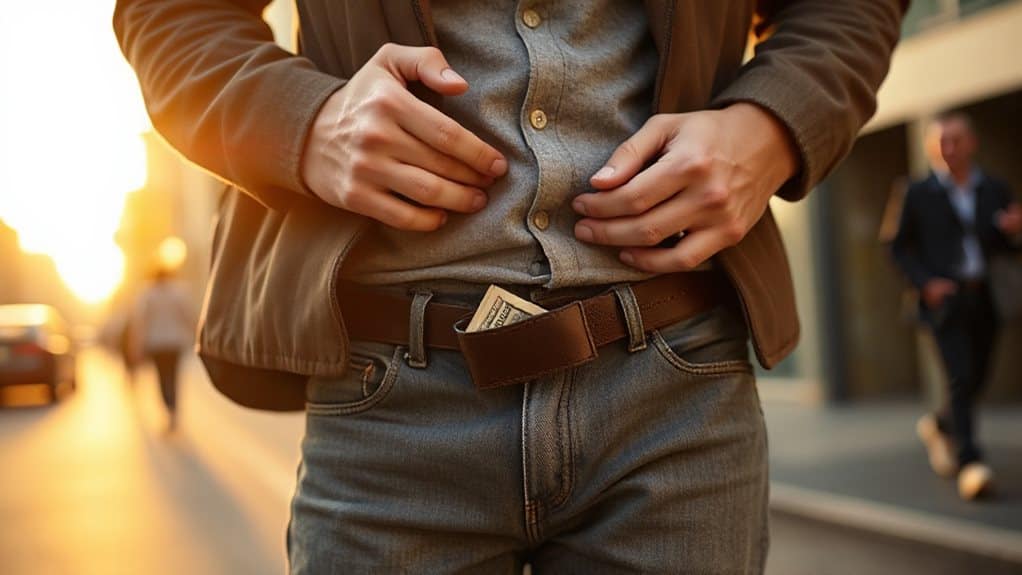
You’ll keep cash and a card in a front pocket that’s snug and easy to reach, limiting the contents to just the essentials so a thief can’t spot a bulky outline.
Because pickpockets are a known risk in crowded areas like Dubai Marina and JBR beachfront, keep your phone, wallet, and backpack secured at all times.
When you need extra protection, slip a slim, RFID‑blocking money belt under your shirt and use its zippered pockets for passports or spare cash, keeping it snug against your body.
Combining the front pocket for daily access and the belt for hidden important gives you both convenience and a discreet layer of security.
Secure Front‑Pocket Placement
When you keep cash, cards, and IDs in a buttoned or zippered front trouser pocket, you reduce the chance that a pickpocket will target you, since experts rarely reach for those pockets.
Use a tight‑fitting wallet, add a rubber band for friction, and zip the pocket to hide bulges.
Distribute items across multiple front pockets, and keep a Bluetooth tracker or decoy wallet nearby for quick checks.
Discreet Money‑Belt Usage
Keeping cash and cards in a front pocket reduces exposure, but adding a discreet money‑belt gives an extra layer of protection for the items you can’t fit into a shirt.
Slip the belt under your pants, strap it at waist, and tuck it beneath your shirt.
Use its zippered sections for cash and cards, and keep the RFID‑blocking fabric facing outward.
Retrieve only what you need, then reseal quickly.
This hidden, slash‑proof system stays comfortable, stays out of sight, and lets you move freely without risking theft.
Stay Alert for Pickpocket Threats on Public Transport and Boardwalks
Usually, crowded buses, subways, and boardwalks create perfect opportunities for pickpockets because the bustle distracts passengers and narrows personal space.
You should keep bags zipped, pockets hidden, and eyes on surroundings, especially during peak travel times when incidents spike.
In high‑risk cities like Barcelona, Paris, and Rome, stay near staff, avoid rear pockets, and be extra vigilant at night or during rushes.
In Hong Kong, avoid unsolicited help from strangers in busy tourist areas to reduce risks of distractions that can lead to theft.
Safe Routes and Timing for Tourist Corridors
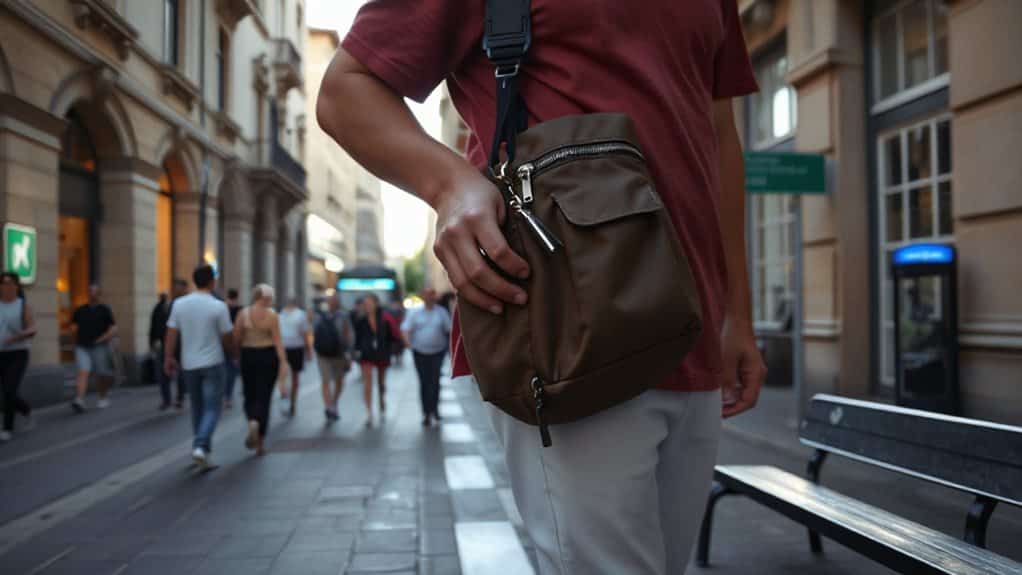
Crowded buses and boardwalks are just the start; once you’re out on the main tourist corridors, the same pickpocket tactics can follow you if you’re not careful.
Travel in daylight, especially 10 AM‑4 PM, and avoid dawn or dusk.
Choose well‑lit routes with raised medians, roundabouts, and limited driveways.
Early mornings or after 8 PM’re riskier.
Use risk maps to pick low‑incident corridors.
Immediate Actions When You Sense a Pickpocket Trying
You’ll often recognize a pickpocket’s move the moment you feel a slight tug or notice a stranger edging too close.
Immediately clamp your hand around the bag, pull it close, and straighten your posture.
Zip any open compartments, tuck your phone into a front pocket, and shift your weight to block access.
Keep your head up, scan the crowd, and move to a safer spot without stopping.
Local Pickpocket‑Prevention Resources: Hotlines, Safes, Apps
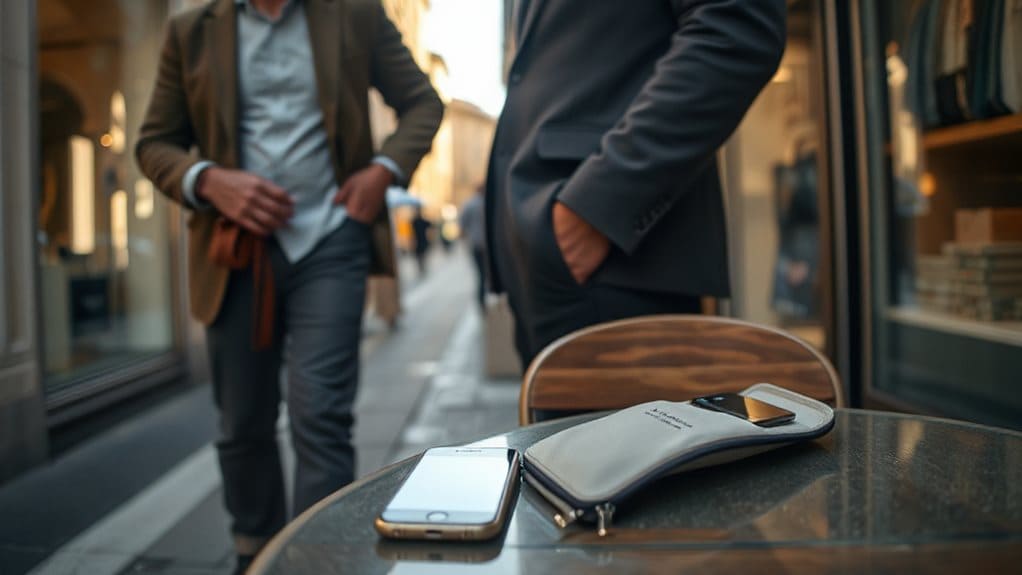
If you spot a pickpocket in action, knowing the local resources can make the difference between a quick recovery and a prolonged hassle.
Call a tour guide, bus driver, or airline rep, then file a police report for insurance.
Store spare cards and cash in the hotel safe, keep digital copies in a secure cloud app, and use RFID‑blocking wallet apps for added protection.
Review and Adjust Your Security Plan After Each Day’s Activities
A quick end‑of‑day review lets you spot patterns and fix gaps before they become problems. Scan for distractions, note high‑risk spots, and assess fatigue.
Inspect bags, straps, locks, and slash‑proof features.
Count cash, cards, and documents, and separate copies. Adjust alertness, bag position, and phone use.
Apply “don’t lose it” checks, update habits, and record effective deterrents for tomorrow’s freedom‑focused travel.
And Finally
Stick to the single rule: keep important things out of sight and secured. Identify high‑risk spots—crowded markets, nightclubs, transit hubs—and stay alert. Use hidden pockets, money belts, and lockable bags to organize cash, cards, and phones. Follow safe routes and timing, and act quickly if you feel a tug. Check local hotlines, safes, and apps for extra help. After each day, review what worked and tweak your plan for the next journey.