
Your experience at the airport depends heavily on its layout. A well-designed airport offers direct pathways from security to gates, clear signage, and intuitive wayfinding, making orientation easier. Spacious waiting areas, flexible interior features, and dedicated lanes help prevent congestion during busy times. Incorporating technology like real-time sensors and predictive analytics improves passenger flow management. Planning flexible spaces guarantees the airport can adapt to future growth, maintaining efficiency. To uncover how these strategies work together, continue exploring detailed airport layouts and design tips.
TLDR
- Efficient layout with direct pathways reduces walking distances and prevents congestion.
- Clear signage and visual cues enhance wayfinding, minimizing passenger confusion and delays.
- Spacious waiting areas and dedicated lanes streamline circulation during peak times.
- Technology like sensors and digital displays enable real-time flow monitoring and adjustments.
- Flexible interior spaces adapt to passenger volume changes, maintaining smooth movement and operational efficiency.
How Airport Layout Affects Passenger Flow
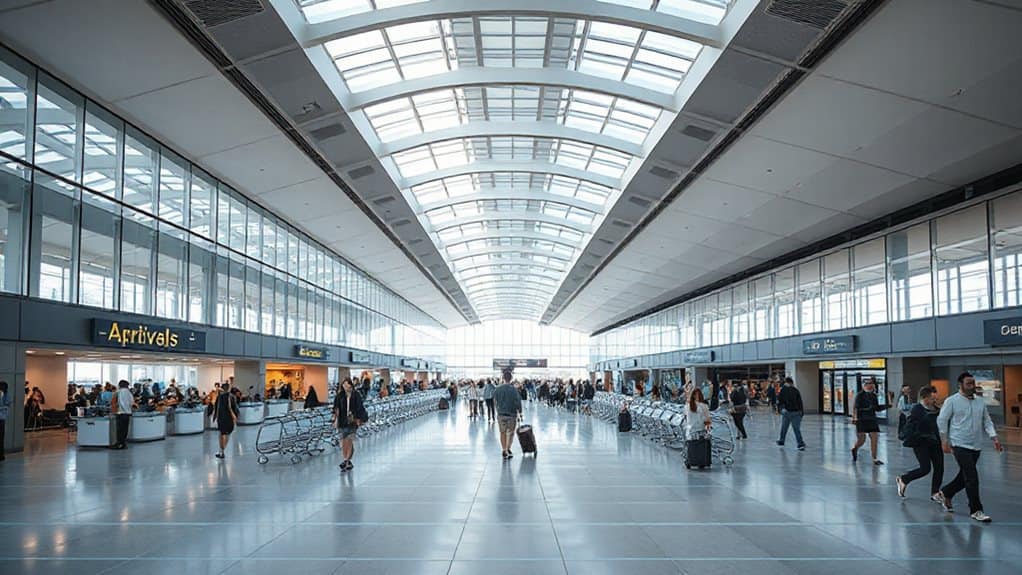
The layout of an airport plays a crucial role in how efficiently passengers move through the facility. A well-designed airport layout enhances passenger flow by creating direct pathways between security checkpoints, customs, and gates. Clear wayfinding and strategic terminal design reduce congestion, facilitate passenger movement, and improve overall airport efficiency. Flexible layouts also adapt to changing passenger volumes for smoother operations. Because passenger behavior in terminals can affect crowding—such as when onboard rules discourage chewing tobacco use—airport operators also need to consider how policies and enforcement at checkpoints influence movement.
Designing Signage and Wayfinding for Seamless Navigation
Effective signage and wayfinding are essential components of airport design that guarantee passengers can steer the facility with minimal confusion or delay.
Clear, consistent signage, visual cues like color-coded pathways, and large fonts improve orientation.
Digital maps and wayfinding displays at key points help streamline passenger flow, guiding travelers intuitively and reducing unnecessary decisions throughout the terminal.
Just as aircraft rely on visual scanning for collision avoidance, airports can help reduce “missed opportunities” by making critical navigation information immediately visible and easy to interpret at decision points.
Creating Interior Features That Reduce Congestion
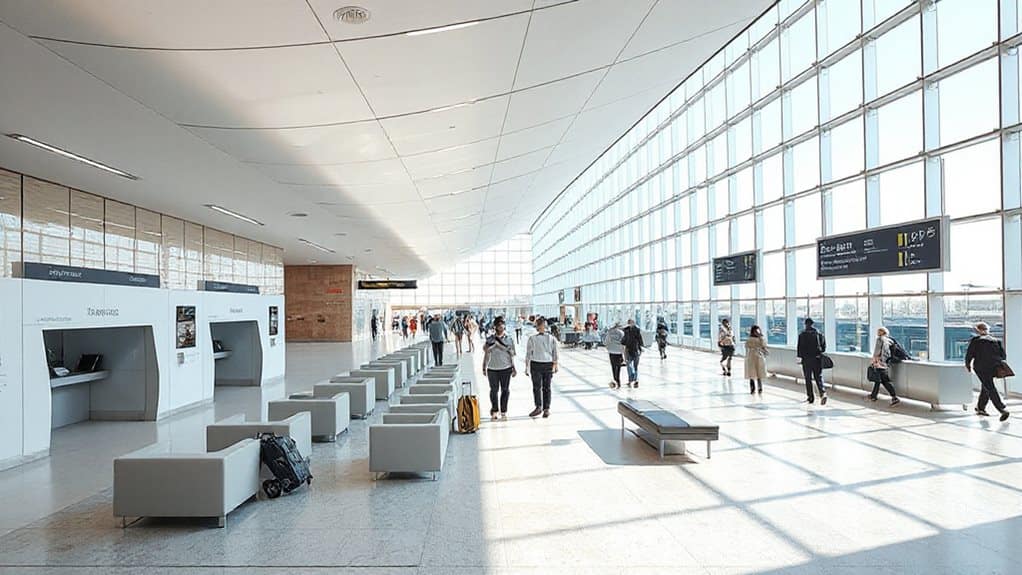
Creating interior features that reduce congestion involves careful planning of space and circulation pathways to guarantee smooth passenger movement throughout the airport.
Incorporate flexible design with modular interior elements, spacious waiting and queuing areas, and dedicated lanes for security and retail zones.
These features direct circulation, improve passenger flow, and minimize bottlenecks, ensuring efficient congestion reduction during peak travel times.
A key accessibility consideration is planning around seat belt extenders so passengers who need them can be accommodated promptly without disrupting boarding and movement.
Using Data and Technology to Optimize Passenger Movement
Utilizing data and technology reshapes how airports manage passenger flow. Real-time data from sensors and digital platforms helps identify bottlenecks immediately. While predictive analytics and heat maps support capacity optimization. These tools enable airports to make informed decisions, reduce congestion, and enhance passenger experience through efficient passenger flow management.
All of this is achieved while adapting layouts and resources flexibly, and the integration of real-time passenger tracking can further improve scheduling and reduce unnecessary holding patterns.
Planning Flexible Airport Spaces for Future Growth
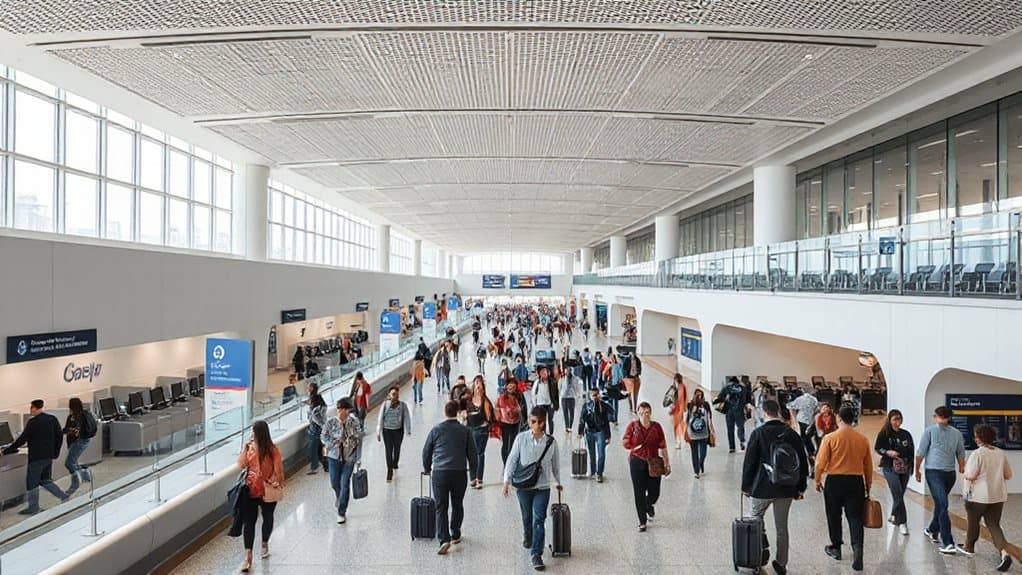
Planning flexible airport spaces involves designing areas that can be easily reconfigured to meet future growth and changing operational needs. Using modular layouts and adaptable infrastructure, such as movable walls and adjustable seating, allows terminal zones to respond swiftly. Incorporating scalable IT systems and reconfigurable spaces guarantees smooth passenger flow and efficient expansion as passenger volumes increase over time. Supporting comfort and circulation at seats—such as by footrests that reduce leg fatigue and improve circulation—can also help maintain smoother passenger movement during longer waits.
And Finally
Effective airport design markedly improves passenger flow by optimizing layout, signage, and interior features. Incorporating advanced data and technology helps manage congestion and adapt to future growth. Flexible spaces allow for scalability and changes over time, ensuring smoother travel experiences. By focusing on these elements, airports can reduce delays, enhance safety, and provide a more comfortable environment for travelers. Ultimately, thoughtful planning and innovative design are essential for efficient airport operations and passenger satisfaction.