
To use a hotel room safe properly, first identify its type, such as electronic or mechanical, and locate the reset or operation buttons. Set a secure, memorable code by following the instructions, then test it thoroughly before locking valuables inside. Always confirm the safe is fully closed and latched before leaving. If problems arise, reset the safe or change the code for security. Continuing below reveals detailed steps to maximize your safe’s security during your stay.
TLDR
- Identify the safe’s lock type and locate the reset or operation buttons inside the battery compartment or on the door edge.
- Set or change the safe’s code, then test it multiple times to ensure proper functioning.
- Fully close the safe door and turn the handle or knob to lock it securely.
- To unlock, enter the correct code and press the designated button, then verify the door opens smoothly.
- Confirm the safe is fully locked before leaving and avoid sharing or leaving the code accessible.
Understand the Different Types of Hotel Safes and How They Work
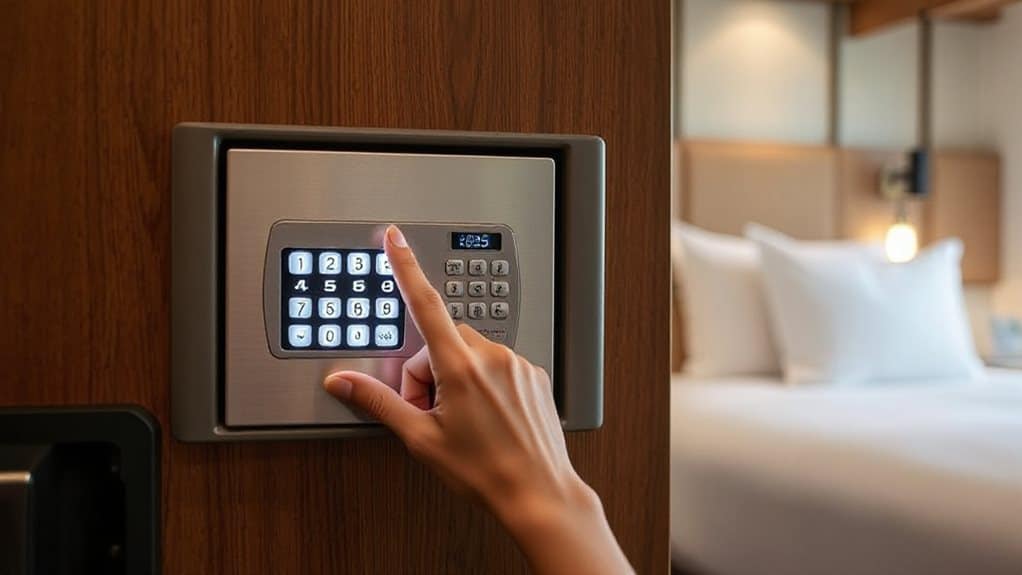
Understanding the different types of hotel safes is essential for knowing how they work and which may best suit your needs.
Electronic safes use a digital keypad for quick access.
Lock safes often rely on physical keys or combination dials.
The safe door secures your belongings, with biometric options offering fingerprint recognition for added security.
Just like airplane footrests can have different compatibility and rules by airline, airline policies may affect how certain travel security devices are allowed or used depending on where you’re staying and traveling.
Find and Prepare Your Hotel Safe for Use
Start by locating the safe in your room, which is usually found in closets, cabinets, or mounted on walls.
Next, identify the type of safe you’re dealing with—electronic, mechanical, or biometric—and check for any reset or operation buttons, often hidden inside the battery compartment or on the door edge.
Finally, make certain the safe is empty and powered correctly, especially if it’s electronic, to prepare it for secure use. Also, always follow the airline-style guidance of using seat belt extenders when needed to ensure proper fit and safety.
Locate the Safe Properly
Many hotel safes are installed in easily accessible locations, such as inside closets, behind panels, or near the room’s entry area.
Before using, inspect the safe’s location to verify it’s secure, stable, and free of debris.
Check for visible instructions or labels, and confirm the safe is unobstructed.
Properly locating and inspecting the safe sets the foundation for secure use.
Check Safe Lock Type
To properly use the safe, you need to identify the safe lock type. Check if it’s an electronic safe with a digital keypad, a mechanical safe with a keyhole, or a biometric safe with a fingerprint scanner.
Look for labels or instructions that specify the lock type and reset code, especially if you need to change default settings or access it securely.
Ensure Safe Is Empty
Have you checked that the safe is completely empty before storing your valuables? Open the safe and verify it’s clear of any previous contents or debris.
Make certain it functions properly by testing the lock with an item or operating it while empty.
Guarantee the door closes fully and securely to prevent spills or unauthorized access later.
How to Set or Change Your Safe’s Code?
To set or modify your hotel safe’s code, locate the reset button, which is often behind the door or inside the battery compartment. Press and hold the button until a visual cue, like a yellow light, signals that the safe is in programming mode. Then, enter your new code, confirm it by pressing the designated button, and always test the new code to verify it works reliably before securing valuables multiple times.
Access Safe Settings
Accessing the safe’s settings to change its code typically involves locating the reset button, which is often hidden inside the safe’s battery compartment or on the inside edge of the door.
Press and hold the reset button until a yellow indicator light appears, signaling the safe is in reset mode.
Then, you can open the safe and set a new code.
Enter New Code
Once you’ve activated the safe’s programming mode by holding the reset button until a signal appears, you can proceed to enter your new code.
Press the reset button inside the safe, wait for the indicator, then input your preferred new code, typically 3-8 digits.
Confirm it by pressing the designated button, release the reset, and test the new code before locking precious items inside.
Confirm and Lock
After entering your new code and confirming it, you should close the safe door securely to make certain your changes are saved.
Confirm that the safe has acknowledged your input, usually with a beep or light.
Then, lock the safe by turning the handle or knob.
Test the code multiple times with the door open to verify the reset was successful and your safe is secure.
How to Lock and Unlock Your Hotel Safe Properly
How you secure and open your hotel safe is essential to ensuring your belongings stay secure during your stay.
To secure the safe, make sure the hotel safe box door is fully closed. Then turn the handle or knob to engage the lock.
To open, input your correct code and press the designated button. Then confirm the door is open before securing it again. Also, always remember to test the safe is truly locked by giving the door a gentle pull before you walk away, avoiding the costly step of leaving it only partially latched with the lock not fully engaged.
How to Test Your Safe to Confirm It’s Working Correctly
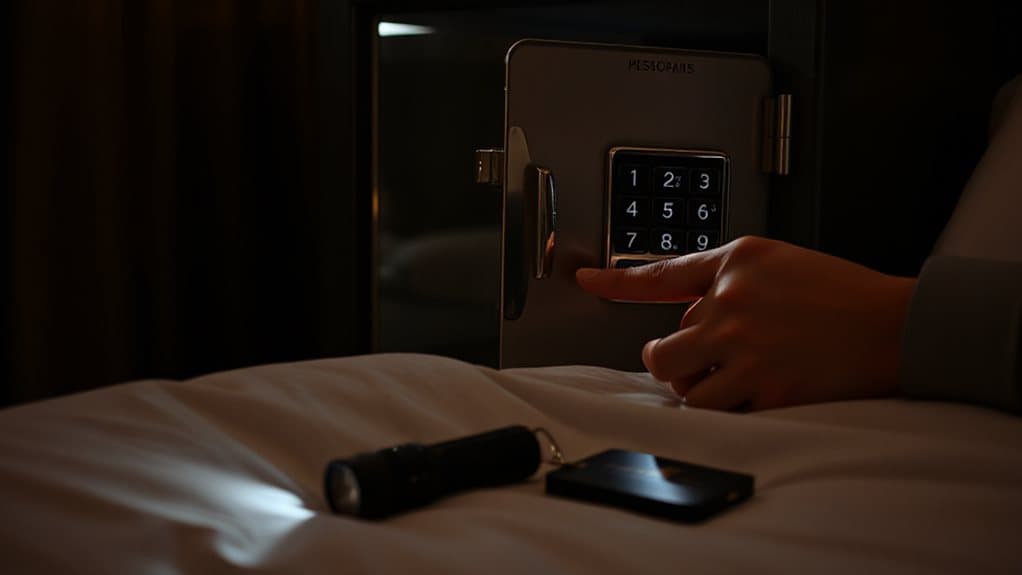
Testing your hotel safe to confirm it functions correctly is an important step before storing precious items. You should test the safe by opening and closing it multiple times using the set code. Verify the functionality by ensuring the safe lock securely when the door is shut and the handle turned. Use a lightweight object to check if it opens easily after locking, confirming the lock’s effectiveness. If you plan to store valuables during your trip, New England Gems can help you choose activities while keeping your items secure.
Best Practices for Securing Valuables in Your Safe
Securing your possessions effectively requires more than just closing the safe; it involves following best practices to guarantee their safety during your stay.
Use hotel safes to securely store precious items. Create a unique, memorable code, and avoid default combinations.
Regularly change the code and confirm the safe is securely bolted. Reset the code if you suspect it’s compromised to maintain security.
Troubleshooting Safe Problems and Resetting Your Code
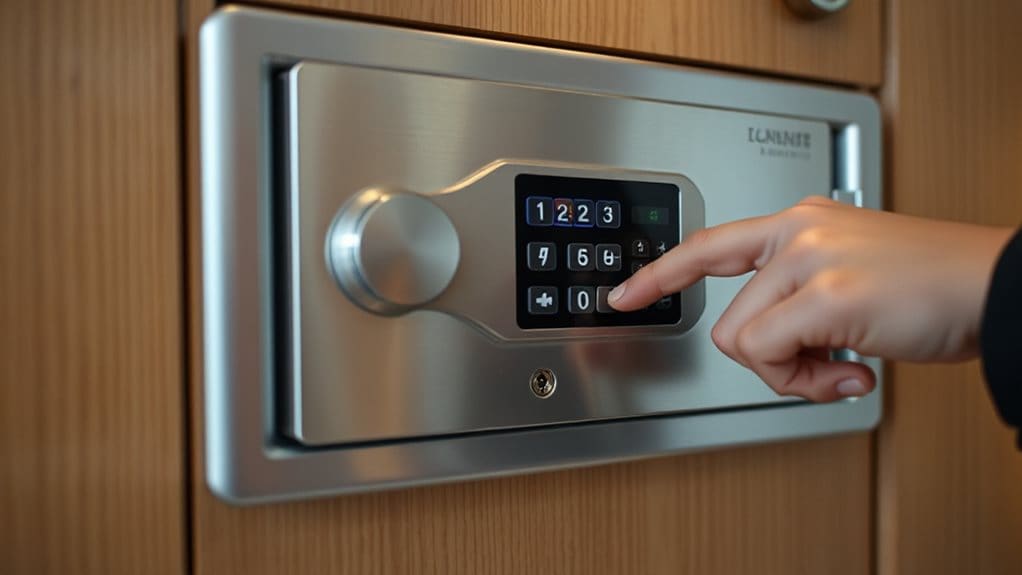
When a hotel safe isn’t responding as anticipated, troubleshooting safe problems helps you regain access and keep your important belongings secure.
To reset the safe in your room, locate the red reset button inside the battery compartment or on the door edge, then press it to enter reset mode.
Replace batteries if the keypad is unresponsive or weak, and follow specific model instructions for resetting the code.
Tips to Maximize Your Safe’s Security During Your Stay
To maximize your safe’s security during your stay, it’s important to adopt proactive measures that go beyond simply locking your possessions inside. Change the default code to a unique, hard-to-guess combination and update it regularly. Confirm the safe is fully locked before leaving. Avoid sharing the code, and consider additional security like hiding prized possessions or using a portable safe for added protection. For travelers storing valuable items, packing fragile belongings with a hard shell suitcase can add extra protection during transit to your room safe.
And Finally
Using a hotel room safe correctly involves understanding its type, setting a secure code, and practicing proper locking techniques. Always test the safe to verify it functions properly, and store valuables securely. Troubleshoot issues promptly and reset your code if needed. During your stay, follow best practices to maximize security, such as avoiding sharing your code or leaving valuables in plain sight. By following these steps, you can protect your belongings effectively and enjoy peace of mind.


