
Use premium processing for your I‑140 to cut the usual 7‑9‑month wait to 15‑45 days, then file your I‑485 together with the I‑140 and a fresh I‑693 when the visa number is current and you’re physically in the U.S. Choose the Nebraska service center for I‑485, where median times are under ten months, and submit the medical exam 3‑4 weeks before filing to stay within its two‑month validity. If you need faster action, request USCIS or NVC expedites for severe financial loss or humanitarian reasons. Following these steps lets you move through the system quickly, and the next section explains how to avoid common pitfalls.
TLDR
- File I‑140 with premium processing ($2,965) to receive a decision in 15‑45 days, cutting the typical 7‑9 month wait.
- Choose the Nebraska Service Center for I‑485 filing, where median processing is about 9.8 months, faster than Texas or the National Benefits Center.
- Submit a concurrent I‑485, I‑140, and I‑693 package when the visa number is current and you are physically present in the U.S., avoiding separate filings and rejections.
- Request USCIS expedite only for severe financial loss, humanitarian urgency, or clear error, and be prepared with supporting documentation.
- Schedule the I‑693 medical exam 3‑4 weeks before filing and submit it within two months of the civil surgeon’s signature to prevent delays.
How Premium Processing Cuts I‑140 Wait Times

When you opt for premium processing, the I‑140 adjudication timeline shrinks dramatically—from the typical 7‑9 months to just 15‑45 days, depending on the category. You’ll pay $2,965, but you lock in a 15‑day guarantee for EB‑1A, EB‑1B, EB‑2 PERM, and EB‑3, and 45 days for EB‑1C and EB‑2 NIW. This cuts waiting time by roughly 80 %, letting you secure priority dates, plan careers, and coordinate family moves without the uncertainty of standard processing. The current record backlog of 11.3 million pending cases underscores the value of this expedited path.
Which Service Center Delivers the Fastest I‑485 Approval?
Which service center processes I‑485 applications the quickest?
Nebraska leads, with a median of 9.8 months in early 2026 and often finishes under ten months for employment‑based cases.
Texas follows, averaging about 13.5 months, while the National Benefits Center lags at 15‑17 months, especially when interviews are required.
Assignment to a center, workload, and staffing drive these differences.
Check USCIS processing‑time updates for current specifics.
Can I File I‑485, I‑140, and I‑693 Concurrently?

You can file I‑485, I‑140, and I‑693 together if your priority date is current and you’ve secured a PERM approval, which lets you stay in the U.S. while you wait for the green card.
This concurrent filing speeds up access to work and travel authorizations, but you must include the medical exam with the I‑485 package to avoid rejection.
Keep an eye on the Visa Bulletin and verify you meet all eligibility criteria before submitting to minimize risks.
Concurrent Filing Benefits
Because the visa bulletin shows an immediately available immigrant number, you can submit Form I‑140, Form I‑485, and the required medical form I‑693 at the same time, provided you’re physically present in the United States.
This concurrent filing eliminates the waiting period between approvals, lets you apply for an EAD and advance parole instantly, and keeps you legally employed while the green‑card process moves forward without unnecessary delays.
Eligibility Requirements Overview
The benefits of filing your I‑140, I‑485, and I‑693 together only apply when you meet three core eligibility criteria: an immediately available immigrant visa number, physical presence in the United States, and placement in an eligible employment‑based category.
You must have a current priority date—EB‑1 is usually current, EB‑2 works for most non‑China/India cases, EB‑3 rarely qualifies.
You must be in the US, not abroad, and your PERM‑approved job must fall under EB‑1, EB‑2, or EB‑3.
The I‑693 must accompany the I‑485 to avoid rejection.
Timing and Risk Management
When you file Form I‑485, Form I‑140, and Form I‑693 together, the key is that an immigrant visa number must be immediately available at the time of filing.
Make sure your priority date is current and the visa bulletin shows availability for your category.
Include the medical form to avoid rejection.
File with any eligible family members, but remember I‑140 approval is still required.
Timing matters; a retrogression after filing can jeopardize your case.
What Expedited Options Exist for Family‑ and Employment‑Based Petitions?
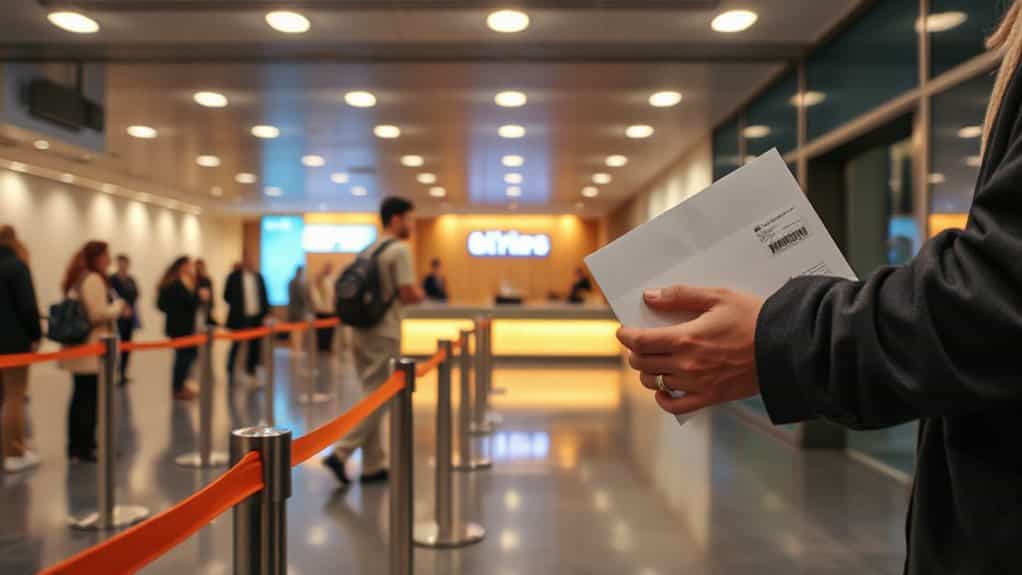
If you need a family‑ or employment‑based petition to move faster, you can request an expedite at three key stages: USCIS, the National Visa Center (NVC), and the Department of State (DOS). At USCIS, prove severe financial loss, humanitarian urgency, or a clear error. NVC requires visa availability, paid fees, and a medical emergency letter. DOS reviews only after NVC approval, granting decisions within 30‑45 days if a visa is available. TDAC 72+ hours can help avoid avoidable entry delays when you travel for immigration-related steps.
How to Time Your I‑693 Medical Exam to Avoid Delays
Within two months of your civil surgeon’s signature, you must submit the I‑693 to keep it valid for the green‑card process. Schedule the exam three to four weeks before filing Form I‑485, then submit the sealed report with your application. This timing fits the 60‑day window, avoids a Request for Evidence, and keeps your case moving without costly delays. Also, if you’re traveling while your exam is pending, be sure to pack any prescription medications with documentation and follow airport rules so you don’t face delays or surprises at airport security.
Quick Checklist: Combine Premium Processing, Concurrent Filing, and Medical Timing

You’ll want to file Form I‑907 for premium processing as soon as you submit the principal petition, then pair it with a concurrent I‑485 filing if your priority date is current, so the IAD and advance parole can be processed together.
Timing the I‑693 medical exam to finish just before the concurrent filing helps avoid costly delays, because USCIS won’t accept the I‑485 until the medical is on file.
This coordinated approach streamlines the workflow, reduces the risk of status gaps, and maximizes the speed advantage of premium processing.
Premium Processing Strategy
By pairing premium processing with concurrent filing and precise medical timing, you can shrink the overall immigration timeline dramatically.
File Form I‑907 after your initial petition, pay the $2,805 fee (or $2,965 after March 1, 2026), and expect a 15‑day adjudication window.
Choose eligible categories—H‑1B, L‑1, O‑1, I‑140, etc.—to guarantee rapid decisions, and align medical exams within that window to avoid delays.
Concurrent Filing Timing
When you align premium processing, concurrent filing, and medical exam timing, the overall immigration timeline can shrink dramatically.
File I‑526E and I‑485 together if your visa is current, and attach I‑765 and I‑131 for work and travel rights.
Schedule the medical exam so it arrives with the package.
This parallel approach cuts waiting periods, grants early EAD and AP, and lets you stay in the U.S. while your green card processes.
And Finally
By using premium processing, filing concurrently, and timing your medical exam, you can cut wait times and avoid common delays. Prioritize the fastest service center for I‑485, keep all forms complete, and monitor USCIS updates. These steps streamline the process, reduce uncertainty, and help you move through immigration more efficiently.