Shift your bedtime 30 minutes earlier each night before you leave and use bright morning light to reinforce the advance, then take 3–5 mg melatonin when the cabin clock hits night. Stay hydrated with electrolyte‑rich water, limit caffeine and alcohol, and eat light, potassium‑rich snacks. During the flight, move every hour—ankle circles, walks, air squats—and align your in‑flight sleep with the destination’s night. Upon arrival, reset your bedtime to local time, avoid naps, and get bright morning light; the next sections will show you how to fine‑tune each step.
TLDR
- Gradually shift bedtime 30 minutes earlier each night for several days before departure, using bright morning light and low‑dose melatonin to advance the circadian clock.
- Align in‑flight sleep with the destination’s night; take 3–5 mg melatonin when the cabin clock reaches the new night and avoid naps after arrival.
- Stay hydrated with electrolyte‑rich water every hour, limit caffeine and alcohol, and eat light, familiar foods rich in potassium and magnesium.
- Expose yourself to bright morning light upon arrival and keep evenings dark; use a light box or outdoor exposure before body‑temperature minimum on eastward trips.
- Move and stretch regularly during the flight (ankle circles, foot pumps, walks, air squats) to improve circulation and reduce the impact of prolonged sitting.
Why Jet Lag Happens and What to Expect
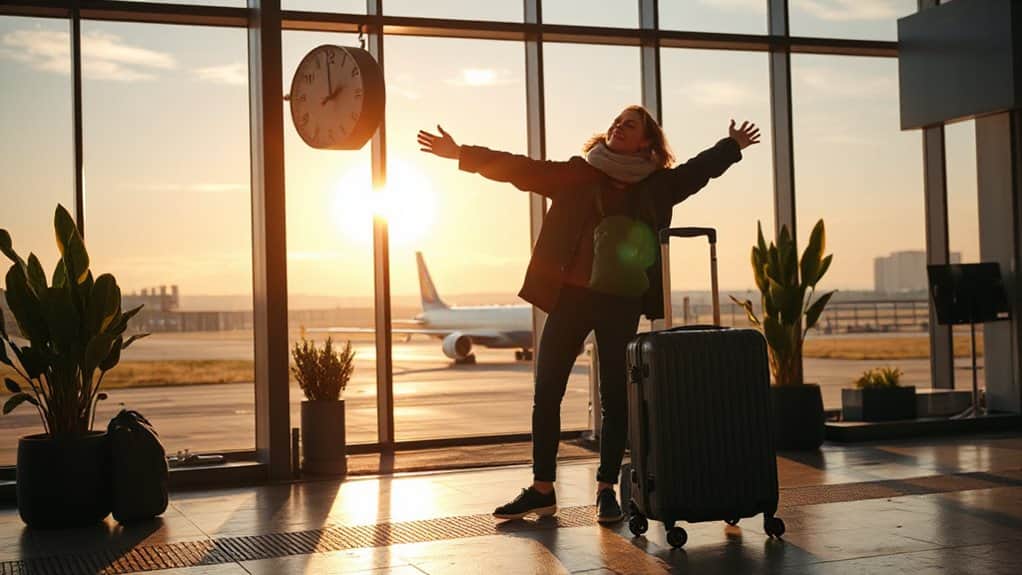
Why does jet lag hit you so hard after a long flight? Your internal clock, the suprachiasmatic nucleus, gets out of sync with the new light‑dark cycle, and peripheral clocks in muscles, liver, and lungs lag behind.
Crossing multiple time zones forces this double desynchronization, disrupting sleep, hormone release, metabolism, and mood. Many travelers worsen symptoms through prolonged sitting and poor posture, so optimizing in-flight ergonomics like using a footrest can help improve circulation.
Light exposure, dehydration, cabin pressure, and sitting posture all amplify the effect, making adaptation slower and performance poorer. Older adults experience heightened sensitivity to these disruptions.
Align Your Sleep Schedule Before You Fly
You can start shifting your bedtime 30 minutes earlier each night a few days before you fly, using bright morning light to reinforce the advance.
Pair the new schedule with a low‑dose melatonin taken about an hour before your target sleep time to help your body adapt.
This gradual time shift and light‑based phase advance make the transition to the destination’s clock smoother.
Consider scheduling gradual changes around your training and rest needs to maintain overall physical fitness.
Gradual Time Shift
How can you ease the shift to a new time zone before you even board the plane? Begin shifting bedtime 30 minutes earlier each night, four days out, and align meals, exercise, and evening light accordingly. For eastward trips, advance sleep one hour per day; for westward trips, delay it one hour per day. These incremental changes let your circadian clock adjust roughly one zone per day, reducing jet lag.
Light‑Based Phase Advance
Ever wondered how a few minutes of bright light can nudge your internal clock ahead of a long eastward flight? Seek bright light right before your body’s temperature minimum (about 20:00) to trigger a phase advance.
Stay awake outdoors or use a light box, avoid sunglasses, and keep evenings dark.
Pair morning light with a small melatonin dose for extra shift. This timing aligns your rhythm with the destination, minimizing jet lag.
Use Light Therapy to Beat Jet Lag
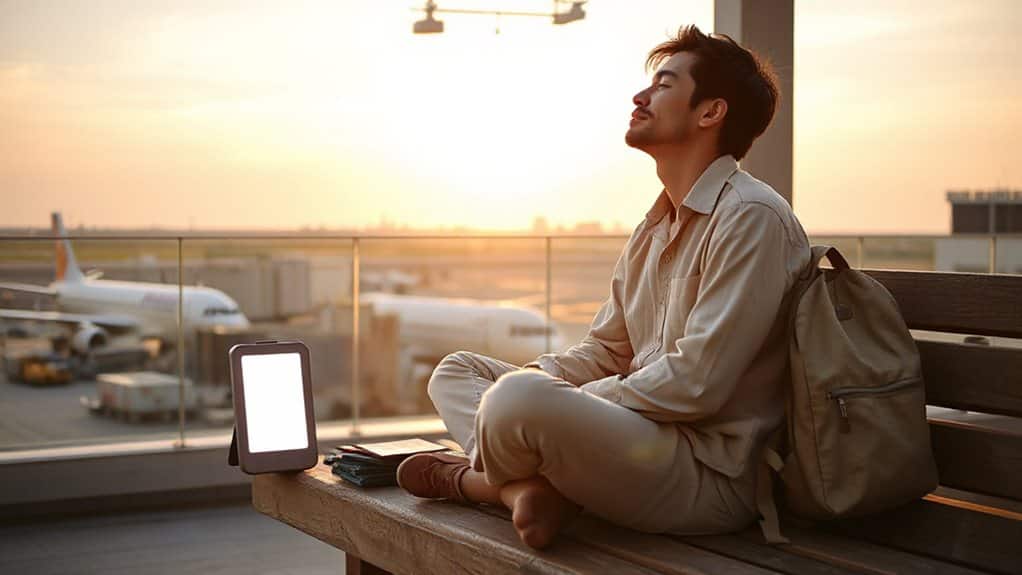
Why does light matter for jet lag? Bright white light (≈3000 lux) for three hours each night after a westward flight can delay your internal clock by over two hours, accelerating re‑entrainment. Intermittent flashes during sleep shift sleepiness faster than continuous light. Start therapy up to three days before travel, timing exposure to your destination’s sunrise or sunset, and use a light visor or device for controlled sessions. This simple regimen trims fatigue, improves alertness, and restores rhythm without drugs. Seat maps are a helpful guide but not definitive, so plan your light-therapy schedule with awareness of travel-related timing uncertainties and map variability.
Hydrate and Eat Light to Reduce Jet Lag on the Plane
You’ll want to sip electrolyte‑rich water about every hour and keep caffeine and alcohol to a minimum, because the cabin’s low humidity can drain up to a litre of fluid per hour and impair cognition.
Pair those sips with light, familiar foods—like a banana, yogurt, or a small avocado—to give your body the potassium and magnesium it needs without overloading your digestive system.
Male flight attendants now make up about 21% of cabin crew worldwide, reflecting greater gender diversity in the aviation industry and broader acceptance of men in cabin roles.
Hydration Strategies
How can you keep your body hydrated while flying long distances? Start 24‑48 hours before departure with electrolyte‑enhanced water, sipping 2‑3 glasses and adding Rescue Drops. During the flight, sip 250 ml of electrolyte water each hour, using a refillable bottle with packets or flavored seltzer. Take gummies at the midpoint for long trips, and avoid caffeine and alcohol. Drink electrolyte water immediately after landing.
Light Meal Timing
Staying hydrated while you’re on the plane sets the stage for an effective light‑meal plan, because a well‑balanced fluid intake helps your digestive system process food more efficiently. Choose a modest snack—like a small salad or a handful of nuts—before take‑off, then skip heavy meals during the flight. Light carbs sustain energy without overloading your stomach, supporting a smoother circadian shift.
Nutrient‑Rich Snacks
A handful of nutrient‑rich snacks can keep you hydrated and energized while you’re in the air, helping your body adjust to new time zones. Pack oranges, watermelon, cucumber slices, and cantaloupe for water‑rich fuel.
Add bananas, avocados, and pumpkin seeds for potassium and magnesium.
Include low‑sodium crackers, unsweetened applesauce, and tart‑cherry juice to support sleep, digestion, and electrolyte balance.
Time Your In‑Flight Sleep to the Destination’s Night
Ever wonder how to make the hours you spend in the air count as night time at your destination? Align your in‑flight sleep with the destination’s bedtime by sleeping only during those hours, even if the flight is long. Take 3‑5 mg melatonin when your cabin clock hits the new night, and keep meals and light exposure consistent with the local schedule. This proactive timing helps shift your circadian rhythm, reducing jet‑lag intensity. Many travelers choose a convenient base with easy transit to minimize additional travel stress on arrival.
Move, Stretch, and Stay Comfortable During the Flight
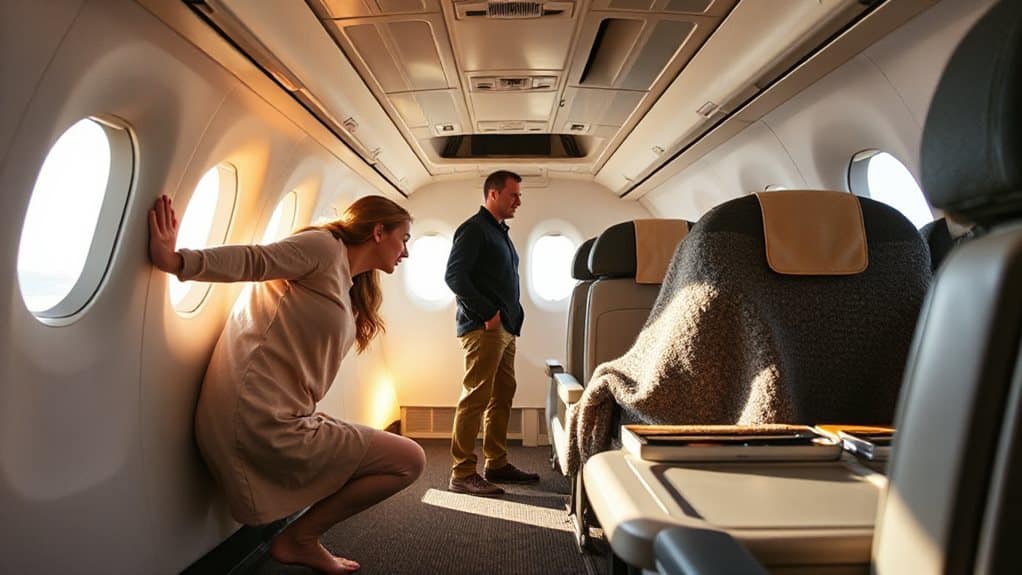
After you’ve timed your in‑flight sleep to match the destination’s night, keep your body moving to prevent stiffness and maintain circulation.
Perform ankle circles and foot pumps every hour, stand for aisles walks, and do knee lifts and air squats near the bathroom.
Add neck rolls, shoulder shrugs, and forward folds.
These micro‑exercises keep blood flowing and muscles relaxed throughout the trip.
Plan ahead to save money by traveling in the shoulder season when flights and accommodations tend to be cheaper.
Shift Your Bedtime Quickly to the New Time Zone
When you land, set your bedtime to match the local time right away, even if you feel exhausted. Shift your schedule immediately, ignoring pre‑flight fatigue. Use bright morning light and avoid naps until the new bedtime.
For eastward trips, advance sleep a hour daily before departure; for westward trips, delay it. Align meals, activities, and your watch to the destination zone to reset your internal clock quickly.
Grounding, Aromatherapy, and Herbal Aids for Jet Lag Relief

Grounding, aromatherapy, and herbal aids each offer a non‑pharmacologic way to ease jet‑lag symptoms, and they can be combined with light exposure and schedule shifts for a more complete adjustment.
Walk barefoot on grass or sand for twenty‑thirty minutes after arrival to reset cortisol and reduce inflammation.
Use essential‑oil diffusers for calming scent, and consider homeopathic herbal pills like arnica‑belladonna blends, avoiding heavy meals that may upset digestion.
Take Low‑Dose Melatonin at the Right Moment
Ever wondered when the perfect moment is to take melatonin for a long‑haul flight? Take 0.5‑5 mg of fast‑release melatonin 30 minutes before your target bedtime at the destination, ideally around 10 pm‑midnight. Use it on arrival day and the next 2‑5 days. This low dose works best eastward, speeds circadian shifts, and avoids alcohol. No pre‑departure dosing needed.
And Finally
By planning ahead, you can minimize jet lag’s impact on long trips. Adjust your sleep schedule before departure, use light exposure to reset your circadian rhythm, and stay hydrated with light meals on the plane. Time in‑flight sleep to match your destination’s night, move regularly, and consider grounding, aromatherapy, or herbal aids for added comfort. When needed, take a low‑dose melatonin at the appropriate moment to aid the transition. These steps help you adapt quickly and maintain alertness throughout your journey.