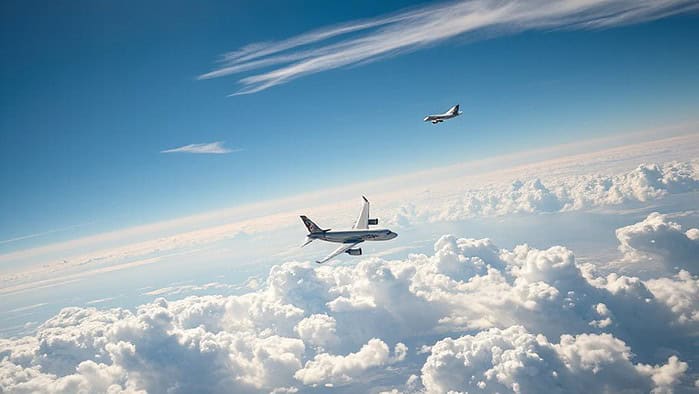
You dump fuel only in emergencies when your plane is too heavy to land safely. Large jets like the 747 or 777 use valves near the wingtips to release fuel as a fine mist, usually above 6,000 feet so it evaporates. You coordinate with air traffic control, who routes you away from people and other planes. Not all fuel vanishes—some can reach the ground, especially if dumped too low. Strict rules govern when and where you can do it. There’s more to how this affects safety and the environment.
TLDR
- Airplanes dump fuel through special valves, usually near wingtips, to reduce weight quickly during emergencies.
- Fuel is released as a fine mist to promote evaporation and is only done at high altitudes, typically above 6,000 feet.
- Only large aircraft like Boeing 747s have fuel dump systems; smaller jets usually do not.
- Pilots must coordinate with air traffic control, who ensure safe separation and route aircraft away from populated areas.
- While most fuel evaporates, some may reach the ground, posing environmental and health risks if dumped too low.
Why Do Airplanes Dump Fuel?
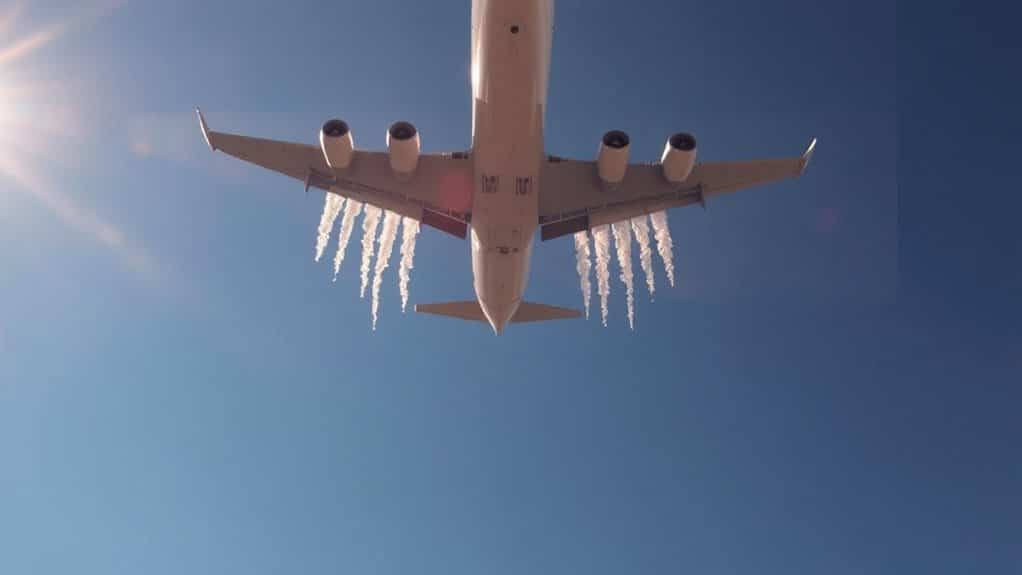
While airplanes don’t dump fuel during normal operations, they’re equipped to do so when safety demands a rapid reduction in weight.
You might need to dump if returning after engine failure or facing a medical emergency, and you’re too heavy to land safely. Heavy landings stress the gear and airframe, so pilots reduce weight fast—especially on large jets certified for lower landing weights. Fuel jettisoning systems can reduce weight to allowable landing limits in less than 15 minutes in some aircraft. Large heavy aircraft may require greater caution because their wake turbulence and operational constraints affect diversion choices.
When Is Fuel Dumping Necessary?
You’ll need to dump fuel when an unexpected situation forces an early landing and your aircraft exceeds its maximum landing weight. Medical emergencies, mechanical issues, or system warnings can trigger this. Detours due to weather or turnbacks after takeoff often require it too. You must notify ATC, follow regulations, and stay at safe altitudes to protect people and the plane below. Non-stop specialized aircraft demonstrate how design and fuel capacity affect range and flight planning, underscoring why some aircraft cannot safely land without refueling constraints and careful operational decisions.
How Does Fuel Dumping Work?
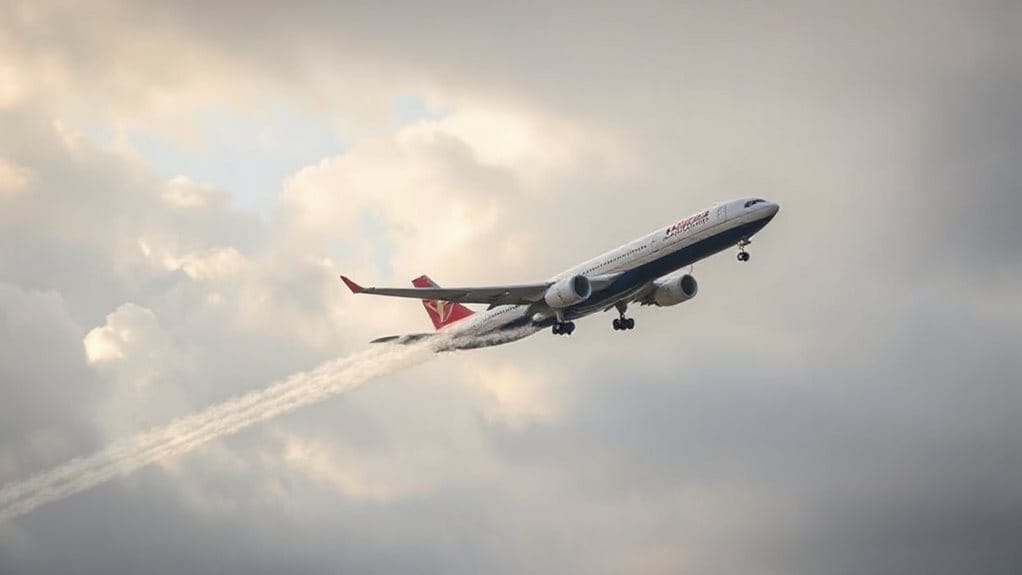
You initiate fuel dumping by opening special valves near the wingtips, releasing fuel as a fine mist that quickly evaporates.
You must be at least 6,000 feet above ground level to guarantee the fuel disperses safely before reaching the surface.
Throughout the process, you coordinate with air traffic control and follow strict safety protocols to protect people and aircraft below.
Large airliners have multiple tanks and fueling systems designed for quick turnarounds and high-capacity operations, which affects how much fuel can be jettisoned and how rapidly it can be expelled.
Fuel Release Mechanism
When an aircraft needs to land quickly but is too heavy to do so safely, it can use a fuel dump system to release excess weight.
You’ll find special valves near the wingtips that spray fuel as a fine mist, clear of engines and structure.
The gravity-fed system works without pumps, letting pilots control the release anytime.
Fuel vaporizes quickly at altitude, reducing ground impact.
Dumping Altitude Requirements
Although fuel dumping is a rare procedure, it must be conducted under strict altitude guidelines to guarantee safety and environmental protection.
You typically jettison fuel above 10,000 feet AGL, or 7,000 in winter and 4,000 in summer if needed.
Below these, it’s only allowed in emergencies.
You must stay at least 6,000 feet above ground for evaporation, and 1,000 feet clear of other aircraft.
Safety And Coordination
Since fuel dumping is a critical safety procedure during emergencies, it requires close coordination between the flight crew and air traffic control to guarantee it’s carried out safely and efficiently.
You must declare an emergency and get clearance before dumping.
ATC directs the route, altitude, and timing, keeping other aircraft clear.
They broadcast warnings every 3 minutes and make certain 5 miles or 1,000–2,000 feet separation, depending on traffic rules.
Which Planes Have Fuel Dump Systems?
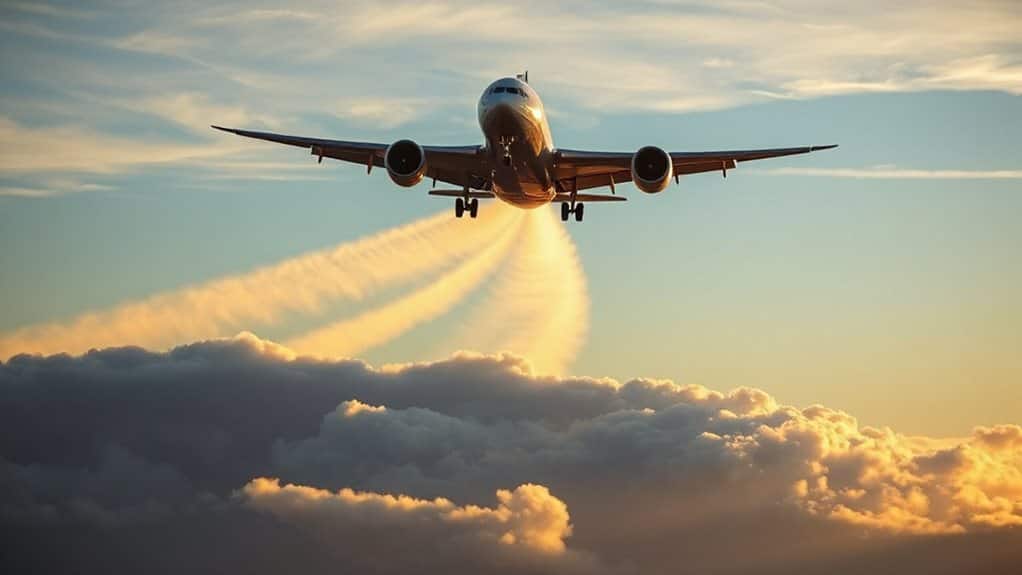
Why do some planes dump fuel while others don’t?
You’ll find fuel dump systems on larger aircraft like the Boeing 707, 747, and MD-11, which need to reduce weight quickly.
Smaller jets like the 737 and A320 land safely without dumping.
Airlines decide based on weight rules, design, and need—giving you flexibility without compromising safety when the sky’s the limit.
Over the past two decades, helicopter and aviation safety has improved significantly, with fatal accident rates dropping and accident reduction credited to training and technology.
How Fast Can a Plane Dump Fuel?
When you’re flying on a large commercial jet and an emergency arises, the crew might need to dump fuel quickly to reach a safe landing weight—and the speed of that process depends on the aircraft.
Newer models like the Boeing 777 can jettison about 2.5 tons per minute, while older types vary.
Rates start high but drop as fuel depletes, since gravity feed relies on remaining fuel weight.
Pilots typically maintain at least a 20-mile separation from severe thunderstorms when deciding diversion and fuel-dump options.
At What Altitude Is Fuel Dumping Safe?
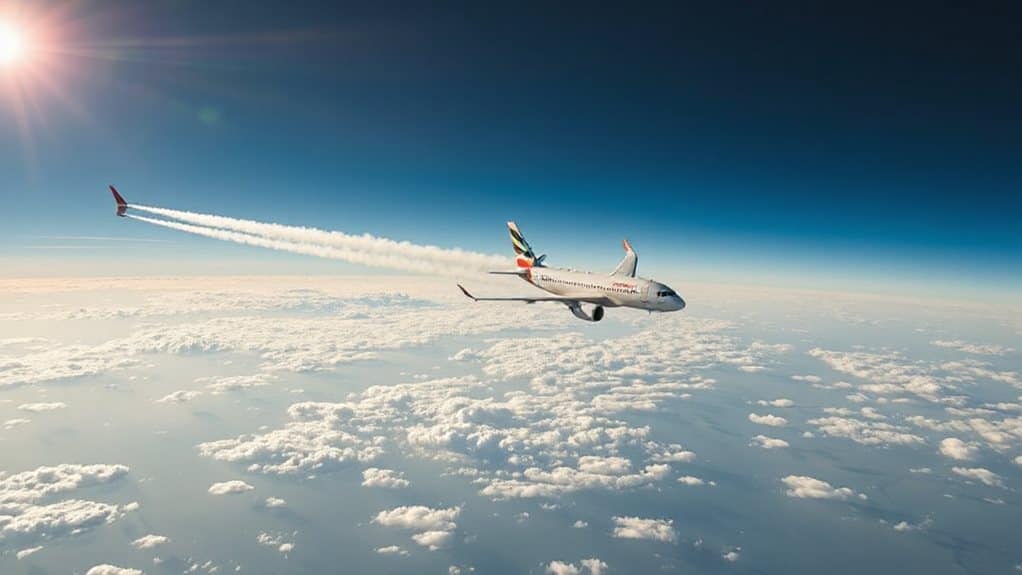
You’ll typically need to be at least 6,000 feet above the ground to dump fuel safely, since that altitude gives it time to break down and evaporate before reaching the surface.
ATC usually recommends flying above 10,000 feet when possible and guarantees other aircraft stay at least 2,000 feet vertically or 5 miles laterally away from you.
Fuel exits near the wingtips as a liquid but quickly disperses into vapor, so staying high and clear of populated areas reduces risks to people and other planes.
Pilots coordinate with air traffic control and follow procedures to ensure safety and minimize environmental impact.
Minimum Altitude Requirements
While fuel dumping is a rare procedure, it must be conducted at a safe altitude to prevent environmental impact and guarantee public safety.
You should dump at least 6,000 feet AGL, per federal rules, adjusting for terrain elevation.
ATC may recommend 10,000 feet, especially in winter.
You’ll maintain 1,000 feet from other aircraft and follow manufacturer guidelines to make certain complete evaporation before fuel reaches the ground.
Fuel Evaporation Dynamics
Releasing fuel at the right altitude guarantees it disperses safely before reaching the ground.
You need 5,000 to 6,000 feet AGL for full evaporation, avoiding pollution.
At extreme heights above 35,000 feet, jet fuel crystallizes below -50°C and won’t evaporate.
Lower, warmer altitudes keep fuel liquid, letting it atomize and dissipate harmlessly in the air, protecting people and the environment below.
Air Traffic Separation
Typically, fuel dumping occurs at safe altitudes where both evaporation and air traffic separation can be effectively managed.
You’ll find controllers requiring 10,000 feet AGL normally, though 4,000 to 7,000 feet may be allowed seasonally.
You must maintain 1,000 to 3,000 feet vertically and 10 nautical miles horizontally from other traffic, ensuring safety and freedom of movement during critical operations.
How Does ATC Handle Fuel Dumps?
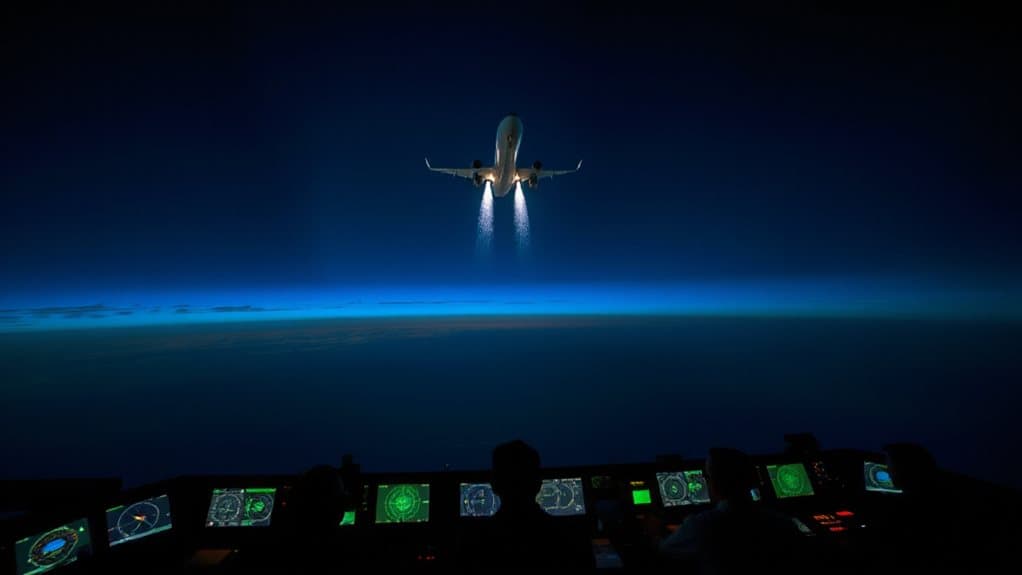
When a pilot needs to dump fuel, air traffic control steps in quickly to manage the situation safely. You’ll coordinate with ATC to reach a designated area, maintain proper altitude—usually 5,000–6,000 ft AGL—and make certain separation from other aircraft.
ATC vectors you clear of populated zones, broadcasts fuel dumping alerts, and keeps airspace clear, guaranteeing safety while giving you the freedom to handle the emergency efficiently.
What Rules Govern Fuel Dumping?
While fuel dumping is rare, strict rules guarantee it happens safely and responsibly. You must dump at least 6,000 feet above ground—higher over obstacles in IFR conditions.
You’ll broadcast on frequency every 3 minutes, stay clear of populated areas, and coordinate with ATC. You can’t dump unless it’s an emergency, and you must report volume, location, and altitude afterward.
Can Dumped Fuel Reach the Ground or Cause Fires?
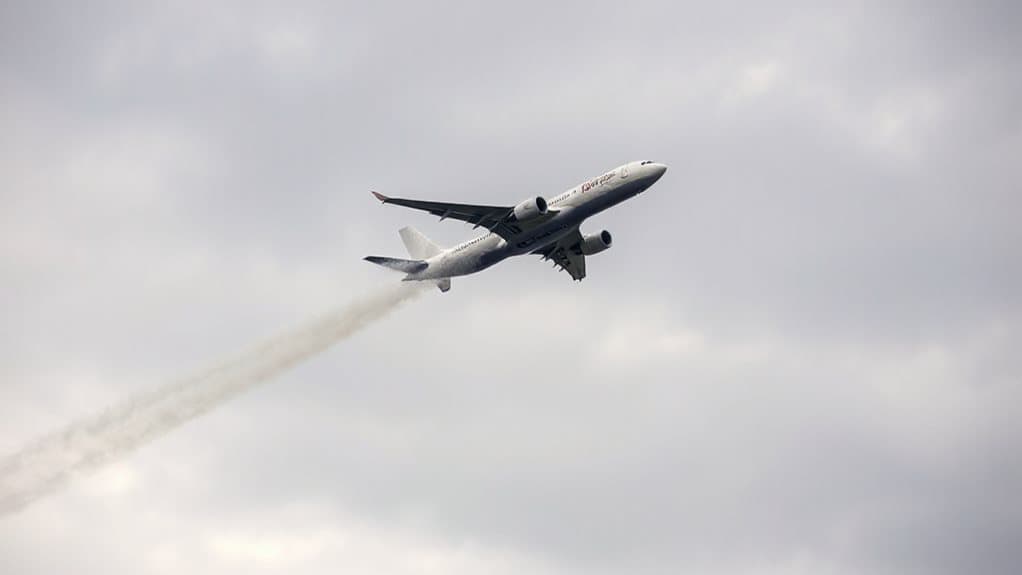
Even though fuel dumping happens at high altitudes to allow for evaporation, you should know that not all of it disappears before reaching the ground.
Denser droplets and excess fuel can fall as toxic rain, especially if dumped too low. Components like benzene and toluene may contaminate soil and water, and while fires are rare, the chemicals pose long-term ecological risks despite evaporation efforts.
And Finally
You now know fuel dumping is rare and done only in emergencies. Pilots use it to reduce landing weight when returning shortly after takeoff. Only certain large aircraft have dump systems, releasing fuel high enough to vaporize before reaching the ground. ATC coordinates safe zones, following strict rules. You won’t see fuel falling like rain—it disperses quickly. No, it won’t cause fires or harm people below. Safety, not convenience, drives every decision.