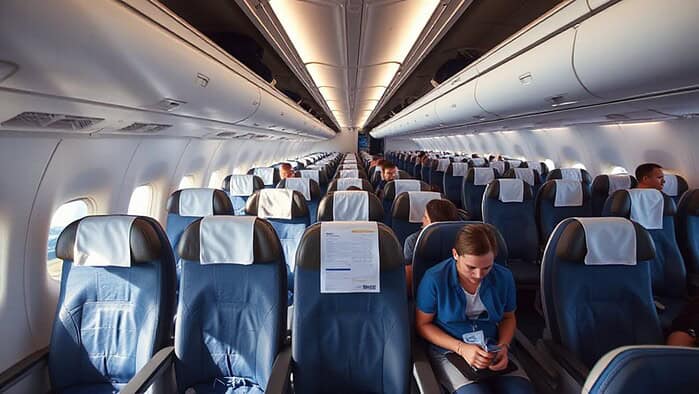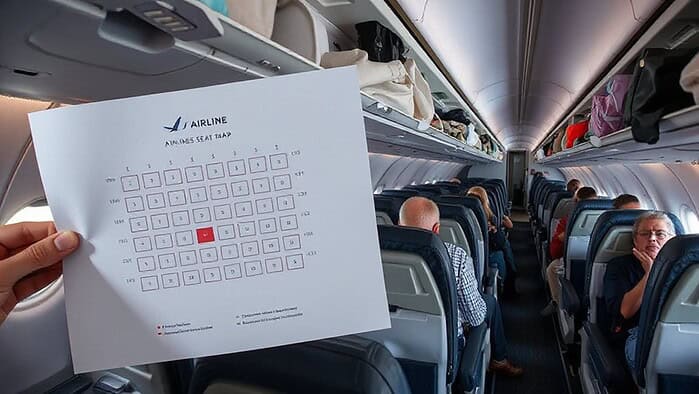
A window seat gives you a steady wall to lean against, better sleep, and a view, but you’ll need to ask neighbors to let you past for the lavatory and you’ll have limited legroom flexibility. An aisle seat lets you stretch, reach the bathroom quickly, and board or deplane without disturbing others, though you’ll face foot traffic and shared armrests. Your choice hinges on whether you value comfort and scenery or mobility and convenience; the next section explains how flight length and cabin location affect the decision.
TLDR
- Window seats offer stable head support and a personal view, ideal for sleep on long flights, but limit quick bathroom access.
- Aisle seats enable easy movement and faster bathroom trips, beneficial on short or mid‑range flights, yet expose you to foot traffic and armrest disputes.
- Exit‑row seats provide the most legroom for tall travelers, but require staying seated during takeoff/landing and meeting strength or age criteria.
- Front‑cabin seats, whether window or aisle, place you nearer exits, improving survival odds and reducing deplaning congestion, especially with a baby.
- For ultra‑long flights, combine a window seat for uninterrupted rest with occasional aisle access for stretch breaks; on short flights, prioritize aisle seats for bathroom convenience
Quick Decision: Choose Your Airplane Seat
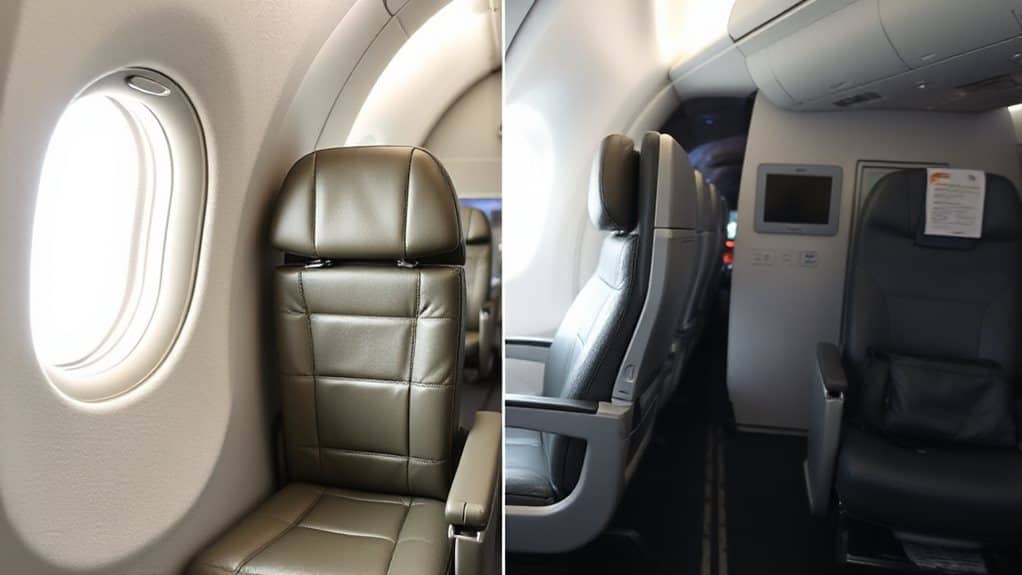
When you’re deciding which seat to book, consider how the layout of the cabin will affect your comfort and convenience during the flight.
A window seat gives you scenic views, personal space, and less exposure to other passengers, but limits mobility and legroom.
An aisle seat offers quick bathroom access, easier exit, and more legroom, yet it brings frequent disturbances and no view.
Exit-row seats may seem like the best legroom option, but their fixed, upright design can make the extra space feel less comfortable than you expect.
Choose based on the freedoms you value most.
How Flight Length Shapes Seat Selection
The length of a flight determines which seat features matter most, so you’ll want to match your choice to the duration’s specific demands. On short hops, aisles win for quick bathroom trips, while windows offer views and occasional sleep.
Mid‑range flights benefit from walls to lean against and aisles for stretch breaks.
Long and ultra‑long trips favor windows for uninterrupted rest and aisles for frequent movement, with rear windows adding safety. For many travelers, choosing an exit row can add major legroom even if recline is limited.
Prioritize Front‑Cabin Seats for Faster Exits
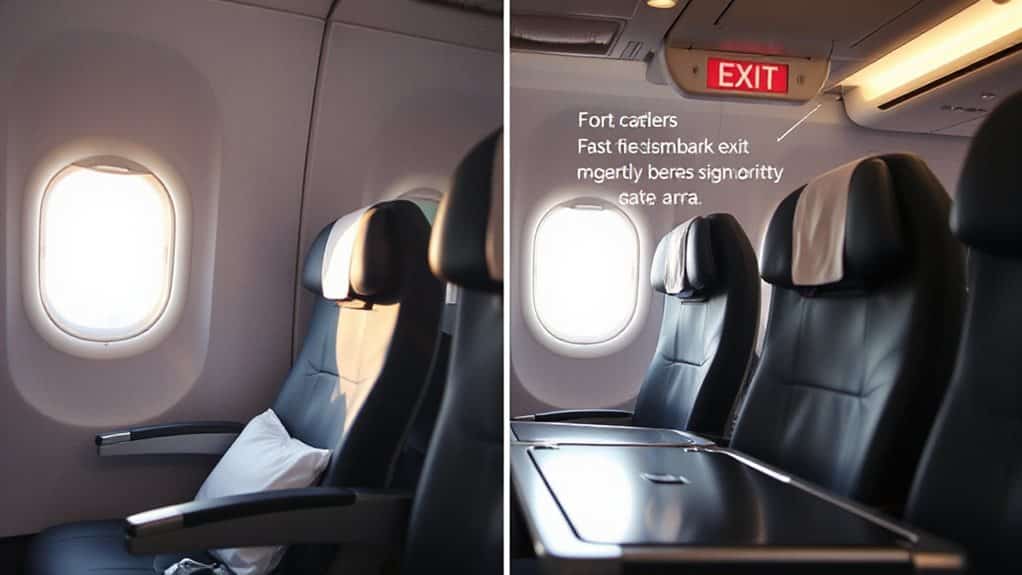
If you’re looking to maximize your chances of getting out quickly in an emergency, choosing a front‑cabin seat is a smart move.
You’ll be within five rows of an exit, which the FAA study shows improves survival odds.
Front‑cabin passengers experience less aisle congestion and faster ramp access.
Data also indicate lower fatality rates in the front third compared with middle or rear sections, making these seats a practical choice for swift egress.
Additionally, when traveling with a baby, sitting closer to the front can help reduce bottlenecks while you manage quick stroller-to-cabin transitions and TSA PreCheck lines.
Exit‑Row vs Standard Seats: Legroom Impact
You’ll notice that exit‑row seats give you a noticeable increase in legroom, which can make a long flight far more comfortable, especially if you’re tall.
However, those seats come with safety and accessibility rules—like staying seated during takeoff and landing and sometimes limited recline—that may affect how you use the extra space.
Because airlines often charge a premium and limit availability, you’ll need to weigh the cost and the chance of actually getting one against the legroom benefit.
Inner armrest width matters too, since the extra space you feel in an exit row can still be constrained by how narrow the usable seat width is between armrests.
Extra Legroom Benefits
A typical economy seat offers about a 31‑inch pitch, which can feel cramped on long flights, especially for taller travelers.
Exit‑row seats give you extra legroom, often exceeding the 31‑inch standard, letting you stretch and move freely.
This space reduces fatigue on extended trips and improves circulation.
When the front exit row lacks recline, the second exit row still offers generous legroom with full recline, balancing comfort and freedom.
Safety and Accessibility Concerns
Because exit‑row seats come with extra legroom, they also carry specific safety and accessibility requirements that standard seats don’t.
You must be able to lift 40‑pound doors, operate handles, and exit quickly, which disqualifies passengers with limited strength, mobility, or seatbelt extenders.
Age 15 plus, clear language comprehension, and no infants or elderly companions are required, limiting who can enjoy the space.
Cost and Availability Trade‑offs
If you’re considering the cost and availability of exit‑row seats against standard economy, the key is to balance the extra legroom you gain with the higher price tag and limited inventory.
Exit‑row seats cost extra, often include priority boarding, and are scarce on each aircraft.
They may lack recline and have storage limits, but the stretch they provide can justify the fee for tall travelers seeking freedom.
Aisle Seat Advantages for Mobility & Baggage
When you pick an aisle seat, you gain immediate freedom to move without disturbing your seatmates, letting you stretch, stand, or reach the restroom whenever you need. You can slip into the aisle to stretch legs, easing cramping and fatigue. Overhead bins are right there, so boarding and deplaning become swift. If you’re traveling behind a heavy aircraft, you may notice you’re given extra spacing during takeoff and landing to account for wake turbulence. Flagging crew is easy, and you exit first, saving time.
Aisle Seat Drawbacks You Should Know
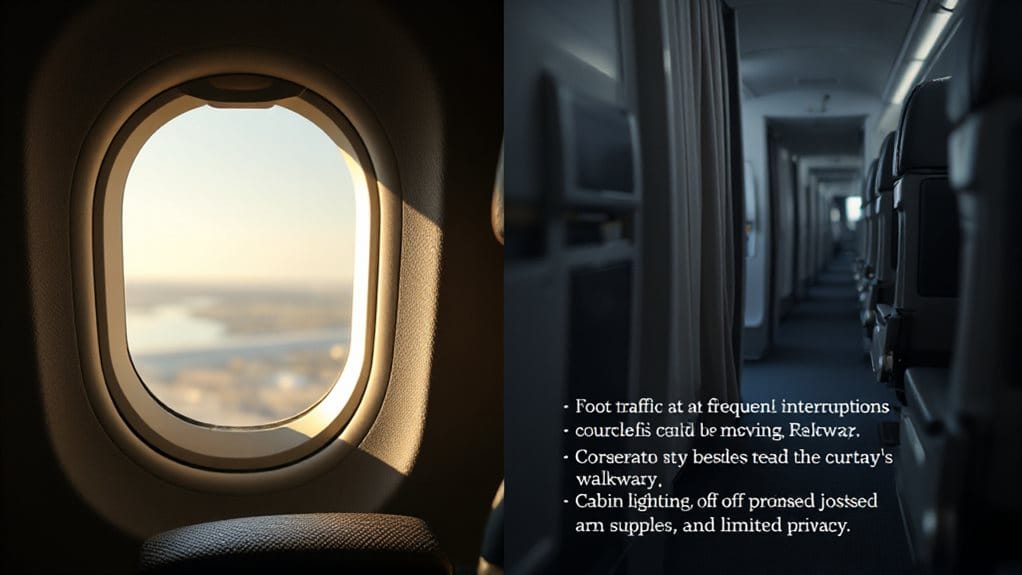
While an aisle seat gives you quick access to the aisle, it also brings several drawbacks you should consider.
You’ll face constant foot traffic, cart bumps, and neighbors climbing over for bathroom breaks.
Shared armrests spark disputes, limiting elbow space.
Visibility to passengers and crew erodes privacy, and frequent nudges increase bruising risk.
Legroom often feels cramped despite the aisle proximity.
For travelers who need additional space, Delta allows extra seat purchases on marketed and operated flights rather than requiring customers to buy an extra seat just to request a seatbelt extender.
Window Seat Benefits for Rest and Scenery
Because a window seat lets you press your head against the fuselage, you can enjoy a more stable and comfortable position for napping than in an aisle seat.
You also control the shade, keeping the view open for bird‑eye panoramas of cities, clouds, and mountains at 500 mph.
Fewer passenger interruptions and a quieter aisle‑free zone let you rest or work without distractions, while the ever‑changing scenery offers a natural, calming backdrop.
Window Seat Drawbacks and How to Mitigate
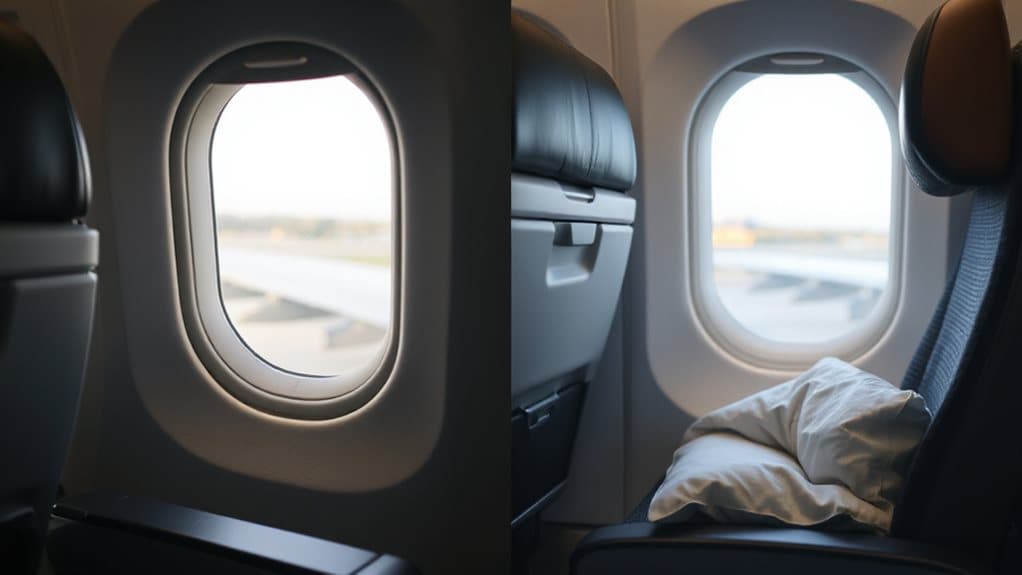
If you choose a window seat, you’ll soon notice that getting up for the lavatory can be a hassle, because you have to ask the middle‑ and aisle‑seat passengers to let you pass.
You also feel confined during turbulence, especially when nearby passengers sleep.
To mitigate, stretch before boarding, request an aisle swap if possible, and stay hydrated to reduce bathroom trips.
Controlling Window Shade for Comfort
The window seat passenger usually controls the shade, so you can adjust it without needing permission from the middle or aisle occupants.
You can lower the shade to block glare during bright daylight or raise it for a panoramic view, as long as it stays open for takeoff, landing, and emergency‑row visibility.
Modern electrochromic panels let you tap a button for precise dimming, while manual pull‑downs work the same way.
Wide‑Body vs Narrow‑Body: Seat Comfort Trade‑offs
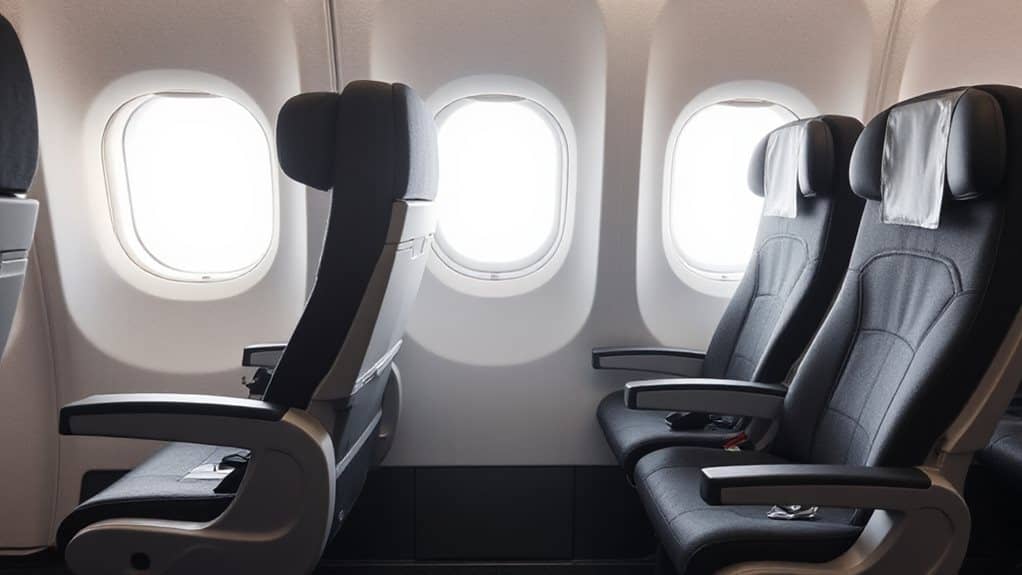
Controlling the window shade is one of the few perks you can enjoy without asking anyone else, but when it comes to seat comfort the image changes dramatically between wide‑body and narrow‑body cabins.
Narrow‑body J seats score 4/10, offering wider tables, adjustable headrests, and often feel roomier than wide‑body PE seats, which rate 3/10.
However, wide‑body bulkheads give extra legroom and two exit points, while narrow‑body bulkheads are colder and lack storage.
Both exceed economy Y seats slightly, but trade‑offs remain.
And Finally
Choose the seat that matches your priorities: an aisle for easy movement and quick access to the lavatory, a window for restful sleep and scenery, or a front‑cabin spot for faster deplaning. If you need extra legroom, consider an exit‑row or bulkhead seat, but remember the safety duties. For short flights, the aisle’s convenience often outweighs the view, while on longer trips a window can help you rest. Balance comfort, accessibility, and personal preference to make the best choice.