
You’ll find Raja Ampat’s 600 coral species and 1,800 reef fish, plus turtles, manta rays and sharks, across 1,500 islands with fringing reefs and mangroves. Coron’s WWII wrecks host brain, staghorn and table corals, soft sea fans and giant clams. Similan’s crystal‑clear waters offer 20‑40 m visibility and seasonal whale sharks. Perhentian delivers budget‑friendly snorkeling with black‑tip sharks and green turtles at Shark and Turtle Points. Bali and Nusa islands provide manta‑ray hotspots, especially at Manta Bay and Manta Point, with the best visibility in the dry season. Continue for more details.
TLDR
- Raja Ampat, Indonesia: 600 coral species, 1,800 reef fish, turtles, manta rays, sharks; 1,500 islands with fringing reefs, mangroves, deep‑sea pinnacles.
- Coron, Palawan, Philippines: World‑class coral gardens and WWII shipwrecks covered in brain, staghorn, and table corals; abundant soft sea fans, turtles, nudibranchs, giant clams.
- Similan Islands, Thailand: Crystal‑clear waters, 20‑40 m visibility, seasonal whale sharks (Nov‑Apr); diverse reefs in shallow bays, tunnels, and slopes.
- Perhentian Islands, Malaysia: Budget‑friendly snorkeling; free beach sites with black‑tip sharks, green turtles, vibrant anemone fish; inexpensive gear rentals.
- Bali & Nusa Penida, Indonesia: Strong currents attract massive reef fish schools, manta rays; Manta Bay (shallow) and Manta Point (deeper) offer high encounter rates.
Raja Ampat: Snorkeling in Southeast Asia’s Crown Jewel
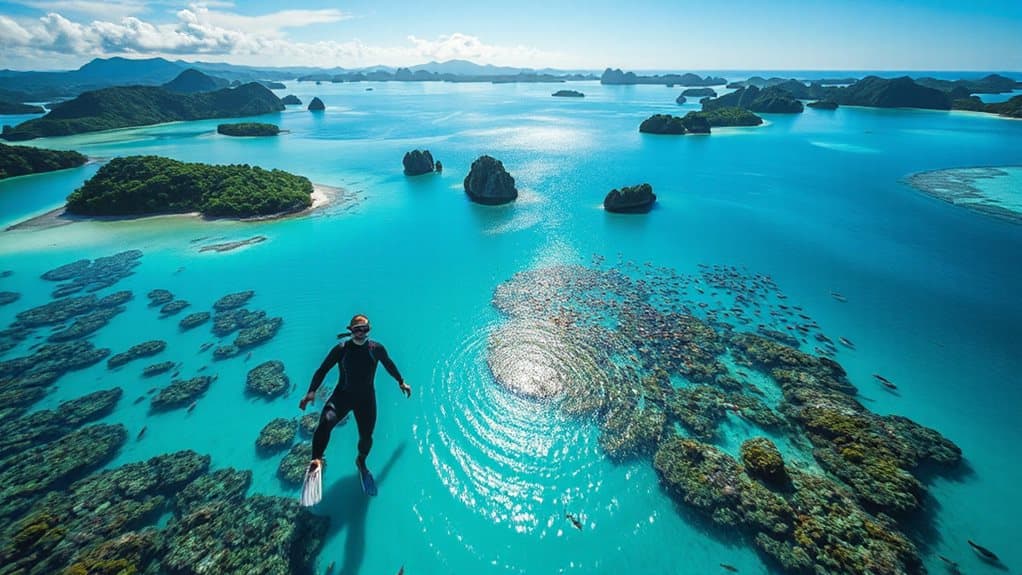
Raja Ampat, often called Southeast Asia’s crown jewel, offers some of the world’s richest snorkeling experiences. You’ll glide over 600 coral species, encounter 1,800 reef fish, and spot turtles, manta rays, and sharks in crystal‑clear bays. The archipelago’s 1,500 islands create varied habitats—fringing reefs, mangroves, and deep‑sea pinnacles. Protected areas safeguard this biodiversity, ensuring vibrant, resilient ecosystems for your underwater excursion. The Indonesian Throughflow brings nutrient‑rich upwellings that sustain the reefs. Many visitors combine Raja Ampat with nearby destinations for a longer, more relaxed trip to fully experience the region’s marine diversity and conservation efforts, especially during peak season when conditions are ideal for snorkeling and diving in Nov–Apr.
Coron, Palawan: Snorkeling in Southeast Asia’s Top Coral Gardens
Ever wondered why Coron, Palawan consistently ranks among Southeast Asia’s premier coral gardens? You’ll glide over WWII shipwrecks draped with brain, staghorn, and table corals, while soft sea fans sway beside lively fish schools. Green and hawksbill turtles, nudibranchs, and giant clams populate the reefs. Protected as a UNESCO‑tentative biosphere, the area offers accessible snorkeling within thriving marine biodiversity.
Similan Islands: Snorkeling in Southeast Asia’s Crystal Waters & Whale Sharks
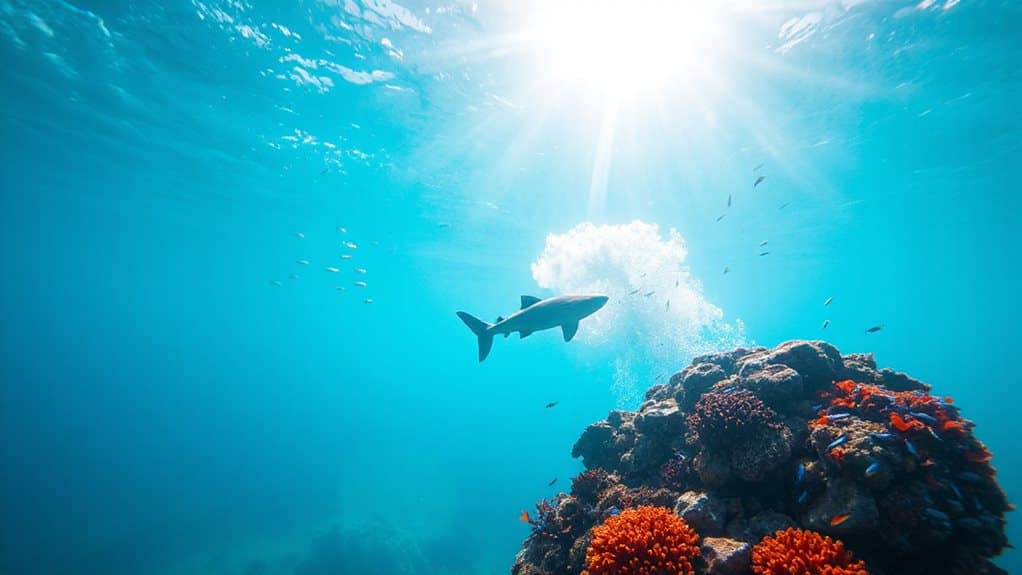
You’ll find crystal‑clear visibility that stretches beyond 30 meters, letting you spot the vibrant reefs and, on lucky days, a passing whale shark.
The Similan Islands host several top snorkeling sites where you can glide over ancient coral formations and encounter diverse marine life without needing a dive mask.
These conditions make the archipelago a premier destination for anyone seeking both stunning underwater scenery and the thrill of spotting a gentle giant.
Stay alert in crowded areas and keep valuables secured to avoid pickpocketing and distraction tactics.
Crystal‑Clear Visibility
How far can you see beneath the surface at the Similan Islands? Visibility typically ranges 20‑40 meters, often hitting 40 meters in peak conditions, especially November through April. Calm seas and 27‑30 °C water keep light penetration steady to 30 meters depth. You’ll spot vibrant corals, gorgonian fans, and schools of fish across shallow bays, protected tunnels, and sloping reefs, all while the dry season maintains crystal‑clear water.
Whale Shark Encounters
The crystal‑clear waters that reveal colorful corals also host the region’s largest fish, the gentle whale shark.
From November through April, especially January‑March, plankton‑rich currents draw them to Richelieu Rock, Koh Bon Pinnacle, and Elephant Head Rock.
Liveaboard snorkeling trips let you glide at snorkelable depths, but stay respectful—these vulnerable giants need responsible tourism to thrive.
Top Snorkeling Sites
Where do you start when exploring the Similan Islands’ crystal‑clear waters? Board a speedboat from Khao Lak, arrive within an hour, and dive into 15‑meter visibility.
Begin at Honeymoon Bay on Island 4, then drift to Koh Similan’s lunch beach, and explore Koh Bangu’s Turtle Rock.
Shallow spots like Donald Duck Bay suit beginners, while guides provide masks, fins, and safety throughout the day.
Perhentian Islands: Budget Snorkeling in Southeast Asia With Sharks & Turtles
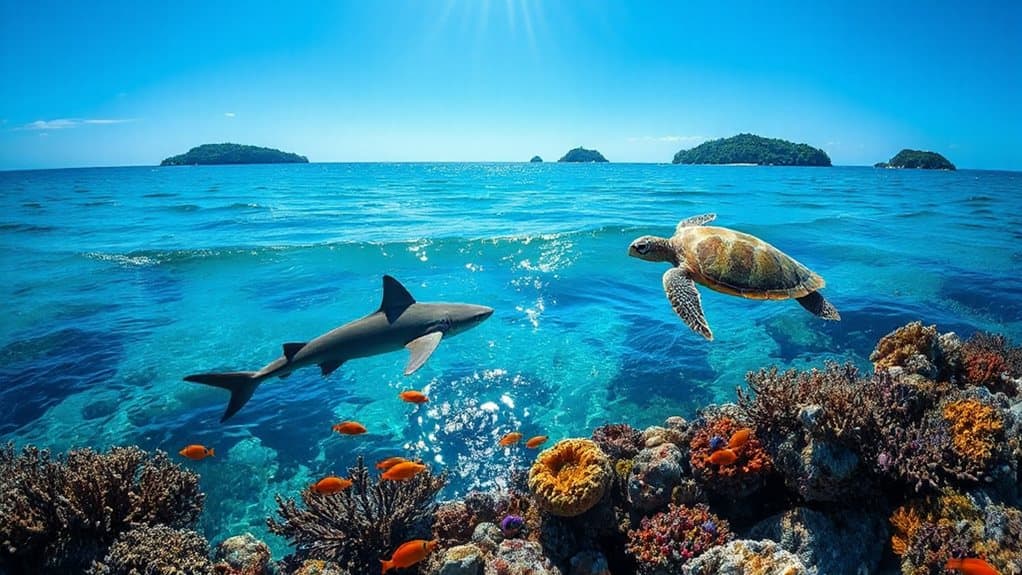
Ever wondered why the Perhentian Islands are a top budget snorkeling destination in Southeast Asia? You’ll find free beach snorkeling at PIM Beach, Teluk Pauh and Coral Bay, and cheap gear rentals on both Kecil and Besar. Consider black‑tip sharks near Shark Point, green turtles at Turtle Point, and lively anemone fish. Early tours avoid crowds; water taxis and inexpensive half‑day trips keep costs low. Always keep possessions secure and be mindful of pickpocketing risks when on busy beaches and boats.
Bali & Nusa Islands: Snorkeling in Southeast Asia’s Manta‑Ray Hotspots
You’ll find that the strong currents around Nusa Penida’s cliffs draw in massive schools of reef fish, creating a vibrant underwater landscape that’s perfect for spotting manta rays.
These same currents funnel plankton and nutrients, which sustain everything from sea turtles to the colorful nudibranchs that carpet the coral gardens.
When you snorkel during the dry season, visibility is at its best, letting you watch the mantas glide while the surrounding biodiversity thrives.
For added comfort on boat transfers, bring a compact travel pillow to save space and stay rested during long rides travel neck pillows.
Manta‑Ray Encounters
How does a manta‑ray encounter differ between the shallow, plankton‑rich waters of Manta Bay and the deeper cleaning station at Manta Point? In Manta Bay you’ll see mantas feeding near the surface, often within ten meters, with an 80 % success rate and easy boat access. At Manta Point, larger mantas gather around coral heads at greater depth, offering a 95 % encounter chance but tougher snorkeling conditions due to swell. Both spots feature cleaner wrasse, reef fish, and occasional baby rays, providing varied marine life while you glide freely.
Currents Boost Marine Diversity
Manta‑ray encounters already showcase the richness of these waters, but the real engine behind that abundance is the powerful current system that threads through Bali and the Nusa islands. The Indonesian Throughflow pushes nutrient‑rich Pacific water through the Bali, Lombok, and Alas Straits, spawning upwellings that feed plankton and larvae.
These currents mix cold, deep water with surface layers, sustaining over 4,000 species and creating lively reefs for your snorkeling excursions.
Sipadan: Permit‑Only Snorkeling in Southeast Asia’s Dramatic Walls
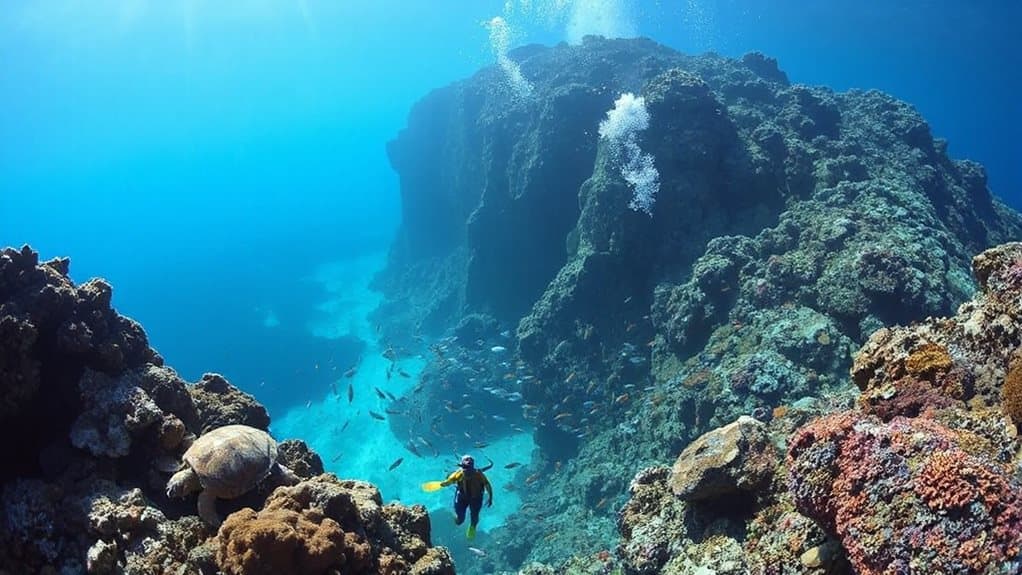
So why does Sipadan stand out among Southeast Asia’s snorkeling destinations? You’ll find a volcanic island rising 600 m from the seabed, its vertical walls dropping near the surface. Permits limit daily visitors to a few hundred, costing about RM 140, and must be booked in advance through licensed operators. The reef hosts colorful corals, turtles, barracudas, and reef sharks, all protected under Sabah Parks. For responsible travel, consider booking through licensed operators who follow protected-area rules and ethical wildlife practices.
Budget, Gear & Skill Matching for Southeast Asia Snorkeling
Where you’re headed, your budget, gear, and skill level will determine how smoothly you can explore Southeast Asia’s reefs. Pack a personal mask, snorkel, and travel fins to avoid low‑quality rentals and save on fees. Choose a dry‑top snorkel with splash guard, full‑foot fins with socks, and a rash guard for sun protection. Beginners stick to compact fins and life vests, while stronger swimmers can opt for open‑heel fins and split‑fin designs. Keep gear lightweight, packable, and include a snorkeling belt for hands‑free convenience. If you’re flying to your destination, consider buying or renting aerosol self-defense sprays locally rather than trying to bring them on a plane, because most are prohibited in carry‑on and restricted in checked baggage with specific volume and active‑ingredient limits (TSA rules).
Snorkeling Safety & Eco‑Friendly Practices for Southeast Asia
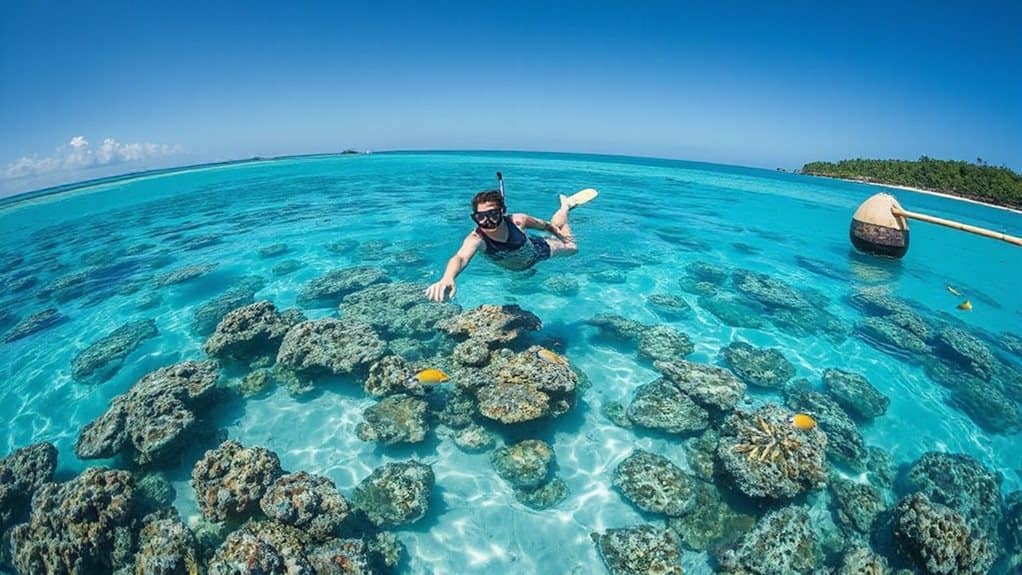
Your gear choices set the stage, but staying safe and protecting the reefs is just as important once you’re in the water. Check weather, tides, and visibility; avoid murky or rough conditions. Use reef‑safe sunscreen, wear UV shirts, and keep at least two meters above coral.
Stick to the buddy system, stay horizontal, and never touch or stir the seabed. Follow local regulations, wear life vests unless certified, and respect marked zones.
And Finally
Explore the sites that match your budget, skill level, and gear, then dive responsibly. Choose Raja Ampat for unrivaled biodiversity, Coron for vibrant coral gardens, Similan for crystal waters and occasional whale sharks, Perhentian for affordable adventures with turtles, Bali and Nusa for manta‑ray encounters, and Sipadan for dramatic wall dives—permit required. Follow local safety guidelines, respect marine life, and minimize impact to preserve these ecosystems for future snorkelers.


