
When you discover your bag is missing, head straight to the airline’s baggage service desk, give your claim tag and flight details, and get a Property Irregularity Report (PIR) with its reference number. Keep your boarding pass, receipt, and a detailed description of the bag, then file an online claim within 24 hours, attaching photos and item values. Track the claim using the reference number, follow up every 24–48 hours, and note compensation limits—$4,700 domestically, $1,700 internationally—while preserving receipts for reimbursement. Continue for more steps on prevention, insurance, and escalation.
TLDR
- Report the missing bag immediately at the airline’s baggage desk and obtain a Property Irregularity Report (PIR) with a reference number.
- Document the bag’s size, color, material, and unique markings, and keep the boarding pass, luggage receipt, and any purchase receipts.
- Submit a detailed online claim within 24 hours, including photos, item inventory, values, and the PIR reference number.
- Track the claim daily via the airline’s app or portal, and follow up within 48 hours if there’s no status update.
- Preserve receipts for valuable items and consider card or travel insurance coverage for additional compensation.
Your Immediate Checklist When You Realize a Bag Is Missing

What should you do the moment you notice a bag missing? Head straight to the airline’s Baggage Service Office before leaving the terminal. Bring your claim tag, flight details, and a clear description of the bag’s size, color, and any unique marks. Give the agent your contact info, get a Property Irregularity Report, and note the reference number for tracking. Obtain a link to track the claim online.
File a Fast, Accurate Lost‑Baggage Claim
Ever wonder how to turn a missing‑bag nightmare into a smooth, trackable process? Locate the airline’s baggage desk, get the phone number and reference number, then fill the claim form with your address, item inventory, values, and photos. Submit online within 24 hours, then follow up after 14‑21 days for higher compensation. Keep the reference number handy for all future communication. Store and document any found items promptly in a secure area to ensure accountability and tracking, especially high‑value items.
Lost‑Baggage Documentation You Need
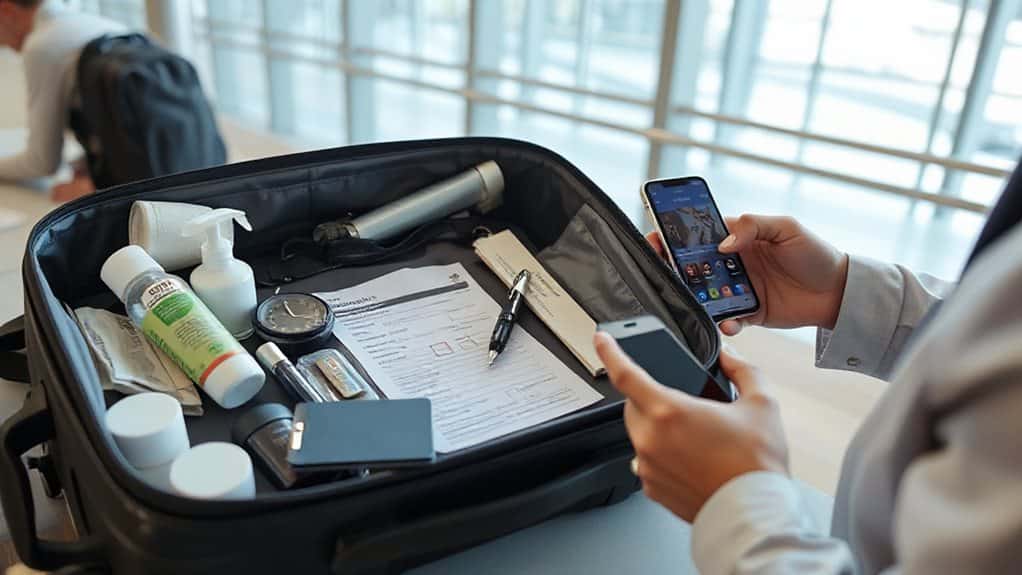
Where do you begin when your bag vanishes? Grab the Property Irregularity Report with its reference number, your boarding pass, and the checked‑luggage receipt. Note the bag’s size, color, material, and any unique markings or ribbons. Include receipts for valuable items, baggage fees, and emergency purchases. Add the full itinerary, flight dates, and the airline’s tracking number. Keep all communication logs and contact details. Consider packing laundry supplies securely and know that Tide pods are allowed in checked bags, though they should be sealed to prevent leaks.
Lost‑Baggage Communication Tips
You should report the missing bag the moment you notice it at check‑in, giving the agent your boarding pass, bag tag, and a clear description of size, color, and any distinctive features. Include all relevant details in the claim and use the airline’s mobile app to share your AirTag location and track updates in real time. Keep checking the app daily and follow up within 24‑48 hours if you haven’t received a status, and have your PIR number handy for any further communication. Many travelers also find it useful to note nearby landmarks and transit options, such as KL Sentral station, which can help when coordinating local pickup or delivery.
Immediate Reporting at Check‑In
When you step off the plane, head straight to the airline’s lost‑baggage desk or Baggage Service Office (BSO) before you walk away from the terminal. Locate the airline‑specific desk or a contract agency with carrier signage. Scan any QR code for self‑service reporting, show your bag‑tag copy or app status, and describe size, color, and unique marks. Capture the reference number and keep the yellow copy if given.
Clear Details for Claims
How do you guarantee your loss‑claim moves smoothly? Gather the file reference from the baggage service report and list every item with estimated values, purchase dates, and receipts for high‑cost goods. Attach legible receipts for interim expenses like clothing. Note depreciation rules and maximum limits. Provide a local delivery address, request fee reimbursement, and submit all documents promptly.
Follow‑Up via Mobile Apps
After filing a detailed claim with receipts and depreciation notes, you can speed up recovery by using a mobile tracking app. Open Find Hub on Android, select the luggage tag, tap “Share item location,” confirm, and copy the encrypted URL. Paste it into Turkish, Air India, Lufthansa, or other participating airline apps. The link expires in seven days, disables when the bag’s nearby, and lets you stop sharing anytime.
Lost‑Baggage Compensation Rules & How to Maximize Reimbursement
What you need to know first is that airlines’ liability for lost luggage is capped at $4,700 per passenger on domestic flights and $1,700 on international trips, and the amount you receive is based on the depreciated value of the bag and its contents. Keep receipts, file claims promptly, and itemize every piece. Ask for the full bag‑fee refund and document depreciation to maximize reimbursement. Consider packing high‑value items in carry‑on luggage and using compact, packable travel blankets or organizers to keep essentials accessible during delays.
Lost‑Baggage Insurance & Credit‑Card Benefits
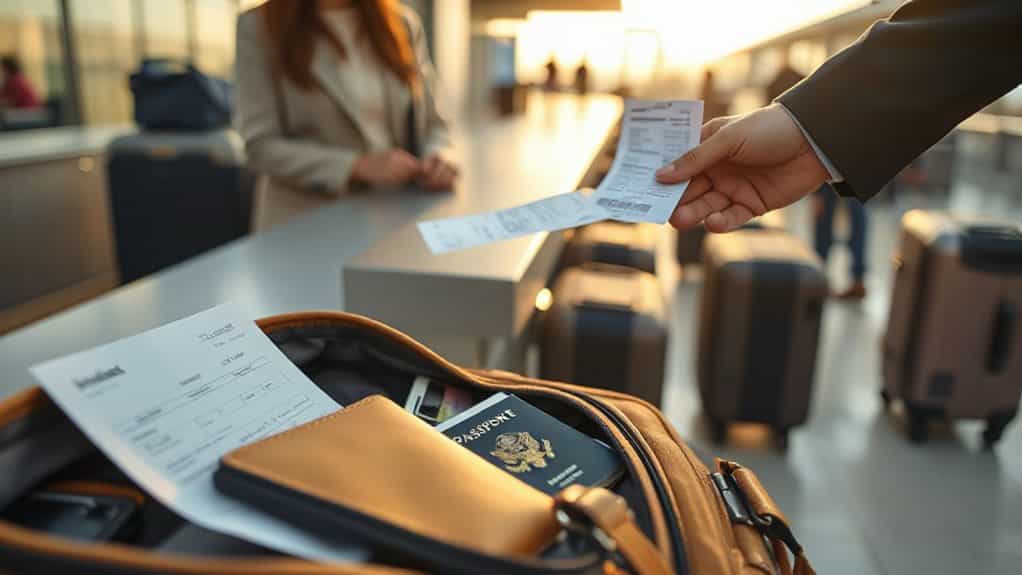
You’ll find that each card sets a specific coverage limit—Visa caps carry‑on reimbursement at $1,250 and checked bags at $500, while Mastercard and American Express can go up to $3,000 per person for certain items.
When a claim arises, the process usually starts with the airline’s settlement, then you submit the remaining balance to your card issuer, attaching receipts and proof of purchase.
Keep your card’s terms handy, because the benefits are secondary to airline reimbursement and often exclude high‑risk items like jewelry.
When packing cigars for travel, remember that travel humidors help protect quality and are generally allowed in carry-on and checked baggage.
Coverage Limits
How much can you actually claim when your luggage disappears? Domestic airlines owe up to $4,700 per passenger, while international carriers follow the Montreal Convention limit of about $2,175. Your travel‑insurance policy may add $500‑$3,000, often with $50‑$300 per‑item caps. Credit‑card benefits usually mirror these ranges, but high‑value items need separate riders. Check each source’s per‑item limits and depreciation rules before you file.
Credit‑Card Claim Process
Ever wondered how to turn a lost‑baggage mishap into a smooth insurance claim? Call your card’s benefit administrator, request the claim form, and submit it with travel itinerary, carrier delay confirmation, and a copy of your credit‑card statement. Include receipts for items over $25. Follow each issuer’s deadline—Chase 20 days, AmEx 30 days, BofA 20 days, Visa 20 days, Mastercard 60 days—to secure reimbursement.
Prepare a 24‑48 Hour Essentials Kit for Lost‑Baggage
What you need for a 24‑48‑hour essentials kit is a compact, well‑balanced collection of items that covers hydration, nutrition, hygiene, clothing, and critical documents. Pack a collapsible canteen, water purification tablets, a filter, and a boiling pot for at least two liters daily. Add non‑perishable meals, a spork, and energy bars. Include a travel toothbrush, wipes, sanitizer, and soap. Bring socks, underwear, a waterproof jacket, and a hat. Store copies of IDs, cash, a USB backup, and prescription meds. Consider bringing a small, compressible travel pillow for comfort that fits as a personal item under airline rules.
Lost‑Baggage Prevention Strategies: Packing & Tagging Hacks
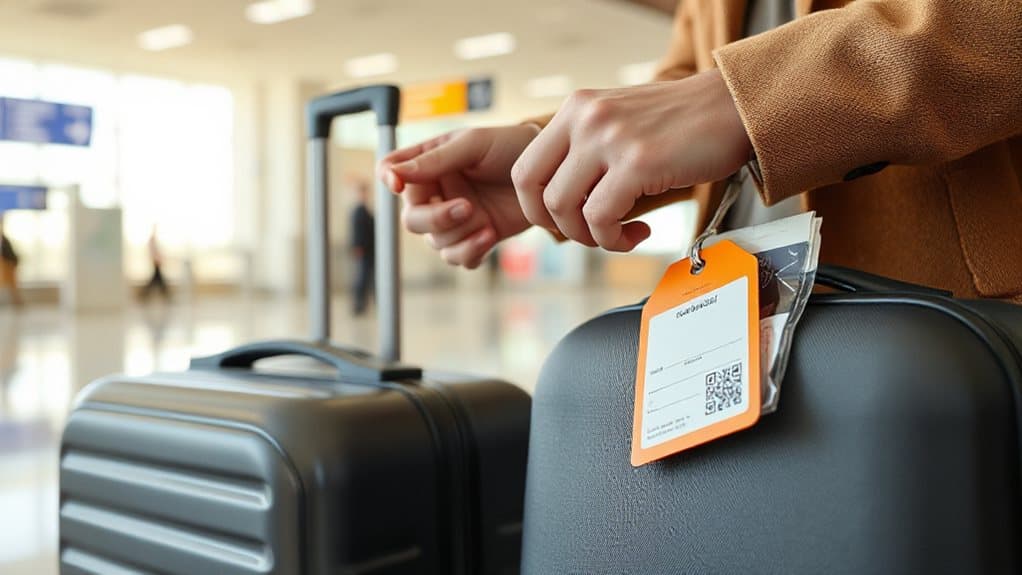
After packing a 24‑48‑hour essentials kit, focus on preventing loss before it happens by using smart packing and tagging techniques. Use RAIN RFID tags for real‑time tracking and QR stickers for quick visual ID. Keep bags within weight and size limits, label interiors, and apply dual physical‑digital tags. Follow IATA Resolution 753 for seamless scanning and avoid oversized items that trigger alerts.
Lost‑Baggage Escalation Guide: Regulators & Consumer Advocates
How you proceed when your luggage disappears depends on knowing which agencies can intervene and what steps to take. File a Property Irregularity Report immediately, then submit a written claim within seven days. In the U.S., contact DOT via its consumer portal within 60 days; EU travelers follow EC 261/2004 and EASA procedures, filing a PIR and online claim within 21 days. Use AirHelp, Travelers United, or Which? for advocacy.
And Finally
By following the checklist, filing precise claims, and using the right documentation, you’ll streamline the recovery process. Knowing compensation rules and leveraging insurance or credit‑card benefits can augment reimbursement. A prepared essentials kit and smart packing habits reduce inconvenience, while escalation contacts provide recourse if needed. Apply these steps, and you’ll handle lost luggage efficiently, minimizing stress and financial impact.