
You’ll find mango sticky rice in Thailand, bingsu’s shaved‑ice in Korea, cendol’s green‑jelly milk in Indonesia, and oni manju’s sweet‑potato cake in Japan, each highlighting local ingredients like coconut milk, red bean, and pandan. Vietnamese chè offers chilled puddings with beans, mung‑bean, and taro, while Korean patbingsu adds fruit and condensed milk. Southeast Asian classics such as mil‑onde and Milo Dinosaur provide chewy textures and chocolate‑y flavors. These treats appear at night markets, street stalls, and cafés, and a quick authenticity checklist will help you verify genuine ingredients. Keep reading for deeper details on where to find them and how to pack them safely.
TLDR
- Sample mango sticky rice with Thai iced tea for a sweet, fragrant classic in Thailand.
- Try Korean patbingsu, shaved ice topped with red beans, fruit, and condensed milk for a refreshing summer treat.
- Enjoy Vietnamese chè varieties—cold or hot puddings with beans, fruit, and coconut milk—found at street stalls and festive markets.
- Taste Japanese matcha‑red bean desserts like layered cake or mochi ice cream for a balanced bitter‑sweet experience.
- Explore night‑market specialties such as Taiwan’s shaved ice, Bangkok’s coconut ice cream, and Beijing’s tanghulu for authentic street flavors.
Top 10 Must‑Try Asian Desserts – Quick Overview
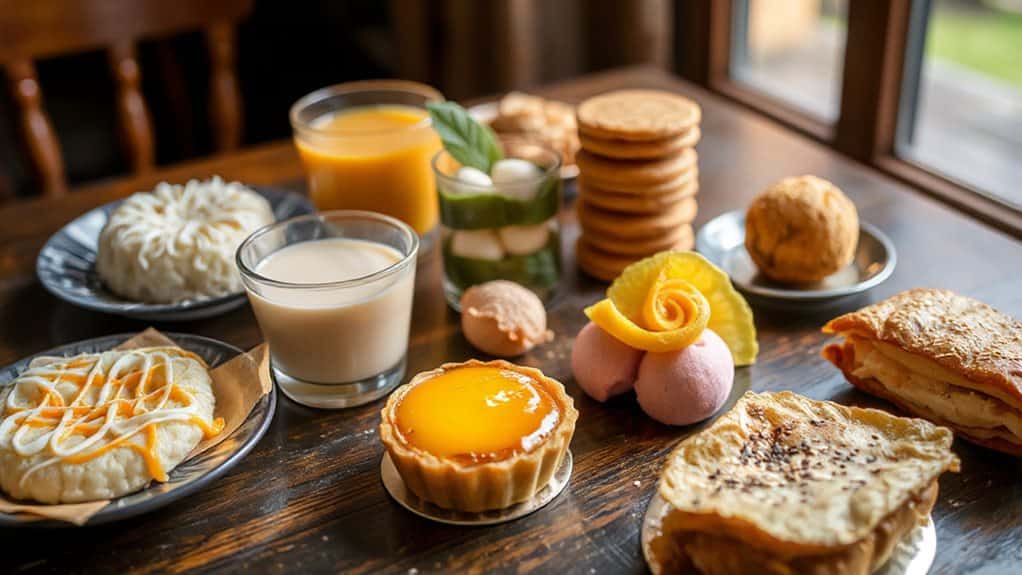
You’ll find ten standout Asian desserts that travelers can sample without hassle, each offering a distinct flavor and texture.
Mango sticky rice blends sweet coconut‑scented rice with ripe mango; Korean bingsu delivers icy milky refreshment with red bean and fruit toppings.
Mochi‑based treats offer chewy, gluten‑free bites, from donuts to brownies.
Street snacks like bungeoppang, hotteok, dasik, and yakgwa provide portable, sweet, and nutty experiences. Matcha‑infused desserts add a subtle bitterness that balances sweetness beautifully.
Vietnamese Sweet Desserts: Coconut Jelly, Chè, Steamed Tapioca Layer Cake
Where can you find Vietnam’s most iconic sweet treats? You’ll see coconut jelly (rau câu dừa) chilled, layered with pandan in chè ba mau, topped with milk or ice. Chè offers hot or cold puddings—red beans, mung beans, bananas, taro, or glutinous rice dumplings—served with peanuts and sesame. Steamed tapioca layer cake (banh da lon) alternates chewy starch, creamy mung bean, and coconut milk, popular at street stalls and festive banh shops.
Japanese Treats You Must Sample: Oni Manju, Zenzai, Rokkatei Cookies
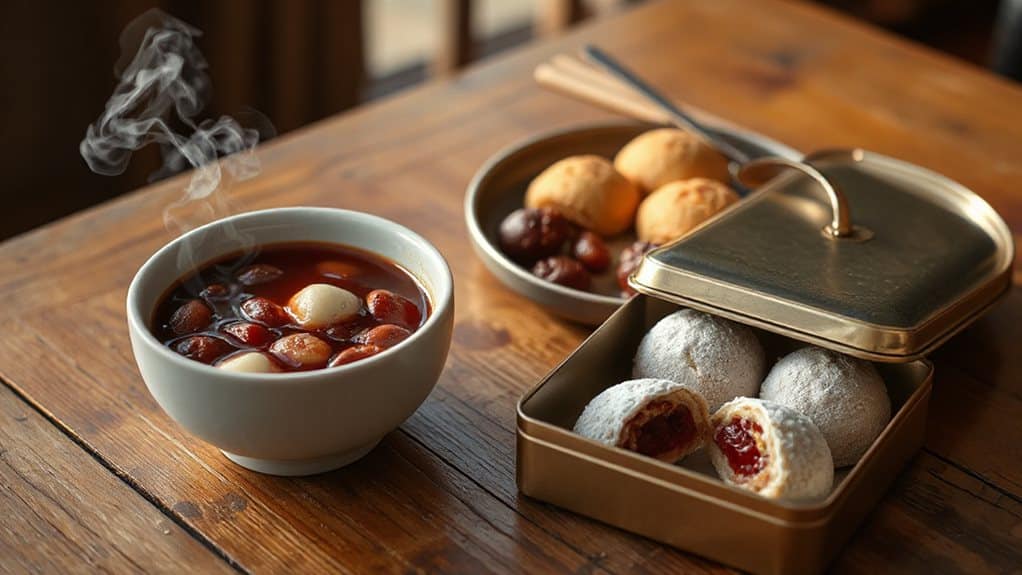
You’ll encounter the devil’s rice cake, a chewy sweet potato bun that looks like a tiny demon, alongside matcha‑red bean sweet, a warm zenzai soup dotted with mochi and chestnuts, and premium chocolate sandwich cookies from Rokkatei that melt in your mouth.
Each treat showcases a distinct regional ingredient and technique, from steaming to slow‑cooking, and they’re all easy to find in local markets and specialty shops.
Trying them together gives you a quick snapshot of Japan’s dessert diversity without needing an extensive itinerary.
Compact travel pillows are a great idea to pack when sampling treats on the go, especially if they fit as a personal item under the seat.
Devil’s Rice Cake
Ever wondered why a humble sweet‑potato cake is called “oni” in Nagoya? Oni Manju, a traditional Japanese treat from Aichi Prefecture, gets its name from the lumpy, spiky appearance that resembles the horns of a devil. You’ll find it at Baikadou, steaming for 15‑20 minutes, bright‑yellow, chewy, and priced around 120 yen. It’s a Setsubun staple, symbolizing evil’s expulsion, and you can make it at home with sweet potato, flour, sugar, and water.
Matcha‑Red Bean Sweet
Why does the matcha‑red bean sweet stand out among Japanese desserts?
You’ll find three honey‑sweetened matcha cake layers, red bean paste filling, and matcha buttercream coating. The buttercream blends butter, powdered sugar, matcha, vanilla, salt, and milk.
You level cakes, pipe borders, spread paste, and crumb‑coat the exterior. This flavor combo mirrors peanut‑butter‑jelly, offering earthy, sweet balance that travelers love.
Premium Chocolate Sandwich Cookies
While the matcha‑red bean sweet showcases a harmonious blend of earthy tea and sweet bean, Japan’s premium chocolate sandwich cookies offer a different kind of indulgence that travelers often seek.
Shiroi Koibito’s crisp langue de chat biscuits hide buttery white or dark chocolate, while Rokkatei’s Snowsand features creamy Nama filling between delicate, wavy‑edged cookies.
Meiji adds strawberry cream, and other brands deliver milk chocolate, orange, or cheese variations, all easily found in specialty stores and online.
Korean Summer Coolers: Patbingsu and Classic Bingsu Variations
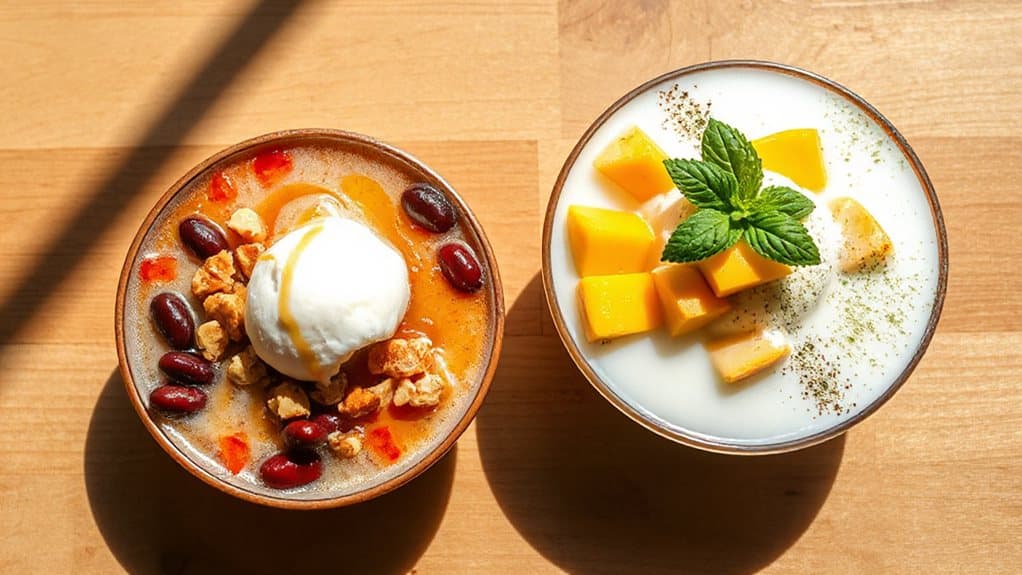
If you’re looking for a rejuvenating Korean summer treat, patbingsu delivers a mountain‑like pile of finely shaved ice topped with sweet red beans and a variety of fruits, all served chilled.
You’ll chill a bowl, layer two cups shaved ice, add one cup red beans, drizzle condensed milk, then stack more ice. Finish with fruit, rice cakes, and optional green‑tea or milky bases for texture and flavor.
For a more relaxed experience while traveling in Asia, consider staying in quieter areas like the riverside or Upper Sukhumvit to avoid crowds and tourist scams.
Iconic Southeast Asian Classics: Cendol, Onde‑Onde, Milo Dinosaur
After enjoying the icy layers of patbingsu, you’ll find a similarly refreshing trio of Southeast Asian treats that each showcase the region’s love for sweet, chilled desserts. Cendol mixes green pandan‑infused jelly noodles, palm‑sugar syrup, and creamy coconut milk over shaved ice. Onde‑onde offers glutinous rice balls with molten palm‑sugar centers, rolled in grated coconut. Milo Dinosaur layers cold Milo‑flavored milk, condensed milk, and ice, topped with an extra Milo “dinosaur” heap. These treats pair perfectly with a stroll through lively markets like Temple Street Night Market where you can soak up the local street‑food atmosphere.
Lesser‑Known Asian Dessert Gems: Khanom Kok, Kaya Toast, Boortsog
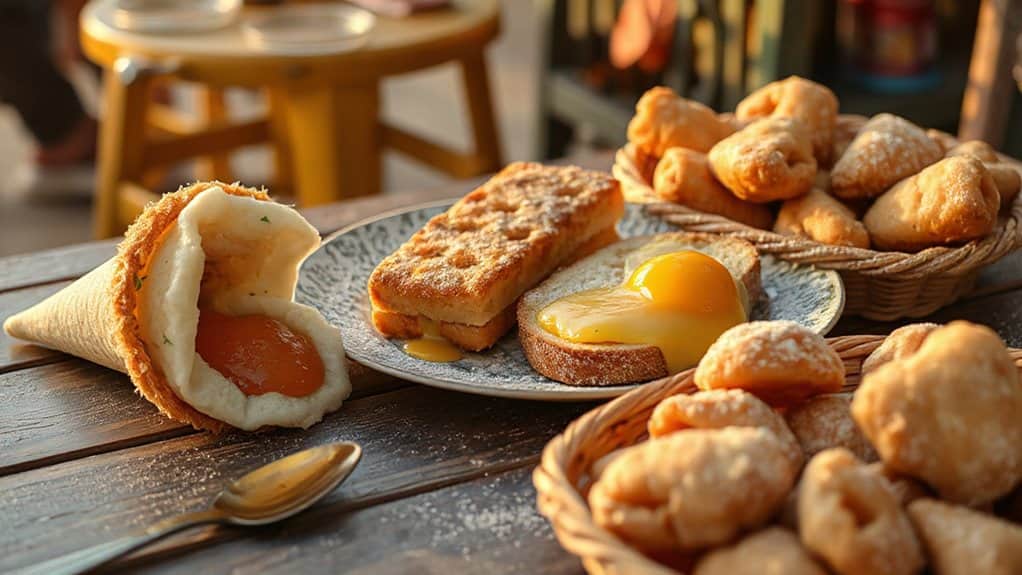
You’ll find these steamed coconut bites perfect alongside a traditional coffee pairing, as the crisp rice‑flour shell of Khanom Kok balances the rich, buttery notes of the brew.
The same principle applies to Singapore’s kaya toast, where the sweet coconut jam and soft‑boiled egg complement a strong cup of kopi, creating a harmonious flavor contrast.
In Mongolia, boortsog’s airy, fried dough offers a satisfying texture that pairs well with tea or milk tea, completing the snack experience with a simple, portable treat.
Steamed Coconut Bites
Ever wondered why Thai street markets constantly serve up tiny, golden‑brown coconut bites? These steamed coconut bites, often called khao tom, use a simple batter of rice flour, coconut milk, and sugar, poured into a bamboo steamer. The mixture cooks quickly, creating a soft, fragrant interior with a slightly crisp edge. You can add a pinch of salt or a drizzle of palm sugar for extra depth. Enjoy them warm, straight from the stall.
Traditional Coffee Pairing
A traditional coffee pairing highlights how the warm, slightly crisp exterior and the soft, custardy coconut filling of Khanom Krok, the buttery, caramel‑sweet layers of Kaya Toast, and the honey‑glazed, crumbly texture of Boortsog each complement the bitterness and acidity of freshly brewed coffee.
You’ll notice crisp‑soft contrast, balanced sweetness, and aromatic coconut‑jasmine notes that enhance coffee’s depth, while the temperature difference aids digestion and heightens enjoyment.
Authenticity Checklist: Local Ingredients to Verify Asian Desserts
How can you tell if a dessert truly reflects its regional roots? Look for signature ingredients: red dates, goji berries, and peach gum in Chinese soups; coconut milk, pandan, and sago in Southeast Asian treats; green matcha, rice flour, and red beans in Japanese sweets.
Spot authentic layers—mung beans, red bean paste, and pandan jello in Vietnamese tricolors.
Verify cassava, taro, or sweet potato in fusion dishes.
Check for durable, high-density ingredients like 210D nylon referenced in packaging and storage recommendations to ensure preserved freshness during travel.
Where to Find Real‑Deal Asian Desserts – Street Stalls, Night Markets, Cafés
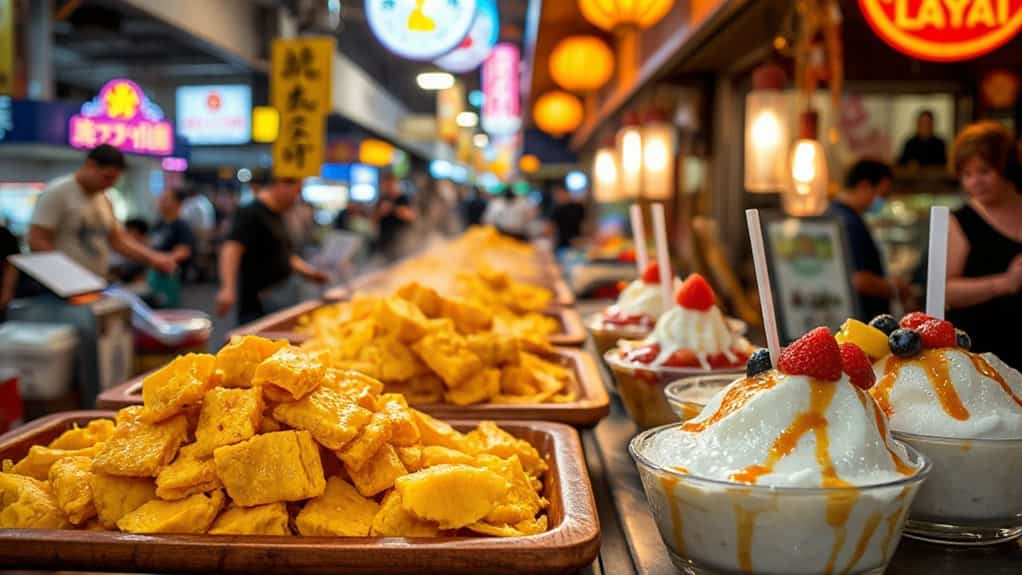
You’ll find night‑market gems like Shilin’s shaved‑ice stalls and Bangkok’s mango sticky‑rice carts, while cafés serve polished versions such as green‑tea egg custard or premium mochi.
Street‑stall secrets include peanut‑ice‑cream rolls wrapped in translucent dough and tanghulu skewers glazed in rock‑sugar syrup.
Together these venues let you taste authentic Asian desserts without the tourist‑trap fluff.
Dubai ranks as one of the safest cities after dark, supported by heavy monitoring and visible patrols that help ensure secure late‑night dining and market visits.
Night Market Gems
Night markets across Asia serve up authentic desserts that you won’t find in typical tourist guides, and they’re often tucked behind neon signs and busy stalls.
In Tokyo’s Shibuya you’ll taste shime parfaits and kakigori with red‑bean cacao.
Beijing’s night bazaars offer tanghulu and peanut ice‑cream rolls.
Bangkok’s Jodd Fairs showcase coconut ice cream and Buddha’s Bean.
Hong Kong’s stalls serve tapioca candy and sweet‑sour treats.
Café Specialty Desserts
After sampling the neon‑lit stalls of night markets, you’ll find that many of Asia’s most authentic desserts also thrive in cafés, where the same ingredients meet refined techniques. In Japan, try matcha mochi ice cream or zenzai red‑bean soup. Korean cafés serve bingsu with tteok and fruit. Taiwanese spots offer mango shaved ice and boba crêpe cakes. Lao cafés feature warm khanom kok, while modern chains highlight black‑sesame Einspanners and boba treats.
Street Stall Secrets
Where can you locate the most authentic Asian desserts beyond polished cafés? You’ll find shaved ice, mochi, and egg custard at Taiwan’s Shilin, Ximending, and Raohe night markets.
Thailand offers coconut pancakes, fried banana, and sweet potato balls.
Korea serves egg bread, dalgona candy, and cheese hotteok.
U.S. Asian markets feature croissant‑taiyaki, boba tea, and mango‑sticky‑rice ice cream.
Follow local stall signs for fresh, crowd‑approved treats.
How to Pack Asian Desserts for the Road – Storage, Allergies, Etiquette
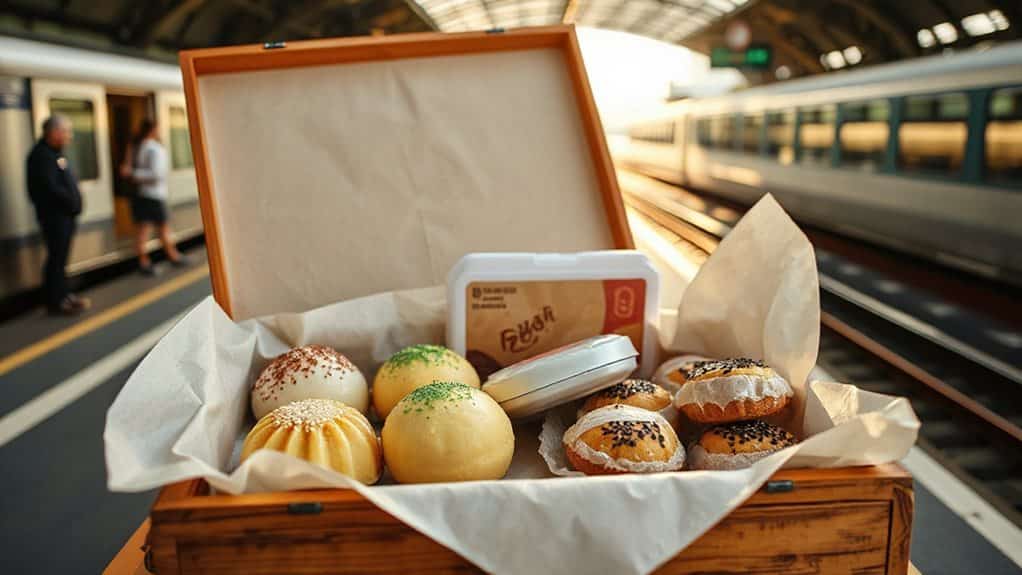
How can you keep delicate Asian pastries fresh while traveling through airports, train stations, or road trips? Pack each treat in airtight containers or wax‑wrapped parchment, then layer with parchment inside a rigid box. Use coolers with ice packs for frosting, label allergen‑free sections, and keep strong odors sealed. Choose reusable jars for gifting, and respect carry‑on limits to avoid spills. Be mindful of carry-on and battery rules when transporting lights or devices you use for photographing or displaying desserts.
Pairing Asian Desserts With Regional Beverages – Tea, Coffee, Sweet Milk Drinks
When you finish packing desserts for the expedition, the next step is to think about what to sip alongside them. Pair mango sticky rice with Thai iced tea for creamy tropical notes, or balance spicy Pad Thai with the same brew.
In India, cool a sweet lassi against fiery curries, while masala chai eases milder snacks.
Chinese honey walnut shrimp pairs well with iced green tea or sparkling water, and Japanese matcha cake shines beside a matcha mojito.
Southeast Asian shaved‑ice treats like halo‑halo complement milky drinks or citrus‑y teas.
And Finally
By sampling these desserts you’ll experience Asia’s diverse sweet traditions and gain insight into local culinary practices. The guide highlights key flavors, authentic ingredients, and reliable venues, helping you navigate street stalls, night markets, and cafés confidently. Remember to check storage needs, allergy information, and cultural etiquette before packing treats for travel. Pairing each dessert with regional teas, coffee, or milk drinks enhances the experience and deepens your appreciation of the region’s food culture.


