Monitor weather‑driven disruption risks and pick airlines with strong on‑time records, using apps like FlightAware or Flightradar24 for real‑time alerts. Book flexible or refundable tickets and favor large spare‑capacity hubs such as Atlanta or Chicago, which absorb delays better. Arrive early to increase re‑booking chances, and consider travel insurance that covers weather‑induced cancellations. Finally, plan backup options—nearby airports, trains, or car rentals—to keep moving if a disruption occurs, and you’ll discover even more tactics ahead.
TLDR
- Book flexible or refundable tickets and use airlines’ storm‑waiver policies for no‑fee changes.
- Choose carriers with high on‑time performance and low cancellation rates, such as Delta or top regional airlines.
- Monitor real‑time weather and airport status via apps like FlightAware, Flightradar24, or SITA alerts for early disruption notices.
- Arrive early and check in promptly to access on‑site re‑booking staff and meet DOT refund verification requirements.
- Secure travel insurance covering weather‑related cancellations and identify nearby backup airports for alternative routing.
Understand Weather‑Related Flight Cancellation Risks
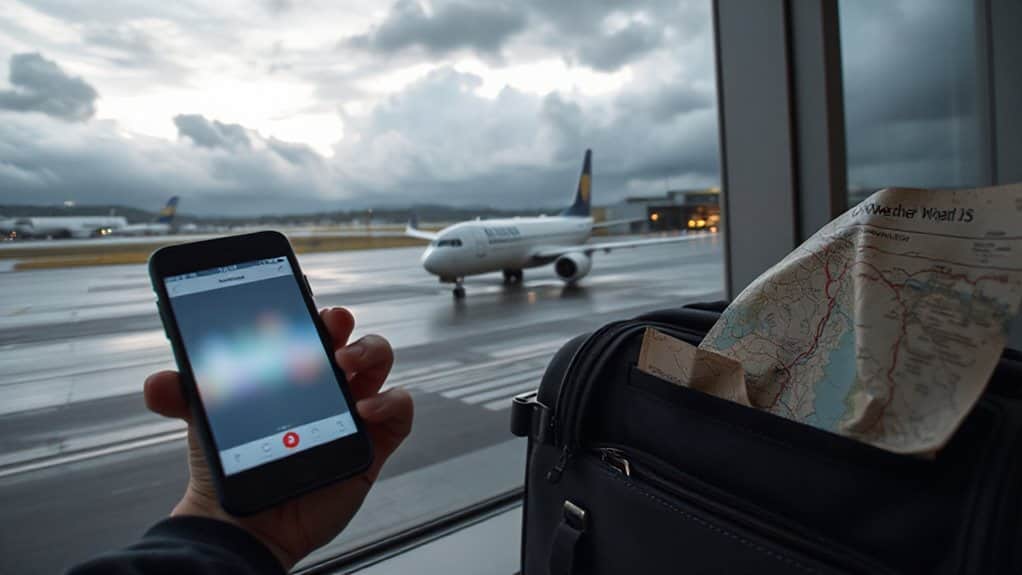
Ever wondered how weather turns a routine flight into a cancellation nightmare? You should know that weather causes over 75 % of U.S. delays and about 30 % of European ATFM delays. Thunderstorms, high winds, snow, ice, fog, and hurricanes rank top. Summer brings the most disruptions, while winter adds ice‑related delays. Airports like Newark and LaGuardia experience the highest cancellation and delay rates. Data‑driven predictions help airlines anticipate these conditions and adjust schedules proactively.
Pick Airlines With Proven On‑Time Records
You should start by checking the airline’s historical on‑time scores, because carriers with consistently high percentages—like those topping global rankings—tend to stick to their schedules. Look for airlines that also report low cancellation rates, since a small percentage of cancellations across thousands of flights indicates strong operational reliability. By focusing on top‑rated carriers with proven on‑time records, you reduce the chance of unexpected disruptions and keep your travel plans on track. Also consider how your choice of hub city affects risk, since flying through major high‑traffic airports can increase chances of delays and cancellations.
Delta Top‑Rated Carriers
What makes a carrier truly reliable? Delta delivers 80.9% on‑time arrivals across 1.8 million flights, outpacing rivals by 1.7 points. It tops Cirium’s North American list for five years and ranks among the global ten. Morgan Stanley forecasts strong earnings, assigning a $90 price target. Free Delta Sync Wi‑Fi, TSA PreCheck Touchless, and expanded routes—Melbourne, Seoul, Lima—enhance freedom‑focused travel.
Historical On‑Time Scores
If you’re looking for airlines with a proven track record of punctuality, historical on‑time performance (OTP) data offers a clear guide.
Aeromexico and Saudia both posted 86.73 % OTP globally, while China Southern led with 89.4 % on 69,392 flights.
In North America, United and Alaska rank near the top, and Delta earned an 83.4 % OTP Platinum award.
Copa’s regional score hits 91.35 %, confirming consistent reliability.
Low Cancellation Rates
Where do you find the airlines that consistently stick to their schedules?
Look to SAS (1.24% cancellations, 84.78% on‑time) and Finnair (1.58%) in Europe, and to Southwest (0.62% in 2024) and Alaska (0.89%) in the U.S.
Delta and Hawaiian airlines also hover near 0.5% in December 2024.
These carriers give you reliable, low‑risk travel options.
Use Real‑Time Tools to Track Weather‑Related Delays
Ever wondered how a sudden storm can throw your travel plans into disarray? Use apps like Flightradar24, Flightview, FlightStats, Planes‑Live, and FlightAware to monitor real‑time weather and airport delays. Each platform shows live maps, forecasts, and push alerts for changes. Enable notifications, check departure and arrival weather, and compare historical on‑time data. This proactive tracking lets you adjust itineraries before disruptions hit. Also consider local weather patterns and the best time to visit to anticipate seasonal disruptions.
Set Up Weather and Airport Operational Alerts

You should enable real‑time weather alerts so you get instant warnings about storms, lightning, or wind that could affect your flight. Keep an eye on airport operational status by subscribing to push notifications that report runway closures, gate changes, or staffing issues. Also, sign up for airline disruption alerts, which combine flight‑status data with passenger information to let you know about delays or cancellations as soon as they’re identified.
Up Real‑Time Weather Alerts
Why wait for a surprise delay when you can get real‑time weather alerts straight to your phone or inbox? Use FlightForecasts or KnowDelay to schedule alerts from the day before departure through takeoff. Choose frequency and detail level, receive concise emails or dashboard notifications, and see hyper‑local updates from SITA, TheWatch, or Delta’s app. Early alerts let you rebook or adjust itineraries before airlines announce changes.
Monitor Airport Operational Status
Where can you get the most reliable snapshot of airport conditions before you even step onto the tarmac? Use real‑time airport alerts from AMS and Insero RCMS to see weather, runway status, and equipment health.
Track surface movement with ASDE‑X radar and ADS‑B data, and monitor crowd flow via AeroCloud Optic Track.
Set up these alerts on your phone or smartwatch, so you stay informed and can adjust travel plans instantly.
Subscribe to Airline Disruption Notifications
Ever wondered how to stay ahead of flight disruptions before they affect your travel plans? Subscribe to airline alerts via SMS, email, push, or apps like WhatsApp, and set weather‑triggered notifications for specific flights or airports.
Use two‑way messaging to receive real‑time gate changes, delays, and rebooking links, enabling you to act instantly and keep your itinerary flexible.
Book Flexible or Refundable Tickets for Weather Cancellations
How can you protect your travel plans when weather threatens to ground flights?
Choose fully refundable tickets for complete reimbursement or flexible tickets that let you rebook without penalty, though fare differences may apply. Take advantage of 24‑hour cancellation windows and airline‑specific waivers—Delta, Frontier, JetBlue, Spirit, United—each offers no‑fee changes for storm‑affected flights. Remember DOT rules grant automatic refunds for airline‑canceled flights if you decline rebooking. Many travelers also use vacuum bags to reduce luggage bulk and fit essentials into carry-ons when rebooking last-minute.
Travel Mid‑Week to Reduce Congestion
Why choose mid‑week travel? You’ll find lower passenger volumes on Tuesdays and Wednesdays, which means shorter security lines and quicker check‑ins. Airlines cut fares during these off‑peak days, so you save money without sacrificing service. Early morning departures further reduce queues and delay risk. Stay alert in crowded transit areas and watch for pickpockets when moving through busy terminals.
Select Larger Airports With Spare Capacity for Disruptions
You should aim for airports that already handle massive passenger volumes, because their spare capacity can absorb sudden disruptions. Look for hub airports like Dubai International, Atlanta Hartsfield‑Jackson, or Chicago O’Hare, which regularly process tens of millions of seats and have shown recent capacity growth.
Having alternate large‑airport options on your route gives you flexibility if your primary flight is delayed or canceled. Consider airports with high seat throughput to increase the chances of rebooking or finding alternate connections quickly.
Spare‑Capacity Hub Airports
What makes a spare‑capacity hub airport precious is its ability to absorb disruptions without derailing passenger itineraries. You’ll find that these hubs handle over 40 million travelers annually, offering multiple runways, terminals, and advanced ATM systems that keep flights moving.
Their dense destination network and frequent departures create schedule redundancy, while spacious terminals and sturdy ground transport let airlines reroute passengers swiftly, preserving your travel freedom.
Alternate Large‑Airport Options
Ever wonder which big airports still have spare capacity when disruptions strike? Choose hubs outside the FAA’s 40‑airport cut list—like Atlanta, New York City, and Los Angeles—where alternate routes reduce delays.
Avoid high‑disruption sites such as SFO, PHX, and MSP.
Larger facilities maintain higher on‑time rates, offering you smoother travel even when staffing shortages cause cancellations.
Arrive Early to Secure Re‑booking Options
Arriving at the airport well before your scheduled departure gives you the best chance of securing a re‑booking if a cancellation occurs. Early check‑in lets you beat crowds, access staff prioritizing re‑booking, and grab dwindling seats on popular routes.
Gate agents can resolve nonstop schedule changes faster, and on‑site presence satisfies DOT refund verification. This proactive approach preserves your travel freedom and minimizes disruption. You can also use extra time to explore nearby Charles Bridge and local sights if re‑booking options are limited.
Buy Travel Insurance Covering Weather‑Induced Cancellations
How can you protect your trip when unpredictable weather threatens to cancel your flight? Buy a policy that reimburses non‑refundable expenses if a storm forces a 24‑hour carrier shutdown or evacuation.
Choose trip‑cancellation, delay, or interruption coverage, and consider CFAR for flexible refunds.
Purchase at least 72 hours before departure, preferably within 21 days of your deposit, and keep documentation for claims.
Create a Backup Travel Plan (Nearby Airports, Trains, Car Rentals)
If your flight gets canceled, you’ll need a backup travel plan that includes nearby airports, train connections, and car‑rental options. Identify alternatives within a 50‑100‑mile radius—Midway for O’Hare, Burbank for LAX, Oakland for SFO, Bedford for BOS, etc.
Compare fares; smaller airports often save 50%+ on tickets. Check train links, such as Amtrak to BWI or Penn Station to Newark. Reserve a rental car at the backup airport to secure freedom and keep moving forward.
And Finally
By staying informed, you reduce the risk of weather‑related cancellations. Choose airlines with strong on‑time records, use real‑time tracking tools, and set up alerts for weather and airport operations. Book flexible tickets, consider larger airports, and arrive early to secure re‑booking options. Purchase travel insurance that covers weather‑induced cancellations, and always have a backup plan—nearby airports, trains, or car rentals. These steps help you navigate disruptions efficiently and keep your travel on track.


