Check a destination’s solo‑travel safety score first; low numbers (e.g., Andorra 1.33/10) mean minimal personal‑risk threats, while high scores (e.g., Venezuela 9.74/10) flag night‑time danger, weak healthcare, and limited local support. Choose low‑risk, infrastructure‑rich places with reliable transport, lit streets, and strong emergency services. Pack a compact safety kit, secure your devices with encryption and VPN, and share live location with trusted contacts. Stay visible, use reputable hostels or guided tours, and follow local customs to reduce scams, harassment, and theft. Continue for deeper details.
TLDR
- Research destination safety scores, women’s‑rights records, and health alerts before booking; prioritize low‑risk, infrastructure‑rich countries.
- Pack a compact safety kit (first‑aid, anti‑theft gear, personal alarm, headlamp, solar charger) and keep electronics encrypted, password‑protected, and limited.
- Share real‑time location with trusted contacts, use VPN or personal hotspot, and disable auto‑Wi‑Fi/Bluetooth to protect digital privacy.
- Stay visible on well‑lit routes, use reputable hostels or guided tours, and join local meet‑ups to build a supportive travel network.
- Remain vigilant for scams, pickpocketing, and harassment; keep valuables concealed, avoid isolated areas, and trust your instincts.
Solo Travel Safety: What Your Score Really Means
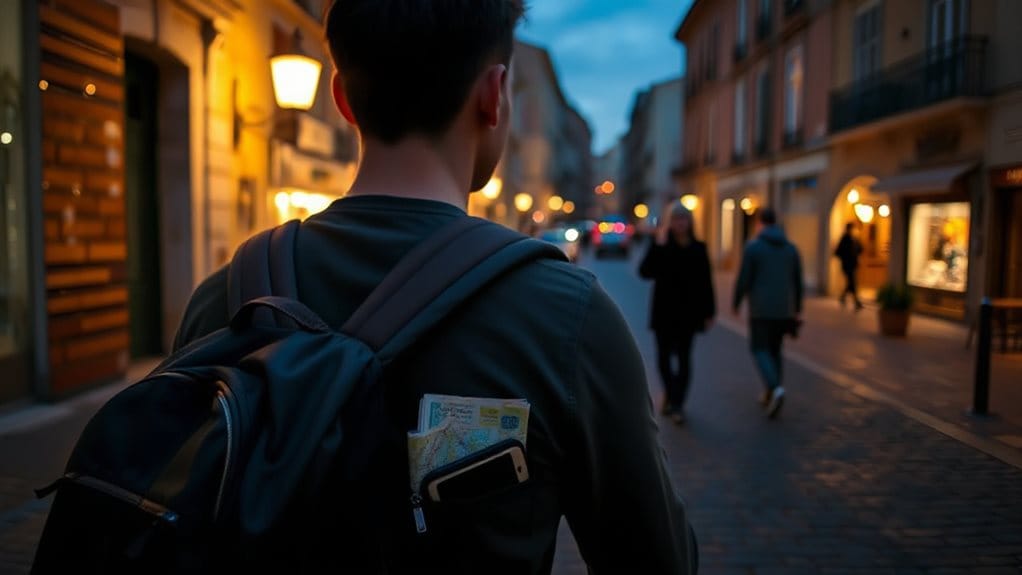
What does a solo‑travel risk score actually tell you? It quantifies safety, security, health, and infrastructure hazards for lone adventurers. Higher numbers mean compounded risks because you lack local support nets. Venezuela’s 9.74/10 reflects night‑time danger and weak healthcare; Peru’s 8.87/10 shows attack fears and poor connectivity. Low scores, like Andorra’s 1.33/10, indicate minimal personal‑safety concerns, guiding you toward freer, safer journeys. Pack liquids in leak‑proof containers and protective bags to keep your belongings safe while traveling. Public spaces are prioritized over private settings to reduce risk.
Solo Travel Safety: Pick Low‑Risk Destinations First
You should start with top‑rated countries that consistently score high on safety indexes, because they already prove low risk for solo travelers.
Prioritizing destinations with sturdy infrastructure—reliable public transport, well‑lit streets, and strong emergency services—means you’ll encounter fewer obstacles and quicker assistance if needed.
This approach lets you build confidence while you investigate new places, keeping your focus on the experience rather than safety worries.
Consider starting with destinations near notable but controlled border areas like the DMZ, where access is restricted and organized tours are required.
Start With Top‑Rated Countries
How can you guarantee a smooth start to solo travel? Choose top‑rated safe countries first.
Iceland tops the Global Peace Index at 1.095, with virtually no crime and English everywhere.
Ireland, New Zealand, Switzerland, and Austria rank similarly low.
Japan offers low violent crime and respectful culture.
Portugal, Greece, and Vietnam provide friendly locals and reliable transit, giving you freedom to explore safely.
Prioritize Infrastructure‑Rich Destinations
After choosing a safe country, the next step is to focus on destinations with strong infrastructure, because reliable transport, lighting, and public services dramatically lower risk for solo travelers.
Prioritize places like Iceland, Norway, Switzerland, Taiwan, Singapore, and Japan. Their low crime rates, well‑lit streets, extensive public transit, and multilingual signage keep you moving confidently, minimizing isolation and ensuring quick help if needed.
Solo Female Travel Safety: Women’s Rights, Local Attitudes, and Health Alerts
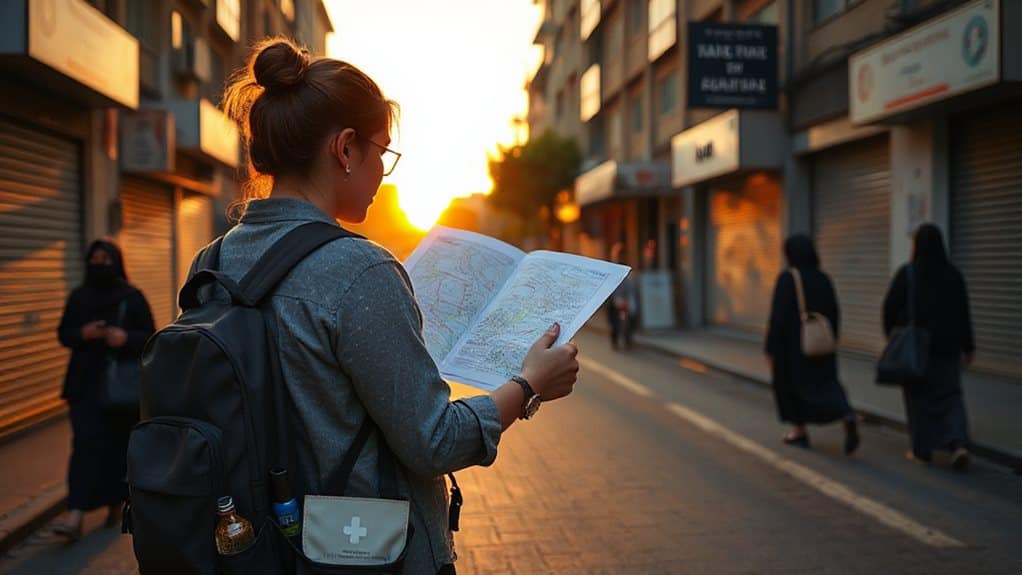
You should check a country’s women’s‑rights record, local attitudes toward unaccompanied women, and any health alerts before you book.
Strong legal protections, inclusive cultural norms, and reliable medical infrastructure can dramatically lower the risk of harassment, scams, or illness.
Be especially cautious in busy transit and tourist areas where pickpocketing hotspots and distraction scams are common, and secure valuables to reduce the risk of theft.
Women’s Rights Landscape
What you’ll quickly notice when traveling solo as a woman is that local attitudes toward gender shape every safety decision you’ll make. Gendered safety issues dominate: unwanted advances appear more often than for men, and sexual harassment is common even in Western Europe.
Patriarchal societies restrict mobility through safety narratives, while violence in places like Pakistan usually spares foreign women. Stay aware, adapt your plans, and respect local norms.
Local Attitudes Toward Women
Because local attitudes shape how women are treated in public spaces, understanding those attitudes is essential before you set out on a solo trip.
In many destinations—South Africa, Brazil, India, Morocco, Türkiye—gender discrimination and harassment rates are higher, so you’ll want to assess personal comfort and consider a guide.
Research crime statistics, connect with local women online, and plan routes that respect cultural norms while preserving your freedom.
Health Alerts & Precautions
Health alerts and precautions form a critical layer of solo female travel safety, intertwining medical preparedness with the broader Women’s Rights and Local Attitudes framework. Secure comprehensive travel insurance, especially for Schengen states, to cover emergencies and disruptions.
Choose destinations with reliable hospitals, low maternal mortality, and strong legal protections. Check local health advisories, verify emergency services, and keep a medical kit handy for confidence and freedom.
Solo Travel Safety: Pack a Physical Safety Kit for Crime, Disasters, and Health
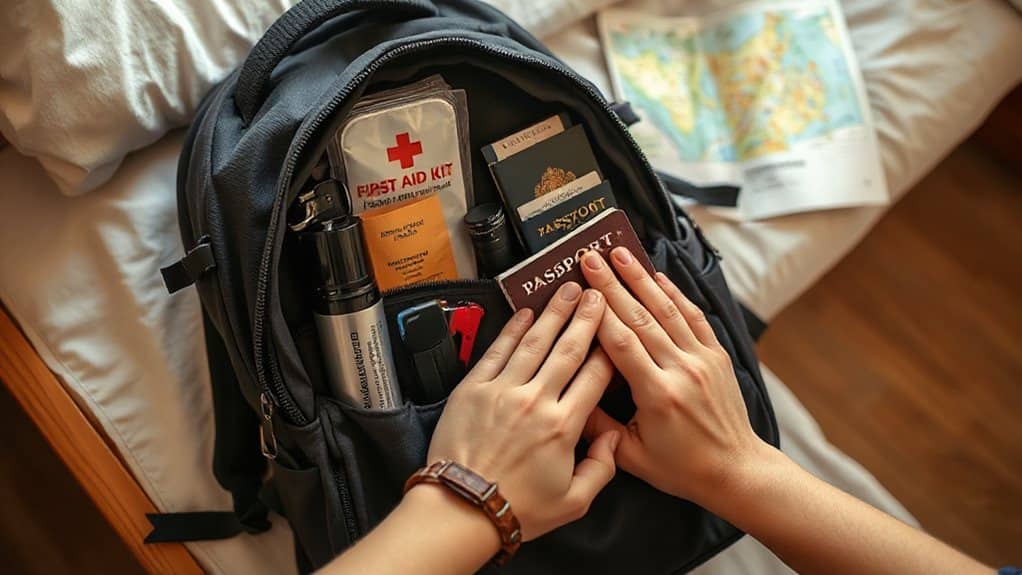
Ever wondered how a compact, well‑stocked kit can keep you safe from crime, natural disasters, and sudden illness while traveling alone?
Pack a first‑aid pouch with band‑aids, painkillers, anti‑motion meds, and anti‑diarrheal tablets, plus tweezers, gauze, and wipes. Add an anti‑theft bag or cross‑body, TSA‑approved locks, a personal alarm, headlamp, thermometer, and a solar phone bank for emergencies. Choose a lightweight, water‑resistant organizer with padded compartments to keep electronics and essentials protected and tangle‑free, like those designed to fit tablets up to 11 inches and featuring removable dividers for customizable storage.
Solo Travel Safety: Keep Your Digital Footprint Safe While Traveling
Your physical safety kit protects you from immediate threats, but your digital footprint needs equal attention once you’re on the road.
Minimize devices, enable full‑disk encryption, and set strong, unique passwords.
Turn off auto‑Wi‑Fi, Bluetooth, and remote sharing; limit location services.
Use a VPN or personal LTE hotspot on public networks, keep software updated, and enable MFA.
Back up data, run antivirus scans, and have a rapid password‑change plan ready.
Consider packing a compact portable hotspot to avoid untrusted public Wi‑Fi and maintain a secure connection.
Solo Travel Safety: Stay Visible and Connected on the Road
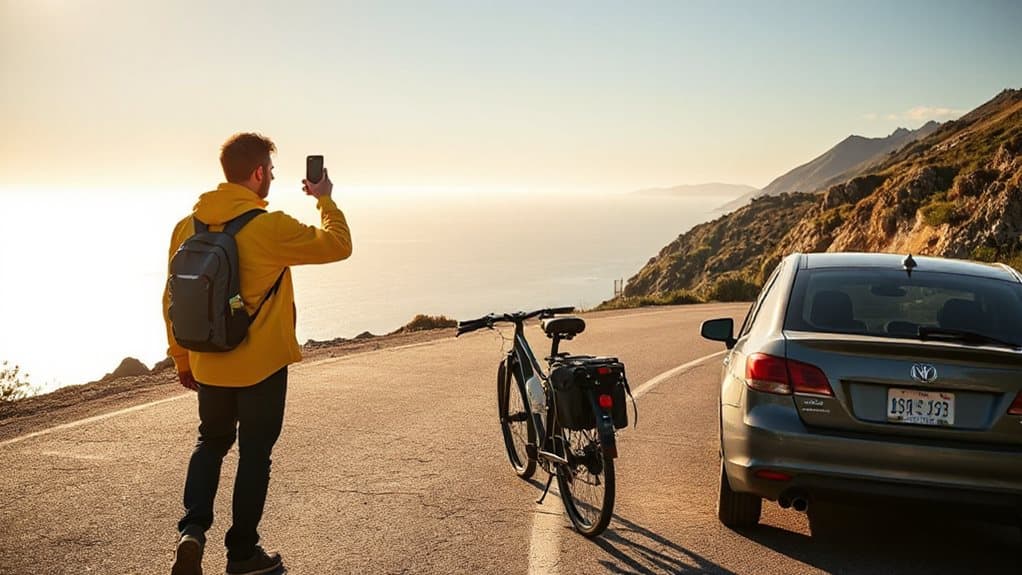
How can you stay visible and connected while traveling alone? Keep your phone concealed, pull out devices only in cafés or stores, and use pre‑loaded audio directions. Share real‑time location with trusted contacts via apps or satellite messengers. Dress conservatively, walk confidently, and position yourself against walls when stopping. Notify friends of itineraries and check in regularly for safety. Consider using a weekly transit pass to limit time fumbling for tickets and reduce exposure when navigating public transport.
Solo Travel Safety: Navigate Public Transport and Nightlife Safely
Staying visible and connected on the road sets the stage for safe movement through buses, night trains, and city nightlife. Research schedules and safety ratings before you arrive, then download local ride‑hail apps for verified drivers. Choose women‑only metro cars where available, and share live location with contacts. Use well‑lit main streets, keep a power bank and local SIM, and avoid unlicensed taxis at night.
Solo Travel Safety: Handle Scams, Harassment, and Theft on the Ground
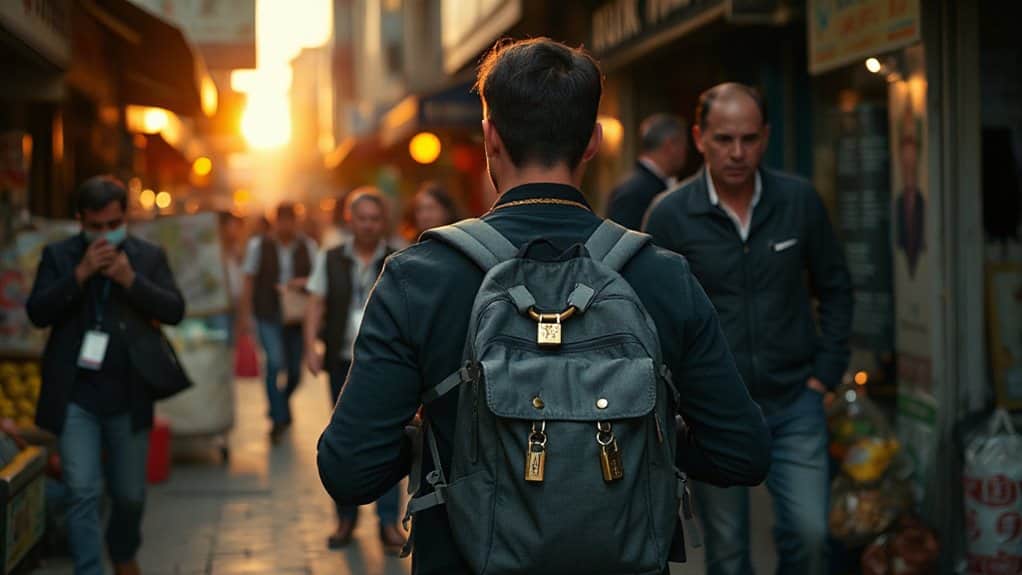
Never wonder how a simple street encounter can turn into a costly scam, an unsettling harassment, or a quick theft?
Research local scams, decline unsolicited items, verify taxis with meters or apps, and refuse wire‑transfer or gift‑card offers.
Trust instincts, stay in public, dress to blend, and use a fake wedding ring.
Keep valuables in a cross‑body sling, stay alert on crowded transport, and lock luggage.
Act confidently, avoid isolated night spots, and protect personal info.
Solo Travel Safety: Safe Community Building With Meet‑Ups, Hostels, and Trusted Guides
After tackling scams, harassment, and theft, the next step is to create a reliable support network while you’re on the road. Join meet‑ups or guided tours—67% of solo travelers do—to gain companionship and safety.
Choose hostels with strong review scores and shared spaces; 32% say they cultivate community.
Trusted guides elevate confidence, especially for women, and group travel reduces isolation, making solo expeditions both freer and safer.
And Finally
By applying the tips you’ve learned—choosing low‑risk destinations, packing a safety kit, protecting your digital footprint, staying visible, navigating transport and nightlife wisely, and building trusted community connections—you’ll reduce vulnerability and enjoy solo travel with confidence. Remember to assess each situation, adapt to local conditions, and keep your plans shared with reliable contacts. Consistent vigilance and preparation turn potential hazards into manageable challenges, allowing you to explore safely and responsibly.


