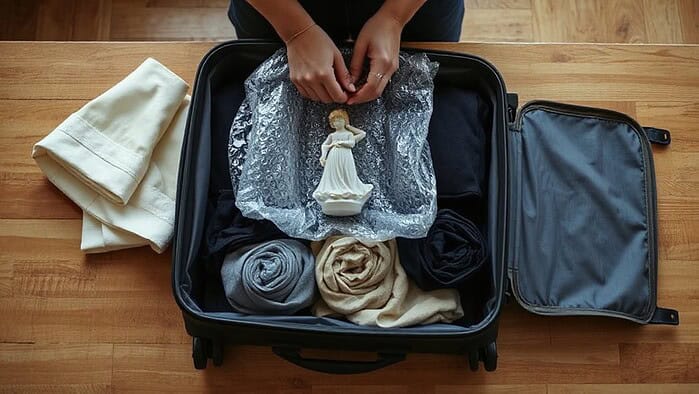
Choose a hard-shell suitcase made of polycarbonate or aluminum for strong protection. Wrap each fragile item separately using bubble wrap, securing it tightly without damaging the surface. Place these wrapped items in the center of your bag, cushioned by soft clothing or towels. Fill empty spaces with socks or paper to prevent shifting. Pack heavy items at the bottom and distribute weight evenly. Perform a shake test—no rattling means you’re good. Keep electronics in your carry-on, and you’ll see why certain extras make all the difference.
TLDR
- Use hard-shell suitcases made of polycarbonate or aluminum for superior impact and moisture protection.
- Individually wrap fragile items in bubble wrap, with bubbles facing inward, and secure with tape.
- Place wrapped fragile items in the center of the suitcase, surrounded by soft clothing for cushioning.
- Fill all gaps with soft materials like socks or clothes to prevent shifting during transit.
- Perform a shake test before traveling to ensure no movement or rattling inside the packed luggage.
Choose a Suitcase That Protects Fragile Items
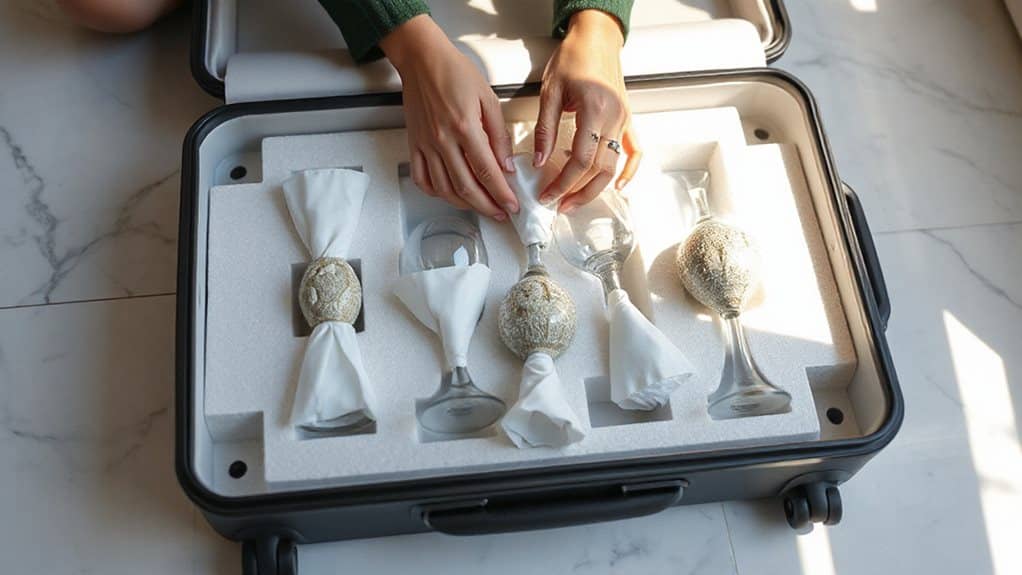
When packing fragile items, choosing the right suitcase makes all the difference in ensuring they arrive safely.
Opt for hard shell luggage made from polycarbonate or aluminum—it resists impacts, deters theft, and shields contents from moisture.
Unlike soft-sided bags, rigid shells prevent crushing during stacking and offer superior shock absorption, so your delicate items stay protected without hassle, giving you freedom to travel with confidence.
For frequent travelers, investing in premium materials like polycarbonate offers the best balance of durability and lightness best material balance.
Many travelers also prefer cases with reinforced corners and durable zippers for added protection and longevity.
Wrap Each Fragile Item Individually
Start by wrapping each fragile item separately to guarantee maximum protection during transit. Use bubble wrap with bubbles facing inward, securing it with tape on the material only.
Apply at least two layers for glass. Stuff hollow areas with socks or tissue paper.
Wrap bottles, frames, and electronics individually, using appropriate padding. Secure all edges tightly to prevent shifting. Champagne bottles should be packed centrally in your checked luggage with padding for safety to reduce the risk of breakage.
Sandwich Fragiles in the Middle With Soft Layers
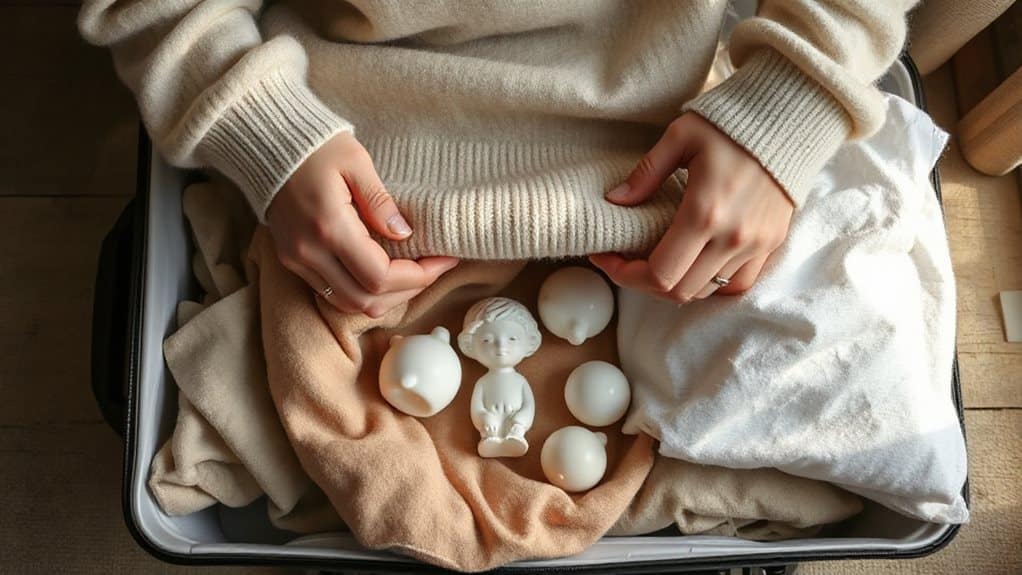
Now that you’ve wrapped each fragile item individually, it’s time to tuck them safely into the heart of your luggage.
Place them in the center, surrounded by soft layers like clothing or towels.
Use socks to fill gaps and prevent shifting.
Keep heavy items at the bottom and distribute weight evenly.
This cushioned sandwich protects against impacts and pressure during travel, giving you peace of mind on the go.
Choose a duffel that fits airline size rules and is made from durable, water-resistant materials like ballistic nylon to better protect fragile contents.
How to Pack Mugs, Bottles & Electronics Safely?
Wrap your mugs, bottles, and electronics with care, layering protection to keep them intact during travel.
Stuff mugs with tissue, then wrap in bubble wrap or socks.
Secure bottles with sleeves and tape, padding inside and out.
Protect electronics with foam, soft clothing, or packing cubes.
Always perform a shake test—add cushioning if items rattle.
Use durable materials like bubble wrap and avoid relying solely on newspaper.
Carry delicate electronics in carry-on luggage for better protection and monitoring, and bring proof of ownership if traveling internationally with valuable devices (see carry-on recommended).
Stop Shifting: Fill Gaps With Clothes or Paper
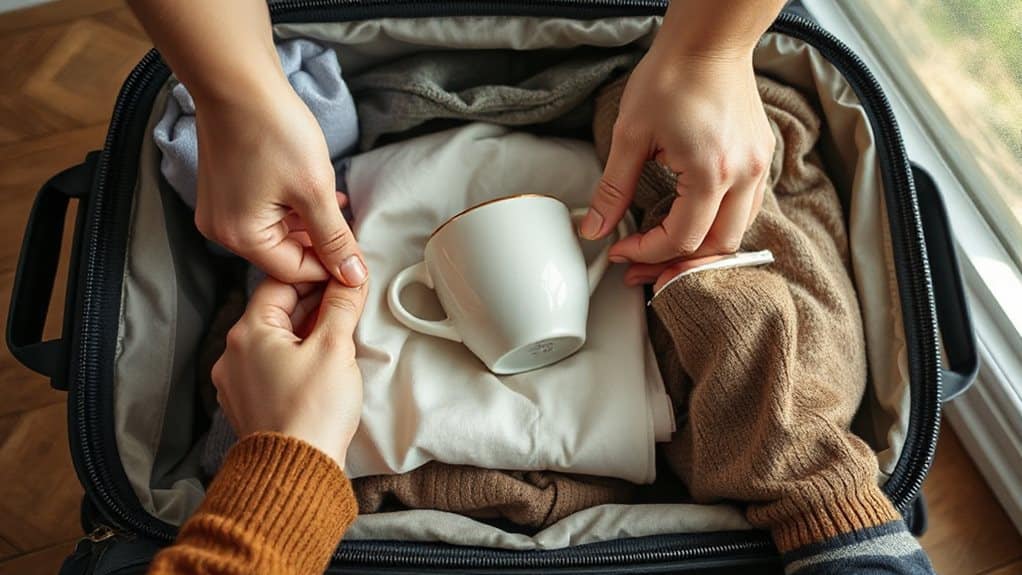
Fill any empty spaces in your suitcase with soft items like clothes or crumpled paper to keep fragile things from shifting.
Use socks, towels, or T-shirts to pad gaps and wrap items snugly, reducing the risk of damage during transit.
Make sure everything fits tightly—give your bag a quick shake to check for movement before zipping it up.
Consider using compression packing cubes to further minimize shifting and maximize space.
Fill Gaps Completely
Because empty spaces in your suitcase can lead to movement during transit, it’s essential to fill gaps completely using soft materials like clothes or paper.
Pack clothes snugly around fragile items, or crumple paper to block shifts.
A full, firm fit prevents sliding and absorbs shocks.
Avoid overstuffing—close the bag smoothly and shake gently to check for movement.
Use Soft Fillers
You’ll often find that soft fillers are your best defense against shifting and breakage when packing fragile items.
Crumple kraft or unprinted newspaper to fill gaps and pad corners.
Use towels or soft clothes to cushion laptops or glassware, nesting them snugly.
Bubble wrap with large air pockets adds resilient protection, while inflatable air pillows save space and adapt easily.
Foam or eco-fillers like Flexi-Hex work well for odd shapes, ensuring your items stay secure and impact-free.
Prevent Item Movement
Secure your packed items by eliminating empty spaces that lead to shifting during transit.
Use packing cubes to group and stabilize belongings, rolling clothes tightly to form a snug, interlocking layer.
Fill gaps with tissue paper or soft items like T-shirts, especially in the handle gap.
Layer heavy items at the bottom, alternating directions, and bundle garments to prevent movement.
Shake Test: How to Check Your Packed Luggage
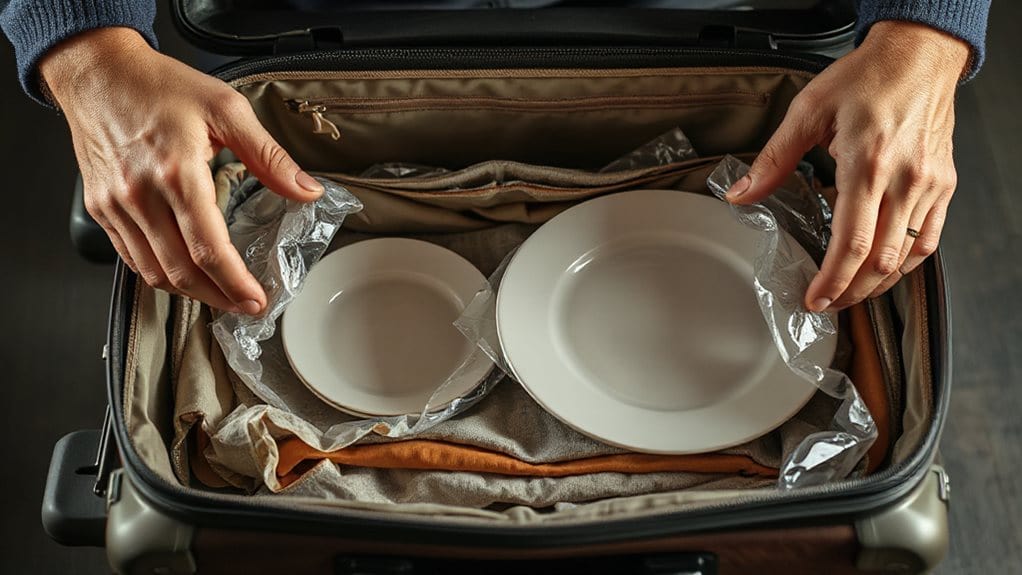
Secure your packed luggage tightly so nothing shifts during travel.
Give it a gentle shake or wiggle to check for movement, listening for any rattling or feeling for loose items inside.
If you notice anything moving, adjust the padding, straps, or arrangement to keep fragile parts safe.
You can also use a bathroom scale to weigh your bag at home and ensure it’s not over the airline limit.
Secure The Load
Give your packed suitcase a good shake—literally. Close it fully, lift by the handle, and shake firmly in different directions.
Listen for rattling; silence means your load’s secure. If things shift, add bubble wrap, socks, or towels around items.
Re-test after each adjustment. Proper layering and padding prevent movement, ensuring your fragile gear arrives safe—just like pros do.
Test For Movement
Put your packed luggage to the test with a simple shake to catch movement before you hit the road.
Secure it fully, then lift and jerk it gently—about 30 times per minute—to simulate travel stress.
Check for shifting contents or strain on handles and straps.
If things slide or wobble, repack tightly.
A stable bag handles bumps better, keeping your fragile items safe and your trip smooth.
And Finally
You’ve wrapped each fragile item, cushioned them well, and secured everything to prevent shifting. Now, double-check by gently shaking your suitcase—it shouldn’t rattle. Keep delicate items like mugs, bottles, or electronics centered and surrounded by soft layers. Always use a sturdy suitcase with some give, like polycarbonate. Remember, proper packing saves time, money, and hassle at your destination.