You might think seat width is straightforward, but airlines measure it differently—some include armrests, others don’t. Method B, measuring from armrest to armrest inside, gives a truer sense of shoulder space. Published numbers can be misleading, often inflating width by using midpoint-to-midpoint measurements. Real comfort depends on actual hip and shoulder room, which varies by design. There’s no standard minimum, so the number alone doesn’t tell the whole story—what really matters becomes clear when you sit down.
TLDR
- Airlines use different measurement methods (B, C, D), with Method B measuring inside armrests for true shoulder space.
- Some methods measure from seat center to center, including full armrest width, which can inflate reported seat width.
- Published seat widths may exclude armrest space, making actual usable space narrower than advertised.
- There is no standardized industry method, leading to inconsistent and non-comparable seat width measurements.
- Real-world factors like body size, armrest design, and cabin layout affect perceived seat width beyond simple measurements.
Why Is Seat Width So Hard to Measure?
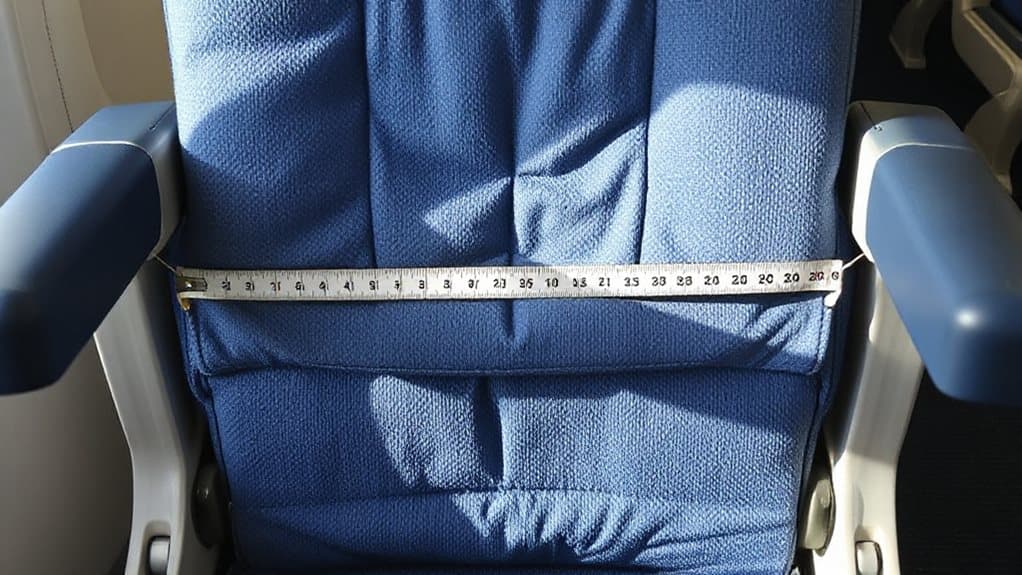
While you might think measuring airplane seat width is as simple as pulling out a tape measure, the reality is far more complex due to a range of human, design, and operational factors.
Your actual space depends on hip breadth, clothing, movement needs, and gender ratios. Armrests vary by plane, and published specs often don’t match real seats. Without standard methods, your true comfort remains hard to measure. Seat width and pitch can differ significantly between aircraft types and airlines, so always check specific seat width and pitch measurements for your flight.
Research shows that accommodation varies significantly based on passenger body dimensions and seat configuration, highlighting why simple measurements fail to capture real-world comfort.
How Do Airlines Measure Seat Width: And Which Method Is Truthful?
When you’re trying to figure out how much space you’ll actually have on a flight, it’s important to know that airlines don’t all measure seat width the same way. They use different methods—B, C, or D—with B (inside the armrests) being the most truthful.
It shows your real shoulder room, avoids inflated numbers, and helps you make informed choices. Always check which method your airline uses. Enforcement at busy hubs and peak times can affect real-world seating comfort, especially on flights with strict measurement enforcement.
How Did Seat Width Shrink From 18 to 17 Inches?
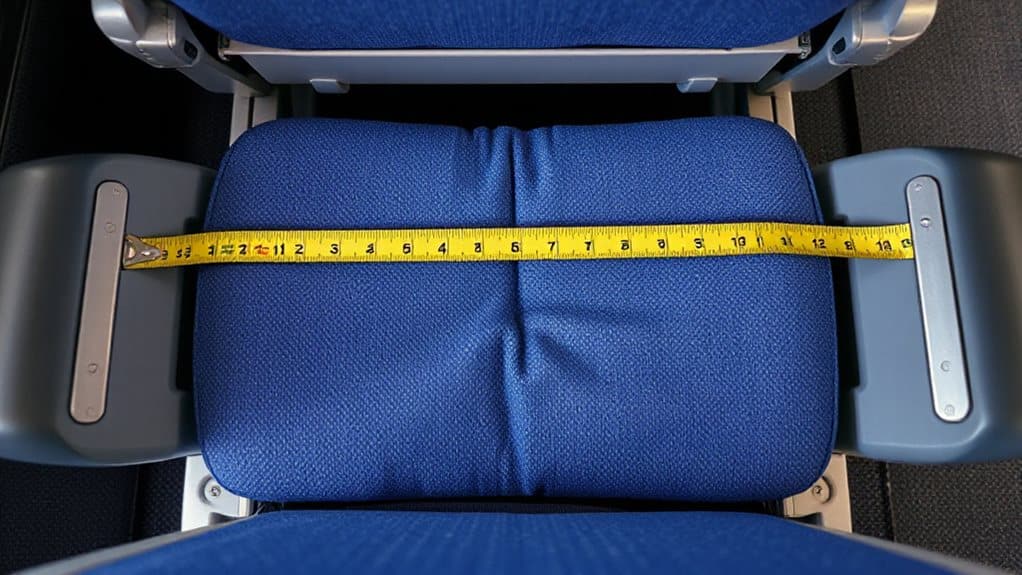
Though seat widths in economy class once averaged 18 inches or more, especially on long-haul flights during the 1970s and 1980s, airlines have gradually narrowed them to increase capacity and cut costs.
You’ve seen this shift since the 1990s, as carriers reconfigured planes like the Boeing 777 to fit 10 seats across. By 2018, average widths dropped to 17 inches—sometimes even 16.1—driven by demand for more seats, not safety or comfort. Larger aircraft are often designated as “heavy” under aviation rules because their size affects things like wake turbulence and spacing requirements.
Do Armrests Make Seat Width Seem Bigger Than It Is?
You’ve seen how seat width shrank from a more generous 18 inches to a common 17 inches, mainly to fit more passengers on board.
Armrests can make seats seem wider because some measurements use midpoint-to-midpoint, including full armrest width. Airlines often quote inner-armrest width, excluding armrest space, making numbers appear smaller.
But when you sit, your shoulders use that armrest zone, so the real space feels tighter than advertised.
Keep a carry-on under the 22 x 14 x 9 size limit in mind, since strict enforcement on regional flights can make overhead and cabin space feel even more cramped.
Is There a Minimum Seat Width? (Spoiler: No)
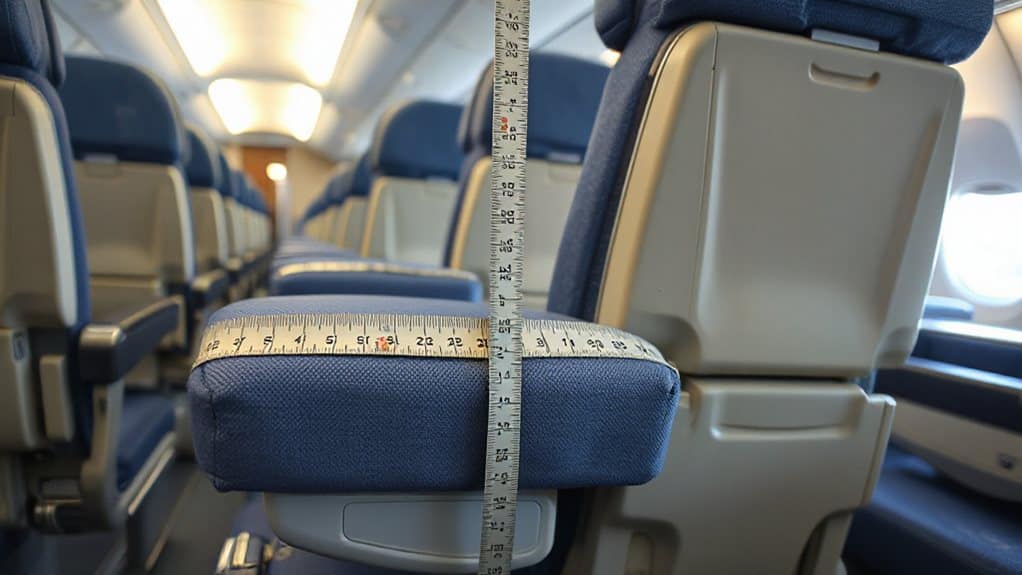
You might assume there’s a safety rule setting the smallest allowed seat width, but there isn’t one.
U.S. and international aviation authorities don’t mandate a minimum, leaving airlines free to choose sizes as narrow as they want. While Airbus once suggested 18 inches for long flights and the FAA has guidance for crew seats, none of these apply to you, the passenger. Airlines often staff more cabin crew than the legal minimum to improve service and response times, ensuring safety and comfort on larger aircraft with higher passenger counts and multiple cabins minimum number.
No Regulatory Floor
While federal regulations govern many aspects of air travel, they don’t set a minimum standard for airplane seat width, leaving passengers with no guaranteed amount of personal space.
Airlines can choose their own dimensions, often using outdated guidelines. The FAA hasn’t updated seat size recommendations since 1994, and those were for flight attendants, not travelers like you.
Industry Proposals Ignored
Though efforts have been made to establish consistent standards, the airline industry has largely ignored proposals for a minimum seat width, leaving passengers without any guaranteed personal space.
Airbus pushed for 18-inch minimums in 2013, but Boeing and others kept narrower 17-inch designs. No unified rule exists, measurements vary, and airlines still choose width freely, prioritizing capacity over comfort.
How Wide Should a Seat Be for Real Comfort?
You’ve probably noticed how tight seats feel, and that’s because most economy seats now range from 17 to 18 inches wide—often narrower than what your shoulders need.
With average male shoulder breadth exceeding 17.7 inches, even a small gap can mean constant contact with neighbors and armrests that offer little personal space.
As airlines pack more seats in, the push for updated standards continues, but real comfort may require widths closer to 18.5 inches or more.
Wide-body aircraft and certain carriers offer noticeably more space, so consider booking those options for improved comfort.
Narrow Seats, Wide Impact
As airlines pack more seats into economy cabins, the space you get has steadily shrunk over decades, with average widths now down to 43 cm (17 inches) from 46 cm (18 inches) as of 2016.
You’re often squeezed into 17-inch seats, despite research showing 17.7 inches is needed for most people’s shoulders.
Narrower seats increase discomfort and evacuation risks, especially since modern passengers are taller and wider than past averages.
Armrests And Personal Space
When it comes to comfort in economy class, the space between armrests only tells part of the story. You need to take into account armrest width too, since narrower ones reduce personal space.
Airlines measure inside armrests, but bulkier designs once offered more hip room. Lowerable armrests help larger passengers, while shoulder room calculations include half of each armrest, affecting perceived comfort.
Evolving Standards For Comfort
While seat width has gradually shrunk over the decades, the fundamental question remains: how wide should an airplane seat actually be to guarantee real comfort?
You need at least 17.7 inches to fit most adults without shoulder overlap. Modern 17-inch seats fall short, encroaching on personal space.
For true comfort, especially on long flights, 18.5 inches remains the practical standard.
And Finally
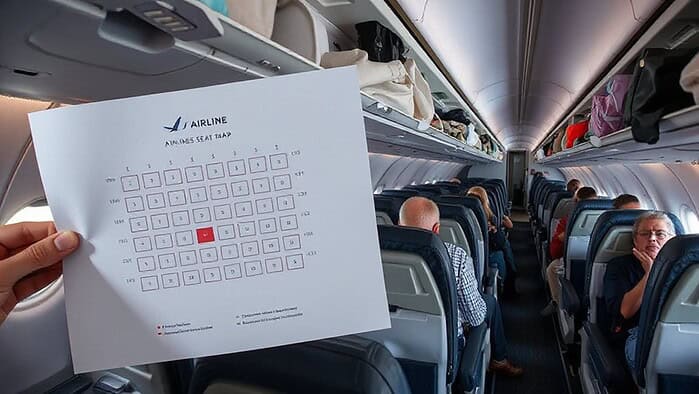
You now see seat width isn’t just a number—it’s measured differently by each airline. Some include armrests, others don’t, which distorts comparisons. There’s no legal minimum, so seats can shrink without warning. For real comfort, aim for at least 18 inches, though many economy seats now fall short. Always check seat maps and reviews before booking. Knowing how width is measured helps you make smarter travel choices.