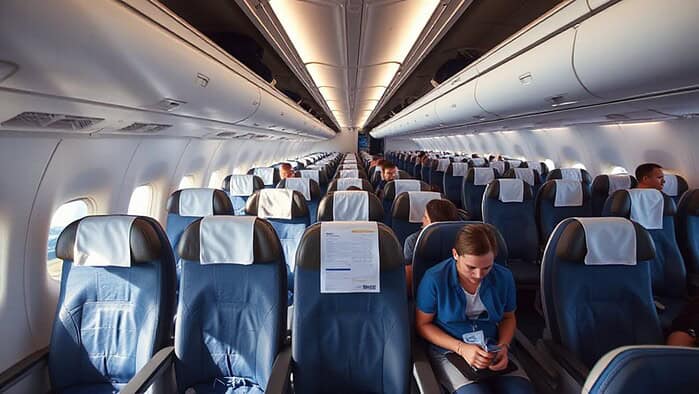
You experience dimmed cabin lights during takeoff to help your eyes adapt quickly in case of an emergency. This improves your ability to spot exit paths, especially if smoke or darkness fills the cabin. Lights stay low so you can evacuate faster if needed. It’s part of broader safety measures aligned with critical flight phases. Modern aircraft also use this time to manage electrical loads efficiently—there’s more to how these small changes enhance your safety throughout the flight.
TLDR
- Dimming lights helps passengers’ eyes adapt to darkness, improving visibility during emergencies.
- Eye adaptation enhances detection of exit paths and hazards if evacuation is needed.
- Floor proximity lighting remains effective, guiding passengers even in smoke or power failure.
- Reduced cabin lighting supports faster response and clearer vision in low-light conditions.
- Dimming lowers electrical load, aiding system efficiency during critical takeoff phase.
The Critical Role of Takeoff and Landing Safety
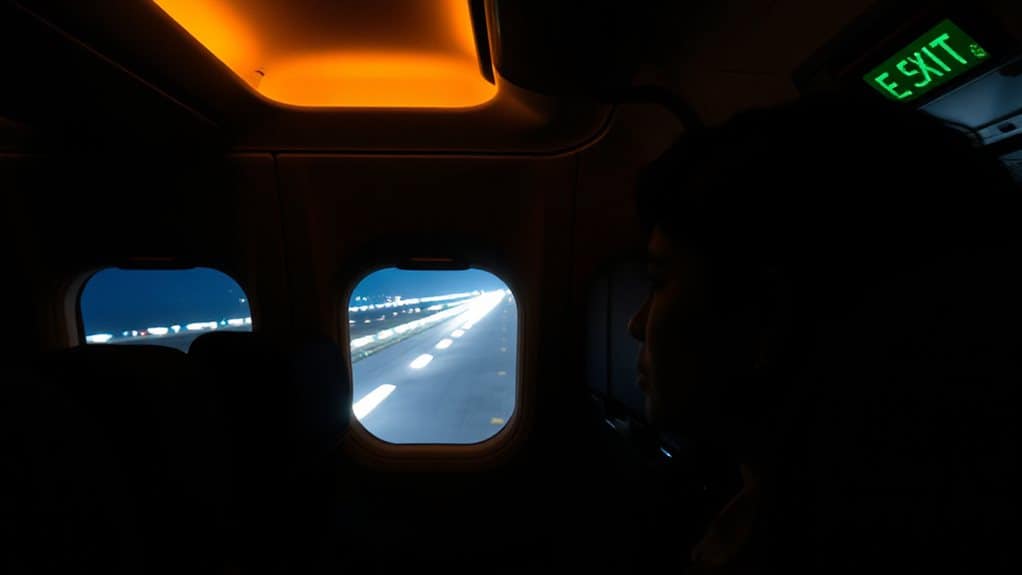
While most people might assume flying is riskiest during turbulent climbs or high-altitude cruising, the majority of commercial jet accidents actually happen during the final approach or landing phase.
You face higher risks then, with 53% of accidents occurring at landing versus 8.5% at takeoff.
Yet, takeoff accidents are rarer but far more fatal, often involving stalls or runway excursions that demand sharp crew response.
Final approach and landing accounted for 47% of fatal accidents.
Modern aircraft and crews mitigate these risks with rigorous pilot training and robust safety systems.
How Eye Adaptation Enhances Emergency Response
You’re already aware that takeoff and landing are the most demanding phases of flight concerning safety, but what happens inside the cabin during these moments can make a critical difference if an emergency arises.
Dimming lights helps your eyes adapt to darkness, so you can spot exit paths faster, detect hazards in smoke, and respond quickly. This shift enhances peripheral vision, sharpens contrast, and improves fixation on critical areas—key for clear thinking and swift action when every second counts. Exit rows often provide significantly more legroom but may have limited recline, a trade-off that helps keep emergency pathways clear.
Improving Visibility of Emergency Exit Pathways
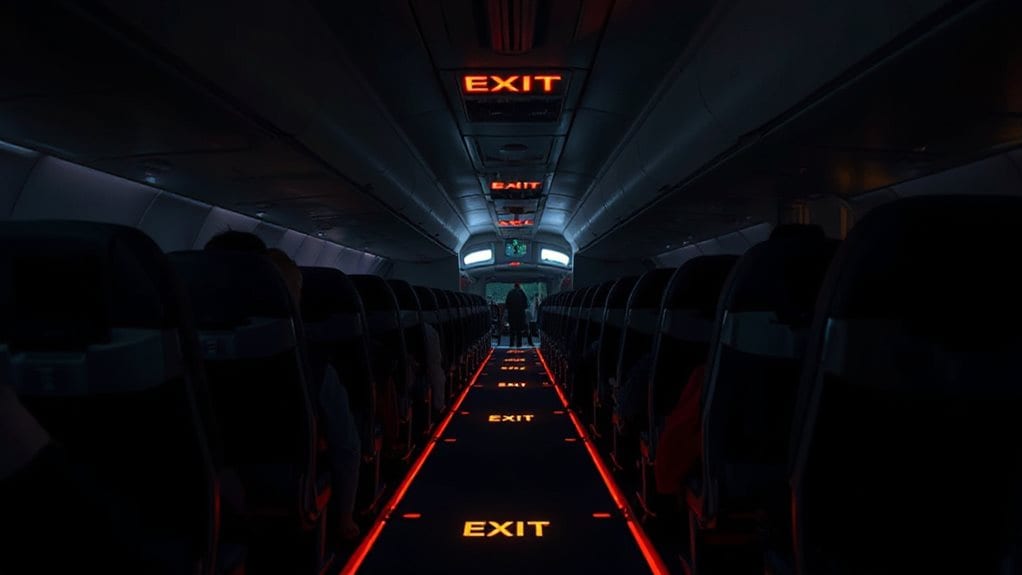
To help you find your way quickly in an emergency, airplane lights dim during takeoff to enhance the visibility of emergency exit pathways.
Floor proximity lighting guarantees at least 0.02 foot-candles within 6 inches of the floor, guiding you even if smoke blocks overhead lights.
Exit signs glow at 25 foot-lamberts, staying visible from 30 inches away, while independent power keeps pathways lit for 10 minutes post-landing.
Modern cabin lighting systems are designed to maintain floor proximity illumination and aid passenger egress in low-visibility conditions.
Timing of Light Dimming During Flight Phases
Because your eyes need time to adjust to low light, airlines dim the cabin lights at specific moments during the flight to guarantee safety.
You’ll notice dimming 10–15 minutes before takeoff and again before descent.
Lights stay low through takeoff and landing phases. This timing makes certain your vision adapts fully, helping you see emergency paths clearly if needed.
Pilots and crew also coordinate lighting with weather radar information to manage safety during adverse conditions.
Electrical System Efficiency and Aircraft Performance
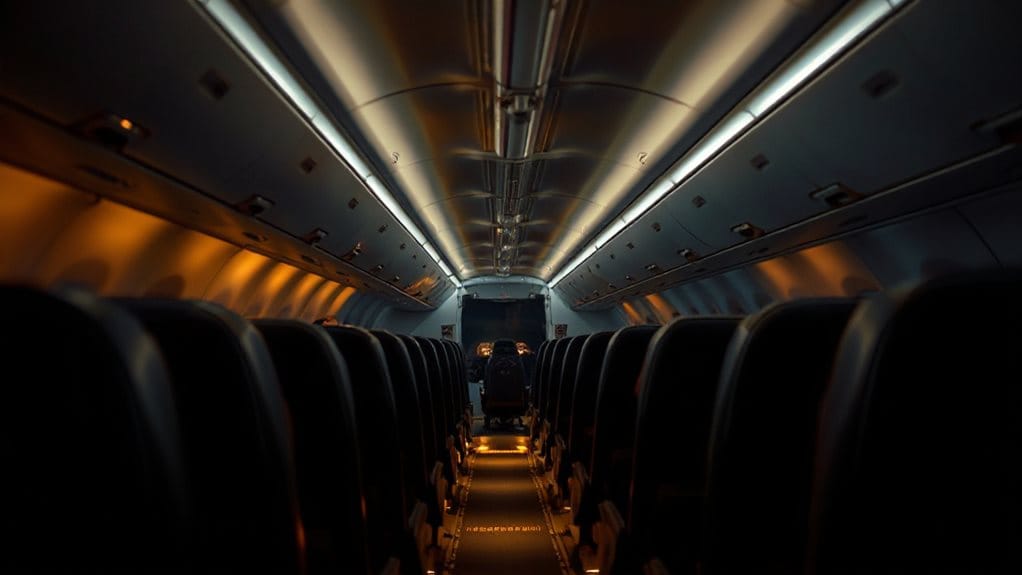
Dimming the cabin lights isn’t just about helping your eyes adjust—it also ties into how aircraft manage electrical demand during critical phases like takeoff.
You rely on efficient systems when power needs spike. Alternators recharge batteries and stabilize voltage, while advanced tech like silicon carbide electronics and superconducting systems cut losses.
Even so, added weight and drag challenge performance, requiring smart load balancing to keep flights smooth and efficient. Refueling logistics and the need to minimize ground time also influence operational planning and power management, especially for large jets with hydrant systems.
Historical and Operational Insights From Aviation Experts
While you might think dimming cabin lights is just a routine step, aviation experts emphasize it’s a deliberate safety measure rooted in both history and operational necessity.
You benefit from gradual eye adaptation, just like pirates using eyepatches for night vision.
Pilots like Jon Lewis confirm this aids emergency response.
Shades stay up, lights adjust to outside conditions, and you stay prepared—ensuring quicker, safer evacuation if needed.
Airlines also dim lights to help passengers’ eyes adjust in case of sudden poor visibility or other weather-related emergencies.
And Finally
You dim airplane lights during takeoff to help your eyes adjust quickly in case of an emergency. This improves visibility of exit paths and enhances response time if evacuation is needed. The practice supports safety during a critical flight phase. It also reduces strain and aids crew efficiency. Airlines follow this standard for consistency and performance. You benefit from smarter lighting choices backed by aviation knowledge and decades of operational understanding.