Travel insurance typically costs between 4% and 7% of your total trip expenses, though the exact amount depends on factors like trip length, destination, coverage level, and your age. Basic plans are usually more affordable, while extensive policies with extras like trip cancellation or medical coverage cost more. Longer trips and exotic destinations tend to increase premiums. If you want to understand how these factors influence costs and find ways to save, continue exploring this guide.
TLDR
- Travel insurance costs typically range from 4% to 7% of total trip expenses.
- Basic plans may start around $31 per day, with premiums increasing based on coverage and trip details.
- Longer trips and higher trip costs generally lead to higher premiums.
- Older travelers and larger groups tend to face higher insurance costs.
- Optional coverages and destination choices can significantly affect overall insurance premiums.
What Is the Average Cost of Travel Insurance and How Is It Calculated?
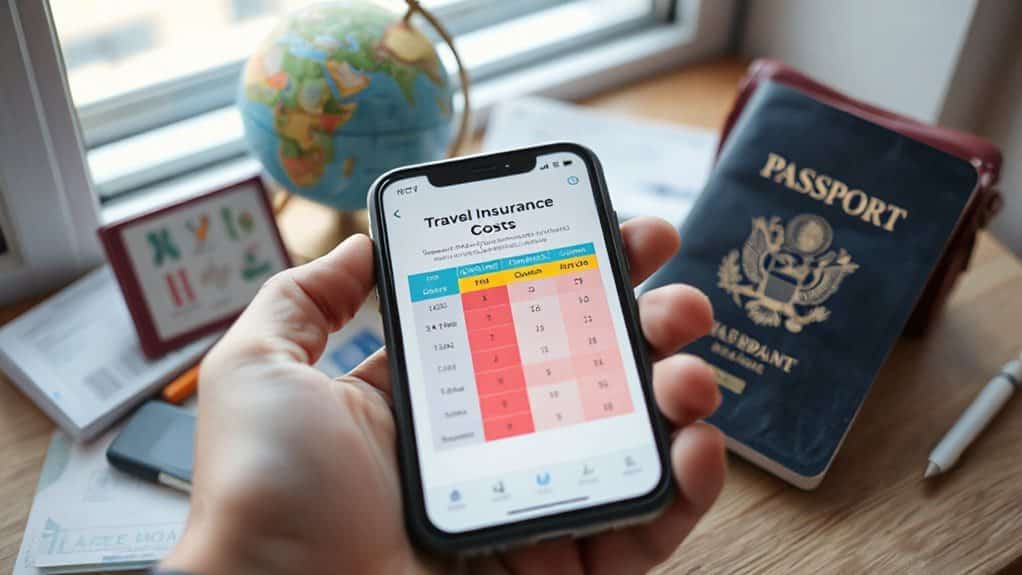
The average cost of travel insurance typically falls between 4% and 7% of your total trip expenses, but it can vary based on several factors. Your trip cost, destination, trip length, and coverage level influence the insurance premiums. All-inclusive plans usually cost around $31 per day, with premiums covering non-refundable expenses and adjusting for trip details. Travel insurance pricing can also change if your plan includes extra protections beyond basic trip cancellation coverage, such as coverage level and trip duration.
Different Types of Travel Insurance Plans and Their Cost Implications
There are several types of travel insurance plans available, each offering different levels of coverage and corresponding cost implications. Basic protection plans have lower premium costs, covering essentials like trip cancellation and baggage. Preferred plans increase benefit limits and add medical evacuation, while extensive plans, including CFAR, feature extensive coverage and higher insurance premiums, especially for international trips. If you’re shopping for options, note that seat belt extenders are available on U.S. flights when needed, which can matter for comfort planning alongside coverage decisions.
How Do Trip Cost and Duration Affect Your Insurance Premium?

Your travel insurance premium generally increases with higher trip costs, as more expensive trips require greater coverage.
Additionally, longer trips tend to cost more to insure because they present an extended period of risk.
Understanding how both trip expense and duration influence your premium helps you plan and budget more effectively.
If your itinerary includes Bako National Park, you may want to consider coverage for activities and transportation tied to day trips in and around Kuching.
Trip Cost Impact
Have you ever wondered how the total cost and length of your trip influence your travel insurance premium?
Generally, higher trip costs, like those over $9,000, lead to increased premiums, around $1,158 or more.
Longer or more expensive trips, especially non-refundable ones, raise coverage needs and overall insurance cost, reflecting increased trip expenses and risk.
Trip Duration Influence
How does trip duration influence your travel insurance premium? Longer trips increase travel insurance costs because the coverage period extends, leading to a premium increase proportional to the trip length.
Extended travel raises overall expenses, as longer durations also heighten the risk of incidents. For example, doubling trip days nearly doubles the insurance premiums, reflecting the duration impact on costs.
How Does Your Age and Travel Group Influence Insurance Prices?
Age and group size are significant factors that influence travel insurance prices. Older travelers, especially those over 80, face higher premiums due to increased health risks, sometimes paying six times more. Larger travel groups typically see higher overall costs, though individual premiums may vary. Carry-on liquid limits can also affect what you’re allowed to bring on board, which may indirectly influence your travel experience and planning. Family travel with children under 18 can reduce costs by adding them at no extra charge.
How Do Destination and Trip Details Impact Travel Insurance Costs?

Destination and trip details play a crucial role in determining travel insurance costs. Your destination, trip length, and trip expenses influence premiums. Longer trips or exotic destinations like Antarctica increase costs. Higher trip risks and trip planning details, such as trip cost and trip duration, directly impact trip insurance premiums. This is especially true for trips exceeding 15 days or involving remote locations. Transport and accommodation typically consume most of the overall budget, which can also affect the total insured trip value.
What Optional Coverages and Add-Ons Can Raise Your Premium?
Adding optional coverages and add-ons to your travel insurance policy can substantially increase your premium costs. Items like trip interruption, baggage delay, emergency medical evacuation, and pre-existing condition waivers often raise premiums, especially with higher benefit limits. High-risk sports coverage and specialized add-ons can lead to a premium increase of 20% or more, impacting your overall costs. For travelers who need reliable connectivity away from home, adding coverage that includes tech-related loss or damage—such as to portable portable Wi‑Fi hotspots—can also raise the price, particularly when you request higher coverage limits.
Tips for Finding Affordable Travel Insurance Without Sacrificing Coverage

Finding affordable travel insurance that still provides essential coverage requires careful comparison and strategic choices. To find coverage that suits your trip, compare plans across insurance providers, focusing on travel insurance policies with appropriate coverage levels.
Buying travel early, choosing medical-only options, or adjusting coverage can reduce travel insurance cost. Consider annual plans for frequent trips and avoid unnecessary add-ons to save money without sacrificing protection.
And Finally
Understanding the factors that influence travel insurance costs helps you make informed decisions. Your trip’s length, destination, age, and coverage options all play a role in premium calculations. Comparing plans and optional add-ons enables you to find coverage that fits your budget without sacrificing essential protection. By evaluating these elements carefully, you can select a policy that offers extensive coverage at an affordable price, ensuring peace of mind throughout your travels.