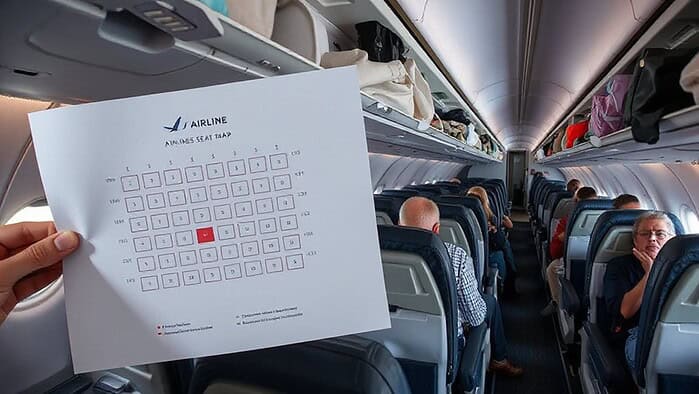
Pilots prepare for emergencies through extensive simulator exercises that replicate in-flight crises like engine failures, fires, or system malfunctions. These simulations include unexpected challenges to improve decision-making, crew coordination, and response speed. They also practice specific procedures for medical, weather, or security incidents, using structured decision models and clear communication methods. Ongoing training guarantees familiarity with systems and quick reactions. Continuing to investigate this topic reveals detailed strategies pilots use to stay prepared for any crisis.
TLDR
- Pilots undergo extensive simulator training to replicate emergency scenarios like engine failures and system malfunctions.
- They practice critical decision-making and crew resource management to handle emergencies efficiently.
- Emergency procedures are drilled repeatedly to develop muscle memory and quick response capabilities.
- Training includes night operations and IFR conditions to prepare for limited visibility emergencies.
- Crew teamwork and communication are emphasized through scenario-based exercises and debriefings.
What Are the Most Common In-Flight Emergencies and How Do Pilots Prepare?
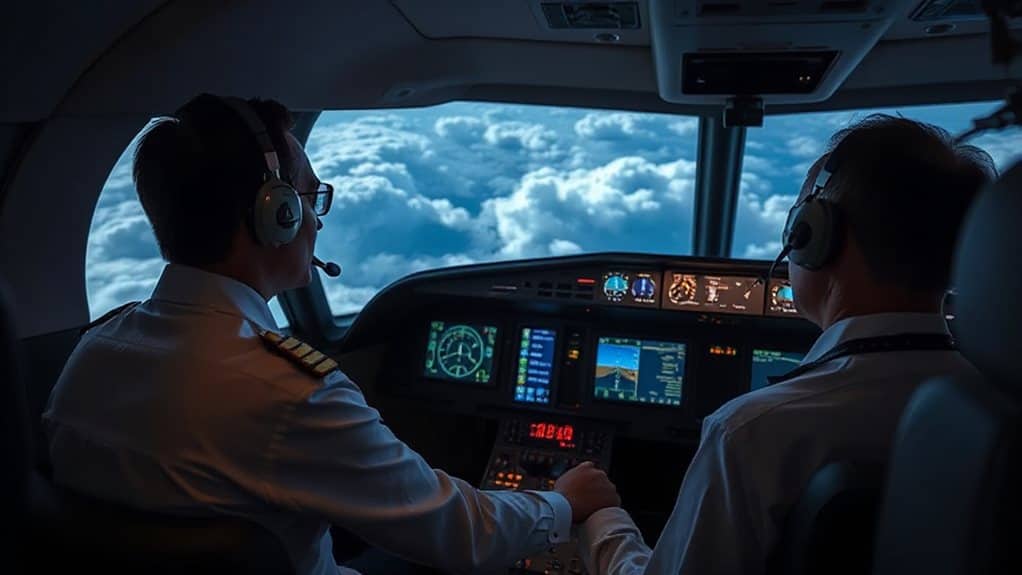
In-flight emergencies can happen unexpectedly, but pilots are trained extensively to handle common situations like engine failure, electrical malfunctions, medical crises, and severe weather conditions.
Through simulator practice and emergency procedures, they develop decision-making skills and crew resource management.
This prepares them to respond quickly, troubleshoot issues, and execute emergency landings confidently, ensuring safety during in-flight emergencies.
In night operations, this training also includes IFR and night operation basics so pilots can maintain safe navigation and approach guidance when visual cues are limited.
How Do Flight Schools Simulate Emergency Scenarios for Training?
Flight schools use advanced flight simulators that closely replicate aircraft cockpits and flight conditions to train pilots on emergency scenarios. These simulators recreate situations such as engine failures, fires, severe weather, and system malfunctions, allowing pilots to practice responses in a controlled environment. Trainers also introduce unexpected challenges and time-sensitive tasks to assess decision-making and stress management, helping pilots build confidence and muscle memory. They may also use time-sensitive tasks in simulation drills to better evaluate how trainees respond under pressure.
Use of Flight Simulators
How do flight schools prepare pilots for emergency situations? They use flight simulators to recreate emergency scenarios, focusing on aircraft systems and procedures.
Simulator sessions enhance situational awareness and decision-making, challenging pilots with unexpected twists.
Regular training helps build confidence, muscle memory, and adaptability, ensuring pilots are prepared to handle real-world emergencies effectively in a controlled, safe environment.
Realistic Emergency Scenarios
Advanced flight simulators allow training programs to create highly realistic emergency scenarios that mirror real-life situations pilots may face. These simulations incorporate unexpected surprises, such as system malfunctions or severe weather, to challenge pilots’ decision-making and situational awareness.
Regular training helps pilots develop muscle memory, ensuring they can respond confidently and effectively during actual emergencies.
What Techniques Do Pilots Use to Make Critical Emergency Decisions?
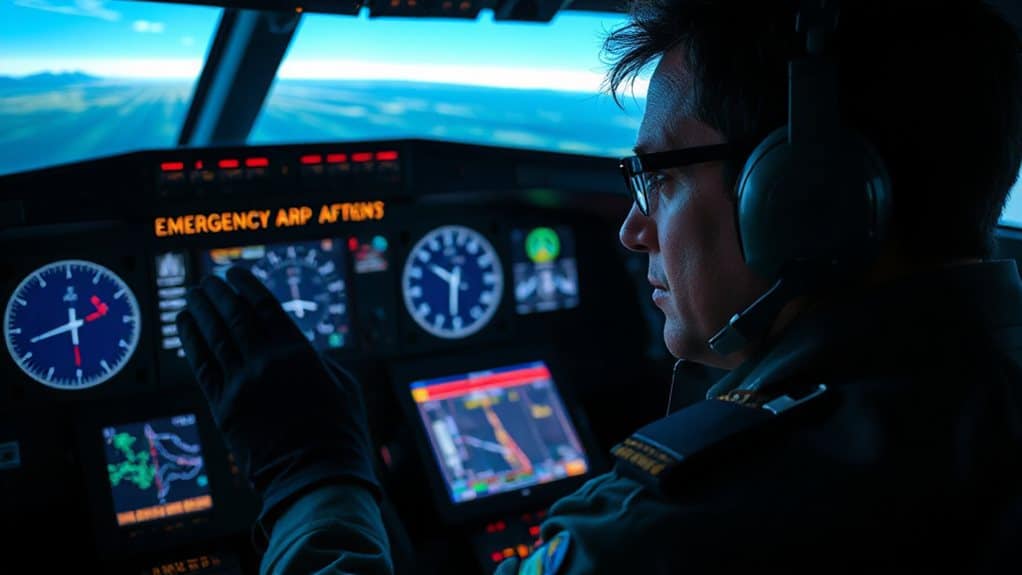
Pilots rely on a combination of structured decision-making techniques and teamwork to handle emergency situations effectively. They use decision-making structure like the DECIDE model for rapid evaluation and assessment. They prioritize actions based on scenario-based training, and depend on CRM to support critical decisions. Simulation exercises help pilots practice scenario-based assessments, enabling quick, informed choices in high-pressure emergencies. They also emphasize immediate, disciplined response to TCAS resolution advisories when they are issued.
How Do Crews Practice Teamwork During Emergency Training?
During emergency training, crews practice teamwork through simulation exercises that replicate complex crisis scenarios, requiring coordinated efforts. Crew members use specific communication techniques to share information clearly and assertively, ensuring everyone understands their roles. Regular role clarification and responsibilities, combined with debriefings, help improve overall collaboration and decision-making under pressure. Situational awareness and disciplined vigilance also matter in high-stakes environments, because confusion and distraction can rapidly escalate risk when multiple threats occur at once.
Crew Communication Techniques
Crew communication techniques are a critical component of emergency training, ensuring that all team members can exchange information quickly and accurately under pressure. During emergency scenarios, crews practice using standardized phraseology to reduce misunderstandings.
These exercises enhance situational awareness, teamwork, and coordination through emergency briefings and crew resource management, promoting seamless collaboration and effective decision-making under stress.
Simulated Emergency Scenarios
Simulated emergency scenarios serve as a core component of pilot training because they replicate real-life crises in a controlled environment. This allows crews to practice teamwork and decision-making under pressure.
Using high-fidelity simulators, crews work on communication, checklists, and crew resource management.
Unexpected challenges test adaptability, while debriefing helps analyze teamwork and improve responses for future emergencies.
Role Clarity and Responsibilities
Clear communication and well-defined roles are fundamental to effective teamwork during emergency training. Crew resource management emphasizes role-specific responsibilities, such as pilot flying or cabin duties, supported by communication protocols.
During training exercises, task delegation enhances situational awareness, especially in high-stress scenarios.
This coordination promotes trust, ensuring crews respond efficiently and collaboratively to manage emergencies and security threats.
How Does Simulator Practice Help Pilots Handle Aircraft Malfunctions?
Simulator practice helps pilots handle aircraft malfunctions by providing a safe environment to experience and respond to a wide range of emergency scenarios.
Through simulator training, you rehearse emergency procedures for issues like engine failures and electrical outages, building muscle memory and decision-making skills.
This enhances safety, confidence, and expertise of aircraft systems under pressure.
How Do Pilots Prepare for Medical, Weather, and Security Emergencies?
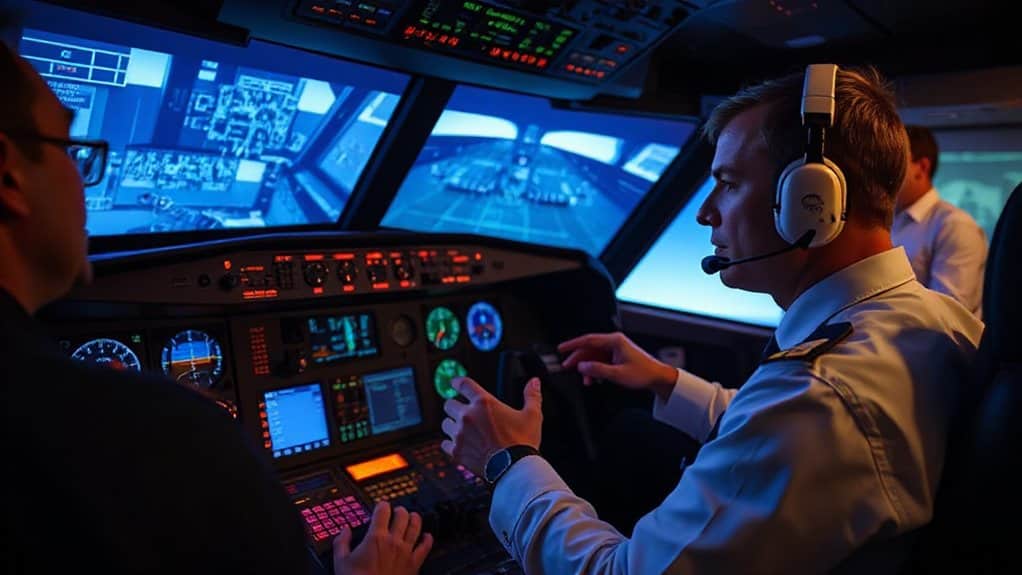
Pilots prepare for medical, weather, and security emergencies through targeted training and thorough pre-flight planning.
They practice emergency procedures via simulator training, focusing on medical emergencies, weather conditions, and security threats.
Crew resource management guarantees effective communication and teamwork, enabling quick emergency response.
Adhering to safety protocols helps pilots handle security emergencies and adapt to changing conditions efficiently.
In a similar way, nighttime safety planning relies on using real-time information and well-informed route choices to reduce risk.
What Are the Key Emergency Communication Procedures With Air Traffic Control?
Effective communication with air traffic control (ATC) during emergencies is essential for ensuring everyone’s safety. You relay clear, concise information about your emergency, aircraft position, and intentions. If radio communication fails, transponder squawk 7700 alert ATC. Follow emergency procedures, request priority handling, and maintain communication to facilitate a safe landing and proper response.
Why Is Ongoing Emergency Training Essential for Pilot Safety?
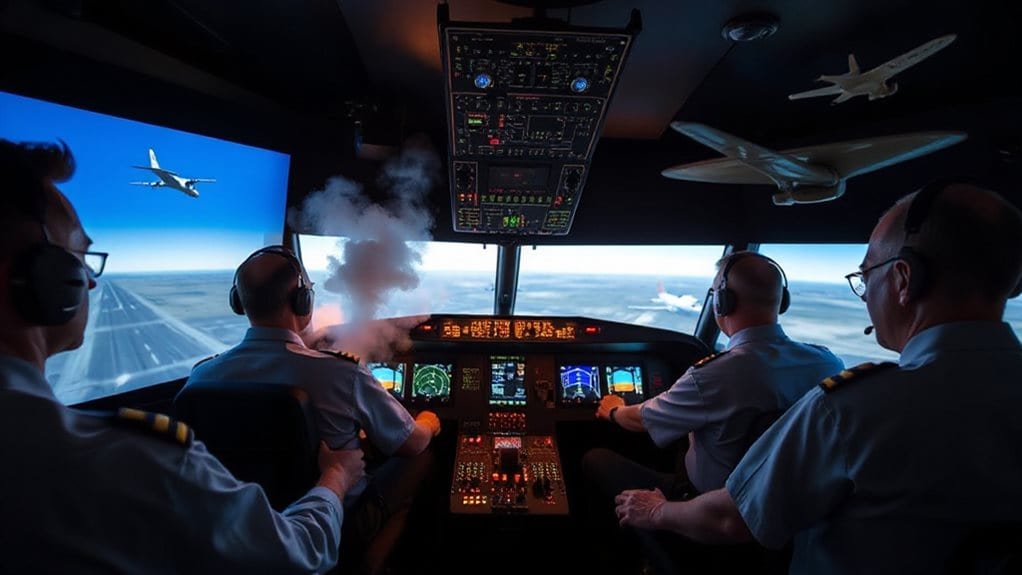
Ongoing emergency training is vital because it helps guarantee that pilots remain prepared to respond effectively to rare but potentially life-threatening situations. Regular simulator practice keeps pilots proficient with procedures, enhances decision-making and stress management skills, and assures safety.
Continuous education maintains familiarity with developing systems, ultimately supporting safety, confidence, and swift, accurate responses during emergencies.
And Finally
Overall, pilot emergency training combines realistic simulations, teamwork exercises, and ongoing education to guarantee preparedness. By practicing various scenarios, from mechanical failures to medical emergencies, pilots develop the skills needed to respond confidently and effectively. Continuous training helps pilots stay current with procedures and adapt to new challenges, maintaining safety for everyone on board. This thorough approach is essential for minimizing risks and handling unexpected situations calmly and efficiently.