You’ll see a “Bid Upgrade” button after your post‑booking email, letting you submit a cash offer that locks in 48‑75 hours before departure; each airline sets its own minimum and maximum amounts, eligibility rules, and closing windows, so you must hold a ticketed reservation on the operating carrier and avoid basic economy, award, group, or codeshare flights. Bids are per segment and per passenger, with minimums around $50‑$250 and maximums up to $1,000, and success improves if you bid slightly above the minimum, roughly 20‑40 % of the fare gap. Upgrades can add extra baggage, priority handling, and larger weight limits, often offsetting the fee, especially on intercontinental routes where checked‑bag costs are high. Weigh the non‑refundable risk against the perks, consider loyalty status and route demand, and remember the bid window usually closes 72 hours before departure; if you keep going, you’ll uncover more detailed strategies.
TLDR
- Upgrade bids lock in 48‑75 hours before departure; timing and airline rules, not just the highest offer, determine success.
- Eligibility requires a ticketed reservation on the operating airline; basic economy, award, group, and codeshare flights are excluded.
- Minimum bids start around $50‑$250 and maximum up to $1,000; bidding slightly above the minimum (20‑40% of the fare gap) improves odds.
- Upgrades can add valuable perks such as extra checked‑bag allowance, often offsetting the bid cost compared to standard bag fees.
- Bids are non‑refundable; weigh the upgrade’s added benefits against the risk and the specific airline’s bid window before bidding.
Upgrade Bidding Mechanics: How the Auction Works
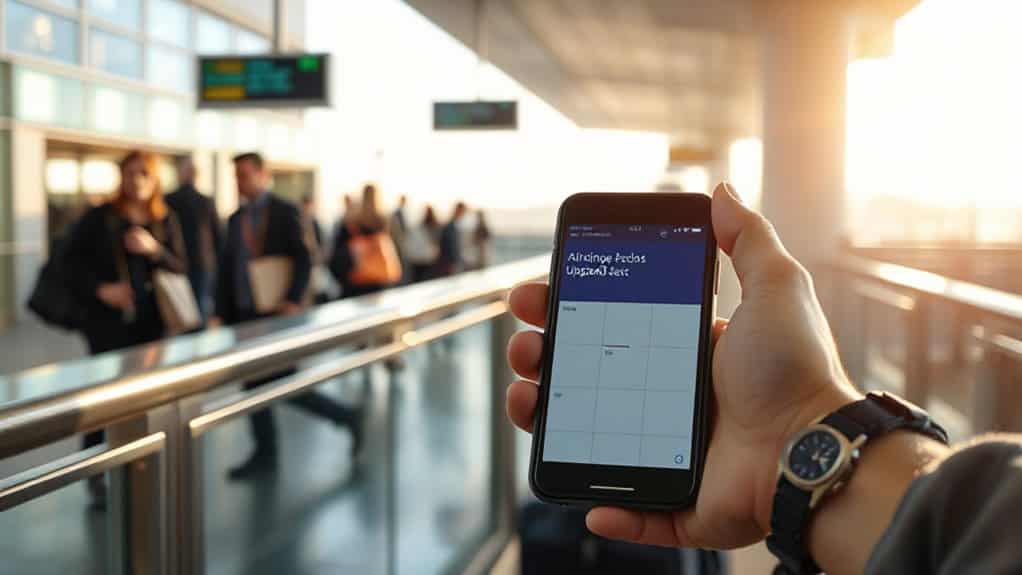
When you receive the post‑booking email, the airline’s system has already opened the upgrade auction for your flight, and you can start bidding as soon as you log in to the reservation portal. You’ll see a “Bid Upgrade” button, set a minimum and maximum amount, and enter your credit‑card details. Bids lock in 48‑75 hours before departure, and the system not the highest offer when seats become available. Some carriers require bid submission at least 72 hours before departure.
Eligibility Rules for Upgrade Bidding
If your reservation meets the basic criteria, you can even start bidding for an upgrade.
You must have a ticketed reservation on the operating airline; basic economy, award, group, and codeshare flights are excluded.
Each segment needs its own bid within airline‑specific minimums and maximums.
Airlines such as Air Canada, Etihad, Cathay Pacific, Qantas, and Hawaiian have additional restrictions, and some carriers simply don’t offer bidding at all.
Timing Your Upgrade Bid: Open & Close Windows
You receive an email or pop‑up after booking, then you have a window—usually 72 hours before departure, though some airlines close at 48, 28, or 25 hours.
Aim to bid after booking but before check‑in; tighter windows on single‑daily routes often demand higher offers.
Notifications arrive 24–48 hours before flight, and you must pay instantly if accepted.
Because airlines use real-time pricing dynamics to adjust upgrade inventory as demand changes, bidding earlier (when options are still widely available) can sometimes improve your chances.
Airlines That Offer Upgrade Bidding (and Those That Don’t)
You’ll find that many airlines now let you bid for a seat upgrade, but the availability and rules differ widely by region and carrier.
In North America, Air Canada, Hawaiian, Aeromexico, Copa, and United (for PlusPoints) support bids.
Europe sees Aer Lingus, Icelandair, Lufthansa, TAP, Brussels, Czech, and SAS.
Asia‑Pacific includes Air NZ, Cathay, ANA, Qantas, and Virgin Australia.
Middle East/Africa feature Etihad, Kenya, Ethiopian, Royal Jordanian, while Emirates uses miles.
American, Delta, United’s standard program, Air France, KLM, Qatar, and Emirates lack cash‑bid options.
Minimum vs. Maximum Upgrade Bids: Finding the Sweet Spot
You’ll notice that airlines set both a floor and a ceiling for upgrade bids, so your offer must sit between the minimum and the maximum to be considered.
Timing matters too—bids placed early on a low‑demand flight often succeed at the lower end of the range, while high‑demand routes may require you to edge closer to the upper limit.
Hidden upgrade bids can be a smart way to turn loyalty points into a better cabin when your timing and bid amount are aligned.
Maximum Bid vs. Minimum
When you compare minimum and maximum upgrade bids, the key is to balance cost savings with your chances of success.
Minimum bids often start at $50‑$250 and can secure upgrades for a fraction of the fare difference, but they risk rejection when seats fill.
Maximum bids, up to $1,000, increase odds on crowded flights but reduce discount magnitude.
Aim slightly above the minimum—around 20‑40 % of the fare gap—to improve success while preserving value.
Bid Timing and Flight
If you time your bid to align with each airline’s closing window, you’ll maximize the chance of securing an upgrade while keeping costs in check.
Most carriers lock bids 72 hours out, but Air Canada stops at 48 hours, Hawaiian at 28 hours, and SAS at 25 hours.
For multiple‑daily routes, bid near the minimum; for single‑daily flights, raise your offer to beat competition and catch last‑minute price drops.
Route Demand Factors
Understanding how route demand shapes both the minimum and maximum upgrade bids is key to finding the sweet spot where cost and success intersect. On low‑demand flights, airlines set €35 minimums to fill premium seats, while high‑demand hubs push maximums toward $900. Mid‑range bids on open cabins usually hit 75% success. Use load tools, target routes with few premium sales, and avoid elite‑heavy flights for best value.
Points vs. Cash for Upgrade Bids: When to Use Credits

Use the cash‑or‑points calculator to decide which upgrade bid gives you the best value, then compare the resulting cents‑per‑point (cpp) to your personal threshold. If cpp exceeds 1 for transferable points or 0.5 for airline miles, redeem points; otherwise pay cash. Low‑end Aeroplan bids can hit 1.9 cpp, while higher fees on cash bids may lower value. Baggage calculation types can also change your total travel cost when you consider whether the upgraded cabin comes with different free-bag or weight allowances, so include those rules in your valuation. Choose the method that fits your budget and freedom.
Route‑Specific Upgrade Bidding Strategies
When you target a specific route, the frequency of flights and the availability of premium‑cabin seats become the two biggest levers for shaping your upgrade bid. Check flight frequency first; low‑frequency routes need 20‑40 % above minimum, while high‑frequency hubs allow bids near the floor. Monitor seat codes (J, C) for openings. Aim slightly above minimum, but stay 20‑40 % below the fare gap for the sweet spot. Use mid‑week windows and wait near the cutoff to gauge competition. real-time load factors can then help you understand how full the flight is likely to be when you place the bid.
Multi‑Segment vs. Per‑Passenger Upgrade Bidding Costs
After you’ve fine‑tuned your route‑specific bids, the next factor to watch is how the cost scales across legs and travelers.
Multi‑segment bids multiply per leg; each flight requires its own bid, so a two‑leg trip can double the total cash or points.
Per‑passenger bids multiply per traveler; a group of three pays three times the per‑person minimum.
Both models add up quickly, so you must calculate total expense before committing.
Also, remember that your boarding group and any credit‑card or elite benefits tied to that reservation can affect upgrade demand and bid effectiveness across the itinerary.
Upgrade Bidding Value Assessment: Perks vs. Price Paid
You’ll notice that lounge access alone can save you hundreds on airport food and drinks, while the extra baggage allowance often offsets checked‑bag fees that would otherwise add up. When you compare those perks to the minimum bid you’re required to place—typically a few hundred dollars—you can gauge whether the upgrade’s total value justifies the price. Onehidden-perks way to think about the tradeoff is that some travelers manage to improve airport comfort without traditional membership, which means a bid may feel less urgent if you already have access to lounge-style benefits. Keep in mind that instant upgrades lock in higher costs but guarantee the benefits, whereas lower bids may win only if the airline’s inventory is ample.
Lounge Access Value
If you’re evaluating whether a lounge upgrade is worth the price, start by comparing the tangible perks against the cost you’ll actually pay. You’ll find that 70 % of travelers say more lounge options improve airport time, while 59 % report a markedly better experience.
Access typically costs $30‑$50 per person, yet credit‑card perks can cover it, providing free Wi‑Fi, gourmet snacks, showers, and workspaces without extra expense.
Extra Baggage Benefits
When you win a bid for an upgrade, the extra baggage allowance that comes with the new class can turn a modest fee into a significant saving, especially on intercontinental flights where business‑class limits reach 32 kg (70 lb).
You’ll enjoy two checked bags in premium economy, priority handling, and no extra fees that otherwise cost $200‑$300 per bag.
Compare this to the $5‑$15 per bag fees airlines now charge, and the upgrade often pays for itself.
Should You Bid? Quick Decision Checklist
Because upgrade bids only work after a ticket is issued, you first need to confirm that your reservation meets the airline’s eligibility rules.
Check the flight’s bid window, usually 72 hours before departure, and note minimum and maximum amounts.
Verify payment method—credit card only—and consider loyalty status, route demand, and multi‑leg costs.
If the potential perks outweigh the non‑refundable risk, place a bid.
And Finally
You’ve learned how upgrade auctions work, who can bid, and when to place a bid for the best odds. Knowing the airlines that offer this option, the price ranges that tend to win, and how route and segment factors affect cost lets you weigh the extra perks against the expense. Use the quick decision checklist to decide if the potential comfort upgrade worth the bid. If the value aligns with your budget and travel priorities, go ahead; otherwise, stick with your original seat.