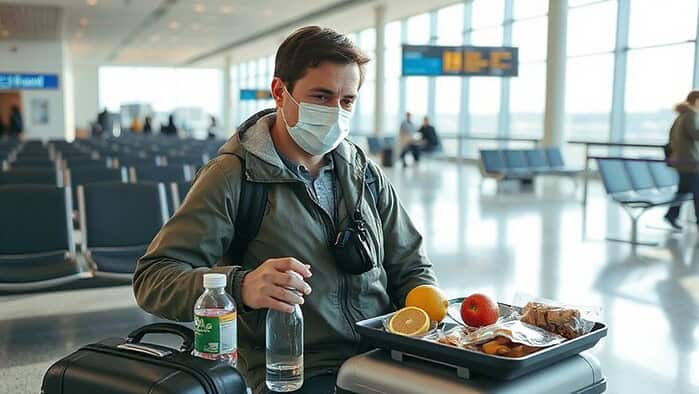
Start equalizing early and repeat often. Swallow, chew gum, or yawn to open the Eustachian tube, and try the Valsalva or Toynbee maneuvers every few seconds during ascent and descent. Insert filtered earplugs like JetEars before take‑off to slow pressure changes and reduce cabin noise. If you’re prone to congestion, take a decongestant an hour before the flight, respecting dosage limits and contraindications. Keep your posture neutral, jaw forward, and stay relaxed; the next sections will explain each step in detail.
TLDR
- Insert pressure‑regulating earplugs before take‑off and keep them in through ascent and descent.
- Begin equalizing early in the descent, using Valsalva, Toynbee, or chewing gum every few seconds.
- Take a decongestant (e.g., pseudoephedrine or oxymetazoline) an hour before flight if no contraindications exist.
- Perform regular swallowing, yawning, or jaw‑wiggling to keep the Eustachian tube open throughout the flight.
- Seek ENT evaluation if ear pain, muffled hearing, or dizziness persist beyond a few hours after landing.
Ear Equalization on a Plane: Why the Eustachian Tube Matters
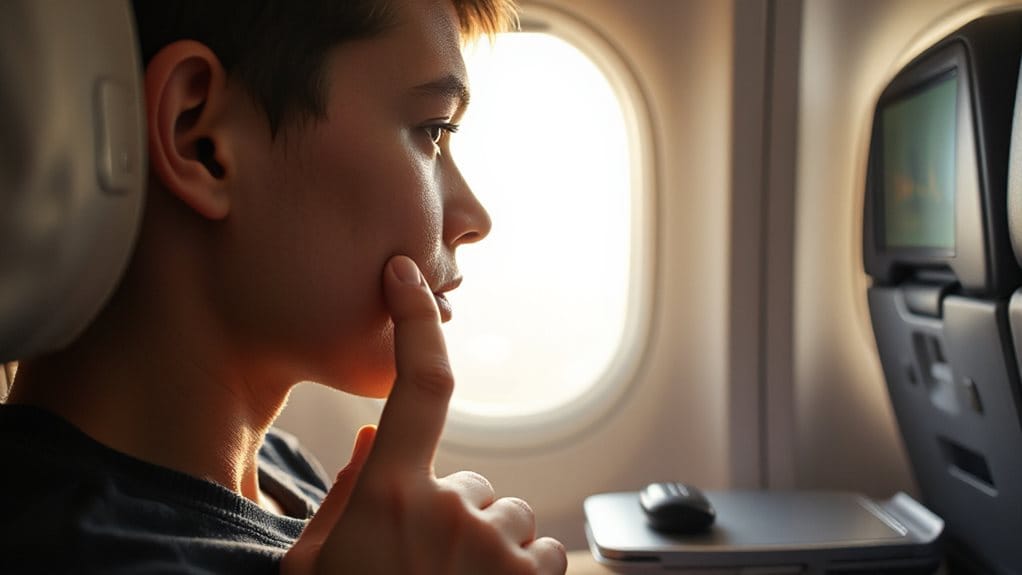
When you board a plane, the Eustachian tube becomes the key to keeping your ears comfortable as cabin pressure changes.
It links your middle ear to the throat, with a bony front third and a cartilaginous back two‑thirds.
Swallowing, yawning, or chewing contracts muscles that briefly open the tube, letting air equalize pressure and prevent eardrum pain during ascent and descent.
The tube’s primary role is to drain fluid from the middle ear, reducing infection risk.
Because baby ears are extremely sensitive, hearing protection can help guard against loud cabin noise during takeoff and landing.
In‑Flight Equalization Maneuvers for Take‑off and Landing
A few simple maneuvers can keep your ears comfortable during take‑off and landing, and you’ll want to start them early in the descent. Pinch your nose, close your mouth, and gently blow (Valsalva) or swallow while pinching (Toynbee) every two seconds. Because flight costs and travel budgets vary, planning your trip with a budget range in Paris can help you better manage overall expenses so you can focus on comfort during travel. Jaw wiggling, yawning, or chewing gum also helps. Begin early, repeat often, and stay relaxed.
Pressure‑Regulating Earplugs & Devices for Air Travel
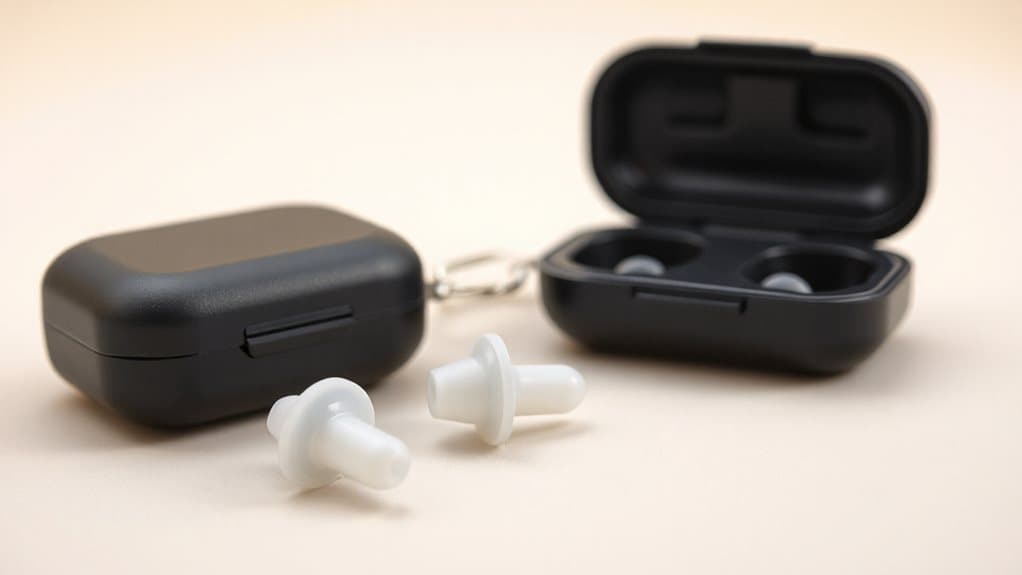
You’ll find that pressure‑regulating earplugs work by slowing the rush of cabin pressure to your eardrum, and the filtered designs—like JetEars or Mack’s Flightguard—do this more consistently than simple foam plugs.
Choosing a silicone plug with a soft flange lets you wear it comfortably from takeoff through descent, while still giving you the added benefit of noise reduction.
Just insert the plug before the plane climbs, keep it in during the descent, and follow any manufacturer or audiologist guidelines for best performance—TSA liquid rules also apply to your travel toiletries if you’re packing items like shaving cream for the trip.
Pressure-Reducing Earplugs
Because cabin pressure drops rapidly during ascent and rises again during descent, many travelers experience uncomfortable ear pain.
Pressure‑reducing earplugs contain tiny ceramic filters that act like valves, slowing pressure spikes before they hit the eardrum.
Insert them before takeoff and keep them in during descent.
Pair with chewing, swallowing, or Valsalva for best relief.
Silicone models fit snugly, stay comfortable, and can be reused.
Filtered vs. Foam Designs
When you compare filtered earplugs with foam models, the main difference lies in how each design balances noise reduction and pressure regulation.
Foam offers 32‑37 dB attenuation, quick seal, but irritates after 3‑4 hours; filtered silicone provides 20‑27 dB, maintains speech clarity, slows pressure changes, and stays comfortable for long flights.
Choose based on flight length, need for awareness, and personal comfort.
Proper In‑Flight Usage
A pilot’s checklist often includes a quick reminder: insert your pressure‑regulating earplugs before the aircraft leaves the ground. You should put them in before takeoff, keep them on through ascent, and leave them in during descent for gradual pressure equalization.
The ceramic filter slows pressure shifts, reducing popping and muffled hearing.
Clean reusable plugs after each flight and consult a doctor if you have ear concerns.
When and How to Use Decongestants Safely
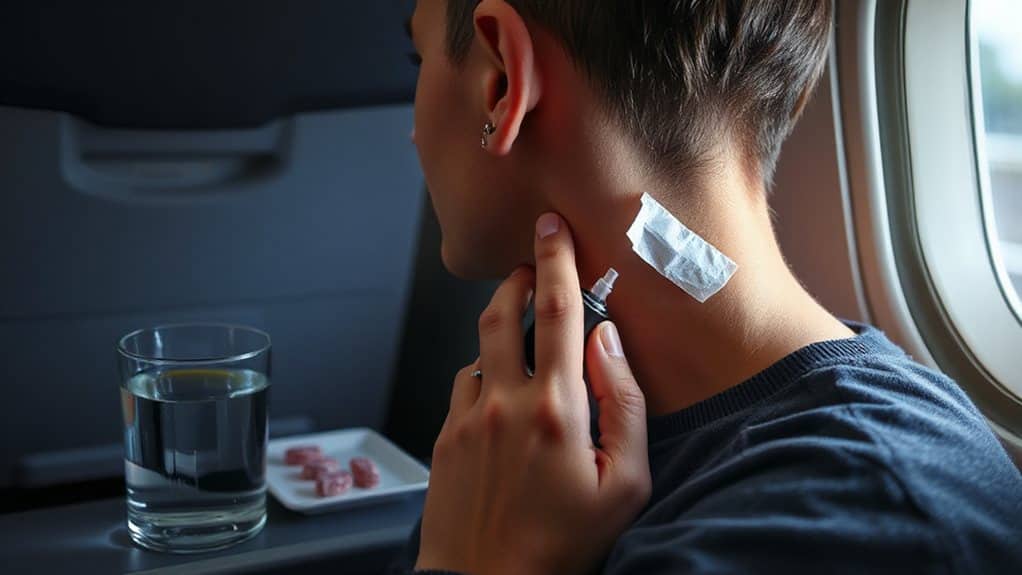
You should start your decongestant an hour before take‑off, using the recommended dose and not exceeding the indicated frequency, whether it’s a nasal spray or an oral tablet. Check any contraindications—high blood pressure, heart rhythm issues, prostate enlargement, pregnancy, or other health concerns—by consulting your clinician or reading the label. Solid melatonin is generally allowed in carry-on, but confirm any destination-specific rules before you travel.
Timing Before Flight
If you start your decongestant routine early enough, you’ll keep pressure changes from turning into painful ear spikes.
Apply Afrin spray two puffs per nostril an hour before departure, then a second dose 30 minutes before takeoff.
Take oral pseudoephedrine or Sudafed one hour prior, and repeat a short‑term nasal spray 30 minutes before descent to avoid rebound.
Use saline rinse first for extra clearance.
Dosage and Frequency
Usually, you’ll follow a strict schedule to keep decongestants effective without risking side effects. Take 60 mg pseudoephedrine every 4‑6 hours, never exceeding 240 mg daily; children 6‑11 get 30 mg, 2‑5 get 15 mg.
For flights, spray 2 puffs of oxymetazoline per nostril 15‑30 minutes before boarding, limiting use to three days.
Phenylephrine tablets follow 10 mg every 4 hours, max six tablets daily.
Contraindications and Interactions
Because decongestants can raise blood pressure and affect heart rhythm, you must check for cardiovascular contraindications before using them on a flight. Avoid them if you have uncontrolled hypertension, coronary disease, arrhythmias, or any heart condition.
Skip decongestants when you have hyperthyroidism, closed‑angle glaucoma, or are pregnant, especially in the first trimester.
Don’t mix them with MAO inhibitors, stimulants, ADHD meds, excessive caffeine, or sedating antihistamines.
Children under six shouldn’t use oxymetazoline, and any pediatric use requires physician guidance.
Pre‑Flight Checklist for Successful Ear Equalization
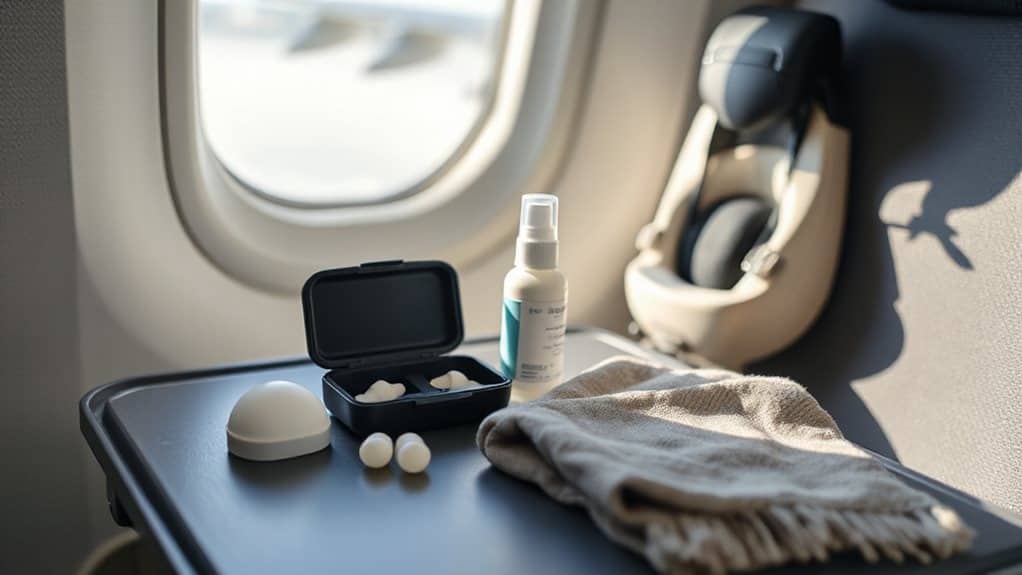
Before you board, run a quick ear check to confirm your Eustachian tubes are open.
Swallow, listen for a pop or click in each ear; repeat in a quiet spot to verify consistency.
Practice Valsalva, Toynbee, Lowry, Frenzel, and voluntary techniques, then perform gentle equalizations and swallowing every few minutes.
Keep a neutral posture, feet‑first mindset, upward gaze, and jaw‑forward push.
Stop if pain arises.
To support overall tolerance during pressure changes, stay hydrated with electrolyte water before and during the flight.
Landing‑Phase Tips to Keep Your Ears Balanced
After you’ve verified that your Eustachian tubes are open during the pre‑flight checklist, the descent and landing phases demand continuous pressure management. Swallow frequently, pinching your nose for a Toynbee surge, and chew gum or suck candy to keep saliva flowing. Yawn deliberately, push your jaw forward, and try a gentle Valsalva if needed. Insert Earplanes or a pop‑balloon device before touchdown for steady equalization. Consider adding a non-slip seat cushion so you can stay comfortably seated and focus on ongoing pressure-equalizing maneuvers during landing.
Post‑Flight Signs That Require an ENT Evaluation
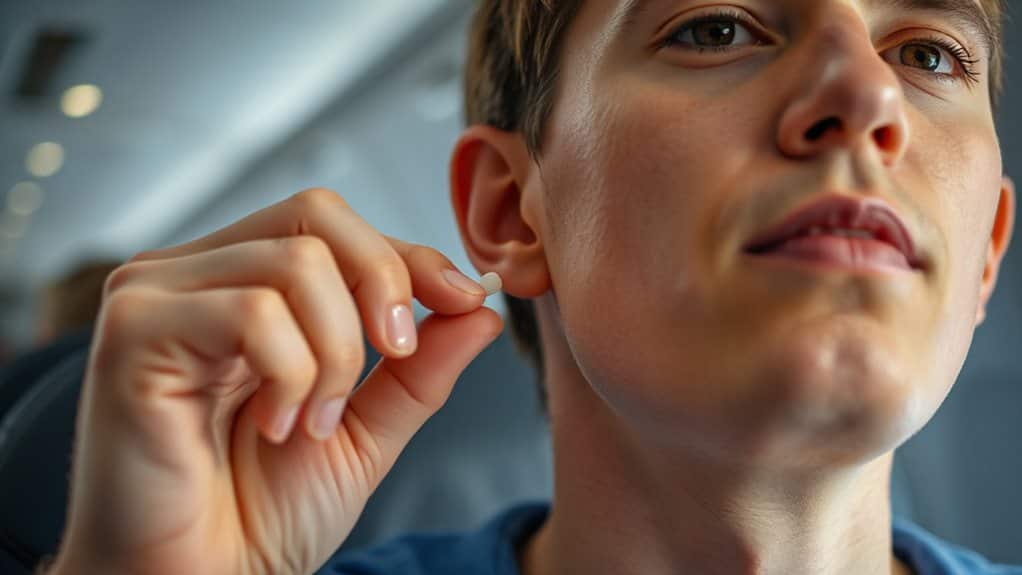
If you notice persistent ear pain, muffled hearing, drainage, dizziness, or fever that lasts beyond a few hours after landing, you should consider seeing an ENT specialist.
Sharp pain, pressure, or worsening hearing loss signals possible barotrauma.
Fluid or blood from the ear, vertigo, fever, or tinnitus persisting beyond the flight all merit professional evaluation to prevent complications.
And Finally
By following the steps outlined—pre‑flight checks, proper equalization techniques, using pressure‑regulating plugs, and taking decongestants responsibly—you’ll minimize ear pain and protect your hearing. Stay attentive during take‑off and landing, and monitor any lingering discomfort after the flight. If symptoms persist, seek an ENT evaluation promptly. This systematic approach helps comfortable travel and reduces the risk of barotrauma.