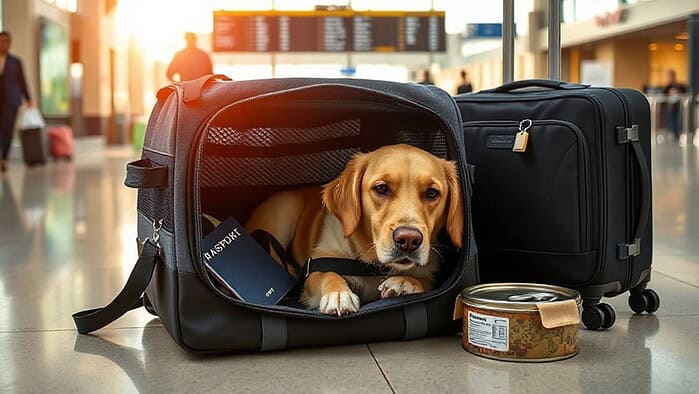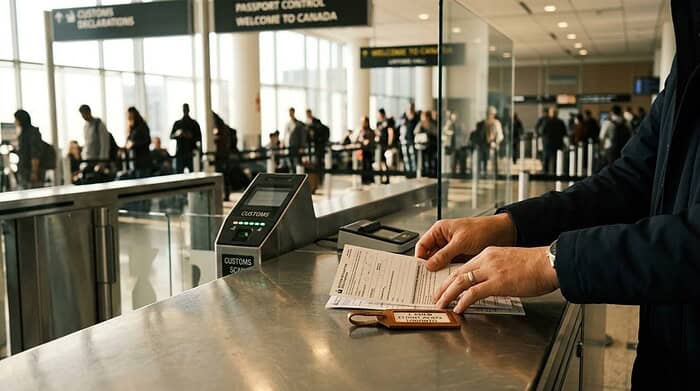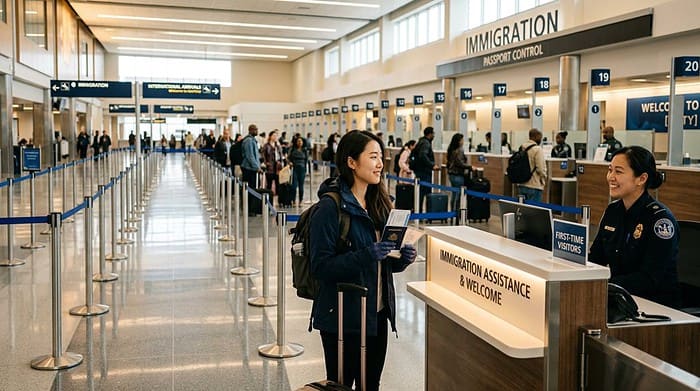
You must declare everything you bring into the U.S., including food, fresh produce, meat, dairy, plants, seeds, and any soil‑based items; alcohol and tobacco (if you’re 21 + and exceed duty‑free limits); gifts, purchases, and business goods with accurate values and descriptions; currency, checks, or monetary instruments over $10,000; prescription medicines up to 90 days; and any prohibited or restricted items such as firearms, wildlife products, and certain animal or plant materials. Accurate paperwork avoids fines, confiscation, and delays, and the next sections will show you how to fill out the form correctly.
TLDR
- Declare all purchases, gifts, and business items with detailed descriptions, values, and quantities, including receipt‑backed values.
- Declare all food, agricultural products, and fresh produce, even prohibited items, with original packaging and receipts.
- Declare alcohol and tobacco exceeding U.S. duty‑free limits (1 L alcohol, 200 cigarettes) and meet the age requirement of 21 years.
- Declare any currency, checks, or monetary instruments totaling over $10,000, using FinCEN Form 105 and CBP 6059B.
- Declare controlled or restricted goods such as firearms, wildlife products, raw dairy, meat, and soil‑based items, following proper documentation and regulations.
Customs Declaration: How to Complete the Form Step‑by‑Step
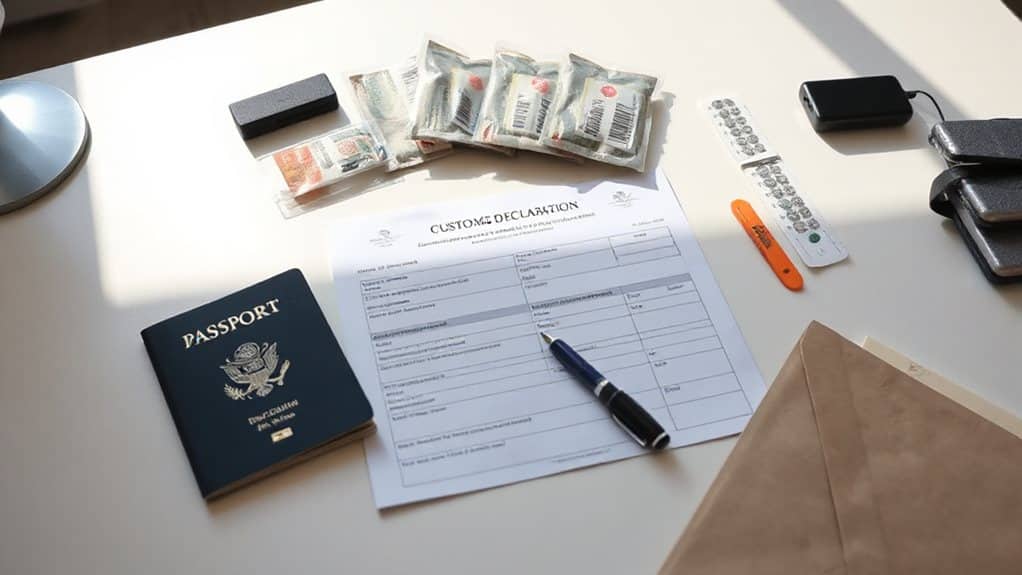
How do you start filling out the customs declaration?
Write your last name, first name, and middle initial clearly, then enter your birthdate in MMDDYY format.
Provide your U.S. or temporary address, passport country, number, and current residence country.
List family members traveling, previous countries visited, airline and flight number, arrival date, and time spent abroad.
Passport book number should be taken from the personal information (data) page under the Passport No. label—often in the top right-hand corner.
Itemize each purchase with specific description, value, and quantity, then answer yes/no questions honestly.
Sign and submit the form.
Keep all receipts for declared items.
Customs Declaration: Food & Agriculture Items You Must Declare
You’ll need to declare any fresh produce, meat, animal products, condiments, oils, and baked goods you’re bringing into the United States, even if they seem harmless.
CBP officers will check each item for pests, diseases, or prohibited ingredients, and they’ll ask for receipts or packaging to verify origin.
Failing to declare can result in hefty fines, loss of Global Entry privileges, and possible confiscation of the items.
Fresh Produce Restrictions
If you’re traveling to the United States, you must declare every fresh fruit and vegetable you’re carrying, even if the item is prohibited.
You’ll need receipts and original packaging to prove origin, and inspectors may examine produce for pests, diseases, or residues.
Failure to declare can trigger fines, especially for Global Entry members.
Check the FAVIR database, keep phytosanitary certificates, and be ready for FDA or USDA inspection.
Meat & Animal Products
Because U.S. Customs requires you to declare any meat, poultry, or pork you carry, you must list every item even if you think it’s allowed.
Products must come from USDA‑FSIS inspected facilities or certified foreign sources, and you should keep receipts and packaging.
Bushmeat is strictly prohibited, with $250 000 fines and destruction.
All animal products face CDC and FDA inspection, and proper rendering certifications are needed.
Condiments, Oils, Baked Goods
After covering meat and animal products, the next category you’ll encounter at U.S. customs includes condiments, oils, and baked goods.
You should declare ketchup, mustard, mayonnaise, olive oil, vegetable oils, bread, cookies, crackers, and cakes.
Keep items in original packaging, label in English, and bring receipts.
Declaring prevents fines, Global Entry loss, and makes for smooth inspection.
Customs Declaration: Alcohol & Tobacco – Quantities, Age Limits, and Duty Requirements
You’ll need to know the exact age limits and quantity thresholds for both alcohol and tobacco before you pack, because any amount above the one‑liter or 200‑cigarette limits triggers a duty obligation and payment at the border. If you’re under 21, you can’t import alcohol at all, and tobacco imports are also restricted to adults, with enforcement policies requiring declaration on CBP Form 6059B and possible fines for non‑compliance. Remember that duty is calculated on the excess volume or value, and you must be prepared to settle it promptly to avoid delays. Cuban-origin cigars are generally prohibited to bring into the U.S. without authorization, and you should verify current rules before traveling.
Age Limits and Quantity Thresholds
If you’re planning to bring alcohol or tobacco across the border, the first thing you need to check is the age limit and how much you’re allowed to bring without paying duties.
In the U.S., you must be 21, and you can take one liter of alcohol or 200 cigarettes duty‑free.
Canada allows 18‑19, depending on province, with 1.5 L wine, 1.14 L spirits, or 8.5 L beer duty‑free.
Tobacco limits are 200 cigarettes, 100 cigars, or 200 g manufactured tobacco.
Duty Obligations and Payment
When you cross the border with alcohol or tobacco, duties kick in as soon as your items exceed the duty‑free limits, and you’ll need to declare them to Customs and Border Protection (CBP). CBP assesses federal excise taxes on spirits, wine, and beer, plus a 3 % duty on the next $1,000 of goods over $800.
Tobacco duties follow similar tiered rates, and state taxes may apply. Excess quantities may trigger commercial‑use permits.
Age Restrictions and Enforcement Policies
Because both the United States and Canada tie alcohol and tobacco allowances to the traveler’s age, you must verify you meet the minimum age before you can claim any duty‑free exemption.
In the U.S., you must be 21 for alcohol or tobacco; in Canada, the threshold is 18 or 19 depending on province.
CBP and CBSA will check IDs, enforce state or provincial rules, and seize any under‑age or excess items.
Customs Declaration: Currency, Checks, and Monetary Instruments Over $10,000 – Reporting Rules
You must declare any U.S. or foreign currency, checks, or other monetary instruments whose total value exceeds $10,000 when you enter or leave the United States.
CBP requires FinCEN Form 105 and a CBP 6059B declaration for combined family totals.
Include cash, traveler’s checks, money orders, and negotiable drafts.
File online beforehand or present paper forms at the border.
Failure leads to confiscation, heavy fines, and possible imprisonment.
Also, if your hat includes metal embellishments, TSA may require hat removal during screening.
Customs Declaration: Purchases, Gifts, and Business Items You Need to Declare
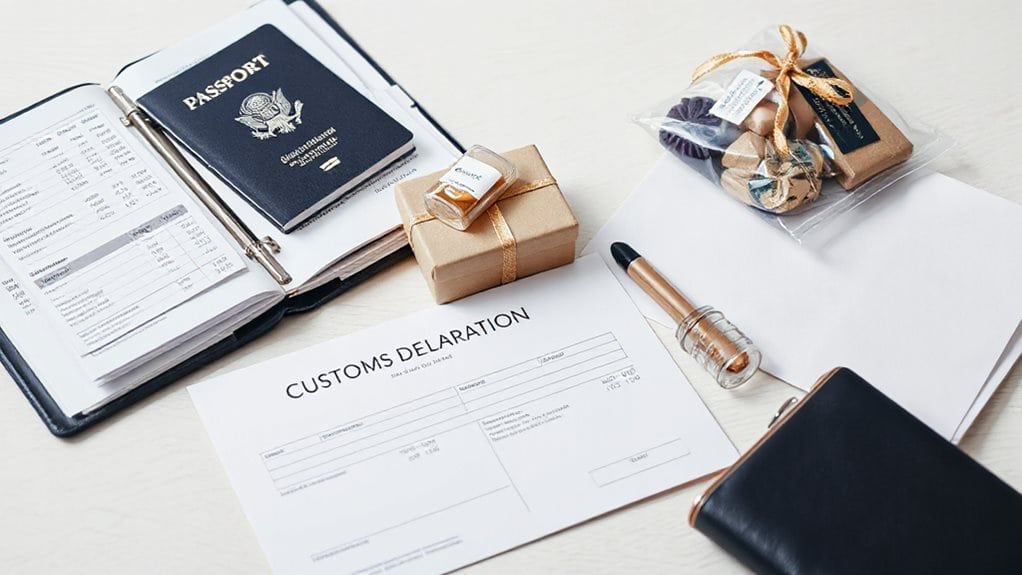
Declare every item you bring back from abroad—whether it’s a souvenir, a gift, or a product for your business—because U.S. customs requires a complete inventory regardless of value.
List purchases with descriptions, quantities, and receipt‑backed values; gifts need the same details and fall under the $800 exemption.
Business goods, including commercial shipments with gifts, must be declared at fair market value, supporting documentation to avoid penalties.
For extra confidence when budgeting your trip, consider planning around the lowest-fare windows so you’re prepared to document any higher-value items you may acquire during low-season travel.
Customs Declaration: Pharmaceuticals, Health Products, and Controlled Substances
When you travel to the United States with prescription medication, you must declare any supply up to 90 days, and you’ll need the original packaging that includes a prescription bearing your name. You should also avoid airport surprises by keeping your documents and medicines organized before you reach Customs. Declare controlled substances, bring DEA/FDA authorizations, and show country‑of‑origin labels. Include HS codes, batch numbers, and temperature logs for cold‑chain items. Carry import permits, CoAs, GMP certificates, and free‑sale proofs to avoid rejection.
Customs Declaration: Prohibited & Restricted Goods (Firearms, Animal Products, Soil‑Based Items)
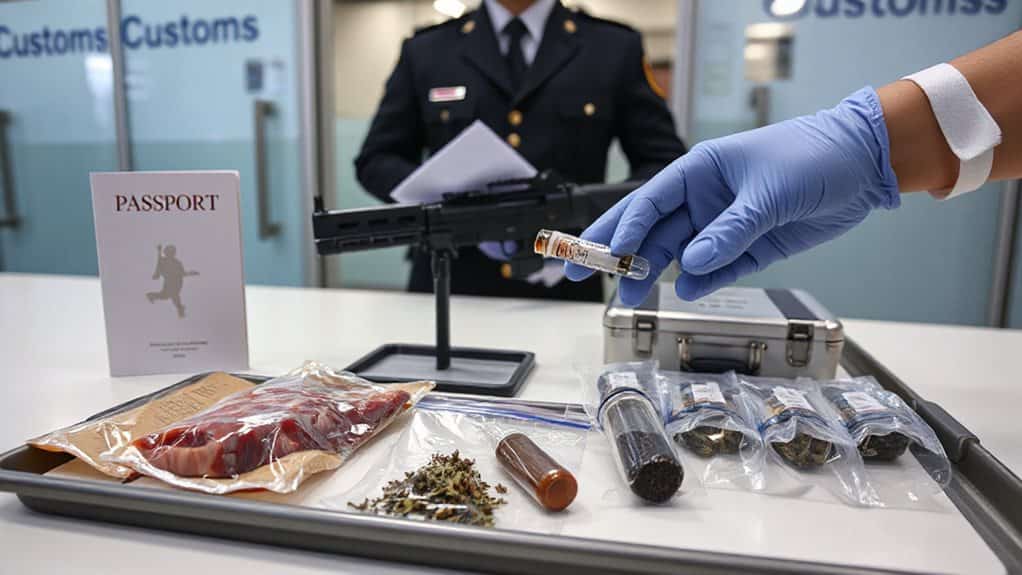
If you’re bringing firearms, animal products, or soil‑based items into the United States, you must know that each category is tightly regulated and often prohibited.
Firearms need import licenses; wildlife goods from endangered species, raw dairy, meat, or live animals must be declared or are banned.
Soil, seeds, unprocessed wood, and plants can carry pests, so they’re prohibited or require permits.
Declare everything to avoid confiscation.
In particular, soil-based items and plants are often restricted because they can introduce pests.
Customs Declaration: Common Mistakes and Resulting Penalties
After covering prohibited and restricted items, it’s important to turn attention to the paperwork that accompanies every shipment.
Misclassifying HS codes, undervaluing goods, or leaving product descriptions vague can trigger audits, fines, and even seizure.
Incorrect EORI, VAT numbers, or origin statements delay clearance and attract penalties.
Use binding tariff rulings and reliable software to make sure accurate declarations and avoid costly enforcement actions.
And Finally
By following this guide, you’ll avoid costly delays and penalties. Remember to list every food, alcohol, tobacco, currency, and medical item, even if it seems minor. Declare prohibited and restricted goods honestly, and double‑check quantity limits and duty thresholds. Accurate paperwork speeds clearance and protects you from fines. Stay informed, fill out the form carefully, and your trip will proceed smoothly.