
File a Property Irregularity Report (PIR) at the baggage desk before you leave the airport, note the 10‑character PIR reference and ask for the 13‑character file ID right away. Include your bag tag number, reservation code, and any receipts for high‑value items when you submit the claim. Track the claim using the file ID on the airline’s portal, and if your itinerary involves multiple carriers, contact the final‑flight airline. Report any bag damage within the airline’s window—usually a few hours domestically and up to seven days internationally—to avoid losing compensation eligibility. Continue for more detailed steps and timelines.
TLDR
- File a Property Irregularity Report (PIR) at the baggage service desk before leaving the airport and obtain the 10‑character PIR reference.
- Immediately request the 13‑character File ID, verify it matches the receipt, and keep it for online tracking and future communications.
- Provide the bag tag number, reservation code, TSID code, and any receipts or proof of value for high‑cost items when filing the claim.
- Track the claim via the airline portal using your last name and the 13‑character File ID; call the lost‑baggage desk daily for updates.
- Submit written notice within seven days and all expense receipts within 30 days; consider supplemental or credit‑card insurance for coverage gaps.
File Your Report Before You Walk Out of the Airport
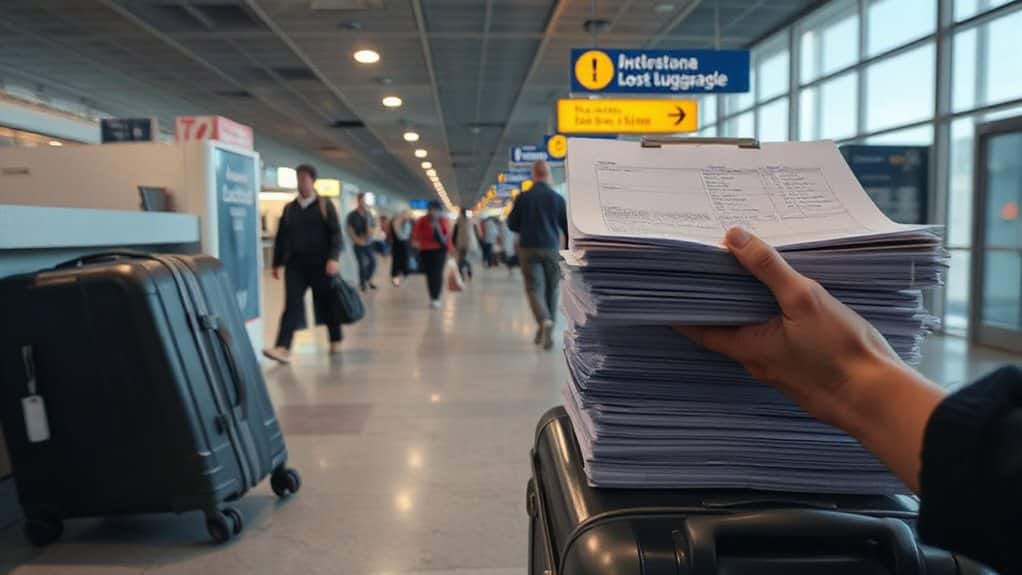
If you wait until you’ve left the terminal, you lose the chance to start the airline’s recovery process right away.
Head straight to the baggage service desk, usually near the claim carousel, and request a Property Irregularity Report. Record the 10‑character reference, flight details, and the agent’s name. Make sure you also understand any damage liability rules that may apply to boxed or irregular luggage.
Keep the number handy; it’s essential for tracking and future compensation. Staying until the report’s filed secures a timestamp and immediate assistance. Contact the airline before leaving the airport to ensure the claim is logged promptly.
What Details to Include in Your Lost Luggage Claim
You should list the bag’s tag number, reservation confirmation code, and any file or claim reference numbers the airline gave you, because these identifiers tie the claim to your specific luggage.
Include the original receipt or proof of value for any high‑cost items, as well as the ticket receipt and baggage claim check numbers to verify your travel and baggage details.
Finally, attach any expense receipts from the delay, clearly showing vendor names, dates, and amounts, so the airline can match your costs to the loss timeline.
Also, be sure to Property Irregularity Report (PIR) reference number from the airline and keep it handy for claim tracking and follow-ups.
Bag Identification Details
When you file a lost‑luggage claim, you’ll need to provide the exact identifiers that the airline uses to track your bag. Include the airline‑issued baggage destination tag number, the barcode label, and the 12‑character TSID code—often under the handle or near the zipper.
Write your name and phone inside the bag with a permanent marker as backup.
Double‑check all numbers before submitting.
Claim Reference Information
Where does the claim start? You begin with the Property Irregularity Report (PIR) number, then add the airline’s file reference or tracking number, and the bag tag number.
Include the flight number, date, booking reference, and destination.
List each missing item with description, value, and receipts.
Record the reporting date, airline representative’s name, and any update phone numbers.
Obtain the 13‑Character File ID From the Agent
Ask the agent for the 13‑character file ID as soon as you finish the PIR, and double‑check that the characters match what’s on your receipt.
Confirm the ID’s accuracy before you leave the desk, because a single typo can delay tracking and compensation.
Keeping the correct file ID handy will let you enter it on the airline’s website and reference it in all future communications.
Request File ID Promptly
If you notice your bag is missing, ask the baggage‑service agent for the 13‑character file ID right away. Get the ID immediately at the Baggage Service Office, before you leave the airport.
Scan the QR code or give the agent your bag details to receive the reference number.
Keep the ID handy; you’ll need it to file claims, check status, and coordinate tracking through airline portals.
Verify ID Accuracy
How can you be sure the file ID you receive is correct? Compare the 13‑character string the agent gives you with the one printed on your bag‑tag receipt or on the claim form.
Double‑check each character, especially letters that look similar, and confirm the airline’s name and your last name match the portal entry.
Accurate IDs grant access to tracking, status updates, and reimbursement.
Track Your Claim With the File ID or Reference Number
Where can you find the status of your lost‑baggage claim? Enter your last name and the 13‑character File ID on the airline’s portal—American, United, Delta, Alaska, or Southwest. The File ID grants real‑time updates, lets you submit claims, and links to QR‑code or app tracking. Keep receipts handy; airlines use the ID to locate your bag and process reimbursements. Also, save your incidental hold documentation from any hotel you stayed at, in case you’re reconciling charges during the claim process.
How to Report Lost Baggage on Multi‑Airline Itineraries
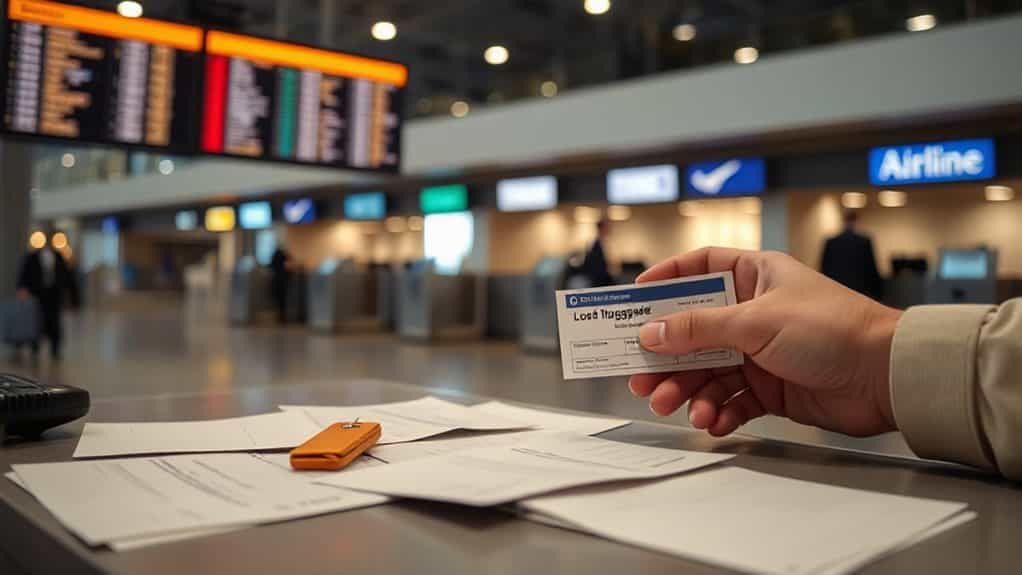
When you travel on a multi‑airline itinerary, the carrier that operated the final flight is the one you must approach for a lost‑baggage report, even if your suitcase never entered that airline’s system. last flight carrier When you file, bring your bag’s description, tags, and a photo; note the IATA‑designated carrier. Visit the baggage service desk immediately, get a reference number, and keep receipts for any compensation claims. Follow up regularly until the airline resolves the case.
Don’t Leave Destination Airport Until You’ve Reported the Missing Bag
You should head straight to the Baggage Service Office as soon as you land and ask for a file ID before you leave the airport. Getting that 13‑character incident number right away lets you track the bag and start any compensation claim without delay. Keep the file ID and the representative’s contact details handy for follow‑up inquiries. Found items are logged within 2 hours to ensure timely tracking and accountability.
Locate Baggage Service Office
What’s the first step when you realize your bag didn’t arrive? Head straight to Level 1 of the Main Terminal’s baggage claim area.
The Baggage Service Office sits near the carousels, staffed by airline reps who can locate your luggage or start a claim.
You’ll find dedicated desks for Delta, American, Southwest, United, and a Guest Services desk in Civic Plaza for extra help.
Obtain File ID Immediately
If you find your luggage hasn’t arrived, head straight to the Baggage Service Office before leaving the airport and request a mishandled‑baggage report; the agent will give you a 13‑character file ID that serves as the reference for all subsequent actions.
Keep the tag, note flight details, and retain the ID. Use it online to check status, file claims, and attach receipts, ensuring timely refunds and recovery.
Use AirTag or Find My to Speed the Search
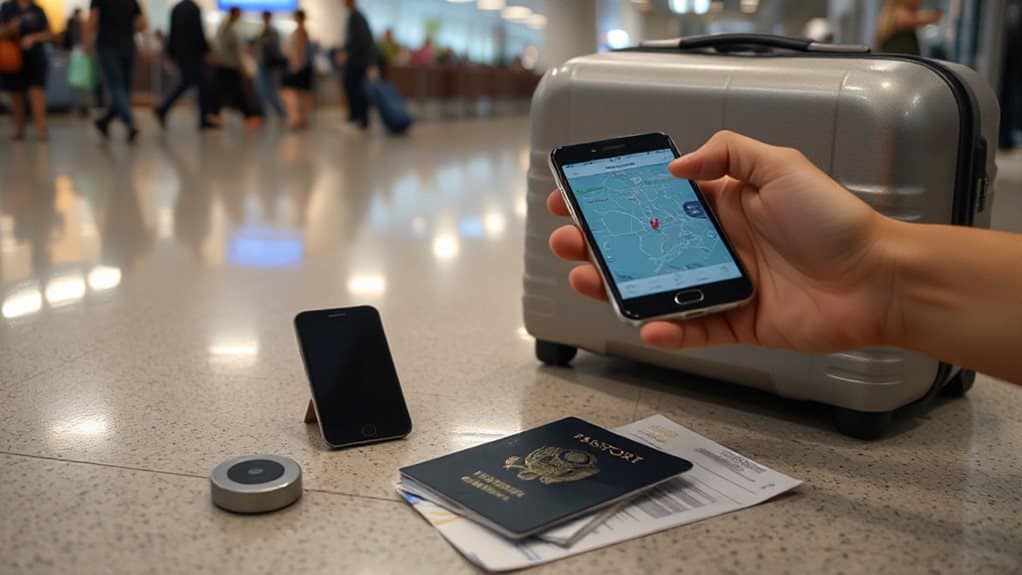
AirTags let you monitor your luggage’s location in near‑real time, updating every five to ten minutes when the tag is near any Apple Bluetooth device.
Use the Find My app to share the Share Item Location link with the airline’s baggage team; this gives them near‑real‑time coordinates.
Connect to airport Wi‑Fi for tighter accuracy, and rely on Precision Finding when the tag stays within iPhone range.
Report Damage on a Delayed Bag: Timing & Steps
After you’ve used AirTag or Find My to locate a delayed suitcase, the next step is to address any damage you find once the bag finally arrives. Inspect the bag before leaving the claim area, then head to the Baggage Service Office. Scan the QR code or give your tag number, provide name, confirmation code, and contact details. File the report within the airline’s window—usually four to six hours domestically, up to seven days internationally. Keep the reference number for follow‑up.
If your luggage contains items that require special screening, such as handcuffs, you may be asked to show them during inspection.
Compensation for Your Lost Luggage Claim: Timelines & Limits
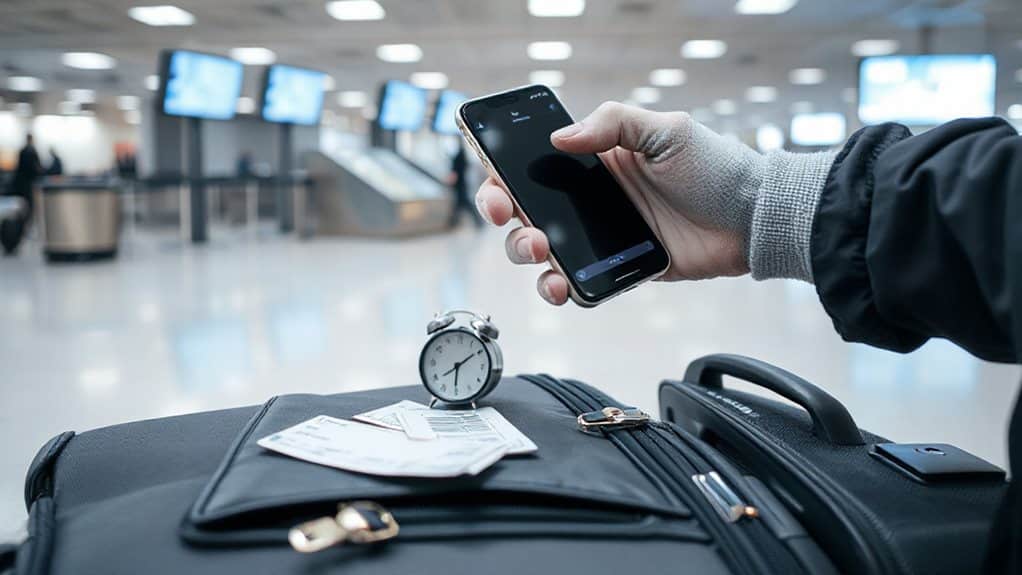
You’ll need to know the specific time frames and monetary caps that govern any lost‑baggage claim, because the amount you receive and how quickly you can get it depend on whether your flight was domestic or international.
Domestic limits sit around $3,800–$4,700, while international claims cap at 1,519 SDR (≈£1,000).
Report immediately, then file written notice within seven days; some airlines shorten guarantees to two hours after arrival.
Supplemental insurance or credit‑card coverage can bridge gaps.
Follow‑Up Tips to Keep the Airline Responsive
If you keep the airline in the loop, you’ll speed up the search and protect your claim.
Call the lost‑luggage desk daily, reference your 13‑character file ID, and log into the bag portal for updates.
Use the airline app to verify carousel status, and send receipts within 30 days.
Escalate after 5 days without a response, and keep all documentation handy.
And Finally
By filing your report before leaving the airport, gathering all required details, and securing the 13‑character file ID, you’ll streamline the claim process. Track the case with the ID or reference number, and follow specific steps for multi‑airline itineraries or damaged bags. Use AirTag or Find My to aid the search, and stay aware of compensation timelines and limits. Prompt follow‑up keeps the airline responsive and increases the chance of a swift resolution.