
You might pack abayas and headscarves unnecessarily—modest dress is only required at mosques, not resorts or malls. Don’t stress over language; English is widely spoken and signs are bilingual. Dubai isn’t just for the wealthy—budget stays, metro rides, and free beaches exist. Avoid public displays of affection and remember Ramadan rules. Skip unlicensed desert tours—safety and regulations matter. You’ll see there’s more to learn about getting around Dubai smoothly.
TLDR
- Overpacking modest clothing is unnecessary; abayas and headscarves are only required for mosque visits.
- Assuming English isn’t widely spoken—most signs, staff, and services operate seamlessly in English.
- Believing Dubai is only for the wealthy—budget options exist for transport, food, and accommodations.
- Wearing revealing clothes outside resorts—shoulders and knees must be covered in public areas like malls.
- Underestimating desert risks—always book licensed tours instead of attempting solo off-road adventures.
Overdressing for Dubai’s Conservative Reputation

You might be tempted to pack only modest, covered-up clothing because of Dubai’s reputation for conservatism, but you don’t need to overdress.
Women aren’t required to wear abayas or headscarves outside mosques, and men can wear shorts and T-shirts in tourist areas.
Resorts, beaches, and hotels allow bikinis and casual wear.
Just cover shoulders and knees in malls and local neighborhoods.
When visiting religious sites, remember that strict dress codes apply, and modest attire is required.
Be mindful of local laws and public behavior expectations, since public conduct can be monitored and carry penalties.
Worrying About Language Barriers in an English-Friendly City
You won’t need a translator when you visit Dubai—English is everywhere, from street signs to menus.
You’ll see clear, bilingual labels in public spaces, so getting around the city is simple.
Just about everyone you meet, from shop staff to taxi drivers, will understand and respond in English.
Many visitors also enjoy nearby destinations like Pulau Ubin for a nature contrast to the urban experience.
English Widely Spoken
Most visitors quickly find that English is everywhere in Dubai, spoken fluently by around 80–85% of residents and used as the go-to language in daily life.
You’ll use it effortlessly in shops, transit, and hotels. Street signs, menus, and ATMs default to English.
Staff readily assist in English. You won’t need Arabic to steer confidently or connect with others across this diverse, multilingual city.
No Translation Needed
Why worry about language barriers when English bridges the gap so seamlessly in Dubai? You’ll traverse government offices, banks, and businesses with ease, as most staff are bilingual.
Street signs, public info, and service industries use English prominently. With 85% of residents comfortable in English, you’re free to discover without translation apps or language stress—just communicate directly and confidently.
Easy Navigation Signs
Getting around Dubai is effortless thanks to clear, multilingual signage that guides the way at every turn.
You’ll see street signs, public documents, and facility instructions in Arabic and English—often Hindi too.
With 85% of residents familiar with English, you can confidently find your way around malls, transit, and government offices using only English, no translation needed.
Assuming Dubai Is Only for the Wealthy
You might think Dubai is only for the wealthy, but you can enjoy it on a budget with smart choices.
You’ll find free beach access, low-cost public transport like the metro and abra rides, and plenty of no-fee cultural sites.
From affordable street food to complimentary landmark views, your daily expenses can easily stay under 50 AED.
Consider signing up for travel credit cards to earn miles and offset flight costs while planning future trips.
Luxury on a Budget
Think again if you assume Dubai’s luxury scene is out of reach for budget-conscious travelers—affordable five-star stays do exist with the right approach.
Book boutique properties like The Canvas Dubai or Crowne Plaza Deira, target off-peak seasons, and compare rates across platforms.
Choose Deira or Jumeirah Village Circle for value.
Opt for serviced apartments or all-inclusive resorts to maximize space and savings without sacrificing comfort.
Affordable City Experiences
Far from being reserved solely for the wealthy, Dubai offers a wealth of affordable city experiences that showcase its culture, nature, and urban charm. You can discover free attractions like the Dubai Mall’s aquarium views, the Dubai Fountain shows, and the historic Al Fahidi district.
Walk the Dubai Marina Promenade, spot flamingos at Ras Al Khor, or relax at Kite Beach—all without spending a dirham.
Misjudging Public Behavior and Cultural Sensitivities

While Dubai welcomes millions of visitors each year with open arms, failing to understand local behavioral norms can lead to unintended offenses.
Avoid public kissing or intimate contact, as it’s illegal for everyone.
Skip offensive gestures like the middle finger—jail time applies.
Dress modestly outside hotels, cover shoulders and knees, and never eat or drink in public during Ramadan.
Respect these rules to stay free and trouble-free. A useful practical tip is to know whether your seat belt fits before flying so you can travel comfortably and avoid issues on board.
Underestimating Safety in Everyday Situations
Because Dubai consistently ranks among the world’s safest cities, you might assume everyday risks are nearly nonexistent—but that perception can leave you vulnerable to preventable dangers.
You may overlook traffic hazards, where drivers ignore crossings, or petty crimes like pickpocketing in crowded areas.
While violent crime is rare, staying alert in public spaces guarantees your freedom isn’t compromised by complacency.
Keep in mind that, statistically, air travel is far safer than most road travel, so choose the safest mode for longer trips when possible.
Expecting Wild Desert Adventures Without Regulations
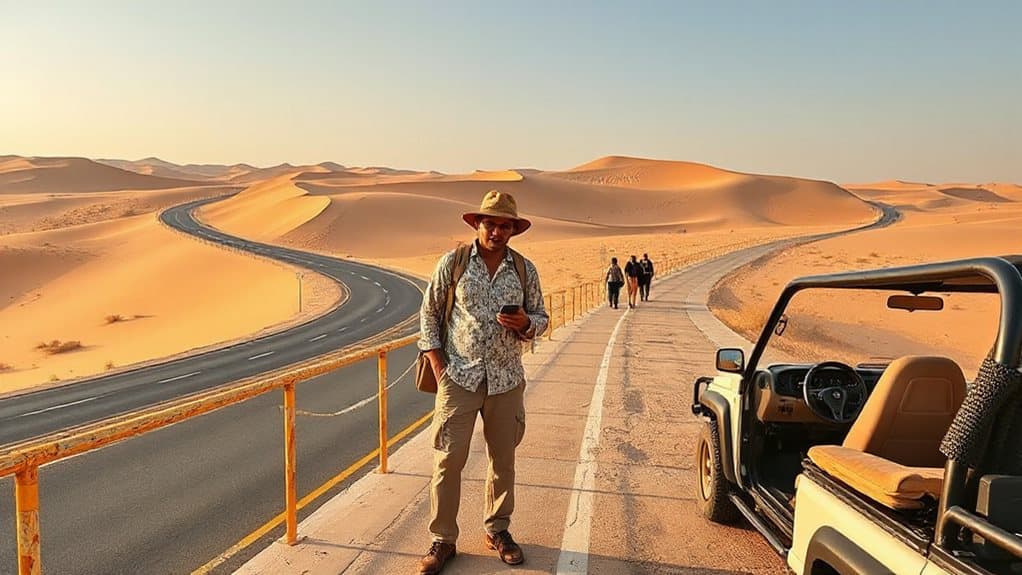
If you’re picturing an unregulated desert expedition with spontaneous dune driving and overnight camping under the stars, think again—Dubai enforces strict rules to guarantee safety and environmental protection.
Licensed tours follow approved routes, use inspected vehicles, and employ trained drivers.
You’ll need proper gear, respect for wildlife, and adherence to modest dress and alcohol laws.
Solo trips risk danger and fines, so trust regulated operators for a responsible, hassle-free excursion.
You can also combine desert activities with nearby mangrove exploration or coastal visits to create a varied, family-friendly itinerary.
Treating the Desert as Just Empty Space
You might’ve thought the desert was just vast, open land perfect for unrestricted exploration, but it’s far from empty.
It hosts 44 fauna species, 731 plants, and essential habitats like interdunal plains and wadis.
Protected areas cover 6,841 km², supporting biodiversity from Arabian gazelles to rare reptiles.
Reserves follow strict monitoring and rewilding efforts, ensuring ecological balance, so your respect helps sustain these fragile, regulated ecosystems.
And Finally
You now know common mistakes to avoid as a first-time visitor to Dubai. You won’t overdress, struggle with language, or assume it’s only for the wealthy. You’ll respect local customs, feel safe, and follow desert activity rules. Understanding these points helps you find your way through the city confidently. You’re prepared to enjoy Dubai’s blend of modernity and tradition without cultural missteps.


